
From protest to progress: Morocco’s commitment to democratic governance

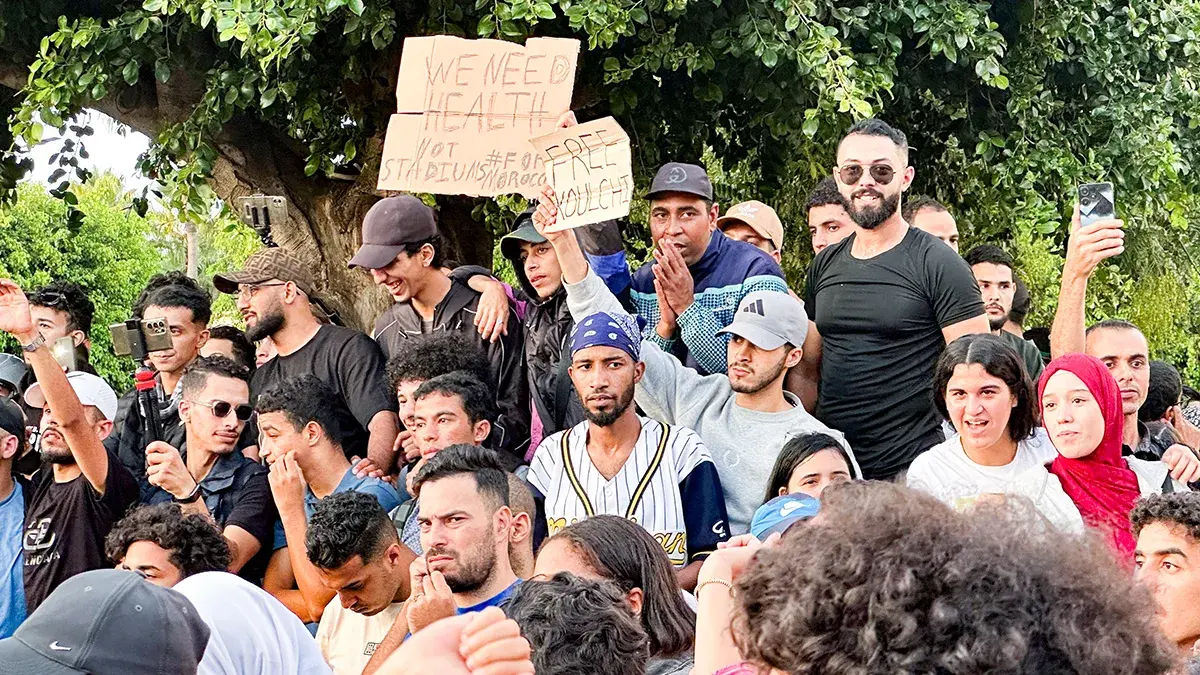
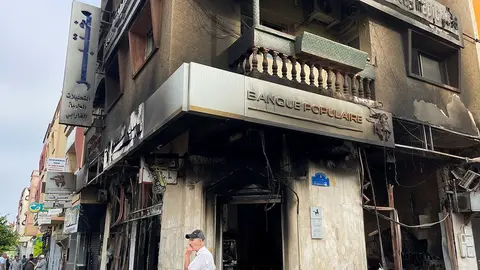
Recent protests in Morocco, some of which escalated into violent confrontations, have captured attention both domestically and internationally. Images of clashes, property damage and injuries are striking, yet they tell only part of the story. Beneath the turbulence lies a far more important narrative: Morocco’s ongoing democratic evolution and its capacity to adapt to the aspirations of its citizens while preserving stability.
The ministry of interior reported injuries among civilians and security personnel, alongside significant property damage, highlighting the risks that arise when social frustrations spill onto the streets. But to view these events merely through the lens of disorder is misleading. They reflect a society actively engaging with questions of governance, inclusion and accountability, a process that is inherently dynamic in any maturing democracy.
For Morocco’s international partners, this context matters deeply. The country occupies a strategic position: a bridge between Africa and Europe, a trusted ally of the United States and a stabilising force in a turbulent region.
Its influence extends beyond its borders: as an active member of the African Union, Morocco promotes continental integration, with the European Union, it partners on migration, trade and investment, while in collaboration with Washington, it provides critical counter-terrorism expertise.
Stability in Morocco is therefore not merely a domestic priority, it is a regional and global imperative.
Yet, the opportunity in these moments of unrest is equally significant. Morocco has proven that it is fully capable of implementing meaningful reforms and is committed to no U-turn on its democratic path. Over the past two decades, the country has steadily modernised its institutions, expanded social programmes and strengthened legal frameworks. These are foundations upon which further reform can build, a reinforcement of both stability and legitimacy.
The challenge lies in transforming citizen grievances into constructive engagement.
Here, three avenues are essential:
- Political dialogue: strengthening mechanisms for citizen participation and ensuring institutions remain responsive to evolving social demands.
- Economic inclusion: addressing inequalities and expanding opportunities, particularly for youth, who are often most vulnerable to frustration and disengagement.
- Civic education: promoting a culture of responsible protest and civic participation, where the right to dissent strengthens rather than undermines democratic governance.
For Morocco’s partners in Europe, Africa and North America, supporting these reform efforts is not an act of altruism, but one of strategic interest. A resilient, democratic Morocco bolsters regional stability, enhances Mediterranean security, facilitates transcontinental trade and provides a model of governance that balances reform, inclusion, and order.
The recent protests should therefore be interpreted not as a sign of fragility, but as a wake-up call for continuous improvement. They reveal both the expectations of citizens and the opportunities for institutional strengthening. Morocco’s response, grounded in dialogue, reform and enforcement of the rule of law, demonstrates the country’s commitment to reconcile freedom with responsibility.
In essence, Morocco stands at a moment of constructive opportunity. Its democratic path is not theoretical; it is actively pursued, deeply embedded and strategically crucial. The country’s leadership and society have repeatedly shown that they can navigate social pressures without compromising stability, and they are poised to continue doing so.
The broader lesson for the international community is clear: Morocco’s domestic evolution is intrinsically linked to regional and global stability. Its ability to integrate citizen demands, strengthen institutions and implement reforms is not only a domestic imperative but a cornerstone for partnerships spanning Africa, Europe and the United States.
By supporting Morocco’s reform agenda, the international community invests in a stable, democratic and forward-looking North Africa, a region whose trajectory matters far beyond its borders.
In this light, Morocco’s recent protests are less a warning than an invitation: an invitation to deepen dialogue, expand inclusion and consolidate democratic practices. They reflect a nation capable of transformation, committed to progress and fully aware that the future is secured not by repression, but by the trust and participation of its citizens.