Trump and Alandete's revenge operation
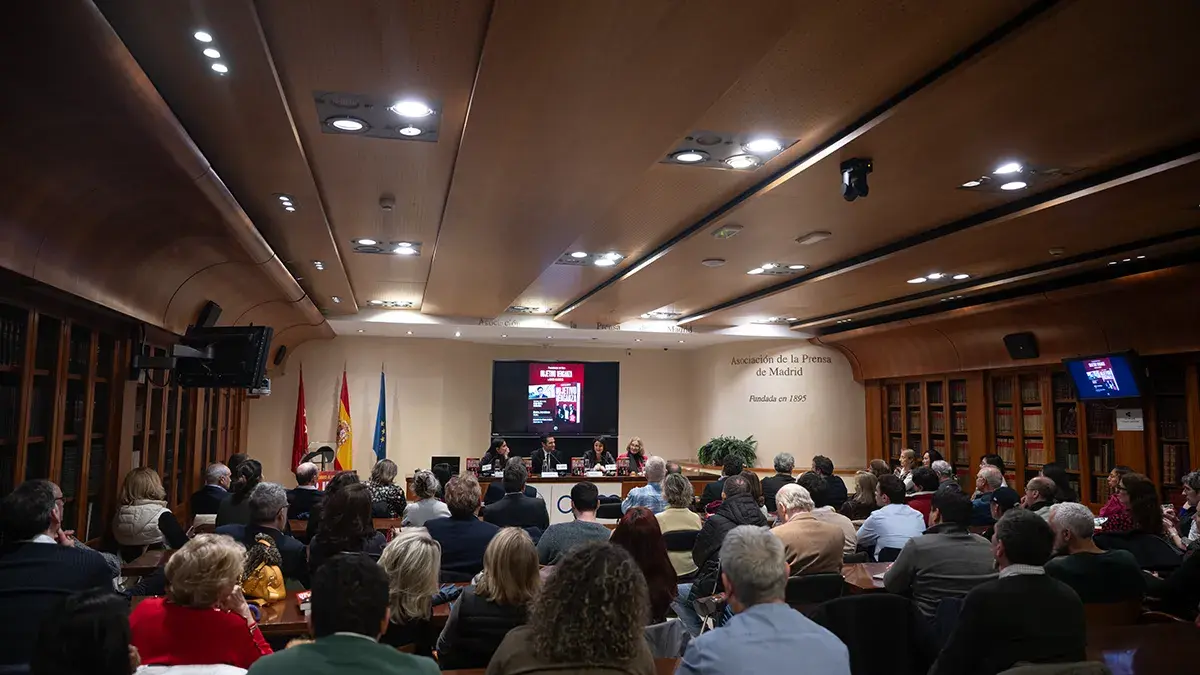

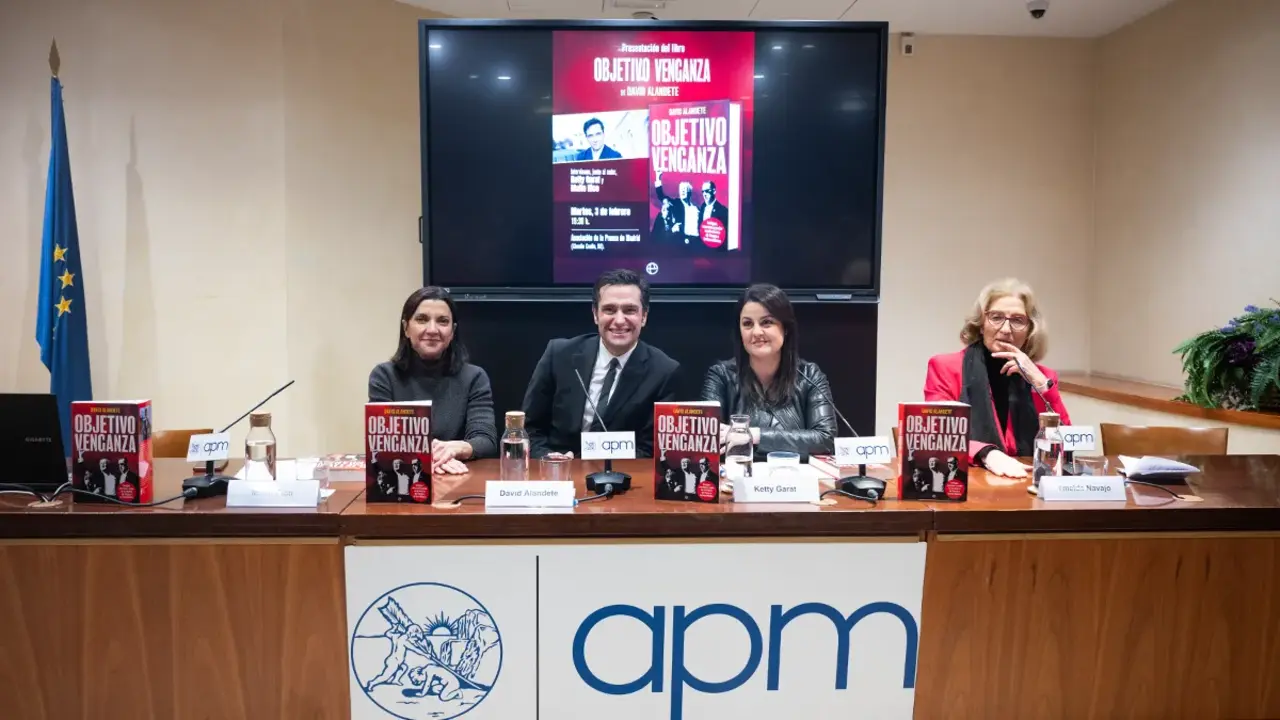
The book Objetivo Venganza (La Esfera de los Libros, 427 pages) set out to uncover and describe the how and why of President Donald Trump's return to the White House. And it succeeds in doing so, revealing the constant intrigues and secrets that marked a decisive event, not only for the United States of America but also for the rest of the world. In his narrative, which reveals the abundance and solidity of the sources that feed a seasoned journalist like Alandete, he paints a relentless portrait of the man considered the most powerful on Earth.
Writing this work is not within everyone's reach. The reason is very simple: the first requirement is to have previously gained access to the circle of power made up of the president's closest collaborators and, of course, Donald Trump himself, to have managed to capture his attention and interest during the numerous times he has had to stand guard, enduring winter temperatures of 14 degrees below zero to take advantage of his departure from the White House to take the official helicopter and ask him the corresponding question, direct, brief and provocative enough for Trump to deign to stop and answer it, even seasoned with some admonition or personal remark to the questioner.
‘Someone taught me,’ says the author, ‘that a journalist who accompanies his narrative with adjectives is a defeated journalist.’ He is referring to Antonio Caño, his direct boss at El País when he was deputy editor. Both of them, along with the renowned analyst and political scientist Maite Rico, were dismissed as soon as Pedro Sánchez took office at La Moncloa.
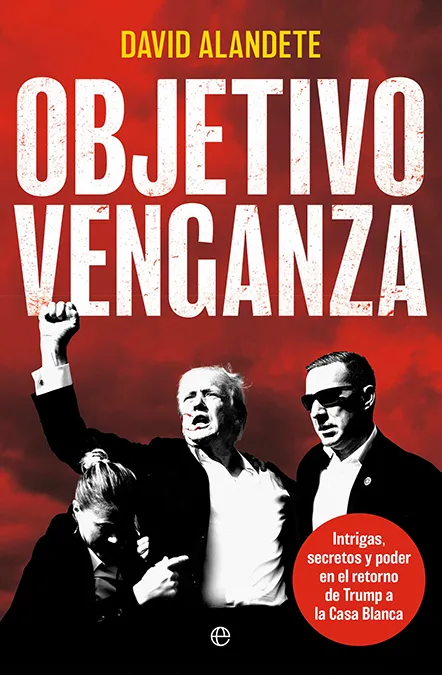
Alandete took Caño's advice to heart, eschewing caricature and adjectives, whether laudatory or pejorative, of the character, who then emerges in all his personal and moral nakedness: capable of being, for example, especially scathing towards male reporters and cruel towards female reporters as soon as the cameras start rolling but who, once they are turned off, eagerly takes an interest in the personal problems affecting the previously maligned reporter.
In addition to recounting the facts, Alandete reveals the immense amount of preliminary work involved in building contacts and carrying out research and negotiations, with the corresponding care of his sources, becoming the privileged interlocutor who obtains answers about what he was going to do in Venezuela and with Nicolás Maduro; who also receives a curt response from Jared Kushner, Trump's own son-in-law, when he asks him if they have informed and consulted Spain about the recognition of Moroccan sovereignty over the Sahara, and also about their intentions throughout Latin America. In that region, he increasingly relies on his Secretary of State, Marco Rubio, a staunch defender of the need to ‘end all tyrannies in Latin America’.
In keeping with the title, the author points to Trump's reprisals and purges of his entire staff as soon as he was sworn in for his second term on 20 January 2025: the swift and cascading dismissal of all those, civilian or military, whom he considered to have betrayed him during his first term. Trump has been and continues to be particularly vindictive towards his predecessor, President Joe Biden, whose entourage was especially combative towards journalists, including Alandete himself, who warned and reported on his progressive mental and emotional decline. This persecution and pressure came not only from Biden's entourage but also from the Moncloa and the Ministry of Foreign Affairs, ‘who wanted to keep quiet about it, just as they are now betting on establishing Sánchez as the global anti-Trump leader’.
According to the correspondent, Trump himself will not contribute to this manoeuvre, as he avoids responding to Sánchez because he understands that this would elevate him by positioning him as a rival. ‘No one should expect any supposed improvisations from Trump in this or other respects; the president does not improvise, he knows exactly the message he wants to convey and he does so’.
The harsh label of ‘traitor’ applied to Alandete by the Minister of Transport, Oscar Puente, for asking Trump about NATO and Sánchez's commitment to reach 5% of GDP in defence spending, would have ended his career, as it has done for so many others, ‘had it not been for my editors, especially the ABC newspaper, supported and backed me up in the face of the evidence and the credibility of my sources.’ He adds: ‘I had seen pressure, vetoes and manoeuvring in all parties and at all levels. But I had never seen a democratic government in my country build a campaign to delegitimise a reporter for doing his job.’
What hurt David Alandete the most and, in his opinion, marks a huge difference with the United States, where pressure is also common, was the manifesto signed by other Spanish journalists justifying the adoption of measures against other journalists who do not resign themselves to the role of mere scribes of what the government dictates. In the author's words, ‘the insults, the biased caricatures and the smear campaign did not come out of nowhere. It was the culmination of a process that Spain has been dragging on for years: the attempt to colonise the public media, condition the private media, classify journalists as it suits and control the narrative at any cost... It was evidence that there is no power more aggressive than that which fears a simple question.’
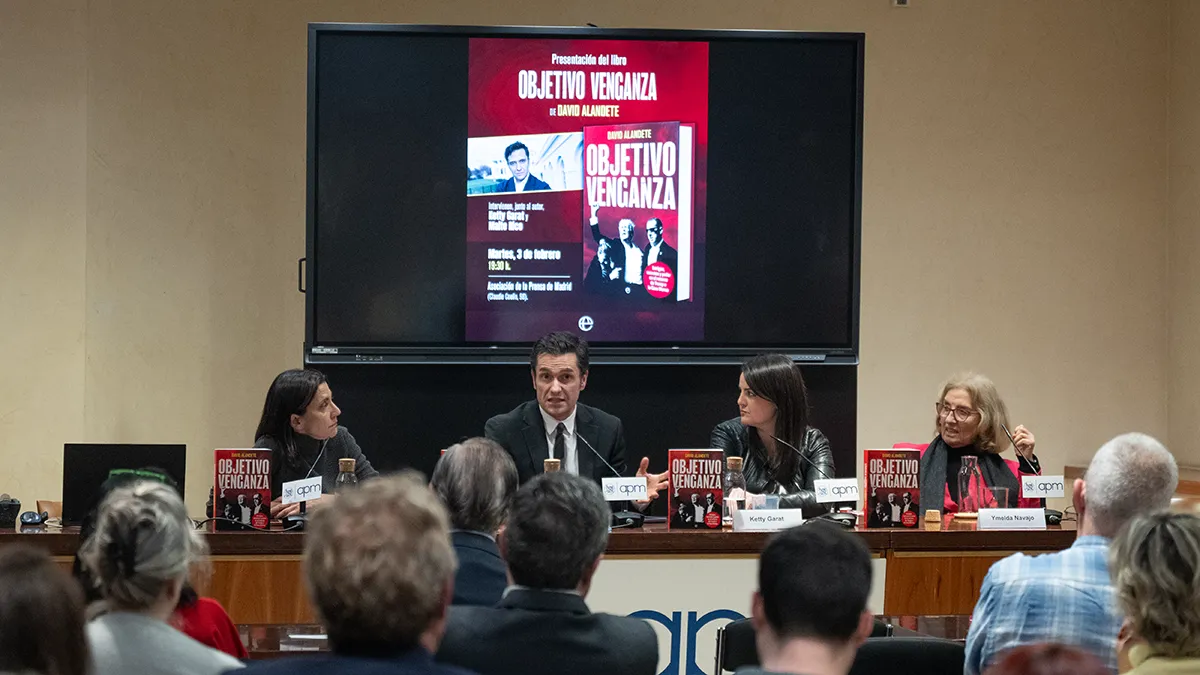
This book was born out of that clash, and is in itself a true lesson in journalism for those who still believe that it is not dead and that it is more necessary than ever. David Alandete recounts what he has seen in the White House during Trump's return, without embellishment, without dramatisation, without value judgements. He explains how a correspondent works in the United States, what happens behind the scenes at a press conference, how decisions affecting millions of people are made, how crises are managed in minutes, how power really works when no one should be watching, but someone – a journalist – is always there to see it.
At the end of the book's 427 pages, the reader is left with the conviction of having seen, through a correspondent who was in the Oval Office at key moments, how decisions were made, forged in advance of course, that changed the course of the United States and the world. In short, this is a chronicle that does not seek to convince, but rather to show how power works when it believes that no one can question it.
And a final note, which the author confided to us in his presentation of the book: 'In Europe, and especially in Spain, there is a marked tendency to think that the United States is on the brink of civil war, for example, now with the two citizens killed in Minneapolis and the corresponding demonstrations. I have heard and read this dozens of times. And it seems to me that, once again, such predictions will not come true, fortunately.' He says this while acknowledging the radical changes that Trump is pushing through in the life of the country, including the militarisation of cities such as Washington, ’where I cannot get used to seeing the police in charge of monitoring illegal immigration on the streets, thousands of kilometres from the border'.