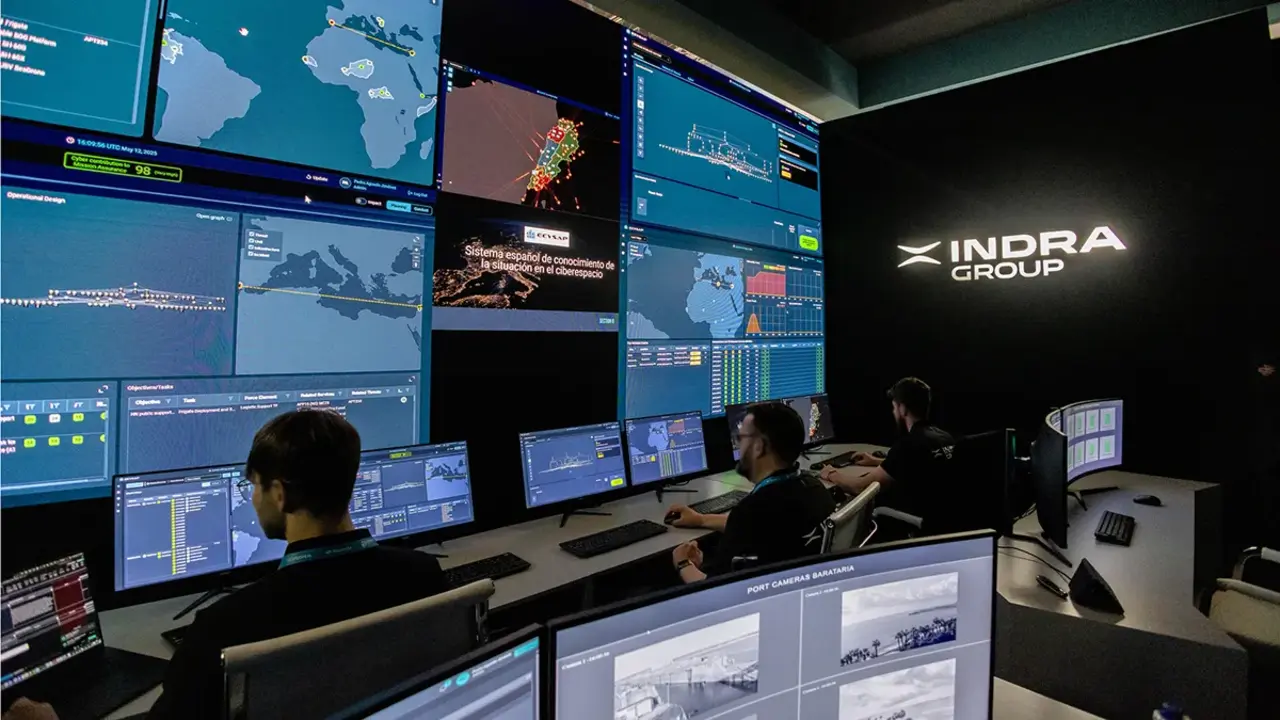
Indra Group and Fundación Universia promote projects that apply AI, robotics, communications and sensors

Indra Group and Fundación Universia, which is supported by Banco Santander in the development of its activities, have announced the results of the 9th Edition of the Call for Grants for Research Projects in Accessible Technologies, aimed at research groups, university centres and business schools affiliated with Spanish universities, which has established itself as a leading reference in this field.
This joint initiative aims to promote the development of innovative technologies that improve the quality of life of people with disabilities, facilitating their social and labour inclusion.
In this call, three projects in the general category have been awarded, each receiving a grant of 25,000 euros, and one project in the special category, which will receive an additional 10,000 euros to continue its development and facilitate its arrival on the market.
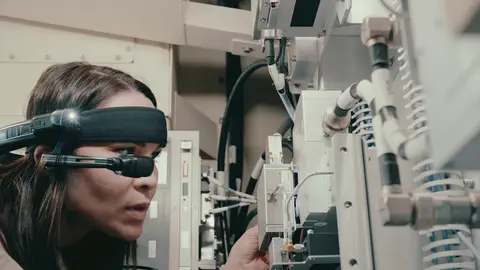
Winning projects in the general category:
- EmpowerTasks - University of Vigo
An inclusive digital platform designed to enable people with intellectual disabilities to access employment opportunities through digital microtasks and remote services. It combines accessible training with an artificial intelligence assistant that guides the user from learning to task execution.
- CONECTA - University of Granada
Development of an immersive communication system for people with severe mobility, head or eye control difficulties who cannot use conventional Augmentative and Alternative Communication (AAC) systems.
- LARA - Polytechnic University of Madrid
Design and construction of a mobile manipulator robot that increases the autonomy of wheelchair users in domestic or work environments.
Award-winning project in the special category:
- FastBaby 2.0 – University of Castilla-La Mancha
Project that promotes autonomy from the first months of life through accessible adaptations such as 3D devices, sensors and digital tools. Through adapted interactive games, it stimulates motor, cognitive and social development.
Promoting continuity and market transfer
For the second consecutive year, the special category seeks to give continuity to previously awarded projects, facilitating their evolution and potential arrival on the market. The aim is to ensure that the solutions developed are scalable, accessible and sustainable over time.
Among the active projects from previous calls, LSEAvatar2 from the University of La Rioja stands out, which is developing a mobile avatar that interprets Spanish Sign Language in real time. Work is currently underway to implement it in a mobile application.
Criteria for excellence and social impact
The key criteria for selecting projects have been:
- Technological excellence and degree of innovation.
- Technical and economic viability of development.
- Real transfer to the market of products or services that do not yet exist.
- Affordability or open source availability.
- Scalability and potential for internationalisation.
- Direct applicability in real work inclusion environments.
With more than 350 proposals submitted by more than 150 research groups since its inception, this call for proposals has established itself as the main platform for promoting accessible technology in Spanish universities.
More information about the call for proposals: http://www.tecnologiasaccesibles.com