Morocco: Africa's fourth largest importer of Chinese solar panels
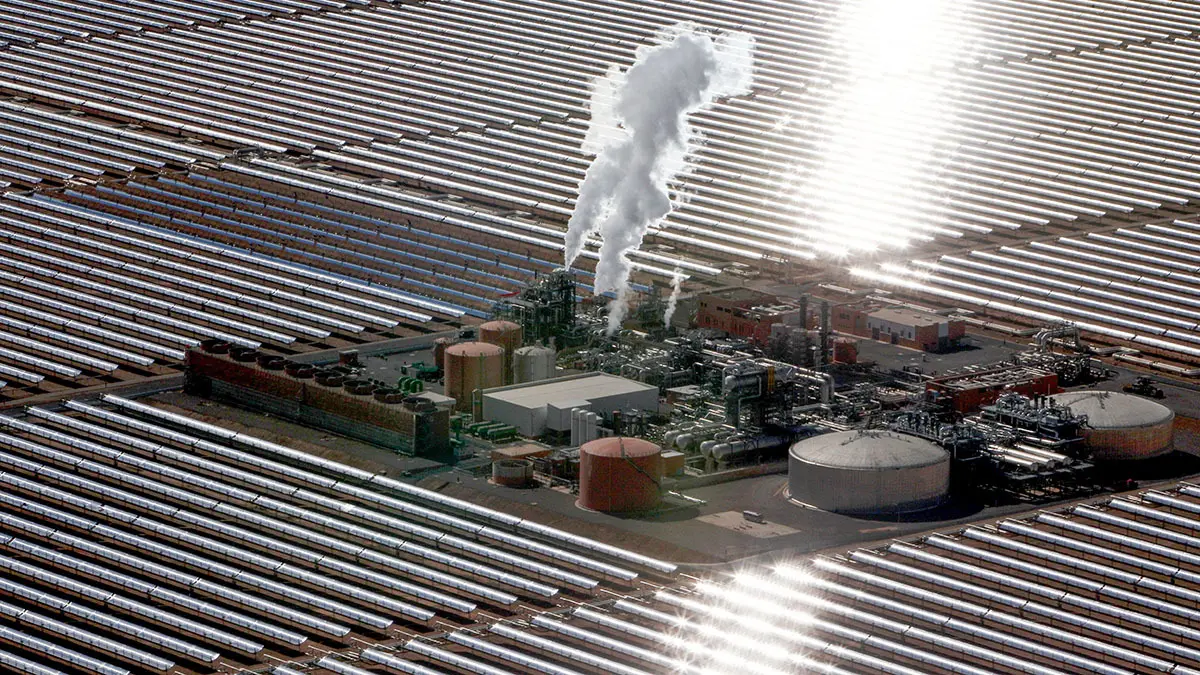
According to a report by the Ember research centre, Morocco ranks fourth in Africa in terms of imports of Chinese solar panels, which have reached 915 MW in one year. However, the Moroccan kingdom is not limiting itself to imports, but is also doubling its local solar panel production capacity in order to reach 1 GW per year by 2025.
This performance, highlighted by the report based on import figures between July 2024 and June 2025, places the Moroccan kingdom just behind Algeria (1,199 MW), Nigeria (1,721 MW) and South Africa, which remains at the top of the ranking with 3,784 MW over the same period.
Far from imports, the North African country has experienced a strategic advance that strengthens its energy resilience and technological export potential, thanks to the development of its industrial capacity, which has enabled it to reach a level of production similar to that of South Africa.
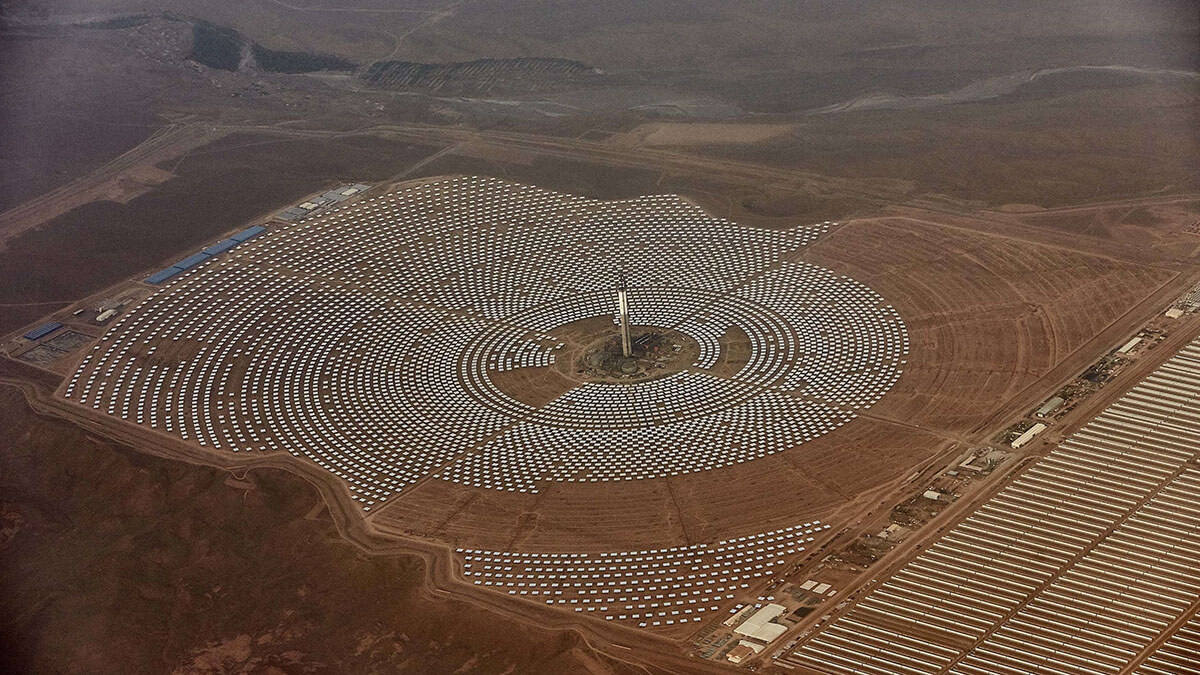
Morocco leads the African energy dynamic
Having been present at all COPs since 2016 as key events for energy transition and climate change, the Kingdom advocates for simplified access to climate finance for emerging countries. The aim is to contribute efficiently to the African energy dynamic and consolidate its position as a bridge between Europe and Africa.
In a global context characterised by climate pressure and increasing energy needs, Africa is stepping up its imports of solar panels, with a record increase of 187% in one year. This reality, where Chinese products reign supreme, has encouraged Morocco to double its local production capacity, reaffirming its industrial ambition on the African continent.
In this regard, the Ember report describes the period 2024-2025 as a real turning point for solar energy in Africa, as imports of solar panels from China increased by 60% in one year, from 9,379 MW to 15,032 MW.
This growth affects the entire continent, with 20 African countries breaking their import records during this period and 25 countries exceeding the symbolic threshold of 100 MW, compared to 15 in the previous year.

For its part, Morocco's figures as an African country confirm the Kingdom's continued progress in clean energy, aiming to increase the share of renewable energy in its electricity mix to more than 52% by 2030, in line with the royal guidelines of Mohammed VI.
Thanks to the projects it has launched in the southern provinces, Morocco is positioning itself as a regional energy platform serving Africa. In fact, the Alawite kingdom ranks alongside Nigeria, South Africa and Kenya among the top ten African importers.
Although smaller than its Nigerian or South African counterparts, Morocco is confirming its place on the continental energy stage, consolidating its commitment to a structured energy transition.
In this vein, Morocco is playing a key role in structuring a regional solar sector capable of reducing import dependency and promoting the emergence of a sustainable industrial fabric.
Morocco's ambition to achieve such productive autonomy is unique on the African continent, investing in the manufacture, design, assembly and installation of solar panels. Morocco's industrial positioning reinforces its credibility in international energy forums and consolidates its climate leadership strategy.
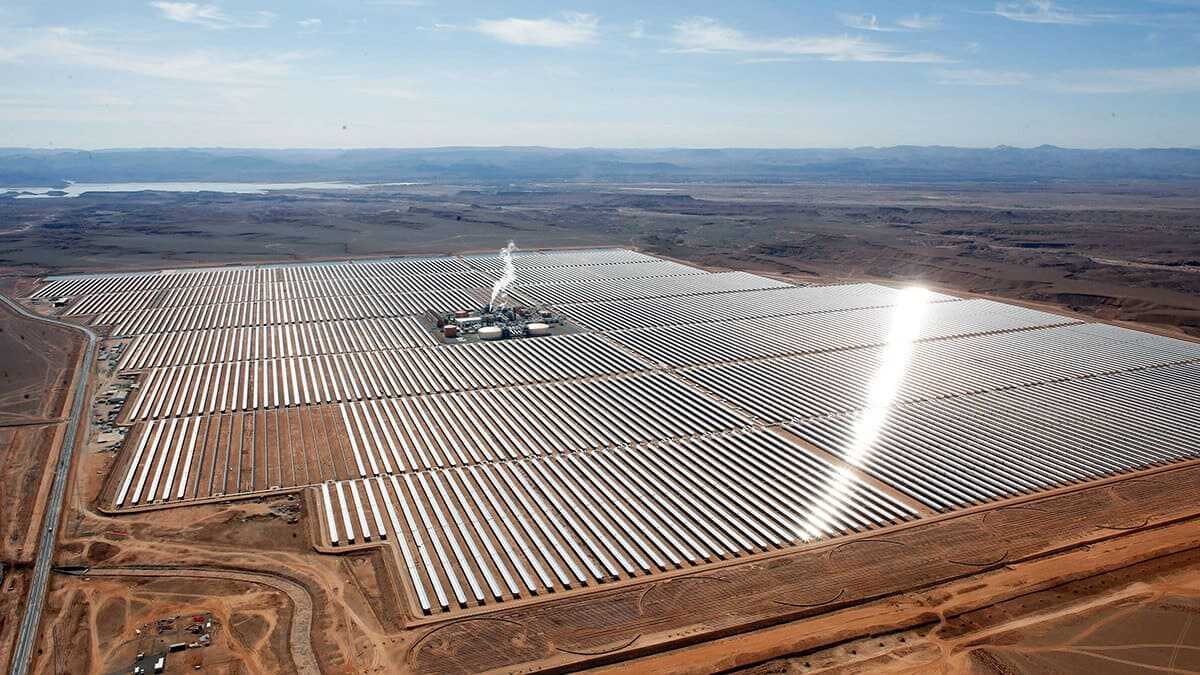
Renewables between ambition and reality
As part of its 2030 renewable energy strategy, Rabat has committed to reducing its greenhouse gas (GHG) emissions by 42% compared to 2010 levels. This ambition is part of its ambitious climate roadmap submitted to the United Nations.
However, 25% of the efforts in this roadmap are conditional on international financial support, i.e. for renewable energy, energy efficiency or green hydrogen development projects.
Supported by the European Bank for Reconstruction and Development (EBRD) and co-financed by the EIB, AFD and KfW, the MorSEFF (Morocco Sustainable Energy Financing Facility) programme, launched in 2015, is an example that has marked a significant change in Morocco's approach to climate finance.
With the aim of ensuring energy efficiency in the industrial and agri-food sectors, which account for 42% and 24% of the projects financed respectively, the programme mobilised €110 million to finance more than 900 companies, most of them small and medium-sized.
This initiative has been followed by other programmes seeking to develop clean energy projects to decarbonise key sectors of Moroccan industry. Faced with a shortage of such industrial initiatives in Africa, Morocco stands out for its strategic vision, both nationally and continentally, in terms of renewables, according to the same report.
Despite all these achievements and ambitions, which are reflected in the continent's solar dynamics, the Ember report points out that fossil fuel imports continue to dominate African energy trade. In 2023, the value of refined oil imports to the ten leading solar panel importing countries was up to 107 times higher than that of photovoltaic systems.
Morocco's progress does not negate its persistent heavy dependence on refined oil, with the value of oil imports exceeding that of solar panels by a factor of 80. The report has highlighted that Morocco shares this trend with most major African importers.
The inertia of existing infrastructure designed largely for fossil fuels, the slow pace of transition in the transport and agriculture sectors, and the initial cost of solar installations are factors that represent a real brake on progress, increasing the resistance of oil in key sectors in both Morocco and other African countries.
Ember's study highlights the considerable potential impact of these new capacities on the electrification of the continent, showing that more than 16 African countries could increase their production by more than 5% per year, thereby contributing to grid security and reducing power cuts in Africa.