Gustavo de Arístegui: Geopolitical Analysis 4 February


- Introduction
- United States shoots down Iranian drone near USS Lincoln
- US selectively eases oil embargo on Venezuela: energy pragmatism with political questions
- Spain pushes for ban on social media access for children under 16
- Violent death of Saif al-Islam Gaddafi in Libya: the definitive end of an era
- France intensifies legal pressure on X: regulatory offensive with political overtones
- Donald Trump and Gustavo Petro: from public insults to cautious thawing of relations
- US overcomes partial federal government shutdown
- Colombia-Venezuela-US energy and security triangulation.
- Thailand: February 2026 general elections and the return of old players to the political scene
- Editorial conclusion
Introduction
The last twenty-four hours have seen an unusual chain of events with the potential to reconfigure the balance of power in four simultaneous geopolitical theatres: the Middle East, Latin America, Western Europe and Southeast Asia. While Western newsrooms remain preoccupied with minor domestic debates or bedroom scandals, the global strategic chessboard is moving rapidly and without concession to sentimentality. From the military-diplomatic standoff between Washington and the jihadist oligarchy in Tehran to the selective—and not risk-free—reopening of the Venezuelan oil tap; from the Franco-Spanish regulatory offensive against big tech to the paternalistic temptation to turn social media into spaces supervised by progressive bureaucrats, we are witnessing an accelerated reconfiguration of the map of power that requires rigorous analysis, stripped of illusions and anchored in the reality of the facts.
This report offers a structured analysis of the main developments of recent hours, assesses their immediate strategic implications and outlines prospective scenarios that allow us to anticipate movements in an international context marked by the erosion of the post-war liberal order and the emergence of an unstable multipolar system, where revisionist actors — from Tehran to Caracas, via Beijing and Moscow — take advantage of every crack in the Atlantic architecture to expand their zones of influence and challenge the rules of the game that for decades guaranteed prosperity, security and freedom to a significant part of humanity.
United States shoots down Iranian drone near USS Lincoln
Facts
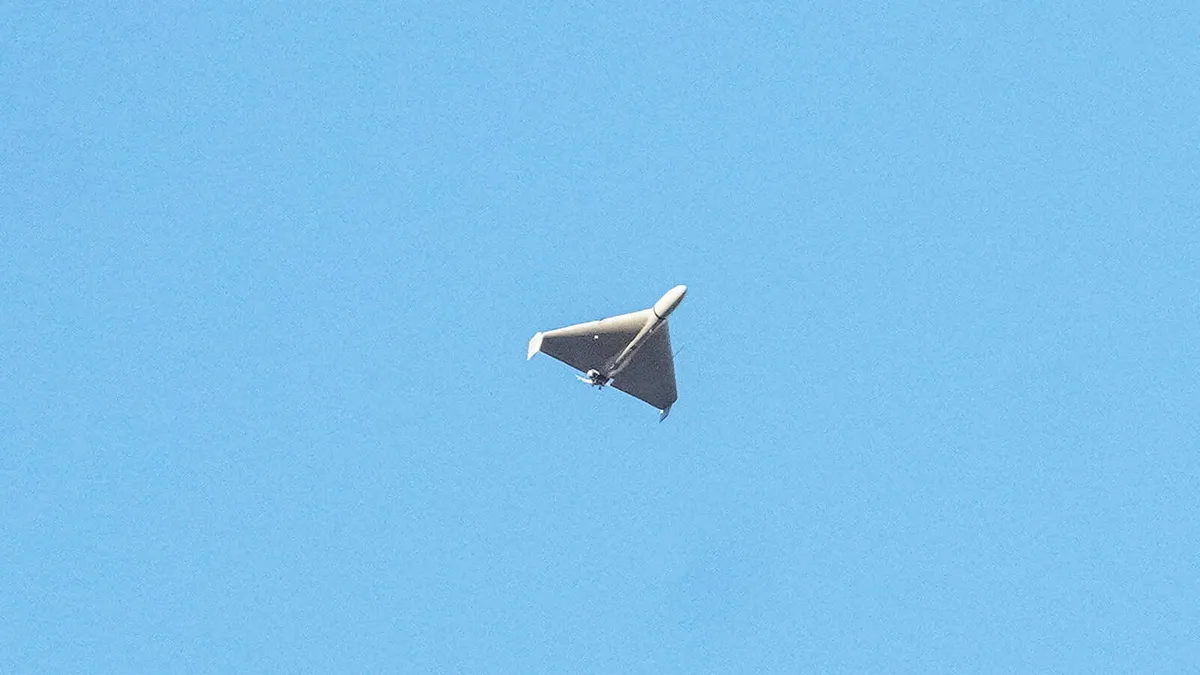
An F-35C fighter bomber aboard the US aircraft carrier USS Abraham Lincoln intercepted and shot down an Iranian-made Shahed-139 combat drone that was approaching the US combat group in an ‘aggressive and unsafe’ manner in international waters in the Arabian Sea, some 800 kilometres south of the Iranian coast. A few hours later, Islamic Revolutionary Guard Corps speedboats harassed a US-flagged and US-crewed oil tanker in the Strait of Hormuz, approaching within 100 metres of the vessel and verbally threatening to board it, in what constitutes a clear violation of international maritime law and a calculated provocation against commercial traffic in one of the most sensitive energy arteries on the planet.
Strategic implications
The Iranian regime, cornered by devastating economic sanctions, recurring internal protests and the growing isolation of its traditional partners, is once again resorting to its strategy of asymmetric warfare: using the Revolutionary Guard—that paramilitary tool of coercion and terrorism by proxy—to artificially raise the political and military cost of any negotiating approach by Washington, attempting to force concessions through the threat of regional destabilisation. The tactic is not new; it follows a pattern established since the 1980s: naval harassment, activation of Shiite militias in Iraq, Syria, Lebanon and Yemen, and revolutionary rhetoric to conceal what is essentially a mafia-theocratic regime whose survival depends on the permanent export of instability.
This sequence of provocations reinforces the perception—entirely justified—that Tehran only understands the language of credible deterrence and that any nuclear or regional agreement that is not accompanied by effective military pressure, sustained economic sanctions, and explicit support for internal Iranian dissent will end up being worthless. The firmness of the US response, proportional but unequivocal, sends a necessary signal: the Persian Gulf is not a zone free of consequences for those who seek to hold it hostage to their expansionist delusions.
Prospects and prospective scenarios
In the short term, an unstable balance can be expected: a reinforced US naval presence in the Gulf, accompanied by tough negotiations in which Washington—under the Trump presidency—will demand verifiable and intrusive limits on Iran's nuclear programme, the dismantling of proxy networks in the region and guarantees of non-interference in the internal affairs of its Arab neighbours. The main risk lies in the possibility that the most radical faction of the Revolutionary Guard, fearing marginalisation in any negotiation process, will force a major incident—a direct attack on a US warship or Saudi or Emirati oil infrastructure—to derail diplomatic contacts. A miscalculation in the Strait of Hormuz, through which approximately 20 per cent of the world's oil passes, would have immediate and devastating effects on global energy prices, maritime insurance risk premiums and the perception of security among Washington's Arab allies, which in turn would reinforce the voices in Tel Aviv calling for a pre-emptive military operation against Iranian nuclear facilities.
The optimal scenario—although unlikely given the nature of the regime—would involve a combination of sustained military pressure, reinforced economic sanctions, covert support for internal Iranian dissent, and a clear negotiating offer: gradual lifting of sanctions in exchange for exhaustive international verification of the nuclear programme, an end to support for terrorist militias, and respect for the sovereignty of neighbouring states. The pessimistic scenario—unfortunately more likely—is one of a phased escalation that ultimately forces the United States and Israel to intervene militarily before Tehran crosses the final nuclear threshold, with unpredictable regional consequences.
US selectively eases oil embargo on Venezuela: energy pragmatism with political questions
Facts
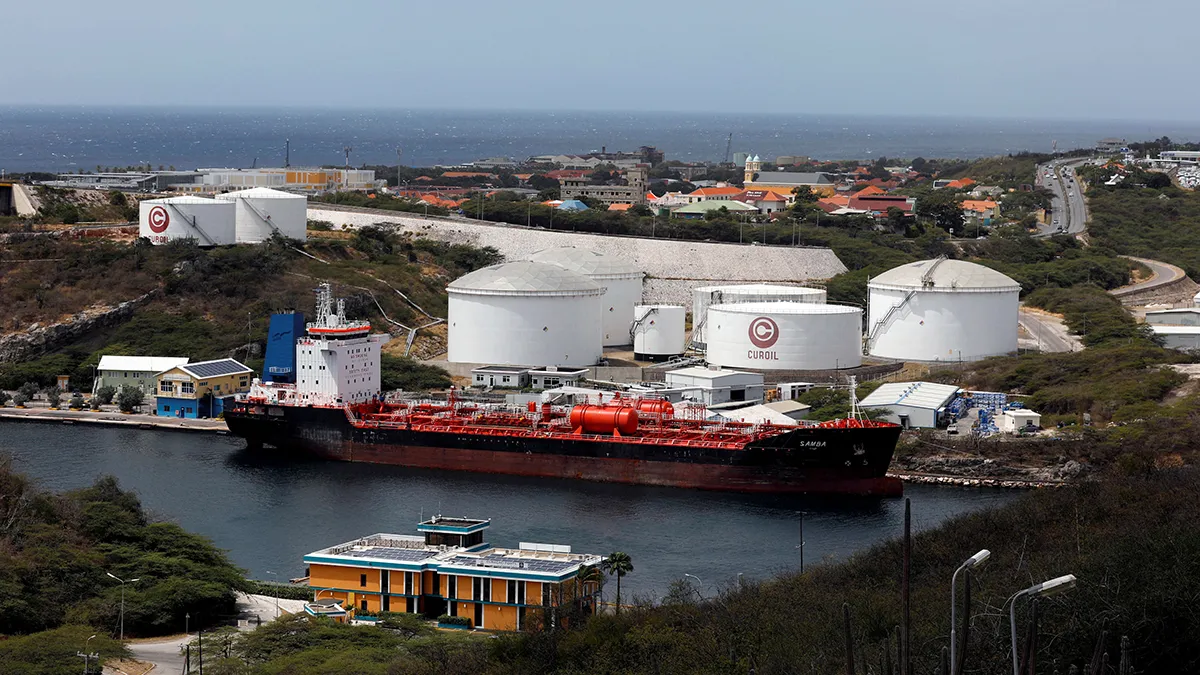
The US Treasury Department has issued a new specific licence authorising the export and sale to Venezuela of US-origin diluents, chemicals essential for blending and processing extra-heavy crude oil from the Orinoco Oil Belt and making it transportable and marketable on international markets. The measure, revealed by Reuters after consulting with Treasury officials, constitutes a selective and tactical modification of the sanctions regime imposed against the Chavista narco-regime, but in no way implies a general lifting of the oil embargo or political legitimisation of Nicolás Maduro's government.
Strategic implications
This seemingly technical decision actually involves one of the most delicate challenges of US foreign policy towards Latin America: how to manage the controlled collapse of the Venezuelan dictatorship without causing devastating collateral effects in terms of migration, regional security and the influence of revisionist powers such as Russia, China or Iran in the Western Hemisphere. Washington is seeking a complex balance: to ease pressures on the global energy market—especially after the strangulation of Russian supplies to Europe and persistent volatility in the Middle East—and to reduce dependence on problematic producers, while at the same time not handing over an unconditional economic lifeline to a criminal clique responsible for the greatest humanitarian and migration catastrophe in Latin America's recent history.
The Venezuelan paradox is brutal: the country with the world's largest proven oil reserves — more than 300 billion barrels — has seen its production plummet from more than 3 million barrels per day in the pre-Chávez era to levels barely exceeding 700,000 barrels per day, the victim of 20 years of institutionalised corruption, the deliberate destruction of PDVSA —once the crown jewel of Latin American oil companies — the expulsion of qualified technicians, a complete lack of infrastructure maintenance and, above all, an extractive-clientelist model that turned oil revenues into the spoils of a revolutionary oligarchy whose only project is to perpetuate itself in power through repression, total control of the state apparatus and industrial-scale drug trafficking.
The selective easing announced by Washington could become an economic turning point if—and only if — it is managed with strict traceability controls, supervision of financial flows and explicit conditions for tangible progress in terms of democratic transition, the release of political prisoners, electoral guarantees and, especially, the dismantling of the drug trafficking networks that link the Chavista leadership with Mexican and Colombian cartels. Without these requirements, we will simply be giving oxygen to a dying regime that will use it to buy military loyalties, repress the opposition more effectively, and prolong an agony that has already driven more than seven million Venezuelans out of the country.
Prospects and possible scenarios
If the flow of US diluents continues and is accompanied by rigorous technical supervision, Venezuelan production could experience a gradual rebound, introducing a relatively stabilising factor in the international heavy crude oil market, with positive effects on specialised refineries in the Gulf of Mexico and Asia. However, the big question is not technical but political: is Washington willing to make this lifeline conditional on verifiable steps towards a democratic transition, or will the purely pragmatic logic of securing energy supplies prevail, relegating human rights and rule of law considerations to the background?
The optimal scenario would involve a strategy of ‘smart sanctions’: selective and reversible easing, conditional on clear political milestones – internationally supervised free elections, the release of political prisoners, the dismantling of paramilitary groups, the extradition of drug traffickers linked to the regime – combined with sustained support for the Venezuelan democratic opposition and civil society, and a credible offer of economic reconstruction for a transitional government. The pessimistic scenario—unfortunately not out of the question—is that this measure will become the lifeline that allows Chavismo to rebuild its treasury, buy back military loyalties, reinforce its repressive apparatus, and prolong its presence in power indefinitely, while the international community watches helplessly as a narco-state consolidates in the heart of South America.
The key will be Washington's ability to maintain pressure on all fronts: diplomatic, judicial — through charges of crimes against humanity and drug trafficking —, economic and, if necessary, intelligence to support processes of internal fracture within the Venezuelan armed forces, the regime's last bastion. The battle for Venezuela has not been lost, but time is running out.
Spain pushes for ban on social media access for children under 16
Facts
Spanish Prime Minister Pedro Sánchez announced that his government intends to ban access to social media platforms for children under the age of sixteen, thus raising the current ‘digital age of majority’ set at fourteen by European regulations. The measure, which will have to be implemented through legislative amendment, plans to impose ‘effective and verifiable’ age verification systems on technology platforms under threat of disproportionate financial penalties, and to classify deliberate algorithmic manipulation to promote illegal or harmful content to minors as a criminal offence, following an increasingly interventionist line in the digital ecosystem that characterises many progressive European governments.
Strategic implications
The Spanish movement, which replicates and amplifies similar initiatives tried in Australia and France, combines a legitimate concern—the protection of minors from harmful content, cyberbullying, and commercial exploitation of their data—with a deeply paternalistic and illiberal view of freedom of expression, the ability of parents to educate their children, and the progressive autonomy of adolescents in their formation as informed citizens. The paradox is as obvious as it is disturbing: a fifteen-year-old is considered cognitively immature to manage an Instagram or TikTok account, but at the same time, sectors of the government itself and the parliamentary left are proposing to lower the voting age to sixteen, when their capacity for political judgement will remain vulnerable to the omnipresent propaganda, identity tribalism and emotional manipulation that characterise contemporary public debate.
Beyond the obvious contradictions, the government's proposal raises fundamental questions about the model of society we want to build: do we trust the ability of families, educators and young people themselves to navigate critically in a complex digital environment, or do we delegate to the state the role of supreme arbiter of what content is appropriate and what is not? Who decides which algorithm is ‘good’ and which is ‘bad’? What guarantees are there that these control mechanisms will not end up being politically exploited to censor legitimate but uncomfortable discourse?
Historical experience should make us wary of any proposal that gives the state discretionary power to regulate the flow of information and access to public debate, even when it is cloaked in the well-intentioned language of protecting the vulnerable. The censorial temptations of contemporary progressive regimes—from the European Digital Services Act to government- and supranational-sponsored ‘fact-checking’ proposals—respond to the same logic: replacing robust pluralism and competition of ideas with a tamed, sanitised public sphere, where dissent is confined to margins tolerable by a progressive orthodoxy that is increasingly intolerant of criticism.
Prospects and prospective scenarios
In the short term, we will witness a legal and political battle over the technical and constitutional viability of the proposed age verification systems, with the obvious risk of creating dangerous precedents in terms of mandatory identification of internet users, erosion of legitimate anonymity, and creation of sensitive databases vulnerable to leaks or misuse. Big tech companies will resist through legal appeals and public opinion campaigns, while governments will try to present themselves as defenders of children against ruthless corporations, in a classic exercise in populist demagoguery.
In the medium term, the real test will be political and cultural: if these initiatives are consolidated and exported to other European countries, we will be witnessing a profound mutation of the liberal social contract, where individual autonomy and parental responsibility are subordinated to a paternalistic logic of the state that infantilises citizens and reduces the space for effective freedom. The instrumentalisation of this agenda as a weapon of mass distraction from much more serious structural problems — persistent youth unemployment, the insolvency of the public pension system, the deterioration of educational quality, unsustainable public debt — will be further proof of the illiberal temptation that runs through supposedly liberal Europe, increasingly tempted by soft authoritarian solutions wrapped in progressive language.
The optimal scenario would be to reject this path and instead focus on rigorous digital education, empowering families and educators, optional technical tools for parental control and, above all, strengthening the criminal and civil liability of platforms when they fail to comply with their legal obligations regarding the protection of minors, without the need to turn the state into the nation's great digital guardian.

Violent death of Saif al-Islam Gaddafi in Libya: the definitive end of an era
Facts
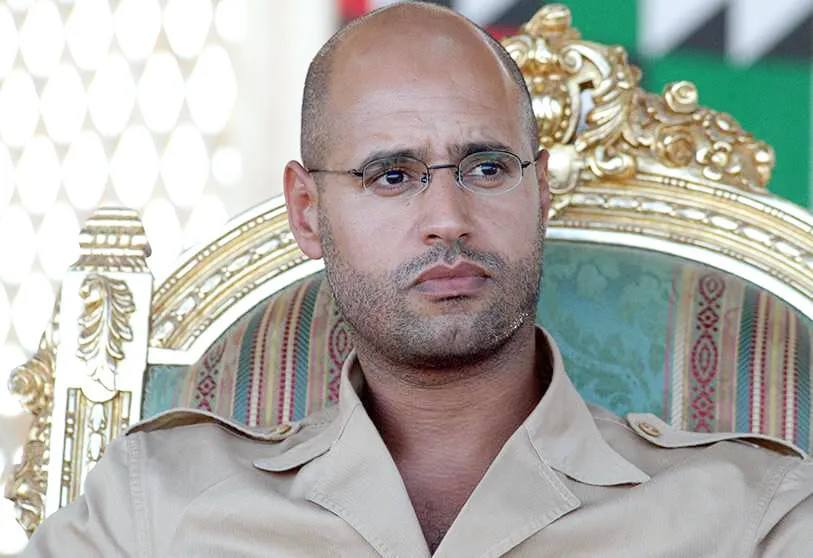
Libyan sources cited by international agencies confirmed the violent death of Saif al-Islam Gaddafi, son of dictator Muammar Gaddafi, who was shot dead at his residence at the age of 53. Saif, who for years was presented by naive Western observers as the ‘modernising’ and ‘pro-Western’ heir to his father's regime, alternated in his political career between periods of open rhetoric and direct participation in the brutal repression of the 2011 protests, which earned him an arrest warrant from the International Criminal Court for crimes against humanity. After years of captivity at the hands of Zintan militias and a failed presidential bid, his physical elimination definitively closes a chapter in Libya's turbulent post-Gaddafi history.
Strategic implications
The death of Saif al-Islam brutally underscores the extent to which Libya remains trapped, fifteen years after the uprising that overthrew his father, in a frozen civil war between armed militias, local warlords, rival tribes and foreign powers that exploit the conflict for their own strategic interests. The country has become a black hole of instability in the central Mediterranean, a privileged transit zone for networks trafficking people, weapons, drugs and jihadists who operate with impunity between the Sahel, Libya and the European coast.
The physical disappearance of Saif, the last symbolic figure of the old regime with a recognisable name and some residual political capital among sectors of the population nostalgic for the Gaddafi order, will not substantially alter the balance of military forces on the ground, but it does definitively close the door on any nostalgic solution of a ‘Gaddafi restoration’ that some sectors—especially in Cyrenaica and among certain tribes in the south—might have harboured as a fantasy of authoritarian stability in the face of the current militia chaos.
Prospects and prospective scenarios
In the short term, no significant changes are to be expected in the military balance between the Tripoli government—recognised by the United Nations but dependent on militias from Misrata and Turkish and Qatari support—and Marshal Haftar's forces in the east, backed by Egypt, the United Arab Emirates, Russia and, more ambiguously, France. The current Libyan status quo benefits too many actors—both local and external—for there to be any real incentive for a negotiated political solution involving disarmament, institutional unification and free elections.
The real challenge for Europe—and especially for Italy, Spain and the countries on NATO's southern flank—is to articulate a coherent strategy that stabilises Libya and reduces the flow of migrants exploited by mafias and revisionist powers such as Turkey. This requires overcoming intra-European divisions over which side to support, jointly pressing for a UN-backed political process leading to credible elections, and at the same time unambiguously combating the criminal and jihadist networks operating in the country. Without stabilisation in Libya, there will be no sustainable solution to the Mediterranean migration problem or effective control of jihadist terrorism, which spreads from there to the Sahel and Europe.
France intensifies legal pressure on X: regulatory offensive with political overtones
Facts
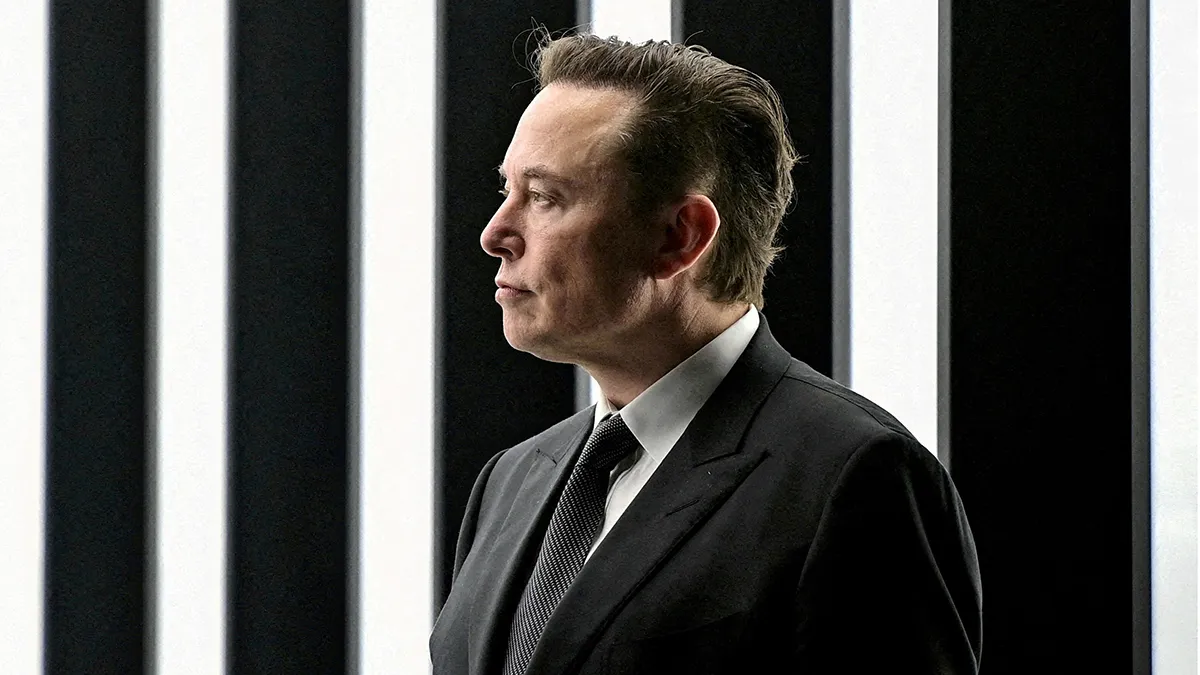
The Paris public prosecutor's office, through its specialised cybercrime unit, carried out a police search of the French headquarters of X (formerly Twitter) as part of an investigation formally opened in January 2025 into alleged algorithmic manipulation and illegal extraction of user data. Elon Musk, owner of the platform, has been formally summoned to testify before the French courts in April, while the investigation is being expanded to examine the company's artificial intelligence practices and its management of content considered sensitive by the French authorities. The police operation, coordinated with the European Commission under the Digital Services Act, places France at the forefront — and sometimes on the front line — of the European regulatory offensive against large US technology companies.
Strategic implications
Paris has become the spearhead of a European strategy which, under the umbrella of combating hate speech, disinformation and protecting personal data, runs the obvious risk of sliding towards a political instrumentalisation of digital regulation to bring to heel platforms perceived as hostile to the hegemonic progressive discourse. It is symptomatic, to say the least, that the judicial spotlight is focused with particular intensity on X, a platform that, since its acquisition by Musk, has relaxed the ideological censorship mechanisms that characterised the previous era, while other tech giants — Meta, Google, TikTok — that have been accused by former employees and independent researchers of systematic algorithmic manipulation as the core of their business model receive comparatively much more benevolent scrutiny.
The underlying question is not whether digital platforms should be subject to regulation—they should be—but who regulates them, how they are regulated, and with what guarantees of proportionality, transparency, and respect for the fundamental rights of freedom of expression and informational pluralism. The drift we are seeing in Europe is disturbing: under the pretext of protecting users, an architecture of state control over the flow of information is being built that gives unelected bureaucrats and progressive prosecutors discretionary power to determine what content is acceptable and what is not, which algorithms are legitimate and which should be intervened in, which platforms deserve protection and which should be harassed in court until they submit.
Prospects and prospective scenarios
A court case or an exemplary financial penalty against X — of the kind that Europe has imposed on Google or Apple for anti-competitive practices — could set a dangerous precedent for much more intrusive regulation of algorithms, with devastating effects on freedom of expression, plurality of information and the ability of dissenting voices to exercise their legitimate right to question progressive orthodoxies in the face of woke groupthink. The battle will be fought simultaneously in the courts, in public opinion and in European institutions: are we facing legitimate regulation aimed at protecting users' rights or a censorship temptation by states that cannot tolerate the existence of spaces for debate outside their control?
The optimal scenario would be to establish clear, transparent, non-discriminatory regulations that impose obligations of algorithmic transparency, data protection and rapid response to clearly illegal content —apology for terrorism, child pornography, direct incitement to violence— but which scrupulously respect pluralism and do not give officials discretionary power to censor legitimate opinions, however uncomfortable they may be for those in power. The pessimistic scenario—towards which we are sliding—is that of a digital Europe increasingly resembling China: a space for public debate that is tamed, monitored, sanitised, where dissent is confined to marginal platforms or directly criminalised.
Donald Trump and Gustavo Petro: from public insults to cautious thawing of relations
Facts
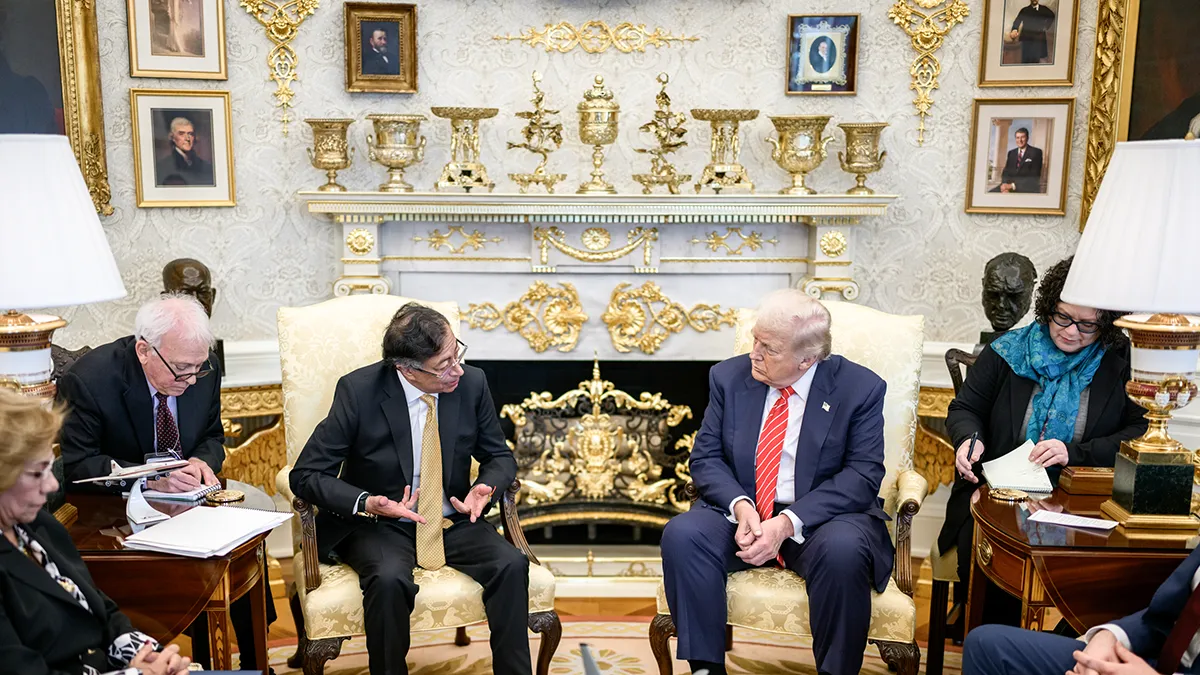
After weeks of mutual accusations and insults on social media and in public statements, Colombian President Gustavo Petro finally met with Donald Trump at the White House in what was their first face-to-face meeting since the Republican's return to the presidency. Petro told the press that the two leaders discussed strategic issues related to Venezuelan gas, cooperation in the fight against drugs and regional security, while Trump described the meeting as ‘very productive’ and announced progress in coordinating sanctions against drug trafficking with Colombia as a privileged partner. The contrast between the previous inflammatory rhetoric and the cordiality displayed before the cameras illustrates the extent to which realpolitik ultimately prevails over revolutionary gestures when vital interests are at stake.
Strategic implications
The photo in the White House, handshake included, reveals a clear trend across Latin America: the continent's radical left, from Petro to sectors close to the Bolivarian axis, is forced to modulate its rhetorical anti-Americanism and gestures of solidarity with dictatorships when the economic, financial and security costs of maintaining that stance become unsustainable. Washington under Trump has made it clear that it will not tolerate ambiguity: either Latin American governments cooperate effectively in the fight against drug trafficking, illegal migration and the isolation of the dictatorships of Cuba, Nicaragua and Venezuela, or they will pay a tangible price in the form of economic sanctions, withdrawal of multilateral financial support and diplomatic isolation.
For Petro, a former M-19 guerrilla turned radical left-wing politician, the meeting represents an exercise in forced realism: Colombia is vitally dependent on access to the US market, security cooperation and financial support from multilateral institutions where Washington has decisive influence. His left-wing electoral base can afford Bolivarian rhetoric and gestures of solidarity with Maduro, but Colombia's economic, military and business power brokers will not tolerate a break with the United States that compromises the country's stability. For Trump, the meeting is part of a broader strategy: to progressively isolate Maduro's regime through a pincer movement combining direct economic pressure—selective sanctions such as those on oil diluents—enhanced cooperation with Colombia and Brazil to cut off Chavismo's supply lines and money laundering, and covert support for internal divisions within the Venezuelan armed forces.
Prospects and possible scenarios
If Petro opts for pragmatic and sustained cooperation with Washington—purging drug trafficking networks, extraditing drug lords, forcibly eradicating illicit crops, sharing intelligence against armed groups—he will be able to preserve privileged access to markets, investments, and financial support, although he risks internal fractures in his far-left coalition and criticism from progressive sectors that will accuse him of betraying Bolivarian ideals. Trump, for his part, will use any tangible progress in the fight against drug trafficking as confirmation of the effectiveness of his maximum pressure approach, contrasting it with the failure of decades of soft policies of ‘constructive engagement’ with regimes that have exploited Western aid to perpetuate themselves in power.
The optimal scenario for the region would be to transform this tactical thaw into verifiable and sustained commitments that structurally weaken criminal networks, isolate dictatorships and reinforce an Atlantic democratic front in Latin America. The pessimistic scenario is that Petro will use the Washington photo as international cover while continuing to flirt internally with Bolivarian rhetoric and maintaining open channels with Caracas, in a double game that will end up eroding trust on both sides and wasting a historic opportunity to rebuild the strategic alliance between Colombia and the United States.
US overcomes partial federal government shutdown
Facts
Donald Trump signed legislation ending the partial federal government shutdown after the House of Representatives narrowly approved—217 votes in favour, 214 against—a funding measure that keeps several federal agencies operational until September and the Department of Homeland Security until 13 February. The bipartisan agreement allows talks to continue on restrictions imposed on immigration agents and other priority items on Trump's border agenda, thus avoiding a prolonged administrative paralysis that would have had devastating effects on essential services and the credibility of the Republican government.
Strategic implications
This outcome reinforces the image of a president willing to negotiate tactically without giving up his fundamental strategic priorities, especially on immigration control and border security, the major dividing lines in contemporary American politics. The Democratic far left—the self-styled ‘Squad’ of democratic socialists that dominates the progressive wing of the party—is caught between its maximalist pressure for the abolition of ICE, open borders and mass regularisation of undocumented immigrants, and the reality of an electorate that, even in traditionally Democratic districts, penalises budgetary chaos, insecurity and the feeling of loss of control over national borders.
The resolution of the stalemate, though temporary and fragile, shows that the American system of checks and balances, however imperfect, continues to function and force compromises between maximalist positions. The contrast with the institutional paralysis that characterises much of European democracy—minority governments, unable to pass budgets, held hostage by minority partners who blackmail them with the threat of withdrawing support—is striking.
Outlook and prospective scenarios
In the short term, the political focus is shifting from administrative paralysis to the substantive content of immigration reform and the financing of border security. Trump will try to capitalise on the agreement to advance his agenda of building border infrastructure, strengthening technological surveillance capabilities, increasing ICE personnel and tightening asylum and residency conditions for undocumented immigrants. Democrats will resist with a mixed strategy of parliamentary obstruction, legal appeals and mobilisation of progressive organisations and immigration lobbies.
The optimal scenario for US governance would be a broad bipartisan agreement that combines effective border control, legal channels for orderly immigration, and selective regularisation of certain groups of undocumented immigrants with proven roots in the country, thus stripping the debate of its current toxicity. Unfortunately, the most likely scenario is a succession of short-term tactical agreements that avoid blockages but do not solve the underlying problem.
If Trump manages to combine fiscal discipline, effective border protection, sustained economic growth and reduced inflation, he will consolidate a Reagan-esque narrative of strength and effectiveness in the face of the identity, budgetary and moral chaos of the progressive left. If he fails, the Democratic far left will regain momentum to impose its agenda of open borders, an expansive welfare state and increasingly radical identity politics.

Colombia-Venezuela-US energy and security triangulation.
Facts
The new US licence to export diluents to Venezuela is being discussed and negotiated in parallel with the Trump-Petro dialogue on Venezuelan gas, anti-drug cooperation and regional security. Caracas desperately needs diluents to monetise its extra-heavy crude oil, while Bogotá is trying to position itself as a relevant energy player and Washington's privileged strategic partner in security and the fight against drug trafficking, in a balancing act where each player seeks to maximise its benefits without being associated with the more toxic aspects of the others.
Strategic implications
A complex geopolitical triangulation is emerging: the US administers sanctions with tactical flexibility but without relinquishing strategic pressure; Venezuela, under the control of a narco-criminal oligarchy disguised as a Bolivarian revolution, seeks financial oxygen for an exhausted regime that only remains standing through repression, corruption and support from Russia, China, Iran and Cuba; and Petro aspires to capitalise on his geographical proximity to the ‘fallen giant’ of Venezuela without becoming politically tainted by the humanitarian and moral catastrophe that Chavismo represents for any democratic left-wing project in Latin America.
The risk is that the additional resources that Maduro's regime obtains through the export of crude oil in exchange for US diluents will end up feeding the very same networks of corruption, repression, drug trafficking and regional destabilisation that the sanctions were intended to strangle, if they are not accompanied by rigorous oversight mechanisms and sustained pressure on all fronts — diplomatic, judicial, financial and even intelligence.
Prospects and prospective scenarios
The window for an agreed transition in Venezuela remains technically ajar, but it is narrowing progressively as the regime manages to reconstitute resources, rebuild alliances with revisionist powers and neutralise any attempt at popular mobilisation through repression. An intelligent design of sanctions—tactical flexibility on secondary elements, strategic demands on fundamental issues—will be decisive in preventing an energy opportunity from becoming the ultimate lifeline for a state mafia that has turned Venezuela into the main source of instability in the Western Hemisphere.
The optimal scenario would be to explicitly condition any easing of sanctions on tangible and verifiable progress: free elections supervised by independent international observers, the release of all political prisoners, the dismantling of paramilitary groups and Chavista collectives, the extradition of drug traffickers linked to the regime, and guarantees of judicial independence and media pluralism. Without these minimum requirements, we will simply be handing over resources to a criminal dictatorship without getting anything in return except the illusion of energy pragmatism.
Thailand: February 2026 general elections and the return of old players to the political scene
Facts
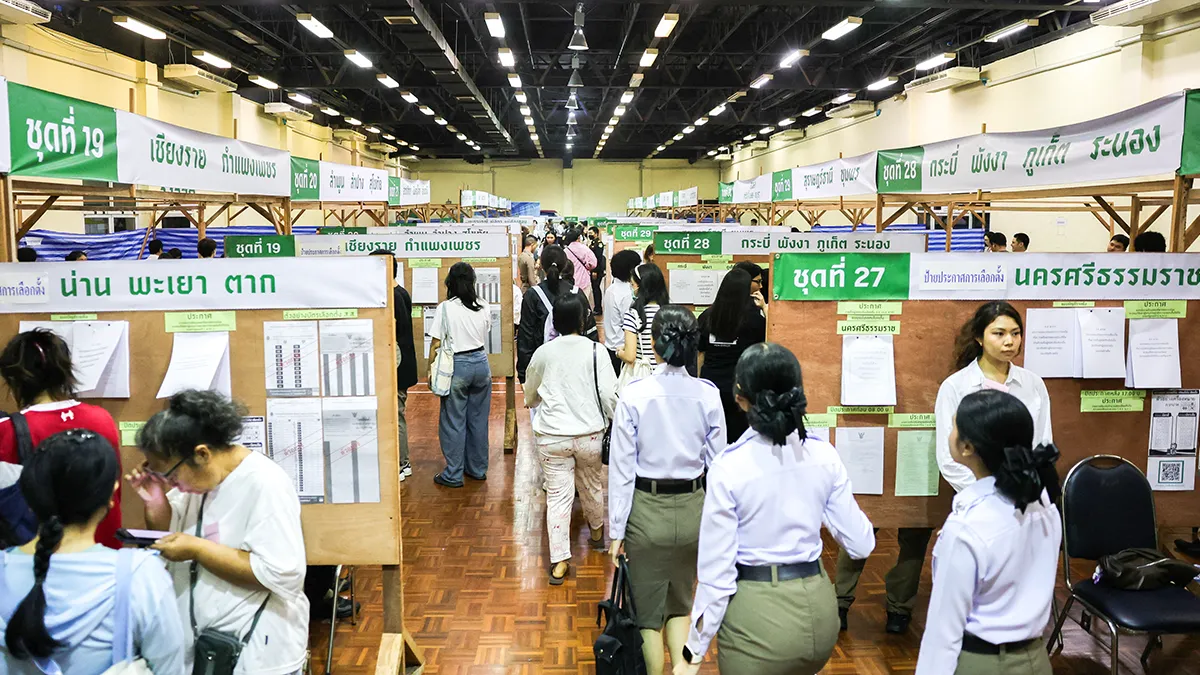
Various analyses and polls place the Thai general elections scheduled for February 2026 as a three-way contest between the progressive People's Party —heir to the dissolved Move Forward Party—, the Pheu Thai party —historically linked to the Shinawatra family— and Bhumjaithai —a centrist party with a strong rural presence. Former Prime Minister Abhisit Vejjajiva, a veteran leader of the Democrat Party, has confirmed his return to the political front line to strengthen his party and try to regain ground in a polarised political landscape. Polls place the leader of the People's Party as the favourite.
Strategic implications
Thailand, a key player in the geopolitical balance of Southeast Asia due to its geographical position, its economic weight and its traditional role as a historic ally of the US in the region, is returning to a scenario of intense political competition between progressive reformist forces, populist parties with a clientelist vocation and old elites structurally connected to the military establishment that has dominated Thai political life for decades through a succession of coups and tutelary constitutions.
The election result will affect Bangkok's ability to navigate between the growing pressure of increasingly aggressive Chinese expansionism in the South China Sea and the Mekong, and its strategic anchoring with the US and its regional allies – Japan, Australia, India – within the framework of the Indo-Pacific mechanism designed to contain Beijing's hegemonic ambitions. It will also have an impact on the stability of the borders with Cambodia and Myanmar.
Outlook and prospective scenarios
A solid victory for the liberal-progressive bloc represented by the People's Party could drive forward institutional reforms that have been pending for years — modifying the political role of the monarchy, reducing military tutelage, strengthening the rule of law — as well as a relative shift towards positions more aligned with Western liberal democracy, although always under the threatening shadow of the military, which retains veto power and has historically shown that it does not tolerate governments that question its privileges or erode the symbolic role of the monarchy.
Scenarios of hybrid coalitions or prolonged parliamentary deadlocks would maintain the classic Thai pendulum between limited democratic openness and soft authoritarian tutelage, with a negative impact on foreign investment, economic growth and Bangkok's ability to actively participate in the regional security architecture. The pessimistic scenario—which cannot be ruled out given recent history—would be a new military intervention if the election results produce a government perceived as a threat to the interests of the traditional power group, which would exacerbate the political divide, drive away investment and weaken Thailand's strategic position at a time of rapid reconfiguration of the Asian regional order.
Editorial conclusion
What links much of what is reported in this report is the same underlying impulse: the attempt by various state and non-state actors to gain strategic ground where they encounter the least resistance, whether in the straits of the Persian Gulf, the oil fields of the Orinoco Belt, the courtrooms of Paris, the algorithmic servers of Silicon Valley or the screens of our teenagers. While Tehran's oligarchic-jihadist regime plays on the edge of the abyss with combat drones and speedboats, deliberately jeopardising global energy trade and stability in the Middle East, Western democracies are flirting dangerously with their own illiberal demons, using the protection of minors, the fight against hate speech, or the defence of privacy as alibis for increasingly suffocating digital interventionism that threatens fundamental freedoms.
Faced with this double threat—the aggressive and destabilising expansionism of autocracies and theocracies on the one hand, and the controlling temptation of certain progressive Western elites tempted by paternalistic guardianship, on the other—the response cannot be either the cynical resignation of those who consider the decline of the West inevitable or the nationalist retreat of those who believe that the problem can be solved by closing borders and renouncing the global defence of our values. The answer can only be an unapologetic reaffirmation of liberal democracy, the rule of law, the market economy and freedom of expression as the indispensable core of the Atlantic project.
This means firmly defending maritime security in the Persian Gulf through a deterrent naval presence and the capacity to respond immediately to provocations; supporting, without ambiguity or double standards, those who fight narco-terrorism and dictatorships in Latin America, making any tactical flexibility conditional on verifiable progress in terms of democracy and the rule of law; and vigilantly ensuring that the self-proclaimed guardians of digital morality in Europe and the United States do not end up turning the public sphere into a theme park of woke groupthink, where dissent is criminalised and pluralistic debate is stifled under successive layers of suffocating regulation.
The fundamental challenge, in short, is to maintain moral and intellectual compass amid media noise and tactical urgencies: to support a tough stance against drug lords, ayatollahs, autocrats and warlords who threaten peace and prosperity, without surrendering the soul of our democracies in exchange for algorithms supervised by bureaucrats, selective censorship justified in the name of the common good, or condescending paternalism that treats citizens as underage subjects incapable of discerning for themselves between truth and falsehood, between legitimate opinion and hate speech. This is the cultural, political and geopolitical battle that, silently but with far-reaching consequences, has also been raging over the last twenty-four hours, while many look the other way.