Gustavo de Arístegui: Geopolitical Analysis 17 December

- Introduction
- Total naval blockade of Venezuelan oil tankers and terrorist designation
- Background of the Bondi terrorist and rise of anti-Semitism
- US pressure on Pakistan for a stabilisation force in Gaza
- Russian advance in Ukraine and International War Crimes Commission
- Expansion of Trump's immigration ban
- Slowdown in returns on investment in AI
- Announced withdrawal of M23 from Uvira (Congo) after pressure from the US
- Progress on security guarantees for Ukraine
- US economic data after the government shutdown
- European acceleration towards the EU-Mercosur agreement
- Media Rack
- Editorial comment
Introduction
The day is clearly structured around four themes: Trump's maximum pressure campaign against the Chavista narco-dictatorship, the jihadist and anti-Semitic terrorism that strikes in Bondi under the distracted gaze of the authorities, the strategic standoff in Ukraine — where Russia is advancing slowly while Europe tries out repair mechanisms — and the combination of hard realism and economic calculation in Washington's domestic and foreign policy, from Gaza to the immigration ban and the AI economy.
In the background, but no less important, the tactical withdrawal of the M23 in Congo and the European push to close the EU-Mercosur agreement complete a picture in which Atlanticism is gambling its credibility against the axis of autocracies and state mafias.
16 December 2025 confirms that the White House has decided to abandon its half-measures with Caracas: by formally designating the Maduro regime as a ‘foreign terrorist organisation’ and ordering a naval blockade of sanctioned oil tankers, Trump places Chavismo in the same category as the friends and allies of Hezbollah jihadist terrorists and drug cartels that the Chavista regime has been sheltering for years. At the same time, the Bondi massacre holds up a mirror to democracies that tolerate the rise of anti-Semitism and Islamist radicalisation with disturbing resignation, while in Ukraine a ‘slow but steady’ Russian advance is consolidating and Europe is launching a war damage commission that aims, at least, to make those who destroy pay.
In Gaza, Trump's plan for a stabilisation force with troops from Muslim countries – and Pakistan in particular – reveals an intelligent but risky realpolitik gamble, which carefully measures the capacity of Tehran and its proxies to sabotage any security architecture they do not control. All this is taking place in a global economy where generative AI promises revolutions that corporate balance sheets have yet to see, while the EU accelerates its agreement with Mercosur and the struggle for regulatory and commercial leadership against China and the United States is reconfigured.
Total naval blockade of Venezuelan oil tankers and terrorist designation
Facts
Trump has ordered a ‘total and complete blockade’ of all sanctioned oil tankers entering or leaving Venezuela, instructing the US Navy and Coast Guard to intercept, search and, if necessary, seize vessels that violate the sanctions. Simultaneously, the US government has designated the ‘Venezuelan regime’ as a Foreign Terrorist Organisation (FTO), arguing its involvement in drug trafficking, terrorism, human trafficking and support for armed groups in the region, with an immediate impact on the prohibition of financial and commercial transactions with entities linked to Caracas. Markets have reacted with a rise of nearly 1% in crude oil prices, in anticipation of a further contraction in Venezuelan exports already hit by years of sanctions, while Maduro denounces a ‘grotesque act of war’ and Democratic congressmen accuse Trump of exceeding his powers.
Implications
From a legal and moral standpoint, the measure is impeccable: if the Cartel of the Suns has been designated a terrorist organisation, there is no possible consistency in keeping intact the government of which its generals and leaders are part, who have turned Venezuela into a failed narco-state at the service of a mafia elite.
The naval blockade, however, enters a delicate area where maritime incidents—a miscalculation, a captain defying orders, a Russian or Iranian escort playing at provocation—could quickly escalate if not managed with transparent rules of engagement and maximum diplomatic coordination with Caribbean and NATO allies.
Politically, Trump's change of course aims to suffocate PDVSA's finances and, by extension, Chavismo's ability to finance internal clienteles, armed groups and ideological campaigns of the extreme left in the region and afterlife. It is fully in line with an editorial stance that demands we stop treating Caracas as an ‘authoritarian regime’ and start calling it what it is: a huge criminal organisation with pseudo-revolutionary trappings, whose collapse should not be lamented but managed to minimise the humanitarian cost to a kidnapped people.

Background of the Bondi terrorist and rise of anti-Semitism
Facts
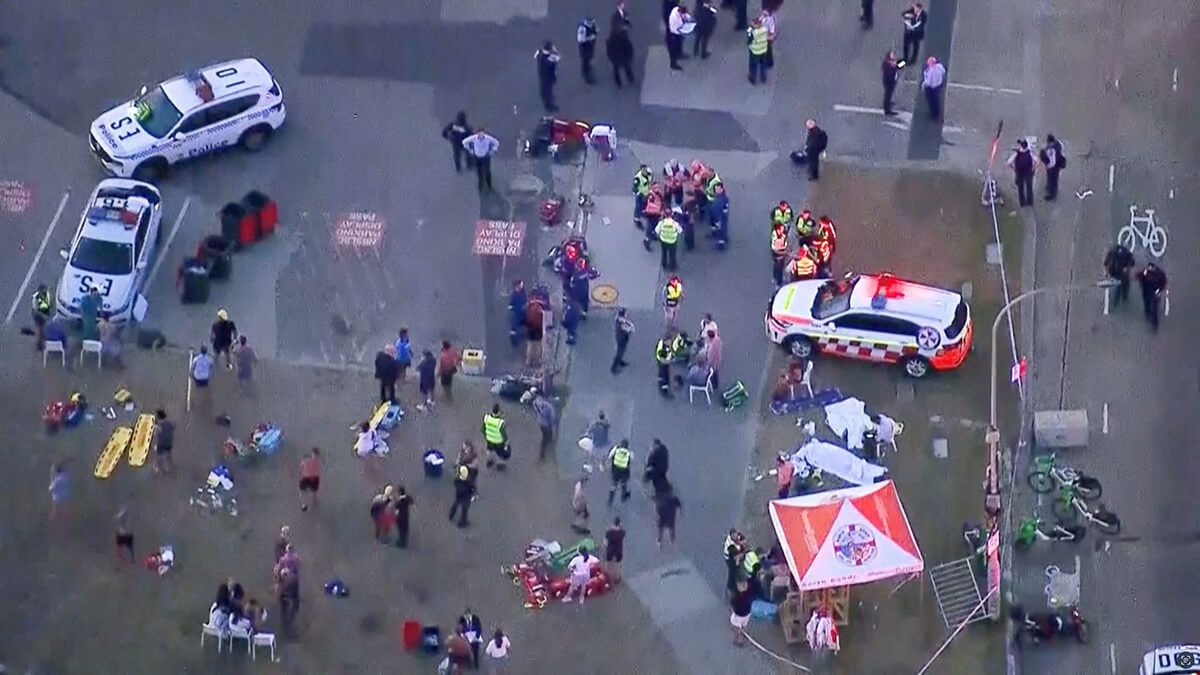
Investigations into the attack on the Jewish Hanukkah festival in Bondi Beach, Sydney, reveal that the main suspect, 24-year-old Naveed Akram, was a teenage preacher linked since 2019 to street Islamic ‘dawah’ groups and was briefly on the radar of Australian intelligence services for possible sympathies with the Islamic State, although he was then deemed not to pose a threat. Akram and his father Sajid, who was killed in the confrontation with the police, had recently travelled to the Philippines, where jihadist affiliates operate, and homemade flags and propaganda material related to daesh were found during a search of their home. The authorities believe that the motive was explicitly Islamist and anti-Semitic. At the same time, media outlets such as the BBC are reporting an exponential increase in anti-Semitic incidents in Australia, without the authorities deploying a robust security presence for the Hanukkah event.
Implications
This case starkly illustrates a pattern that is repeated in too many democracies: individuals known to intelligence services as potentially problematic, but classified as ‘low priority,’ end up bringing about the worst-case scenario, while the bureaucracy hides behind protocols. The fact that a Jewish event, at a time of rising anti-Semitic threats, did not have enhanced protection reveals a mixture of political frivolity and fear of being accused of ‘Islamophobia’ for strengthening surveillance in environments susceptible to radicalisation, confirming the extent to which wokism has anaesthetised the basic instinct for self-protection in open societies.
For an editorial line that combats anti-Semitism, racism and Islamophobia alike, the path is clear: zero tolerance for jihadism and its apologists — whether they wrap themselves in black flags or pseudo-progressive rhetoric — but firm defence of the full citizenship of Muslims who reject barbarism. The lesson from Bondi is that speeches against hatred are not enough; real investment in intelligence and a crystal-clear political message are needed: those who incite, finance or turn a blind eye to terrorism will pay a price.
US pressure on Pakistan for a stabilisation force in Gaza
Facts
The head of the Pakistani Army, General Asim Munir, is at the centre of intense diplomatic efforts to get Pakistan to contribute troops to a future multinational stabilisation force in Gaza, composed mainly of Muslim-majority countries, as part of a 20-point plan promoted by Trump for the “day after” Hamas. A high-level visit to Washington is being considered to discuss rules of engagement, political command and funding, while Islamabad weighs the domestic cost of participating in a mission perceived by Islamist sectors as ‘working for Israel’. Trump has publicly stated that he has the ‘100%’ support of Munir and Prime Minister Sharif.
Implications
From a realpolitik perspective, the idea that Muslim armies—rather than Western troops—should disarm Hamas and ensure security in Gaza is a smart move that defuses much of the propaganda narrative of Tehran and its proxies about a ‘crusader occupation.’
But Pakistan is not a neutral actor: it is a nuclear power with a strong internal Islamist drive, which makes its possible involvement a double-edged sword. Success in this endeavour would be a strategic blow to Tehran's export of theocratic terrorism and would bolster Trump's credibility. But failure, resulting in mass protests in Lahore or Karachi, could embolden extremists and destabilise a key ally.

Russian advance in Ukraine and International War Crimes Commission
Facts
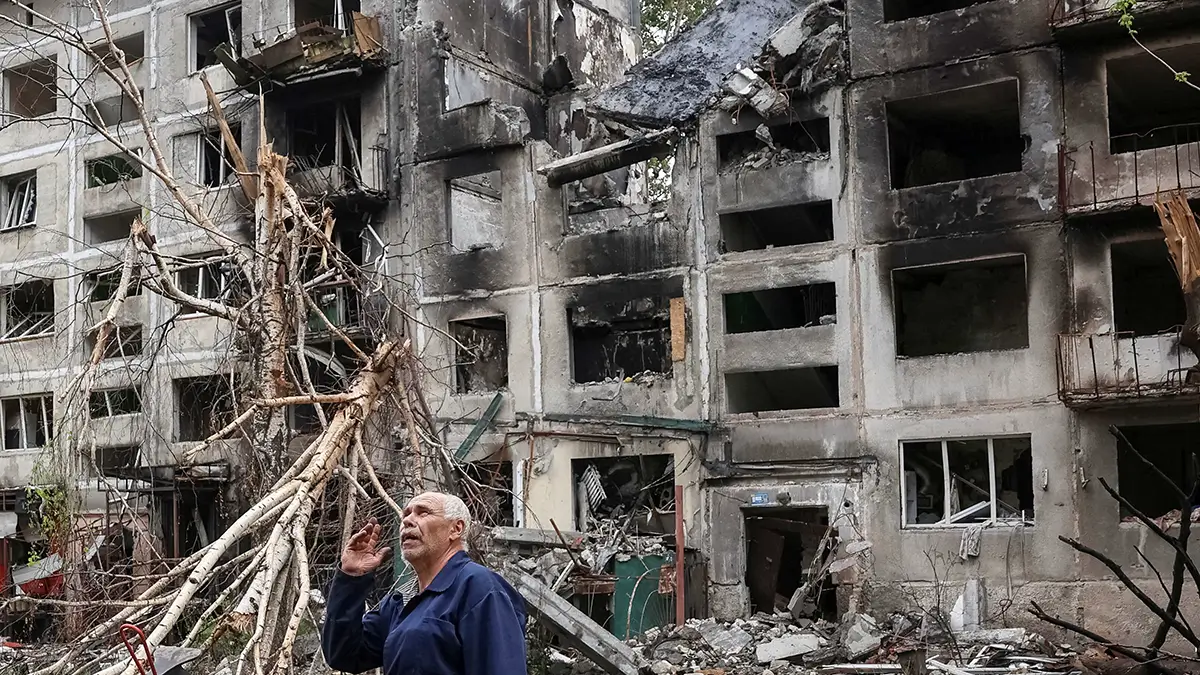
Analysis confirms that the Ukrainian front is experiencing a ‘slow but steady advance’ by Russian forces, which are consolidating positions in the east through a war of attrition. At the same time, in The Hague, more than fifty countries and the European Union have launched the International Claims Commission for Ukraine, which will assess and decide on compensation for war damage, estimated at hundreds of billions of dollars. The commission is based on a damage register that already has more than 86,000 claims, and the use of frozen Russian assets to finance part of the reparations is being discussed.
Implications
The launch of this commission is an important gesture: it sends the message that there will be no impunity for the aggressor. However, without Russia at the table or a clear mechanism for enforcing resolutions after the assets already frozen, there is a risk that the process will become a legal liturgy parallel to a de facto peace that enshrines Russian territorial gains. Our position demands clarity: no agreement that formally or tacitly recognises the annexation of Ukrainian territories can be acceptable, because it would open the door for any power to perceive that force remains a viable means of redrawing borders.
Expansion of Trump's immigration ban
Facts
The Trump administration has extended its immigration and travel ban to seven additional countries, including Syria, South Sudan, Burkina Faso, Mali and Niger, and has banned individuals with Palestinian Authority documents from entering the country. The measures affect about 20% of the world's nations with some form of restriction, justified by severe deficiencies in the exchange of security information and terrorist risks.
Implications
In a context of persistent jihadist terrorism and failed states, the preference for caution in admitting people from high-risk countries is defensible and compatible with national security. The specific ban on Palestinian Authority documents aligns immigration policy with the security reality in the Middle East, delegitimising entities that do not control terrorism in their territories. From a liberal centre-right position, firm border control is supported, provided that it does not lead to isolationism that erodes trade or indiscriminately punishes global talent.

Slowdown in returns on investment in AI
Facts
A Reuters report highlights the growing unease among executives who are postponing massive investments in generative AI because current tools fail at basic tasks and are difficult to integrate. Only 5-15% of companies report clear gains attributable to generative AI, while giants such as OpenAI are pivoting towards bespoke solutions for large enterprise customers, moving away from the promise of an immediate universal revolution.
Implications
This ‘disillusionment curve’ is reminiscent of the dot-com bubble: the technology is real, but the messianic narrative clashes with operational reality. For the West, the priority should not be to demonise AI for its ‘woke’ biases, but to invest in infrastructure and regulatory frameworks that allow it to compete with Chinese dirigisme without stifling innovation. The real risk is not that AI will destroy liberal democracy, but that the lack of ambition of democracies will allow Beijing to monopolise the technology value chain.
Announced withdrawal of M23 from Uvira (Congo) after pressure from the US
Facts
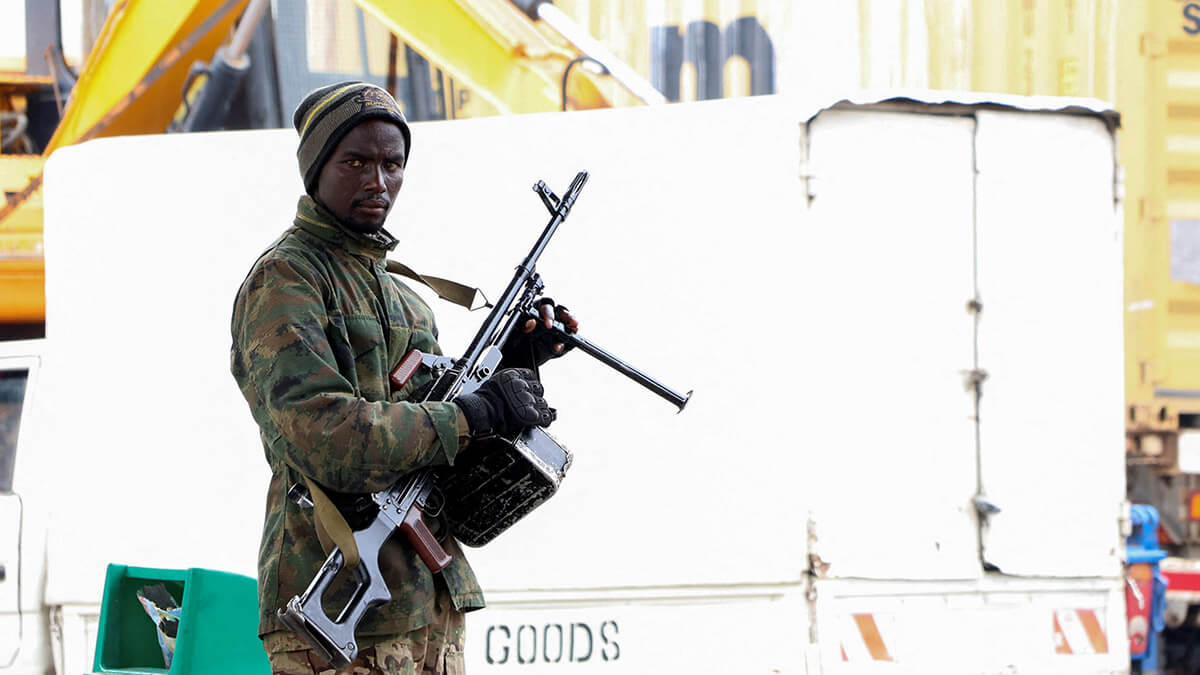
The Rwandan-backed M23 rebel group has announced that it will withdraw from the city of Uvira in eastern DRC following an express request from the US government. The rebels are presenting the withdrawal as a ‘unilateral confidence-building gesture’, although they are demanding the demilitarisation of the area.
Implications
The fact that the withdrawal is a direct response to pressure from Washington shows that the Trump administration is willing to use its diplomatic weight in Africa to prevent a regional escalation involving Burundi and Rwanda. From a liberal-conservative perspective, curbing chaos in the Great Lakes region of Africa is an investment in stability: every forgotten war is a breeding ground for jihadism and organised crime that ultimately impacts the West.
Progress on security guarantees for Ukraine
Facts
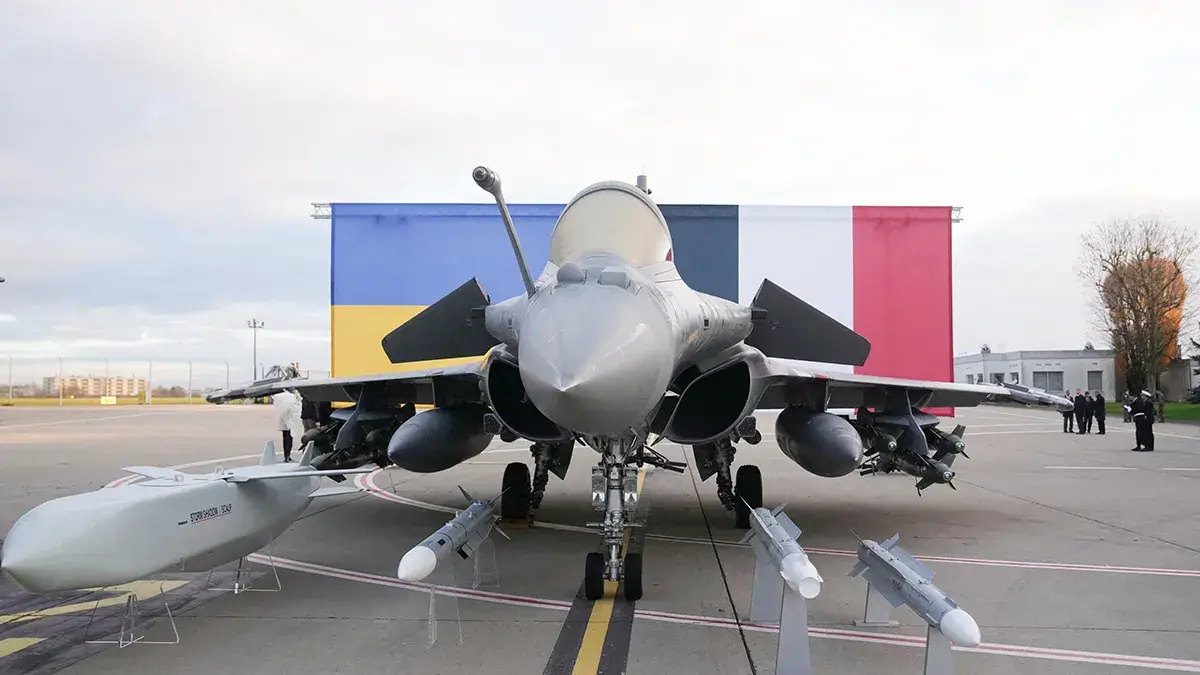
The United States, Ukraine and European allies have made progress on a security guarantee plan that includes binding commitments for military assistance and arms transfers, functioning as a ‘NATO without a name’. These agreements are part of negotiations in which Washington has suggested a scenario of ‘painful territorial concessions’ in exchange for peace, something that Zelensky is considering with suspicion.
Implications
Providing Ukraine with a credible security umbrella is existential for Atlantic credibility. However, legitimising the amputation of Ukrainian territory would be a step backwards to the logic of Yalta. The responsible option is to strengthen Ukraine's military capacity and maintain pressure on Moscow, not to force Kiev into a poisoned peace that invites future Russian aggression.
US economic data after the government shutdown
Facts
The US economy added 64,000 jobs in November, following a revised loss of 105,000 jobs in October due to the government shutdown. The unemployment rate rose to 4.6%, its highest level in four years, signalling a cooling of the labour market caused by public sector cuts and regulatory uncertainty.
Implications
Far from a collapse, these figures confirm the resilience of a market economy that absorbs the impact of the reduction in the administrative state (‘draining the swamp’). From a liberal perspective, fiscal discipline and the reduction of unproductive bureaucracy are defended, but Washington must ensure that the combination of tariffs and cuts does not stifle the middle class or generate unsustainable debt.
European acceleration towards the EU-Mercosur agreement
Facts
The European Commission is stepping up pressure to sign the agreement with Mercosur before the end of the year, despite opposition from France, which alleges agricultural risks. Spain and Germany defend the agreement as crucial to not losing ground to China in Latin America.
Implications
The EU-Mercosur agreement is a geostrategic opportunity that Europe cannot afford to miss. French protectionism, wrapped in green rhetoric, risks making Europe irrelevant in the region, handing the South American market to China. For liberal democracies, concluding this agreement means strengthening shared value chains and offering a real alternative to dependence on Beijing.
Media Rack
Structured analysis by source, highlighting key coverage and detected biases, with a focus on balance but a commitment to fighting extremism.
Summary of Coverage by Blocks:
- NYT / Washington Post / CNN / BBC: emphasise the blockade of Venezuela and the expansion of the immigration ban from a very critical perspective of Trump, highlighting the internal debate in Congress and the humanitarian impact, but showing more restraint when describing Maduro's regime as a narco-dictatorship.
- Reuters / AP / AFP / DPA: set out the factual framework of the day in a sober and technically sound style, although they sometimes fall into a neutrality that dilutes the specific responsibility of actors such as Russia, Iran or Chavismo.
- The Economist / Financial Times / WSJ: focus on Russian advances, the new architecture of reparations for Ukraine and the market economy, with a sympathetic bias towards firmness towards Moscow.
- Continental European press: they converge in their support for the damage commission for Ukraine and their concern about the EU-Mercosur blockade, with a clear divide between the Franco-Italian bloc (protectionist) and the Atlantic countries.
- Latin American and Arab media: they are following Trump's hard line against Chavismo and the negotiations on Gaza with interest, with a pragmatic attitude favourable to strengthening regional security.
Editorial comment
16 December marks a symbolic turning point: for the first time, a major democratic power has openly called a regime that many had been describing for decades with sociological euphemisms a ‘terrorist organisation’. Chavismo is not simply a ‘failed Bolivarian experiment,’ but a mafia with a flag and a seat at the United Nations. The fact that the United States is finally treating it as such, cutting off financial oxygen to its narco-boats and zombie oil tankers, is a victory of common sense over political correctness and the cynicism of certain European and Latin American leftists.
But on the same day that Maduro's mask falls, shots ring out again in Bondi, reminding us that the enemy of freedom does not sit alone in presidential palaces: it preaches on street corners, stirs up social media, sneaks into anti-Semitic demonstrations and exploits the complacency of institutions more obsessed with prosecuting incorrect jokes than with stopping fanatics with rifles. Fighting jihadism and its accomplices is not an ideological choice, but a moral obligation; and doing so without falling into racism or Islamophobia is perfectly possible when a clear distinction is made between peaceful believers and theocratic murderers.
In Ukraine and Gaza, it is largely being decided whether this century will be one of liberal democracy or of mafia and theocratic empires: if Putin is rewarded with territory and Tehran is allowed to continue exporting militias, the message to all aspiring autocrats will be that patience and brutality pay off. Faced with this drift, the response cannot be either the caricatured Trumpist isolationism dreamed of by his enemies or the multicultural do-goodism of the woke left, but rather a firm, pro-European and liberal Atlanticism: a tough stance against narco-states and terrorists; unconditional support for besieged democracies; defence of free trade and technological innovation; and zero complexes when it comes to affirming that the Spanish transition, the Reagan example and the transatlantic alliance remain beacons of success, not relics of the past.