Gustavo de Arístegui: Geopolitical Analysis 26 December

- Introduction
- Oil ‘quarantine’ on Venezuela and standoff in the Caribbean
- Peace plan for Ukraine: Zelensky wants to discuss territory face to face with Trump
- North Korea: nuclear submarine and long-range missile
- Trump's coup in Honduras: Asfura wins after contentious recount
- Fight against terrorism: Washington strikes ISIS in Nigeria
- Jordan attacks drugs and weapons on the Syrian border
- Trump and the “diplomatic purge”: ambassadors in the firing line
- Pope Leo XIV and Gaza: Christmas among tents and ruins
- China, India and the Pentagon report: diplomacy of suspicion
- Israel looks inward
- Sudan cries out for peace
- Media Rack
- Editorial comment
Introduction
The last 24 hours have revealed a particularly telling picture: Washington has decided to tighten the noose on the Chavista narco-regime with a de facto oil ‘quarantine’ that Moscow is quick to label ‘piracy,’ while in Ukraine the most delicate phase of the peace plan is beginning, with Zelensky determined to discuss territory directly with Trump, without intermediaries or technocratic euphemisms.
At the same time, North Korea is displaying submarines and missiles as if they were dynastic symbols, Pope Leo XIV is placing the suffering of Gaza at the moral centre of Christmas, and the United States is bombing the Islamic State in Nigeria to defend Christian communities too often left to fend for themselves.
In parallel, Jordan is forced to bomb drug and arms routes on the Syrian border, China tries to present what is structural pressure on India as ‘responsible management,’ Israel looks in the mirror after months of war, and Sudan sinks into a forgotten war that opens the door to jihadists, traffickers, and revisionist powers. The common denominator is clear: either Atlantic liberal democracy regains the strategic and moral initiative, or it will cede decisive ground to narco-states, theocracies and regimes that make cynicism their official doctrine.
Oil ‘quarantine’ on Venezuela and standoff in the Caribbean
Facts
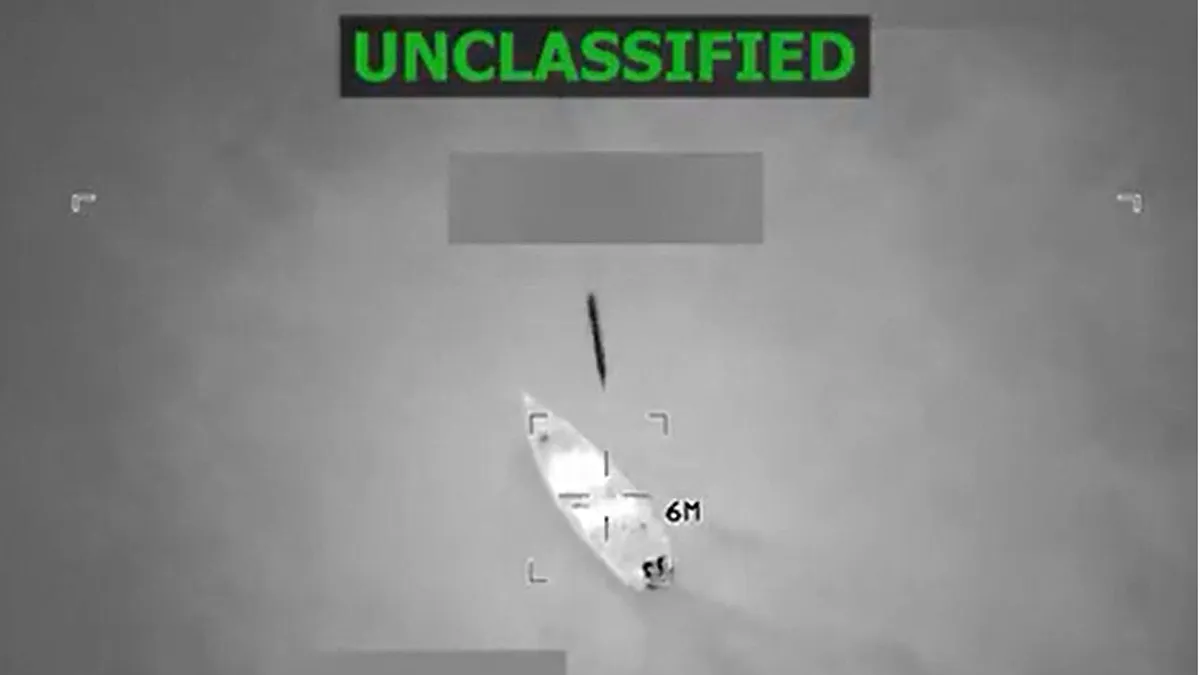
The White House has ordered the US Armed Forces to focus ‘almost exclusively’ on enforcing a ‘quarantine’ on Venezuelan oil for at least the next two months, prioritising economic pressure through sanctions and maritime control over possible direct military strikes against Nicolás Maduro's regime.
The US Coast Guard acknowledges that, for now, it lacks sufficient resources to board and detain a tanker linked to Venezuela that attempts to evade the interdiction, while the deployment of additional assets is being studied.
Caracas has passed a law ‘against piracy and blockades’ as a political and propaganda response to the campaign to interdict ships and cargoes, seeking to legally shield its transport network and international partners.
Russia has accused the United States of reviving ‘piracy’ and “banditry” in the Caribbean through its de facto blockade of Venezuelan oil, describing Washington's actions as ‘totally illegal’ and presenting itself as the defender of Maduro's ‘sovereignty’.
Implications
This oil ‘quarantine’ is, in practice, a selective narco-energy embargo: it is not an imperial whim, but the legitimate use of economic and maritime pressure against a narco-dictatorial regime that has turned Venezuela into a gigantic mafia organisation with a destabilising vocation for the entire region.
Russia's discourse on ‘piracy’ reveals Moscow's hypocrisy: the same Kremlin that violates borders in Ukraine seeks to lecture on international maritime law to protect an ally that launders money, finances criminal networks and relies on Iran, Russia and Cuba to perpetuate its impunity.
If the operation is sustained with intelligence, coordination with Caribbean allies and legal transparency, the ‘quarantine’ could become a turning point in financially suffocating Chavismo; if it is handled clumsily, it will leave room for Maduro's victim narrative and propaganda from Moscow, Beijing and Havana about a supposed ‘imperialist blockade’.
Peace plan for Ukraine: Zelensky wants to discuss territory face to face with Trump
Facts
Volodymyr Zelensky has called for a direct meeting with President Trump to address ‘the most sensitive issues’ of the future peace agreement with Russia, particularly control of territory, following a round of negotiations in Miami where delegations from Kiev and Washington have made progress on a 20-point plan to end the war.
The outline under discussion provides for a cessation of fighting along the current lines, security guarantees, funding for reconstruction and the future status of critical infrastructure such as the Zaporizhzhya nuclear power plant, but leaves border adjustments and the possible demilitarisation of certain areas up in the air.
The Kremlin has confirmed that it is ‘analysing’ the US documents on the peace plan, stressing that it sees ‘slow but steady progress’ in the talks, without renouncing its objectives of control over Donbas and other occupied areas for the time being.
Implications
It is inevitable that the debate on territory will move to the leader-to-leader level, but this is extremely dangerous: a peace that legitimises any form of annexation or “freezing” of front lines imposed by force would break a fundamental taboo of the European order and become a manual for future aggressors.
The Atlanticist editorial line requires us to be very clear: supporting Trump's ambition to end the war and rebalance security in Europe is compatible with firm criticism of any temptation to sacrifice Ukrainian sovereignty in exchange for a short-term ‘peace deal’ that leaves Kiev crippled and Moscow rewarded.
Europe must abandon the comfort of being a ‘restless spectator’ and accept that, if it does not set its own red lines, others will decide for it what price it is willing to pay for peace, opening the door to a dangerous doctrine of borders that can be revised by force of arms.

North Korea: nuclear submarine and long-range missile
Facts
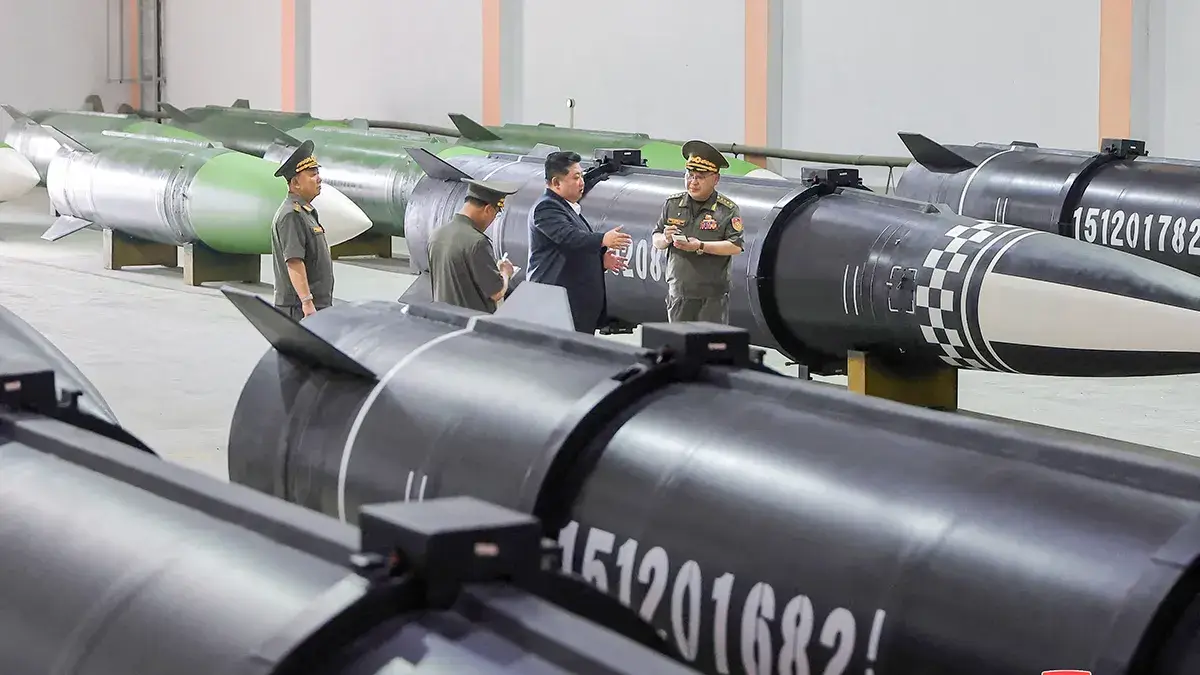
Kim Jong-un has overseen the construction of a potentially nuclear-powered 8,700-tonne submarine and witnessed the firing of a long-range surface-to-air missile, according to the KCNA news agency; in the images, he is accompanied by his daughter, who is presented as his de facto political heir.
The missile, launched near the east coast, reportedly hit targets 200 km away in a test aimed at validating new altitude and range capabilities, while the South Korean Armed Forces confirmed the test and stressed that they were prepared to respond.
Implications
North Korea is sending a message on several levels: growing technological capacity, a desire to build a more credible naval force, and the construction of a dynastic narrative around the figure of Kim's daughter. All this comes at a time of tension between Washington and Beijing and the recomposition of alliances in the Indo-Pacific.
For Japan, South Korea and, ultimately, Europe, this development confirms that proliferation is not on hold: while semantic nuances about ‘denuclearisation’ are being discussed in diplomatic forums, Pyongyang continues to develop vectors that could destabilise the regional balance and open the door to a broader arms race.
Trump's coup in Honduras: Asfura wins after contentious recount
Facts
Nasry Asfura, backed by Trump, has been declared the winner of the presidential election in Honduras after weeks of delays, appeals and allegations of fraud; the electoral authority has confirmed the result in a climate of strong polarisation.
The United States has urged all parties to accept the outcome and channel their differences through institutional channels, while making it clear that it will continue to support Honduras on security, migration and the fight against organised crime.
Implications
The victory of a candidate aligned with the White House shows that, even in a Central America saturated with populism and criminal gangs, there is room for pragmatic centre-right formulas if messages of order, growth and cooperation with the United States are combined.
The key will be to see whether the new government converts Washington's support into real reforms against drug trafficking and corruption or whether it merely changes friends among the elite while everything remains the same: the worst-case scenario for the region is a “pro-American” façade that does not touch the interests of the mafias.

Fight against terrorism: Washington strikes ISIS in Nigeria
Facts
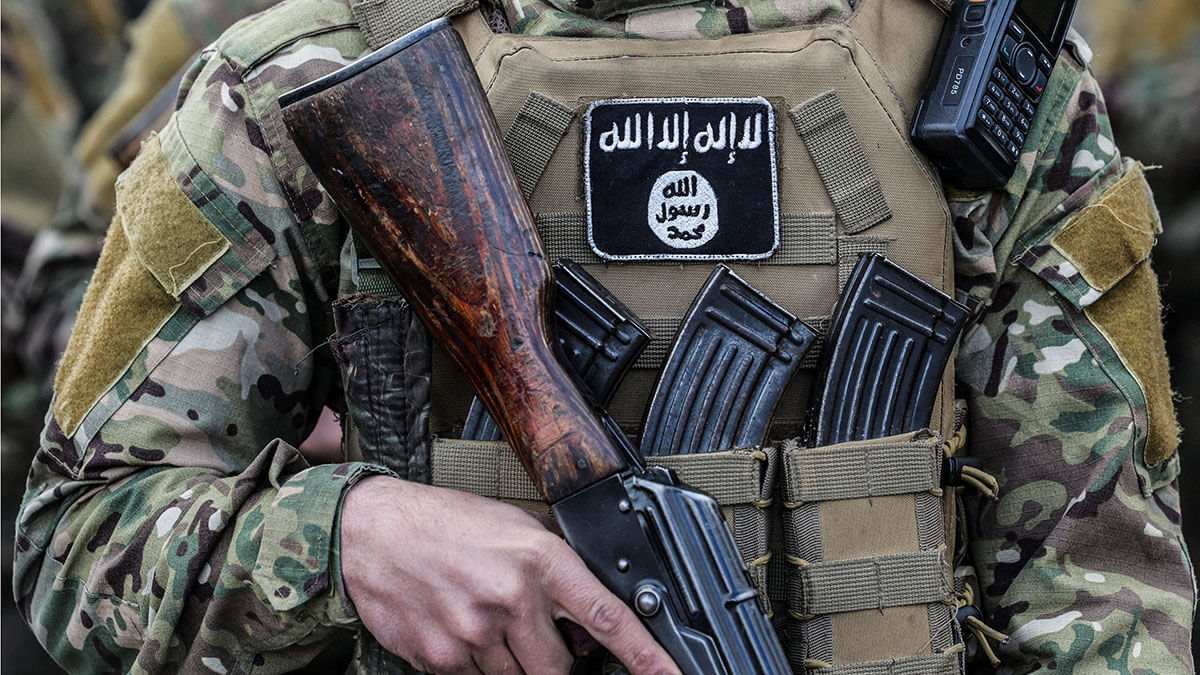
The United States has launched an air strike against fighters of the so-called Islamic State in north-western Nigeria, at the request of the Nigerian government, following a series of massacres against Christian communities.
President Trump has stressed that the aim was to punish ‘terrorist scum’ who were killing mainly Christians ‘at levels not seen in many years, even centuries’, reinforcing his message that Christianity faces an ‘existential threat’ in that country.
Implications
This type of operation embodies the policy we advocate: cooperation between democracies—however imperfect—to strike at jihadist organisations that combine murderous ideology, territorial control and criminal connections; it is the opposite of the relativist defeatism that reduces them to ‘insurgents’ or ‘militants’.
Nigeria is a testing ground for something bigger: if jihadism consolidates sanctuaries in the Sahel and West Africa, the next chapter will be an increase in attacks, uncontrolled migration flows and the presence of Russia, China and Iran as supposed ‘security partners’ filling the vacuum left by the West and local elites.
Jordan attacks drugs and weapons on the Syrian border
Facts
Jordan has carried out bombings against drug and arms traffickers' facilities in southern Syria, describing the operation as a defensive measure against the flow of Captagon, weapons and networks linked to both pro-Iranian militias and transnational criminal organisations.
Implications
Amman is demonstrating that a serious state cannot resign itself to seeing its territory become a highway for drug traffickers and militias: either the routes, laboratories and depots are targeted, or the border becomes a black hole that corrodes institutions, security forces and the social fabric.
For Europe, Jordan is a key player: if it falls or is seriously weakened, the vacuum will be filled by Tehran's proxies, traffickers and jihadist networks, with a direct impact on the eastern Mediterranean, Israel's stability and migratory pressure on the continent.

Trump and the “diplomatic purge”: ambassadors in the firing line
Facts
A group of Democratic congressmen has asked Trump to reverse the mass withdrawal of some 30 political ambassadors announced by the White House, denouncing the measure as a ‘purge’ that weakens professional diplomacy and damages the United States' image abroad.
Implications
The simultaneous dismissal of 30 ambassadors cannot be condoned without qualification: although there may be cases in which some representatives, due to ideological sectarianism or incompetence, deserve to be replaced, a massive and abrupt decapitation introduces noise, resentment and a sense of arbitrariness into a foreign service that needs predictability and professionalism.
The responsible course of action would be to combine three steps: first, to issue clear and binding instructions to eliminate leftist propaganda, gender ideology and woke activism in foreign policy; second, demand strict institutional loyalty to the president and the Constitution; and only third, dismiss—with evidence of disloyalty or serious misconduct—ambassadors who refuse to comply with these guidelines. Thirty dismissals at once are excessive and may give ammunition to those who caricature any attempt to de-ideologise diplomacy as political vendetta.

Pope Leo XIV and Gaza: Christmas among tents and ruins
Facts
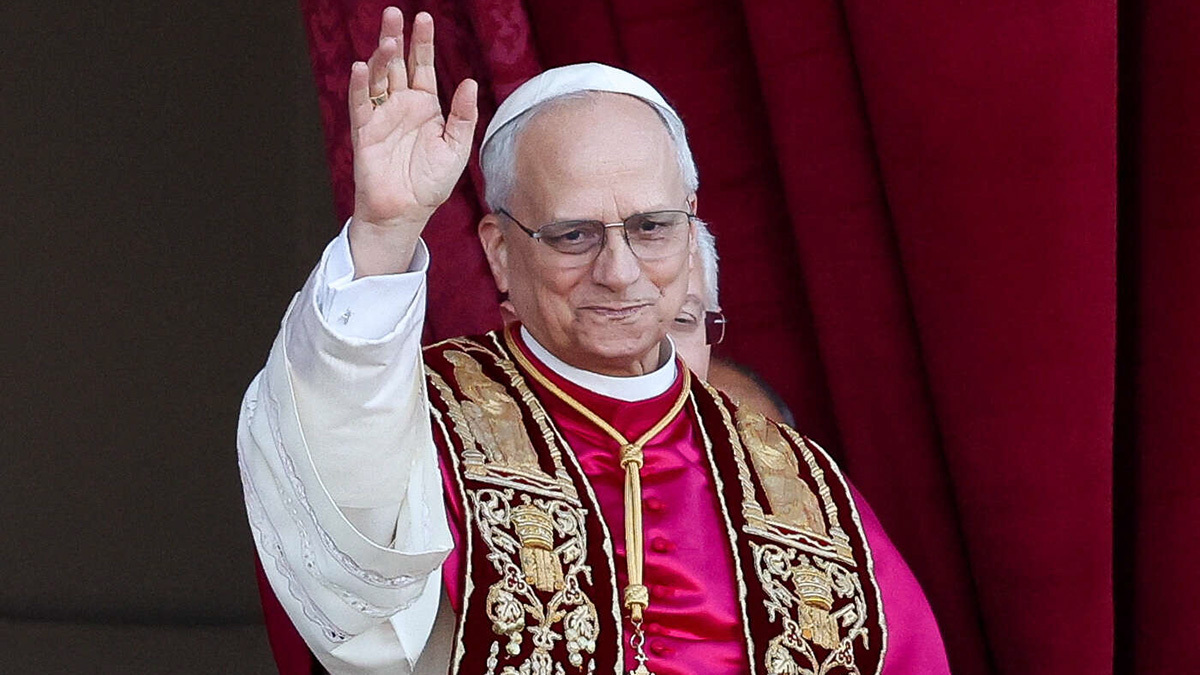
In his first Christmas homily, Pope Leo XIV denounced in very direct terms the conditions of the Palestinians in Gaza, asking how one could not think of the tents exposed to rain, cold and wind, and speaking of the ‘fragile flesh’ of defenceless populations punished by wars that leave ‘rubble and open wounds’.
The pontiff reiterated that any solution to the Israeli-Palestinian conflict must include the creation of a Palestinian state, while condemning the suffering of young people forced to go to war by leaders who hide behind grandiloquent rhetoric.
Implications
Pope Leo XIV's voice puts the focus where it should be: on the dignity of civilian victims caught between Hamas' terrorism and Israel's need to ensure its security. Remembering this dimension does not mean whitewashing terrorists or questioning Israel's right to defend itself, but rather demanding that the military response be combined with a serious political horizon.
The Vatican's message is also directed at democracies: if moral discourse is abandoned to the radical left and wokism, the cause of freedom and Israel will be hijacked by those who only accept it as a pretext to demonise the West; we need an ethic of security that recognises the suffering in Gaza without silencing the barbarity of Hamas.
China, India and the Pentagon report: diplomacy of suspicion
Facts
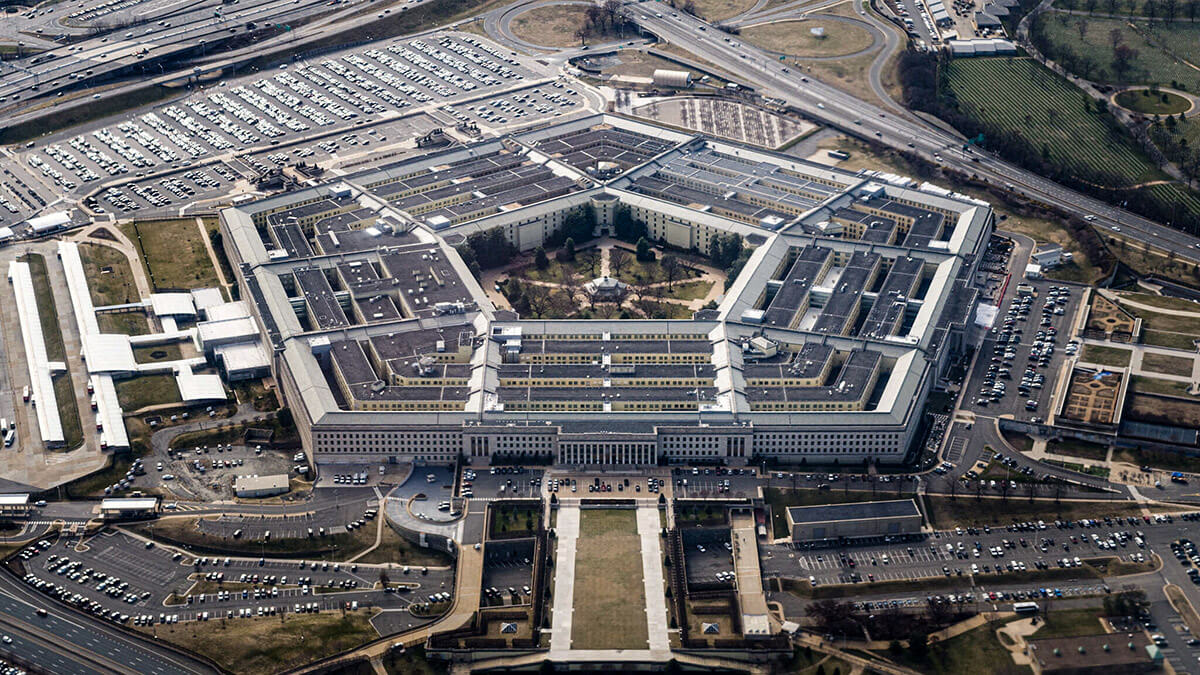
Beijing has accused the United States of trying to create ‘discord’ between China and other countries following the publication of a Pentagon report suggesting that China would try to dissuade India from strengthening its ties with Washington.
Spokesperson Lin Jian has stressed that border tensions with India have eased and that the line of control—the scene of deadly clashes in 2020—is now ‘stable,’ presenting the Sino-Indian relationship as an example of ‘responsible management of differences.’
Implications
The Chinese message is clear: deny that there is a strategic problem while consolidating military infrastructure, dual capabilities and economic presence in the Indian Ocean and the Himalayas. Anyone who believes that the border is ‘stabilised’ because Beijing says so has failed to understand the doctrine of salami slicing (the accumulation of small advantages).
For India, the dilemma is clear: either consolidate an axis with the United States, Japan and European partners to curb Chinese expansionism, or accept living in the shadow of an authoritarian neighbour that combines military pressure, economic coercion and disinformation campaigns. Beijing's angry reaction to the Pentagon report confirms that the real battle is for New Delhi's strategic loyalty.
Israel looks inward
Facts
The Economist describes Israel at a time of painful introspection, marked by a long and costly war, a poisoned political climate and a bitter debate over responsibility, intelligence failures and the future of West Bank settlements, as the country tries to define the “day after” in Gaza without a clear consensus.
Implications
Israel faces a triple existential challenge: credibly defeating Hamas terrorism, preserving its status as a liberal democracy in an environment of constant threats, and rebuilding a minimum internal pact between a traumatised security camp and an exhausted civil society; if it fails on any of these three fronts, its enemies will present the crisis as proof of the unviability of the Zionist project.
For its Atlantic allies, supporting Israel cannot be reduced to rhetorical gestures: it requires firm military and diplomatic backing, but also a clear message in favour of reforms that strengthen the rule of law and prevent internal divisions from eroding the image of a country that, despite all its mistakes, remains one of the few full democracies in a region plagued by dictatorships and theocracies

Sudan cries out for peace
Facts
In Sudan, the war between the regular army and the Rapid Support Forces (RSF) has led to millions of displaced people, growing famine, destruction of basic infrastructure and a dynamic of ethnic cleansing and looting reminiscent of the worst moments in Darfur, leaving the state virtually collapsed.
Implications
Sudan is today the most brutal example of what happens when the state breaks down: the vacuum is filled by militarised factions, ethnic militias, traffickers and potentially jihadist cells, while Russia, China and other actors seek opportunities in the chaos to secure access to minerals, ports and strategic positions in the Red Sea.
For Europe and the Atlantic world, treating Sudan as a “distant conflict” is a strategic mistake: it will give rise to new waves of migration, new routes for arms and human trafficking, and new opportunities for revisionist powers to present their ‘mediation’ as an alternative to the supposed moral exhaustion of the West. Ignoring this cry for peace is, in practice, leaving the field open to those who believe neither in peace nor in freedom.

Media Rack
Structured by key sources analysed, highlighting dominant perspectives in the last 24 hours. Priority is given to a broad approach, avoiding woke or relativist biases and highlighting relevant facts.
- NYT, Washington Post, USA TODAY, POLITICO, The Hill, The Daily Beast, Newsweek:
They focus criticism on Trump for his interventions in Honduras and Nigeria, which they present as ‘meddling’ and “politicisation” of foreign policy, minimising the component of the fight against drug trafficking and jihadism.
They are moderately positive about the progress in the peace negotiations in Ukraine, although they insist on the risk that Zelensky will be ‘pressured’ by Washington. They maintain a highly critical stance on the mass withdrawal of ambassadors.
- The Times London, The Telegraph, The Guardian, BBC, The Mail and the Globe:
They highlight the Venezuelan blockade as a significant escalation, with The Guardian describing it as almost ‘economic aggression’, while The Times and The Telegraph emphasise its geopolitical significance vis-à-vis Russia and Cuba. The British media emphasise Pope Leo XIV's sermon on Gaza as a profound moral call and are more technical than alarmist about North Korea, although concerned about the drones and missiles surrounding the Ukrainian conflict.
- WSJ, Financial Times, CNBC, CBS, CNN, Fox News:
The Wall Street Journal and Financial Times analyse in detail the economic implications of the ‘quarantine’ of Venezuelan oil and North Korean tests, highlighting the risks of energy volatility and new geopolitical risk premiums. Fox News unreservedly praises the strikes against ISIS in Nigeria, framing them as a defence of Christians and ‘Western civilisation’. CNN, for its part, focuses its criticism on the recalls of ambassadors, which it considers a dangerous undermining of professional diplomacy in favour of domestic politics.
- Le Monde, Le Figaro, Libération, LCI, BFM, France Info, La Tribune de Genève:
The French-language press echoes the Russian narrative of ‘piracy’ in response to the blockade of Venezuela, without fully embracing it but giving it more space than it deserves. Le Figaro and some audiovisual segments highlight the moral dimension of the Pope's message on Gaza and connect it to Ukraine and Sudan.
On the Ukrainian front, they welcome the diplomatic progress, but explicitly warn that any territorial concessions would set a very serious precedent.
- FAZ, Die Welt, Die Zeit, DPA, Helsingin Sanomat:
The major German media outlets highlight the combination of the North Korean threat and Chinese pressure as proof that Europe cannot continue to be in a ‘strategic siesta’. They criticise European lack of coordination on defence and warn of the risk that US diplomatic vacuums will reinforce Russian and Chinese influence in multilateral forums. Helsingin Sanomat insists on the risks to European security arising from a poorly designed Ukrainian peace.
- Corriere della Sera, L'Osservatore Romano:
Corriere focuses on the wider Mediterranean: Venezuela, Gaza, migration and pressure on southern Europe, while L'Osservatore Romano concentrates on the spiritual and moral content of Leo XIV's message, summarising the suffering in Gaza and other conflicts without going into great geopolitical detail.
- Russia Today, TASS:
They construct a narrative of ‘American piracy’ in the Caribbean and present Russia as the defender of international law and the ‘Venezuelan people’ against Washington. On Ukraine, they insist on an alleged implicit recognition of the ‘realities on the ground’ by the West and downplay both Russian attacks and humanitarian risks.
- WION, The Times of India, Hindustan Times, Indian Express:
They maintain a tone of vigilance towards North Korea and show concern about Beijing's movements; they point out that the Pentagon report on Chinese pressure on the border and in Asian diplomacy is consistent with what India perceives in the Himalayas and the Indian Ocean. The Ukrainian conflict is mainly discussed in terms of sanctions, energy and diplomatic space for Delhi.
- South China Morning Post, China Daily:
They criticise US military actions as unjustified interference and describe the Pentagon reports as attempts to ‘divide Asia’. They barely mention North Korea and present the relationship with India as being managed in a ‘mature and responsible’ manner by Beijing.
- Tokyo Times, The Straits Times, Yomiuri Shimbun:
They warn about the North Korean submarine and long-range missile, calling for more coordination within the Quad and alliances with Washington. They stress that the Indo-Pacific cannot live in a false peace while Pyongyang and Beijing build up their military capabilities.
- Reuters, AFP, AP, DPA:
They maintain factual and extensive coverage of news from Venezuela, Ukraine, North Korea, Nigeria, Gaza, Jordan and even Sudan, seeking to separate facts from opinions and offering a mosaic of narratives from the West as well as Russia, China, the Arab world and Africa.
- Gazeta Wyborcza, Ukrainian Pravda, Ukrinform, Fakty i Kommentarii, Vesti, Kyiv Post, The Kyiv Independent:
They report hopefully on progress in the negotiations, but strongly emphasise the red line of any recognition of annexations. They praise Ukrainian resilience, express respect for Trump's personal involvement and stress that the ultimate goal remains the full restoration of territorial integrity.
- Yedioth Ahronoth, Israel Hayom, Jerusalem Post, Jerusalem Times, Haaretz, Maariv:
They analyse the papal sermon as another piece of international pressure on Israel, with nuances between those who believe it can help legitimise a structured ceasefire and those who fear it will reinforce biased narratives about the conflict. There is broad consensus on the danger posed by Iranian proxies and the existential nature of the fight against Hamas and Hezbollah.
- Al-Jazeera, Al-Arabiya, Al-Hayat, An-Nahar Beirut, Orient Le Jour, Daily Star, Jordan Times, Al Rai Jordan, Hürriyet, Al Quds Al Arabi, Al Hayat Al Jadida, Alyyam, Felestin, Peninsula Qatar, Arab News, Asharq Al Awsat, Al Riyadh, Saudi Gazette, Gulf News, Khaleej Times, Gulf Today, Al-Ittihad, Times of Oman:
They strongly denounce the conditions in Gaza, quote the Pope's message and accuse Israel of disproportionately punishing the civilian population, with very little reference to the terrorist nature of Hamas. On Nigeria, some media outlets present US strikes as ‘anti-Islamic’ actions, avoiding emphasising the jihadist nature of the Islamic State.
- Clarín Buenos Aires, El Mercurio Chile, Reforma Mexico:
They take a hard line against Maduro, viewing the US ‘quarantine’ as a necessary—albeit risky—tool to force change in Caracas and warning of the danger that the Latin American populist left will use the crisis to reinforce its anti-Americanism. They adopt a cautious stance on the outcome in Honduras, aware of the weight of organised crime.
- Foreign Affairs, The Economist, The National Interest, Washington Times:
Foreign Affairs analyses the structural dimension of competition with China, especially in Africa and Latin America. The Economist identifies Ukraine, Israel and Sudan as the three axes of a partial failure of the international order to manage wars and post-war situations. The National Interest and the Washington Times tend to value Trump's pragmatism: a tough stance against drug trafficking and jihadism, a willingness to end conflicts, a rejection of absolute isolationism and explicit criticism of wokism.
Editorial comment
The White House's decision to make Maduro's Chavista narco-regime the central target of an oil ‘quarantine’ marks a turning point that many in Europe dare not even mention: either Venezuela is now assumed to be a mafia structure with a flag and a seat in parliament, or we will continue to talk about a ‘humanitarian crisis’ as if the drama were the work of the weather and not of a corrupt elite protected by Russia, Cuba and Iran. That Moscow speaks of ‘piracy’ while plundering Ukraine and protecting Caracas only reinforces the certainty that the battle is not semantic, but moral: those who violate borders also want to rewrite the dictionary.
In Ukraine, Zelensky's demand to deal with the territory directly with Trump reveals both courage and desperation: he knows that if the discussion is left in the hands of bureaucrats and polls, the temptation to sacrifice square kilometres in exchange for headlines about ‘historic peace’ will be enormous. The obligation of any honest Atlanticist is twofold: to unapologetically support Trump's leadership in the search for a solution and, at the same time, to draw a red line on territorial integrity; to call the amputation of a country under military pressure “realism” is a polite way of saying ‘surrender’.
Meanwhile, in Nigeria, the order to attack ISIS to protect Christian communities shows that a heavy hand, when exercised within the law and in cooperation with allied governments, is not excessive: it is the minimum decency required. It is scandalous that there are still major media outlets and political sectors that talk about the Islamic State as if it were just another armed faction, an expression of abstract ‘political violence’, when we are dealing with pure and simple terrorism, with a genocidal agenda and a global vocation.
The rest of the board completes the picture: North Korea shows off submarines and missiles as if displaying trophies of a personalist cult inherited from the past; China denies the evidence of its pressure on India while accusing Washington of sowing discord; Jordan is forced to bomb its border to avoid being dragged down by drug traffickers and Iranian proxies; Pope Leo XIV speaks out loud about what too many want to silence about Gaza, and Sudan agonises in international indifference. This is the true map of contemporary hypocrisy: those who defend their borders are demonised, and we look the other way when the executioners hide behind speeches of ‘resistance’ or ‘multilateralism’.
The line between firmness and barbarism is clear: no to annexation by force, no to dictatorship with revolutionary aesthetics, no to terrorism dressed up as identity politics; yes to representative liberal democracy, yes to a market economy with a responsible welfare state, yes to the Atlantic alliance and to the example of transitions such as Spain's, which show that change can be achieved without destroying freedoms. At a time when narco-states, theocracies and revisionist powers are testing every seam of the international order, neutrality is no longer a prudent position: it is the alibi of those who, out of weariness or convenience, are willing to leave the century in the hands of those who despise freedom.