Gustavo de Arístegui: Geopolitical Analysis 4 December

- The breakdown of order and the return of history
- Brussels and the ‘reparations loan’: Europe discovers power late in the game
- India-Russia: the New Delhi summit and the architecture of mutual dependence
- Visegrad breaks up: Poland and Hungary are no longer on the same side
- United States: Minnesota, massive fraud and possible pipeline to Al-Shabab
- Immigration suspension for 19 countries: the border as a red line
- The Aragua Train: from Venezuelan prison to global criminal and terrorist organisation
- Gaza and the Red Sea: ‘reducefire’ and hybrid warfare
- Ukraine: uncertain peace on a chessboard shifting in Geneva, Moscow and New Delhi
- Mogherini: the scandal that is undermining the credibility of European diplomacy
- Hong Kong and failed governance: when corruption kills
- Media Rack
- Editorial
The breakdown of order and the return of history
On this 4 December 2025, the international system is not merely undergoing a transition; it is experiencing systemic upheaval. The tectonic plates of geopolitics, which for decades seemed to rest on the comfortable liberal consensus of the post-Cold War era, are now colliding with renewed violence. What we are seeing are not isolated crises, but the accelerated reconfiguration of the global security architecture.
The massive fraud in Minnesota, which the US Treasury is now investigating for possible links to Somali terrorism, demonstrates the extent to which institutional weakness and identity naivety can become weapons in the hands of our enemies. Vladimir Putin's visit to India, in the midst of the war in Ukraine, openly challenges the narrative of Russian ‘isolation’ and reveals the vigour of the Eurasian energy-military axis.
Transnational organised crime, epitomised by the Tren de Aragua, is no longer a public order problem but has become a geopolitical actor, to such an extent that the United States has simultaneously designated it as a transnational criminal organisation and a structure linked to terrorism, even sanctioning public figures such as Venezuelan model and DJ Jimena ‘Rosita’ Araya for material support to the network.
At the same time, Europe is entering its moment of truth. On the one hand, the Commission is proposing to use frozen Russian assets to finance a ‘reparations loan’ to Ukraine, in the greatest use of financial power in its history. On the other, the continent is rocked by the most serious scandal its foreign service has ever known: the arrest and formal indictment of Federica Mogherini, former EU High Representative, for alleged fraud, corruption and conflict of interest in a European Diplomatic Academy programme run by the College of Europe.
At the same time, the Visegrad Group is breaking apart over the rift between Poland, which sees Russia as an existential threat, and Hungary, which persists in treating the Kremlin as a privileged partner. Gaza and the Red Sea remain the epicentres of a low-intensity but extremely high-risk hybrid war, with Iran pulling the strings of its militias and proxies, from Hamas to the Houthis.
This report, following your structure and editorial line, analyses the ten key dynamics of this day: not only the facts, but also the undercurrents that are rewriting the global chessboard.
Brussels and the ‘reparations loan’: Europe discovers power late in the game
Facts:
The European Commission is promoting a scheme to mobilise up to €210 billion in frozen Russian assets, the extraordinary profits from which would be used as collateral for a large G7 loan to finance Ukraine until 2027. Belgium, home to Euroclear, expresses strong reservations, as does the ECB, due to the legal precedent and the risk to the credibility of the euro as a reserve currency.
Implications:
Europe is finally beginning to behave like a geopolitical actor, not just a regulatory and moralising power. Using the profits from Russian assets to support Ukraine is an exercise in basic justice: the aggressor should help pay the bill for the war it has unleashed.
But the operation is also a stress test for the European project:
- Legally, the line between using interest and touching the principal is very fine; any mistake could trigger years of litigation and undermine the confidence of third countries in the legal security of parking reserves in the eurozone.
- Politically, resistance from Belgium and the ECB, coupled with Hungary's usual obstructionism, shows that European unity remains fragile when it comes to taking innovative steps on sanctions.
- Strategically, Brussels is attempting, with this move, to reserve a seat at the future negotiating table on Ukraine, in the face of Washington's push to impose its own peace plan.
From an Atlanticist and pro-European perspective, the message is clear: despite its doubts, Europe is finally beginning to use its instruments of power; but if it hesitates now, it will confirm to Moscow, Beijing and Tehran the image of a continent that threatens much and acts little.

India-Russia: the New Delhi summit and the architecture of mutual dependence
Facts:
Vladimir Putin arrives in New Delhi for the 23rd Annual India-Russia Summit, his most significant visit since the start of the invasion of Ukraine. The relationship is officially defined as a ‘Special and Privileged Strategic Partnership’. India maintains around two-thirds of its arsenal of Russian or Soviet origin and has multiplied its purchases of discounted Russian crude oil since 2022, creating a huge trade surplus in Moscow's favour.
On the agenda are the acceleration of the delivery of S-400 Triumf systems, possible cooperation on the Su-57 fighter jet, guarantees of spare parts for existing equipment, and mechanisms to recycle the rupees accumulated by Russia in Vostro accounts through investments and de-dollarisation instruments.
Implications:
The summit reveals an asymmetrical mutual dependence:
- For Russia, India is a strategic lifeline: it buys oil, keeps the Russian military-industrial complex alive and shows the world that the Kremlin is not isolated.
- For India, Russia remains an indispensable supplier of key weapons systems in an environment where China is squeezing in the Himalayas and Pakistan remains structurally unstable.
- Narendra Modi's manoeuvre is masterful: he welcomes Putin with state honours, reaffirms his strategic autonomy, but at the same time consolidates his alliances with the United States, Japan and Australia within the framework of the Quad. India is sending an unequivocal message to the West: it will not be anyone's satellite.
From the Western point of view, it is in their interest to avoid pushing Russia further into China's arms and to integrate India into an Indo-Pacific security architecture that is flexible enough to tolerate its relationship with Moscow, but robust enough to contain Chinese expansionism.
The Indian lesson is brutal for certain European elites: in international politics, there are no eternal friendships, only permanent interests. And those who forget this axiom end up paying dearly for it.

Visegrad breaks up: Poland and Hungary are no longer on the same side
Facts:
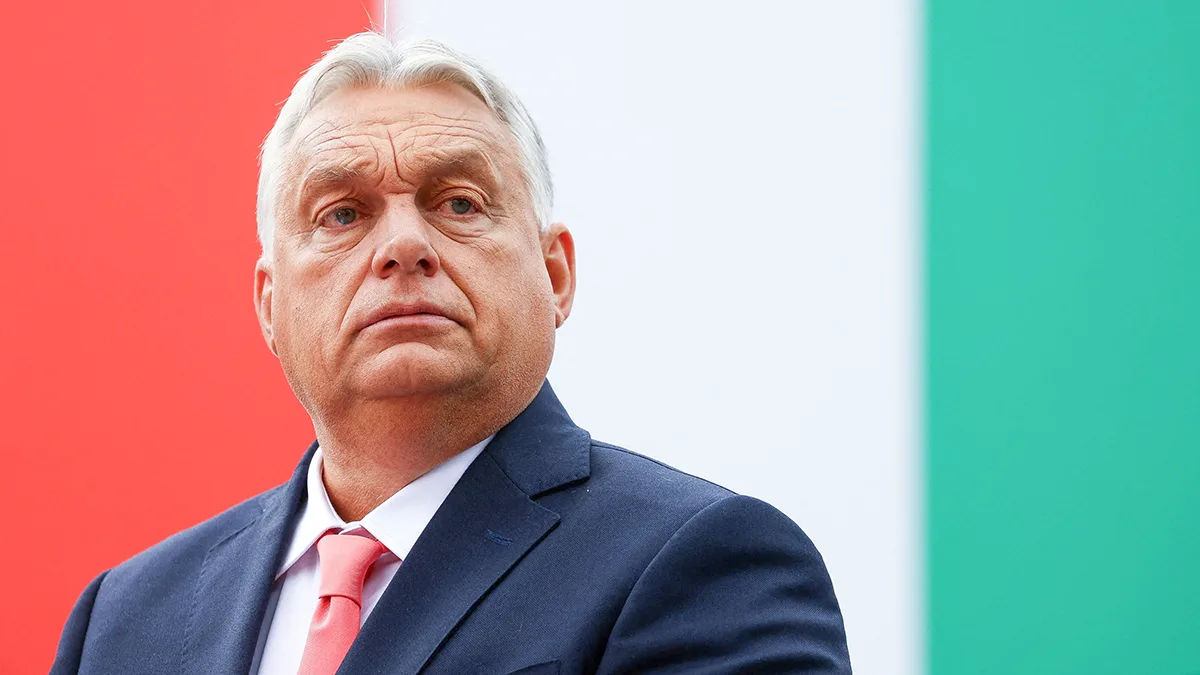
The Visegrad Group is on the verge of irrelevance. Polish President Karol Nawrocki's cancellation of a meeting with Viktor Orbán following the latter's visit to Moscow symbolises the break. Warsaw describes Orbán's rapprochement with Putin as a ‘moral and security red line’.
Poland calls for a V4 focused on security and defence against Russia; Hungary uses it as a platform to erode European unity and negotiate bilateral advantages with the Kremlin.
Implications:
This is no longer a matter of nuances, but of antagonistic strategies:
- For Poland, Russia is a historical enemy and an immediate existential threat.
- For Hungary, Russia is a privileged energy partner and a tool for gaining leverage against Brussels.
The result is that the V4 is moving from being a potential bloc for consolidating European security to becoming an empty shell, useful only for photo opportunities. Poland will increasingly turn towards alliances with the Baltic states, the Nordic countries and staunch Atlantic allies; Hungary will tend to become isolated, trapped between its own ambiguities and its flirtations with Moscow.
For the EU, the conclusion is clear: new security coalitions can no longer be based on inherited regional formulas, but on the real convergence of strategic interests and the effective will to defend Ukraine and the European order against Russian aggression.
United States: Minnesota, massive fraud and possible pipeline to Al-Shabab
Facts:
The US Treasury Department, headed by Scott Bessent, has announced an investigation into the possible connection between massive fraud in Minnesota's social programmes and the financing of the Somali jihadist group Al-Shabab through informal remittance systems.
So far, evidence of specific links to Al-Shabab is preliminary and the investigation is in its very early stages, but the mere announcement has set off alarm bells in Washington and sparked a fierce political battle with Democratic Governor Tim Walz.
Implications:
This case is paradigmatic of the ‘willful blindness’ of certain Western elites: a generous welfare system, lax or non-existent controls, fear of auditing organisations for fear of accusations of racism, and the politicisation of identity in any attempt at oversight.
The combination is lethal. Minnesota has become a symbol of how do-goodism and incompetence can inadvertently open channels that could have been exploited by terrorist organisations.
The Trump administration's reaction is consistent with a doctrine of total security: investigate every last dollar, demand political accountability, and link the fight against fraud to the fight against terrorism. The risk is internal polarisation; the benefit is twofold: restoring respect for the law and sending a clear message, both inside and outside the United States, that social programmes cannot become cash machines for organised crime or jihadism.
Immigration suspension for 19 countries: the border as a red line
Facts:
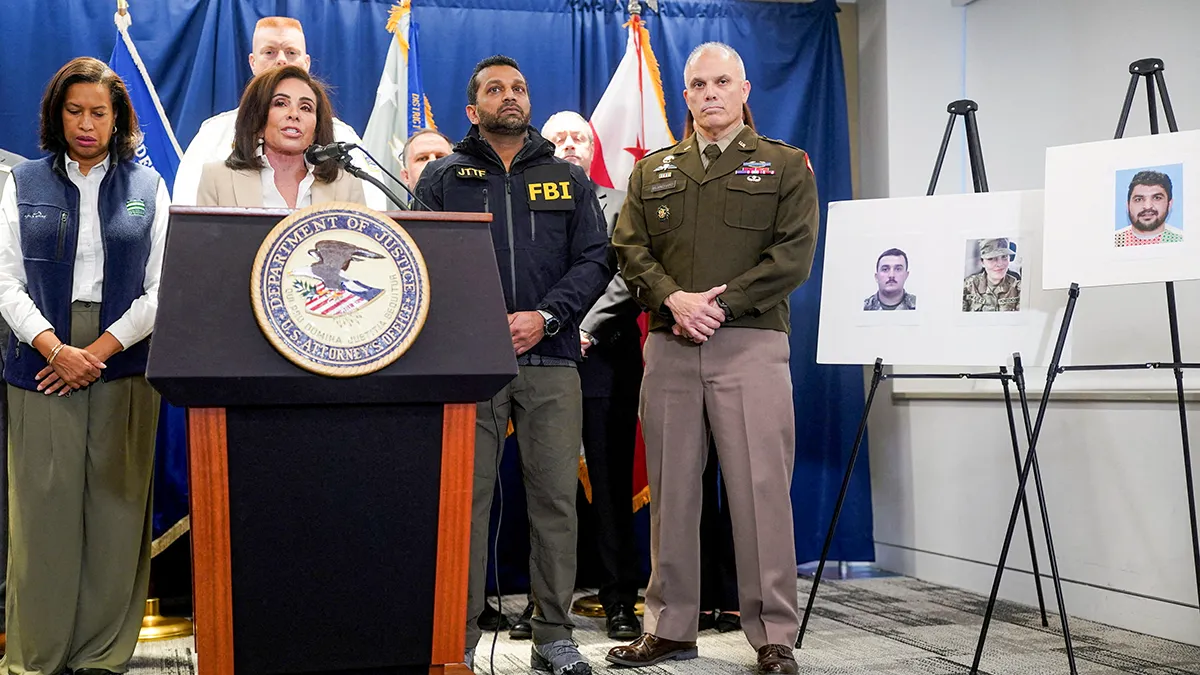
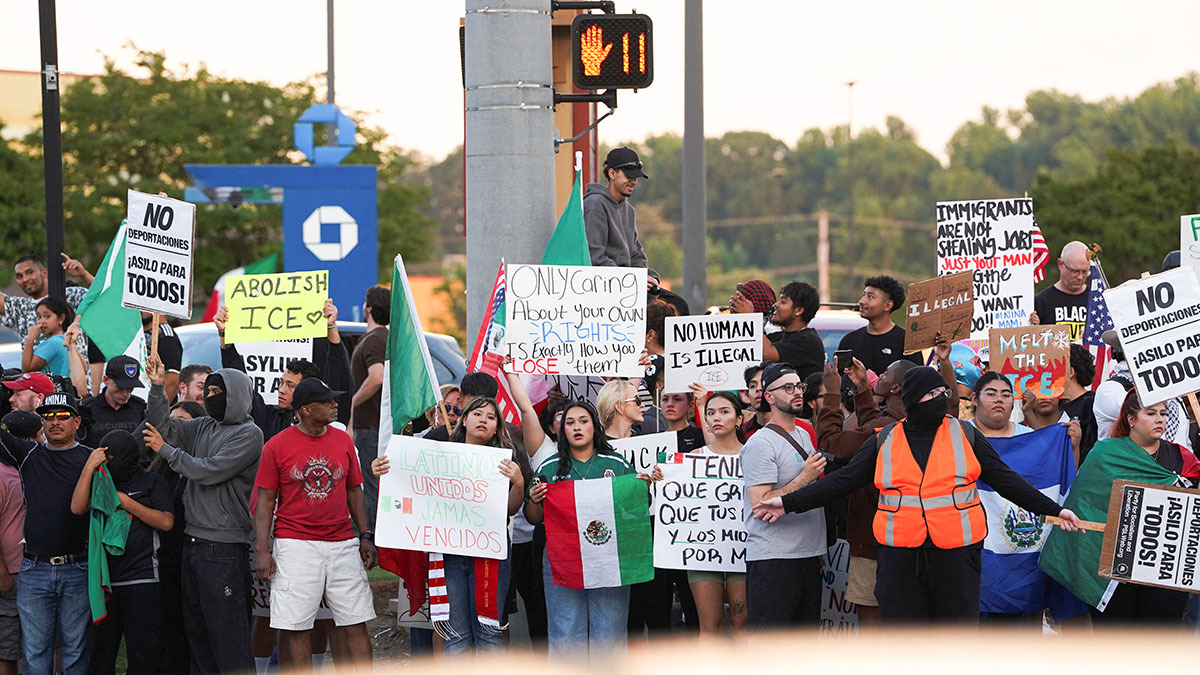
At the same time, the Trump administration has ordered the indefinite suspension of all immigration adjudications for citizens of 19 countries following a shooting involving an Afghan refugee and in the context of the Minnesota investigation.
The measure affects: work visas, family reunification, asylum applications, and even scheduled naturalisation ceremonies.
Implications:
From a balanced and sensible perspective, the decision is extremely harsh, but it must be placed in context: years of border chaos, trafficking networks, systematic abuse of asylum procedures and pressure on public services.
The White House's message is unequivocal: there is no right to immigrate, there are immigration processes; the state has a duty to protect its citizens; and to look after legal immigrants who scrupulously comply with the law.
The radical left will react with the usual mixture of moral indignation and accusations of xenophobia. But in the underlying cultural and political battle, Trumpism is setting the framework: immigration can no longer be an ideological taboo, but rather a public policy subject to the logic of security, legality and social cohesion.
The Aragua Train: from Venezuelan prison to global criminal and terrorist organisation
Facts:
The United States has intensified its offensive against the Aragua Train (TdA), the criminal organisation born in Venezuela and now spread throughout much of Latin America, the United States and Europe. The Trump administration has taken two decisive steps:
Formally designate the TdA as a transnational criminal organisation and link it to the list of sanctions against global terrorist organisations under the authority of Executive Orders 13,581 and 13,224.
Sanctioning a network of associated individuals and entities, including Venezuelan model, actress and DJ Jimena Romina Araya Navarro (‘Rosita’), accused by the Treasury Department of providing material, financial or technological support to the TdA; as well as front companies such as Global Import Solutions S.A. and premises used as money laundering centres, according to the official OFAC statement.
Implications:
The qualitative leap is enormous: the TdA is no longer seen as a ‘Venezuelan prison gang’ but is explicitly treated as a hybrid actor of organised crime and terrorism, with continental implications.
The network described by OFAC is revealing: the use of media figures such as ‘Rosita,’ whom the Treasury identifies as part of a network linked to the leader ‘Niño Guerrero’ and key in support and money laundering operations; front companies in Colombia, Panama, and other countries; nightclubs and production companies as money laundering centres; and mid-level TdA cadres sanctioned one by one with surgical precision.
From our editorial standpoint, the conclusion is clear: Maduro's Venezuelan regime has created the conditions for structures such as the TdA to thrive and internationalise; the TdA is now an instrument of regional destabilisation, combining drug trafficking, human trafficking, extreme violence and social penetration; and Washington's decision to treat it with the same tools as terrorist organisations and Mexican cartels is an essential step, albeit not sufficient.
The battle against the TdA will be won in the areas of international judicial cooperation, financial intelligence and sustained political pressure on the Venezuelan regime and its accomplices.

Gaza and the Red Sea: ‘reducefire’ and hybrid warfare
Facts:
In Gaza, an attack by militiamen wounds five Israeli soldiers; Israel responds with selective bombing in the south of the Strip. Despite the language of ‘ceasefire’, the reality on the ground is more like a reducefire: lower intensity but constant violence, with a spiralling humanitarian crisis.
In the Red Sea, the Houthis release the crew of the cargo ship Eternity C after months of captivity, thanks to Oman's mediation, but continue their campaign of attacks on strategic trade routes.
Implications:
In Gaza, the decisive factor is no longer the exchanges of fire, but the total absence of a political architecture for the ‘day after’: Israel cannot accept a return to the status quo ante Hamas; the Palestinian Authority lacks legitimacy and capacity; moderate Arab countries do not want to ‘inherit’ a powder keg with no guarantees of security; and the West has not yet articulated a credible model of international administration.
Meanwhile, Iran is exploiting the situation to legitimise its ‘axis of resistance’ and present itself as the champion of the Palestinian cause, while feeding Hezbollah, Iraqi militias and the Houthis themselves.
In the Red Sea, the release of the Eternity C sailors is a calculated gesture to improve the Houthis' image with certain regional actors. But the reality is that they retain the ability to attack commercial vessels; they control the narrative of ‘resistance’ against Israel and the West; and they have demonstrated that they can make global trade more expensive at will.
Iran has turned the Red Sea into a laboratory for hybrid maritime warfare: a front where it can pressure the West without exposing itself directly.

Ukraine: uncertain peace on a chessboard shifting in Geneva, Moscow and New Delhi
Facts:
Discreet talks continue between US and Russian envoys on a possible 28-point peace plan for Ukraine. Meanwhile, the front remains tense, with a stabilised line of contact but daily artillery exchanges and drone attacks. The Eurasian realignment itself weighs on the negotiations.
Implications:
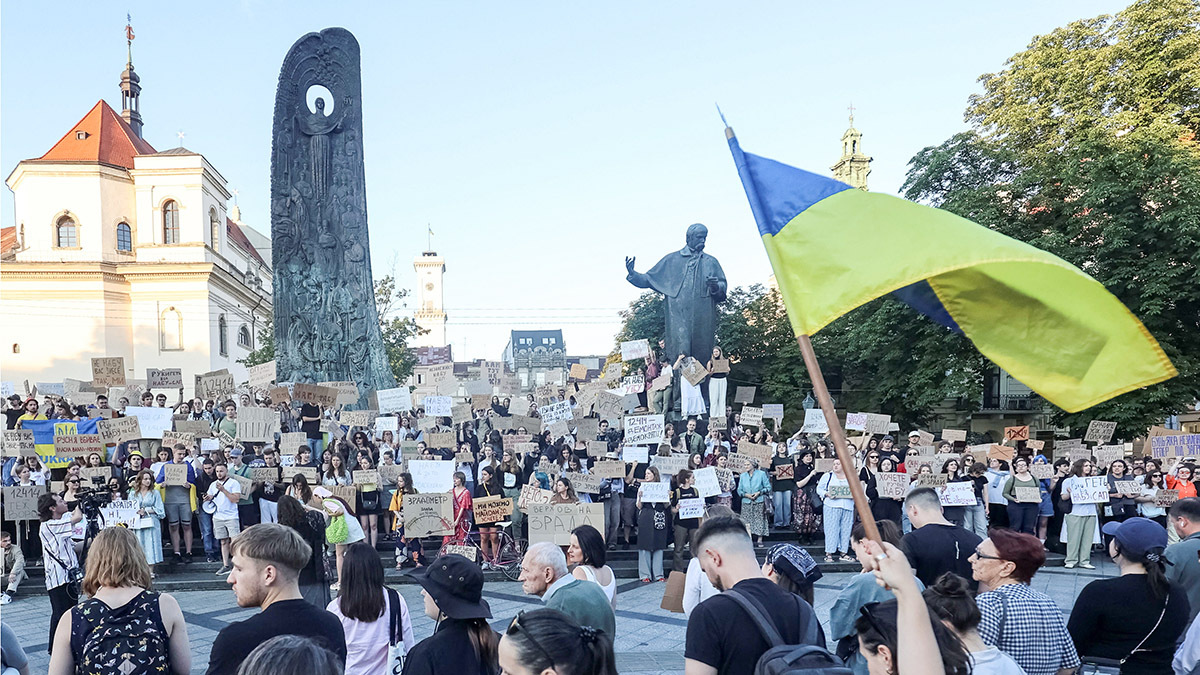
Our line is firm: we are radically opposed to any solution that legitimises territorial acquisitions by force.
Trump aspires to present a peace agreement as a diplomatic victory. Russia seeks to consolidate its gains in Donbas and Crimea. Europe wants to avoid being relegated to mere payer. Ukraine is fighting for its survival as a sovereign state.
The real danger is a bad peace that consolidates faits accomplis, fragments Europe between ‘pragmatists’ and ‘principlists,’ and sends a devastating message to the world: those with strength and nuclear arsenals can redraw borders and emerge unscathed. If this precedent is established, Russia will not be the only one to try it next.
Mogherini: the scandal that is undermining the credibility of European diplomacy
Facts:
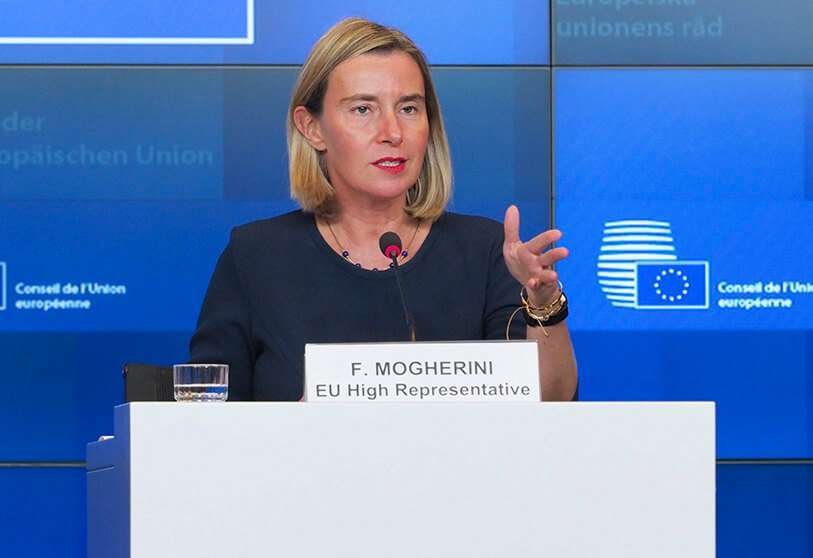
The former EU High Representative for Foreign Affairs, Federica Mogherini, has been arrested and subsequently charged, along with two other senior officials, in an investigation by the European Public Prosecutor's Office (EPPO) for alleged fraud in public procurement, corruption, conflict of interest and breach of professional secrecy in relation to a contract awarded by the European Diplomatic Academy to the College of Europe, of which Mogherini is rector.
The investigation has involved searches at: the headquarters of the European External Action Service in Brussels, the premises of the College of Europe in Bruges, and the private homes of the accused.
Implications:
This is the worst institutional scandal in the history of European foreign policy.
This is not a minor case of influence peddling. The heart of the matter is that the person who was ultimately responsible for the EU's foreign and security policy, who played a central role in the nuclear agreement with Iran, and who today heads the institution responsible for training the European diplomatic elite, is formally accused of having manipulated an EU-funded procurement procedure for the benefit of the institution she heads.
From a political point of view, the damage is threefold:
- Damage to internal confidence: if the EEAS and the College of Europe can be the scene of corrupt practices at the highest level, the credibility of internal control mechanisms is called into question.
- Damage to external credibility: with what moral authority can the EU demand reforms, transparency and “good governance” from third countries if its former head of diplomacy is accused of manipulating European public contracts?
- Damage to strategic doctrine: Mogherini symbolised the commitment to “soft multilateralism”, to appeasement in the face of regimes such as Iran's;
- Today, the fact that this same figure is involved in a case of fraud and corruption, even if it has no direct connection with Tehran, reinforces the perception of a lost decade in European foreign policy, where rhetoric replaced vigilance and fascination with ‘soft power’ eclipsed the need for real power and iron-fisted controls.
The accused have the right to the presumption of innocence, but the systemic gravity of the case calls for an exemplary response: total transparency, full cooperation with the EPPO and, above all, a thorough reform of the control mechanisms in the EEAS and in the management of strategic training programmes such as the European Diplomatic Academy.
Hong Kong and failed governance: when corruption kills
Facts:
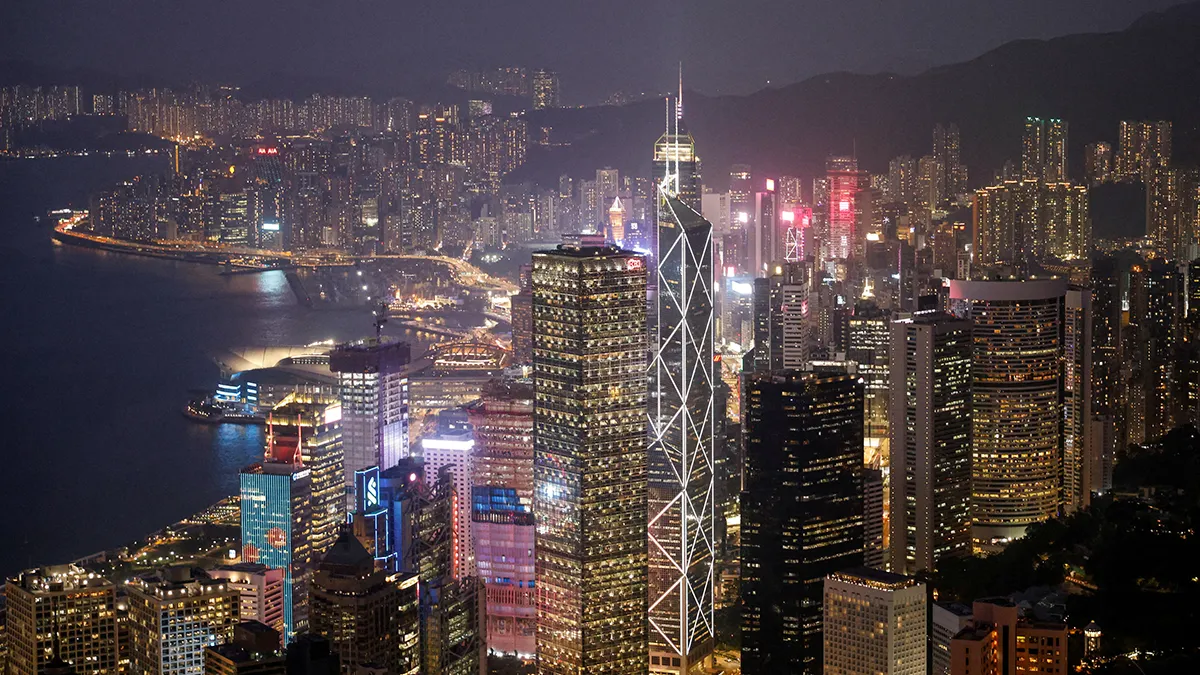
The fire at the Wang Fuk Court residential complex, which left 159 people dead, has revealed a chain of corruption and negligence in Hong Kong: the use of illegal flammable materials, the deactivation of alarms and collusion between contractors and regulators.
Implications:
Beyond the tragedy, the case illustrates the deterioration of a model that was once a symbol of efficiency and the rule of law. Since Beijing imposed the National Security Law, Hong Kong has seen a steady erosion of its control mechanisms, press freedom and civil society's power of oversight. When checks and balances are removed and whistleblowers are intimidated, corruption flourishes, and corruption, sooner or later, kills.
Media Rack
United States (NYT, WP, WSJ, Fox, AP, CBS)
The NYT and Washington Post focus on the Minnesota case, the political battle between Trump and Walz, and the debate over whether links to Al-Shabab are real or the result of political manipulation.
WSJ and Financial Times emphasise the legal risk of using Russian assets and the potential impact on markets.
Fox News and conservative networks highlight the offensive against the Aragua Train, the role of ‘Rosita’ and the narrative of ‘Total National Security’ in the face of crime and terrorism.
Europe (Le Monde, Le Figaro, FAZ, Die Welt, Corriere, Euractiv, Euronews)
Le Figaro, Die Welt, Corriere and specialised European media such as Euractiv and Euronews open with the Mogherini scandal, describing it as the latest chapter in a series of reputational blows to European institutions, following Qatargate and other cases.
Le Monde and FAZ analyse the V4 split and the discussion on Russian assets as symptoms of a Europe torn between the will to power and fear of its own decisions.
Asia (The Times of India, Hindustan Times, Yomiuri, SCMP)
The Indian press dissects Putin's visit as recognition of India's centrality in the new multipolar order, highlighting pressure from Washington, but also the importance of cheap Russian oil and military equipment.
SCMP links the Hong Kong riots to the deterioration of the ‘one country, two systems’ model and growing regulatory impunity.
Latin America (El Nacional, Infobae, El Tiempo, Semana)
Extensive coverage of sanctions against the Aragua Train and Jimena ‘Rosita’ Araya, with an emphasis on the internationalisation of the cartel and the impact on Chile, Peru and Colombia.
Editorial
The events of 4 December 2025 offer a stark picture of Western weakness and, at the same time, its latent capacity to react.
In the United States, seeing how child nutrition programmes allegedly end up financing one of the most dangerous jihadist groups in Africa is not just an administrative scandal; it is a failure of intelligence and strategic thinking. It shows that our enemies do not distinguish between borders or silos: they will use our mismanaged generosity and legal laxity as weapons against us. The Trump administration's response may make the beautiful souls of progressivism uncomfortable, but it follows the logic of democratic state survival.
In Europe, the picture is even bleaker. The Visegrad schism certifies the demise of a bloc that could have been a pillar of security on the eastern flank and has become a theatre of contradictions. Meanwhile, Putin is welcomed with honours in New Delhi, proving that the narrative of Russian ‘isolation’ was, from the outset, a Eurocentric illusion.
And, to top it all off, the European Union is watching as its former head of diplomacy, a symbol of soft multilateralism who sought to appease regimes such as Iran, is arrested and formally charged with fraud and corruption in the management of a programme financed with European money. We should not prejudge the outcome, but we can draw an unequivocal political lesson: when realism is replaced by complacency, rigour by ideology and control by blind trust, the system rots from within.
Against this backdrop, India offers us a lesson in Realpolitik that should not be forgotten: a country that understands the harshness of the world buys the missiles it needs, negotiates the oil that suits it and talks to those it must, not those it would like to. Weakness, in geopolitics, does not generate sympathy; it generates temptation.
History will not absolve the naive. Nor will it absolve the cynics who enrich themselves with public funds while preaching European values. It can, however, recognise and reward democracies that regain a sense of responsibility, firmness and strategic common sense.
We still have time. But the margin is narrowing every day.