Indra is on the verge of acquiring ownership of Hispasat and control of Hisdesat


- Blessed by Moncloa to lead the aerospace and defence industry
- The battle is now, and we cannot wait much longer
It's a matter of a few weeks. Indra has everything in place and is about to complete the purchase of Hispasat from Red Eléctrica de España (Redeia), an entity chaired since February 2020 by Beatriz Corredor, former Minister of Housing between 2008 and 2010 in the government of President José Luis Rodríguez Zapatero.
Indra's acquisition of Spain's leading commercial satellite communications operator will take effect ‘in the second half of November or in early December,’ according to executives familiar with the process. Almost all regulatory approvals have already been obtained from the Spanish public administrations and the countries where any of the ten satellites in the fleet of Hispasat, a company headed by Miguel Ángel Panduro since 2019, provide services. For 30 years, Hispasat has been a driving force in the Spanish space industry, a role it has shared with Hisdesat for the last 20 years.
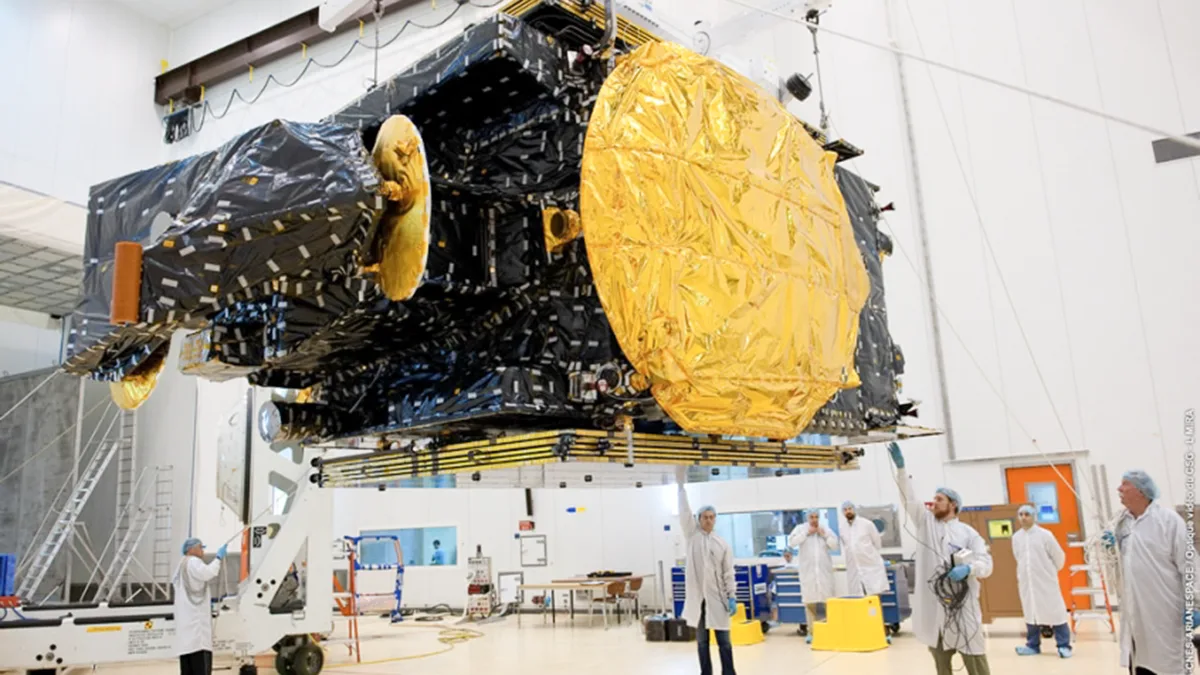
At their meeting on 29 October, the members of the Board of Directors of Indra gave the green light to the acquisition of 89.68% of Hispasat. The remaining shares are held by the State Industrial Holdings Company (SEPI, which owns 10.32%), after acquiring 2.91% of the shares held by the Centre for Technological Development and Innovation (CDTI, a public company belonging to the Ministry of Science, Innovation and Universities) on 1 April.

The signing of the transaction for €725 million dates back to 3 February, which means that at least ten months will have passed by the time the purchase becomes effective.
One of the final milestones still pending is that of the National Commission for Markets and Competition (CNMC). The aforementioned body ‘already has the authorisation ready for the controlling position in Hispasat to be transferred from Redeia to Indra,’ confirm professionals familiar with the operation.
The approval of the CNMC is the final mandatory step for the Council of Ministers to give the green light to the sale, as the Spanish Industrial Holdings Company (SEPI) holds a 28% stake in Indra and a 10.32% stake in Hispasat. Indra's commitment to the purchase of Hispasat is justified by the desire of its CEO, José Vicente de los Mozos, to achieve a triple win.
Blessed by Moncloa to lead the aerospace and defence industry
On the one hand, adding Hispasat and Hisdesat to its portfolio of companies would increase the technology company's consolidated turnover, thereby substantially improving its position in the ranking of large companies in the global defence sector. Secondly, it will strengthen the capabilities of Indra Space, its new subsidiary, which already includes Deimos, dedicated to the integration of satellites and critical subsystems, control and mission software, as well as space surveillance and tracking, a purchase that was announced in August 2024 and completed in October of the same year.
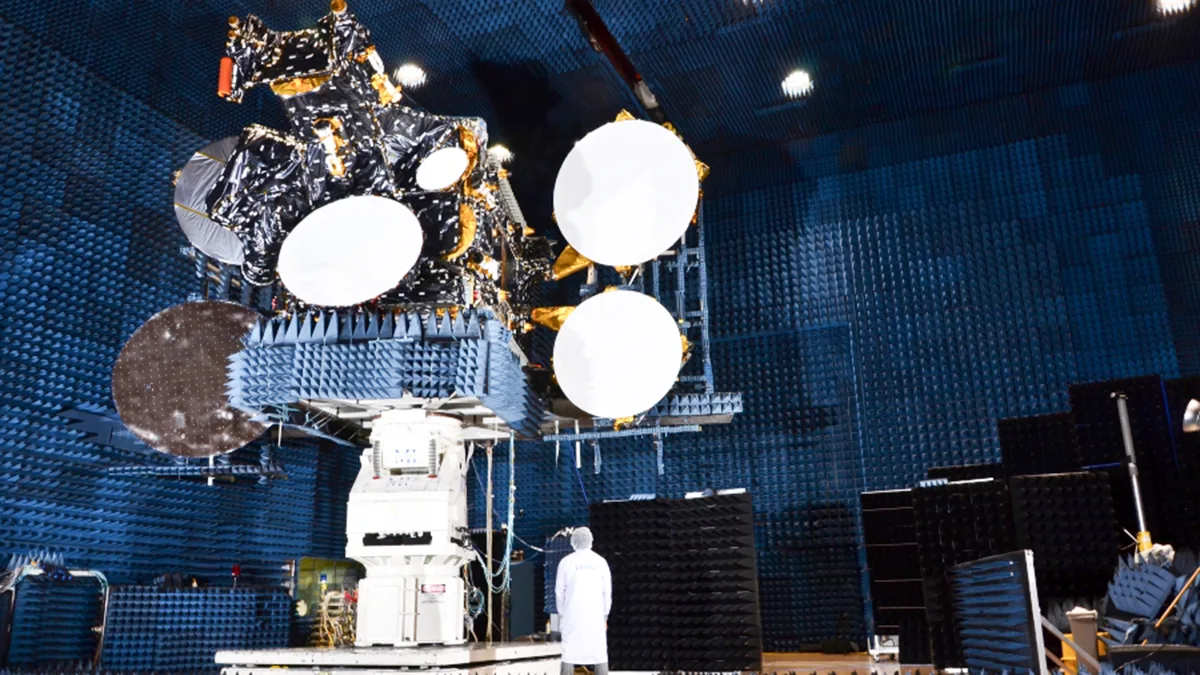
Thirdly, Indra aspires to gain control of Hisdesat, the crown jewel of Hispasat, a company headed by Miguel Ángel García Primo and whose main customer is the Ministry of Defence through its Spainsat NG secure communications satellites and Earth observation satellites with radar technology. Including Hisdesat in Indra's shopping basket is such a strategic move that the February agreement with Redeia includes a clause requiring Indra to take control of Hisdesat in order for the purchase of Hispasat to go ahead.
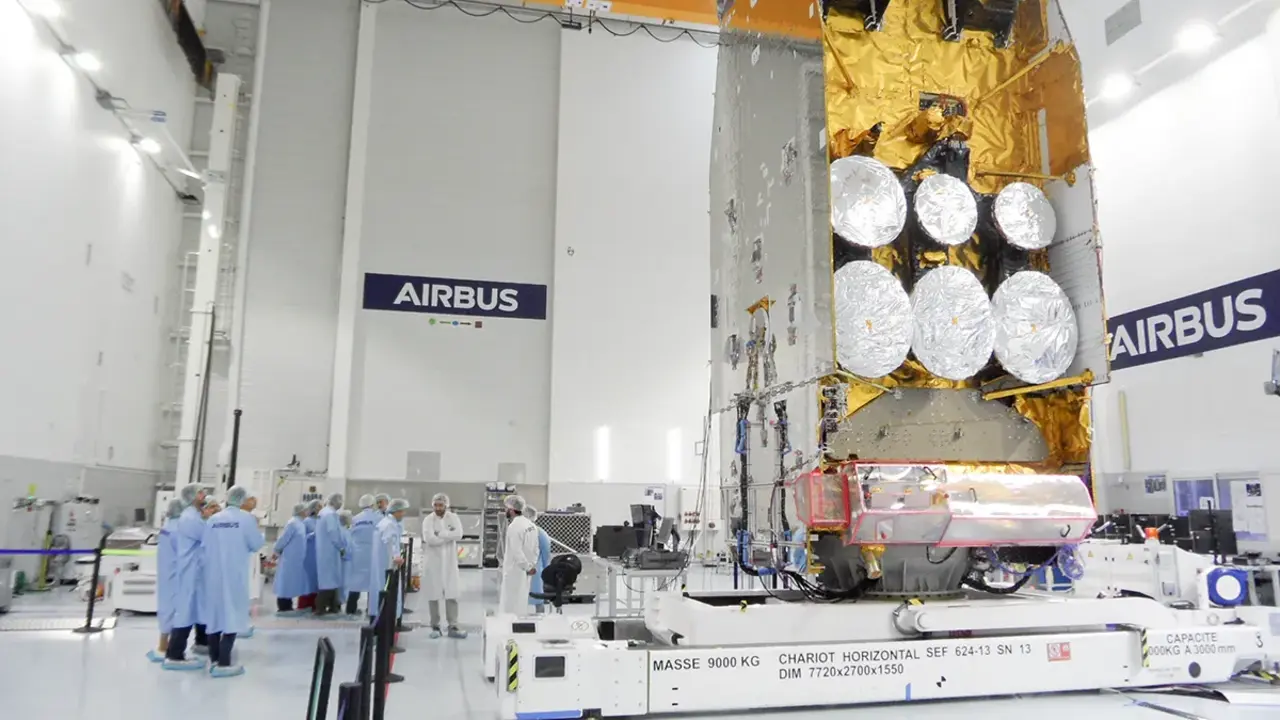
Today, Indra already holds 7% of Hisdesat, which would rise to 50% with the purchase of Hispasat, which owns 43%. The other shareholders in Hisdesat are Isdefe, a public consulting and engineering company attached to the Ministry of Defence, which holds 30%, and the companies Airbus Defence & Space and Sener, which hold 15% and 5%, respectively.
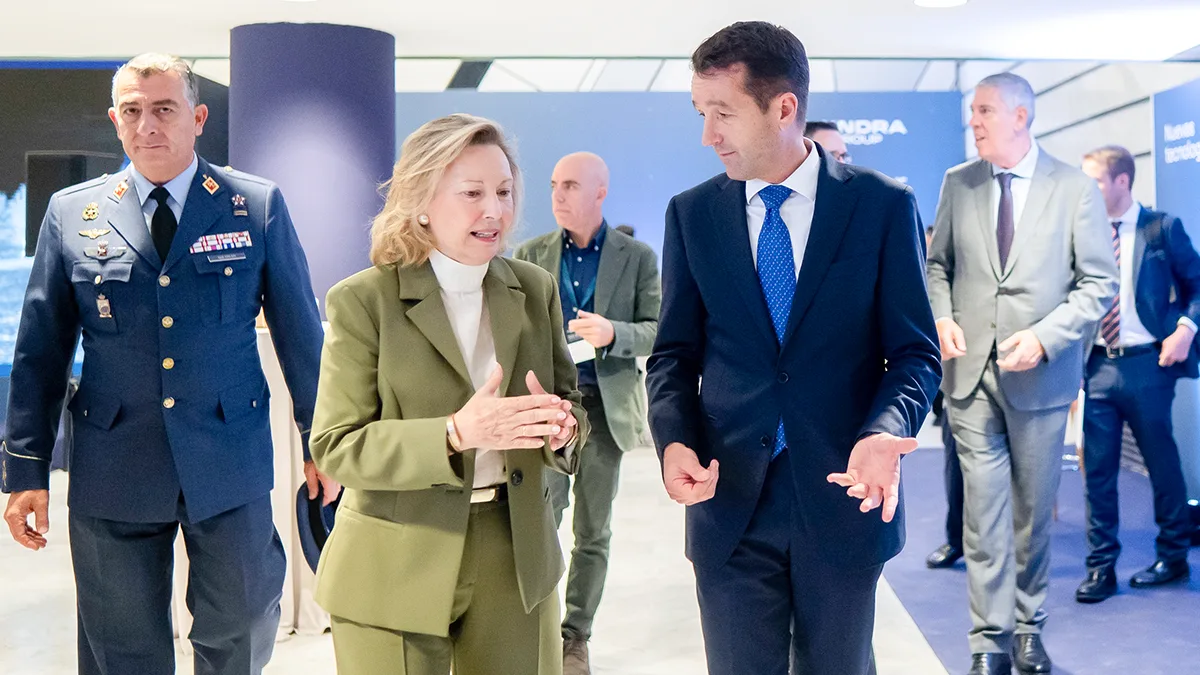
It is clear that Indra is playing with the approval of the Ministry of Defence and the Moncloa. The most recent example took place on 30 October, during the Second National Meeting of the Innovation Ecosystem organised by Indra, which brought together nearly 600 companies and institutions in Madrid.
The Secretary of State for Defence, Amparo Valcarce, has asked Indra to ‘exercise open, responsible leadership and drive the sector forward, incorporating the entire ecosystem’. The technology company's response was to ‘reaffirm its commitment as a driving force behind the Special Modernisation Programmes, as a lever to strengthen the sector's competitiveness and make it a benchmark in European defence’.
While the technology company chaired by Ángel Escribano closes the chapter on the purchase of Hisdesat and takes control of Hisdesat, in the international space sphere it is clear that, as the Spanish saying goes, he who does not run, flies. The alarm was sounded by Hispasat's own CEO in his speech at the forum entitled ‘The Spanish defence industry in the new European scenario’ organised in Madrid by the economic newspaper El Economista.
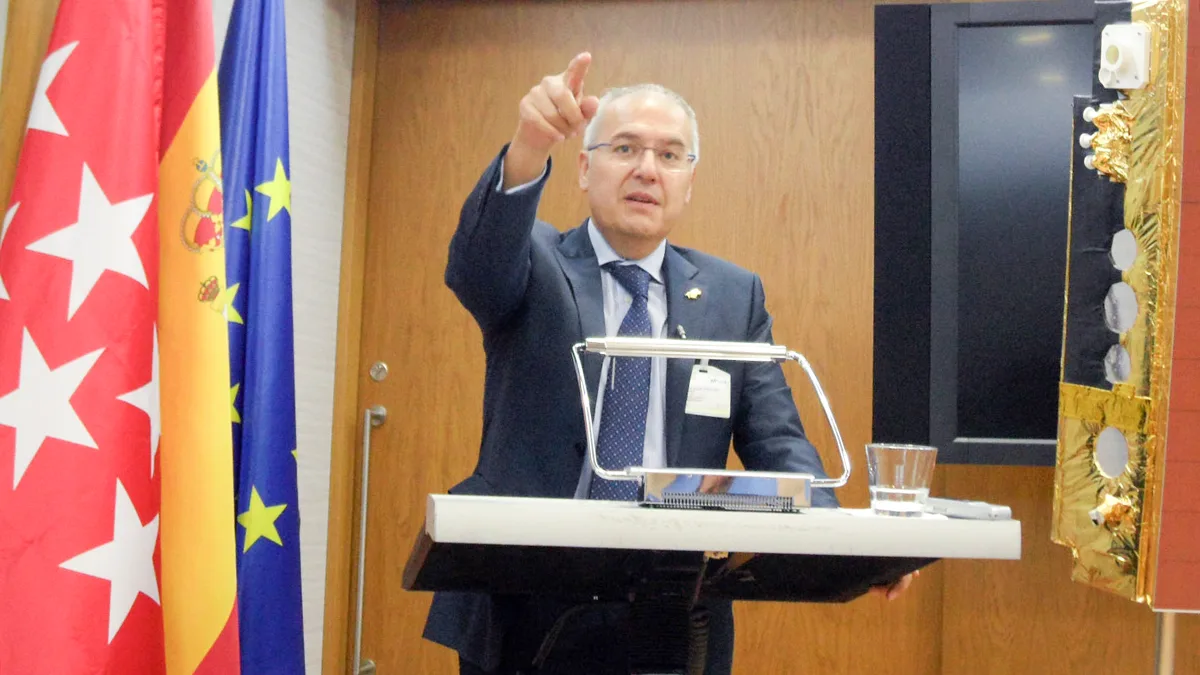
The battle is now, and we cannot wait much longer
Miguel Ángel Panduro has warned senior officers of the Armed Forces, senior officials of the Ministry of Defence and executives from the aerospace and defence sector that the European Union ‘is facing a very difficult moment’ with the appearance of ‘someone who has caused a disruption’, in a veiled reference to American magnate Elon Musk and his company SpaceX.
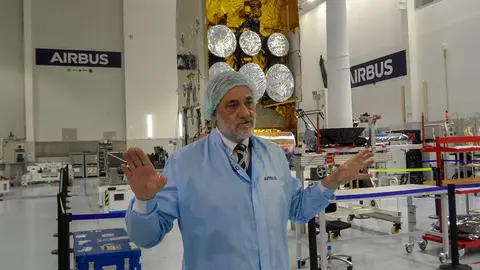
He recalled that Europe, with the Ariane 5 launcher, ‘had a large share of global space launches’ but that now, with Ariane 6, it is ‘trying to see if it can reposition itself in the market’ and find a niche to compete with the international monopoly exercised by Elon Musk's Falcon family of rockets.
Panduro stressed that less than ten years ago, large European companies ‘had a large market share in satellite production,’ but that this is no longer the case. He anticipated the ‘possible merger of some satellite manufacturers’ – which took place seven days after he made his comments between Airbus, Leonardo and Thales – and hinted that mergers ‘will also occur among communications operators’, a field in which Hispasat operates.
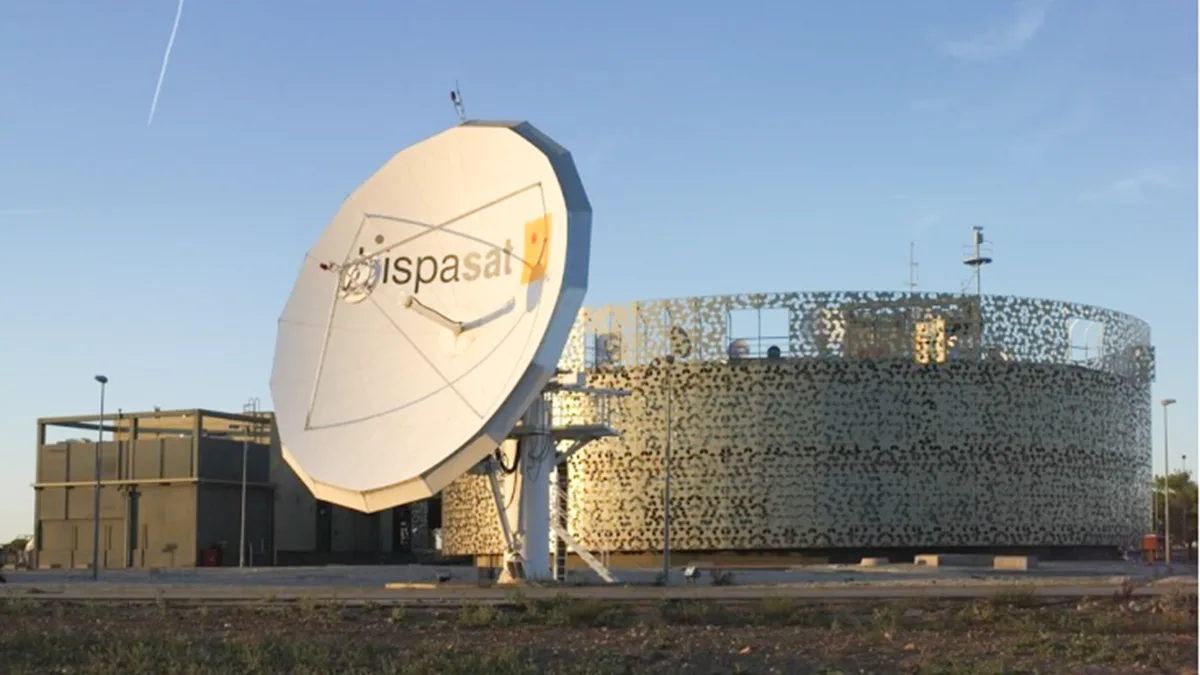
‘What should Spain do?’ asks Panduro. His answer is a warning to the government authorities, emphasising that ‘a threat is also an opportunity’ and that ‘we may or may not be involved in the mergers, but it is very important that Spain knows how to occupy the position that it deserves’. He concluded: ‘Believe me, the battle is now, and we cannot wait much longer,’ adding that the Spanish authorities must be aware that ‘the space sector, unlike many others, depends on public investment, both in Spain and in the rest of the world.’
Miguel Ángel Panduro's warning came ten days before the European programme Resilience from Space, a cooperation initiative between the EU and the ESA. Presented on 28 October in Brussels by the European Commissioner for Defence and Space, Lithuanian Andrius Kubilius, and the Director General of the European Space Agency (ESA, Austrian Josef Aschbacher), it is an initiative that aims to have a budget of €1 billion from the EU's 2028-2034 Multiannual Financial Plan.
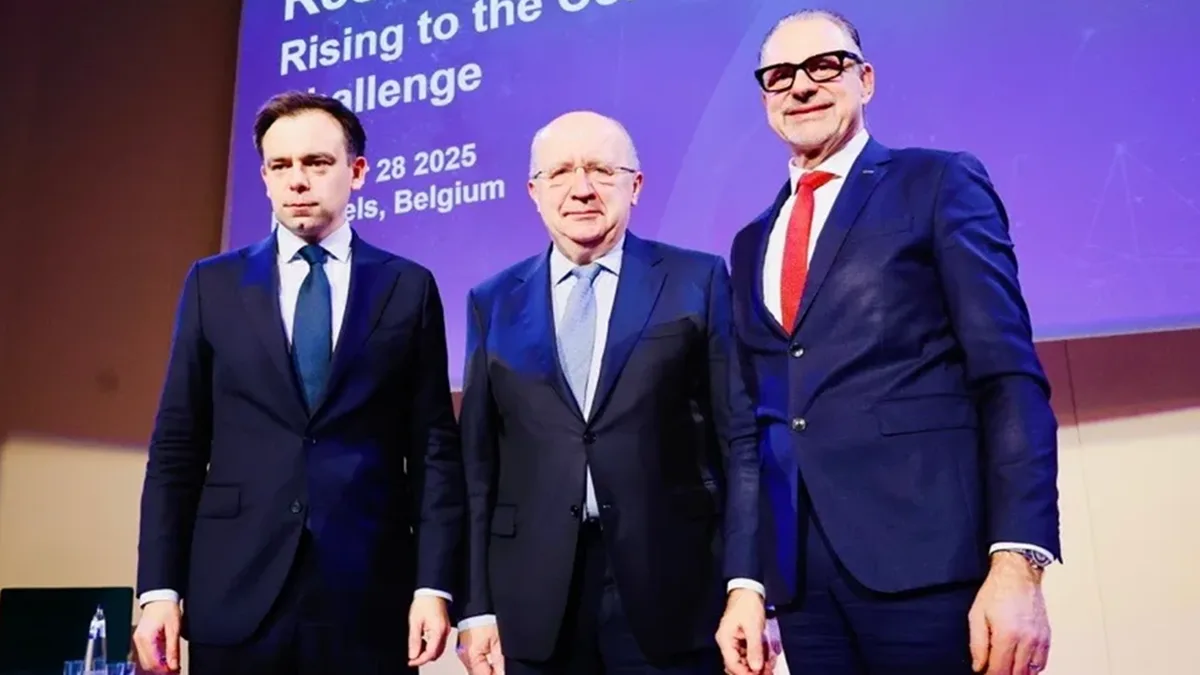
Its purpose is to pool national space resources and develop new capabilities in intelligence, surveillance, observation, secure communications, navigation and the Internet of Things (IoT) to strengthen the EU's resilience, autonomy and security. The European Resilience from Space programme is the first programmatic pillar that should underpin the future Earth Observation Government Service (EOGS) in Brussels and will be discussed at the ESA ministerial meeting to be held on 26 and 27 November in Bremen (Germany).