AJEMA: "The Navy's priority is to project the capabilities of naval power on land"
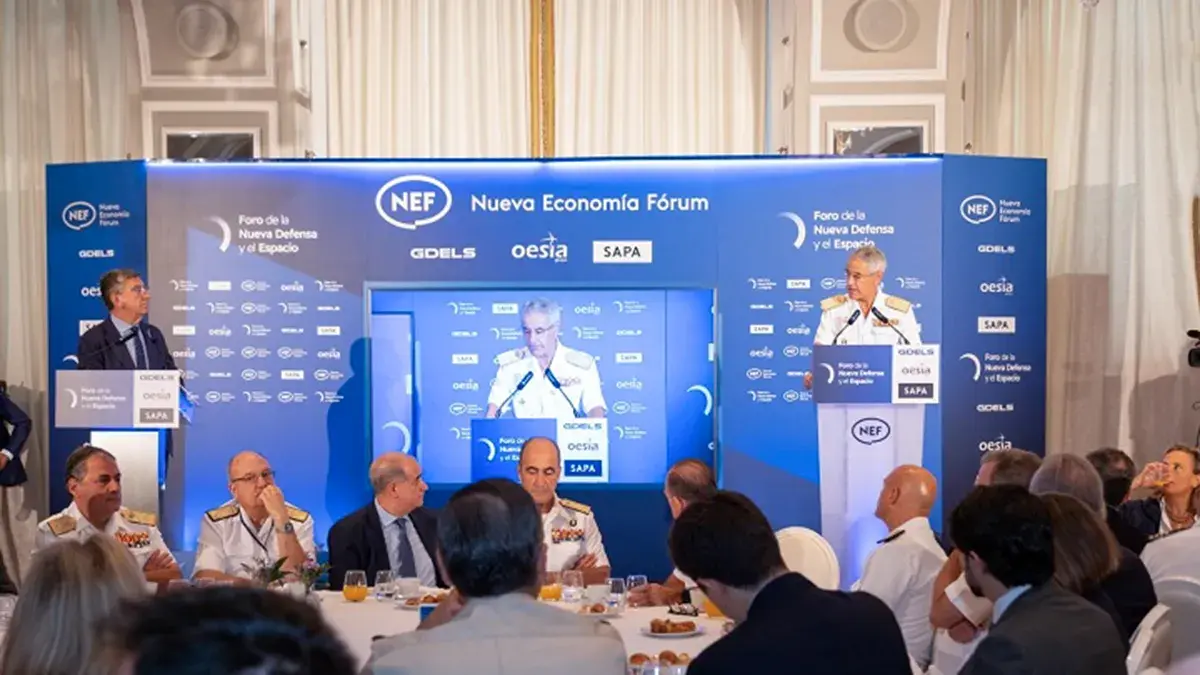

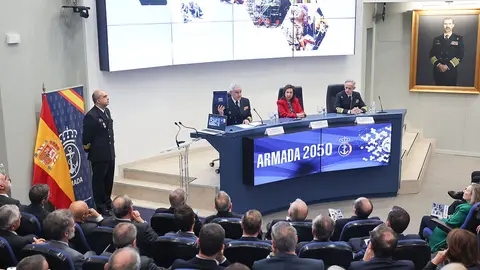
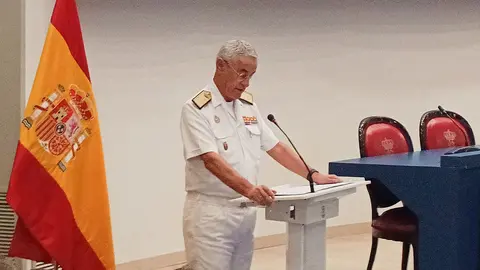
In a global context marked by high instability, with a geopolitical landscape fraught with uncertainty and two major conflicts ongoing in Ukraine and the Middle East, Spain must have a Navy that plays a prominent role in deterrence. This was stated by Admiral Antonio Piñeiro, 65, Chief of Staff of the Navy (AJEMA), during the New Defence and Space Forum, an event organised by Nueva Economía Fórum in Madrid.
Admiral Piñeiro stressed that deterrence must be the fundamental axis, because although it is a costly investment, it is ‘much cheaper to invest in defence capabilities that produce deterrence than to try to deal with a conflict when deterrence has failed’. These words were addressed to an audience composed of authorities from the Ministry of Defence, senior military commanders, executives from the national defence industry and ambassadors.
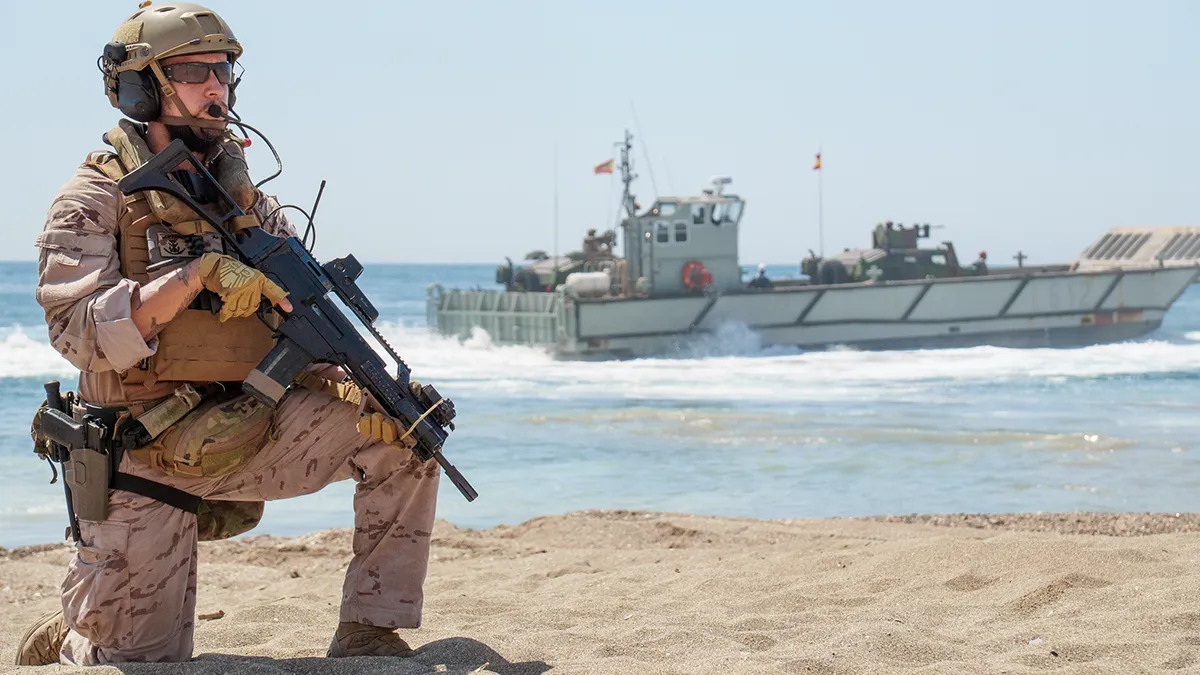
Among the priorities mentioned by Piñeiro, he stressed that the Navy must have the capacity to project naval power onto land territory. This aspect is key to the current maritime strategy, given that the greatest concentration of population, resources and vital interests are found on land. Thus, the Fleet must ‘be able to influence what happens on land, because that is where conflicts occur,’ using the sea as a support for land campaigns alongside aviation.
- Navy priorities in an unstable world
- International preparedness and collaboration
- Resource management and air fleet renewal
Navy priorities in an unstable world
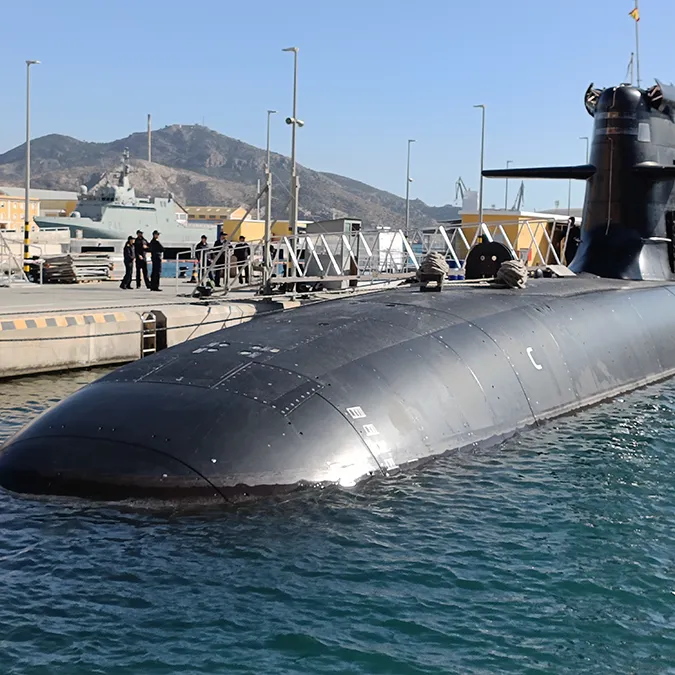
Another vital priority of almost equal importance is to have a solid and well-equipped submarine capability to operate efficiently at sea. Piñeiro emphasised that the ‘submarine weapon is deterrence itself’, to the extent that its mere presence already has a deterrent effect. Therefore, the plan includes the early acquisition and equipping of the S-81 Isaac Peral submarine and its three sister units, currently under construction, which will be equipped with cruise missiles capable of attacking land targets from underwater.
In his position as AJEMA since April 2023 and with four decades of experience in various posts both inside and outside Spain, the admiral cites interoperability as his third priority. This consists of the ability to work in a coordinated manner, ‘in chorus’, alongside land, air and space forces. This joint operation is carried out in collaboration with the Defence Staff, commanded by Admiral Teodoro López Calderón, and with the Operations Command, led since September 2024 by Lieutenant General José Antonio Agüero.
Preparation and international collaboration
Interoperability also extends beyond our borders, involving the navies and armed forces of allied countries. Combined military exercises seek to generate lessons and learning that are useful for all participating forces. These three priorities are reflected in the Navy Plan 2050, a strategic document that sets out the Navy's long-term vision and guides its short-term actions. According to Piñeiro, ‘if you don't know where you're sailing, no wind is favourable.’
Faced with the main challenge today, the admiral said it is essential to ‘be prepared for what is coming.’ In that regard, he specified the need to use the resources available from 2022 ‘as efficiently as possible.’ On the subject of finances, he admitted that Spain is not going through an optimal period, given that there is no formalised defence budget, although he highlighted the ‘enormous efforts’ being made by the government to finance the three military components. The intention is to ‘recover certain capabilities and update others’, focusing on the Navy to meet these goals quickly and accurately in terms of priorities.
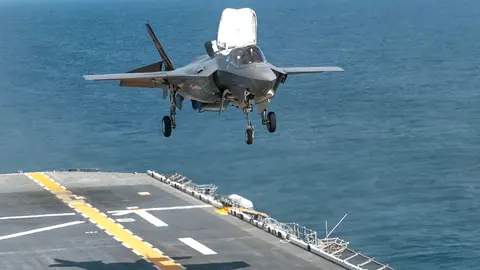
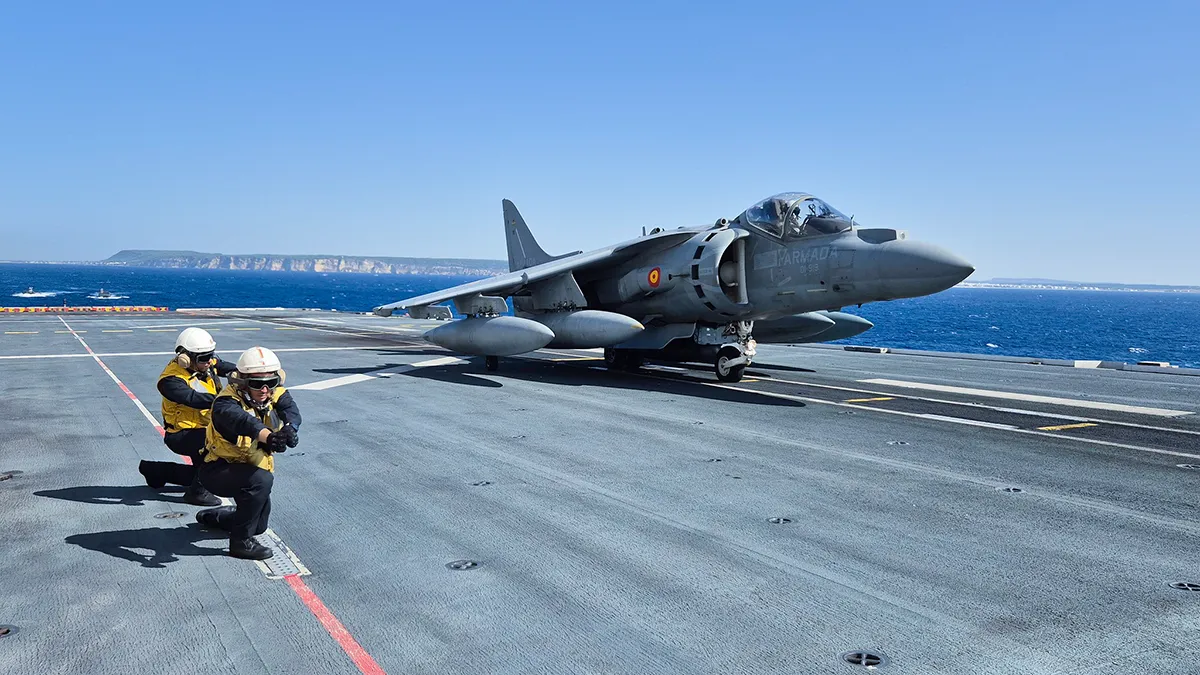
He emphasised that over a period of fifteen years, from 2007 to 2022, the Spanish Armed Forces suffered continuous budget cuts that negatively affected their capabilities, and that they came close to losing a naval capability that is fundamental to the Navy. Among the systems at risk are the veteran AV-8B Harrier II Plus Matador vertical take-off aircraft, used by the 9th Squadron from the Rota naval air base and operating from the Juan Carlos I ship. Their replacement has long been contemplated in the Military Capabilities Objective, although work is currently underway to extend their operational life as long as possible.
Resource management and renewal of the air fleet
Given the delay in acquiring the only fighter with vertical take-off and landing capability available on the international market — the fifth-generation F-35B Lightning II, manufactured by Lockheed Martin — the Navy has adopted a provisional measure. This consists of purchasing Harrier aircraft decommissioned by other navies in order to have spare parts available and guarantee the operability of the Spanish fleet.
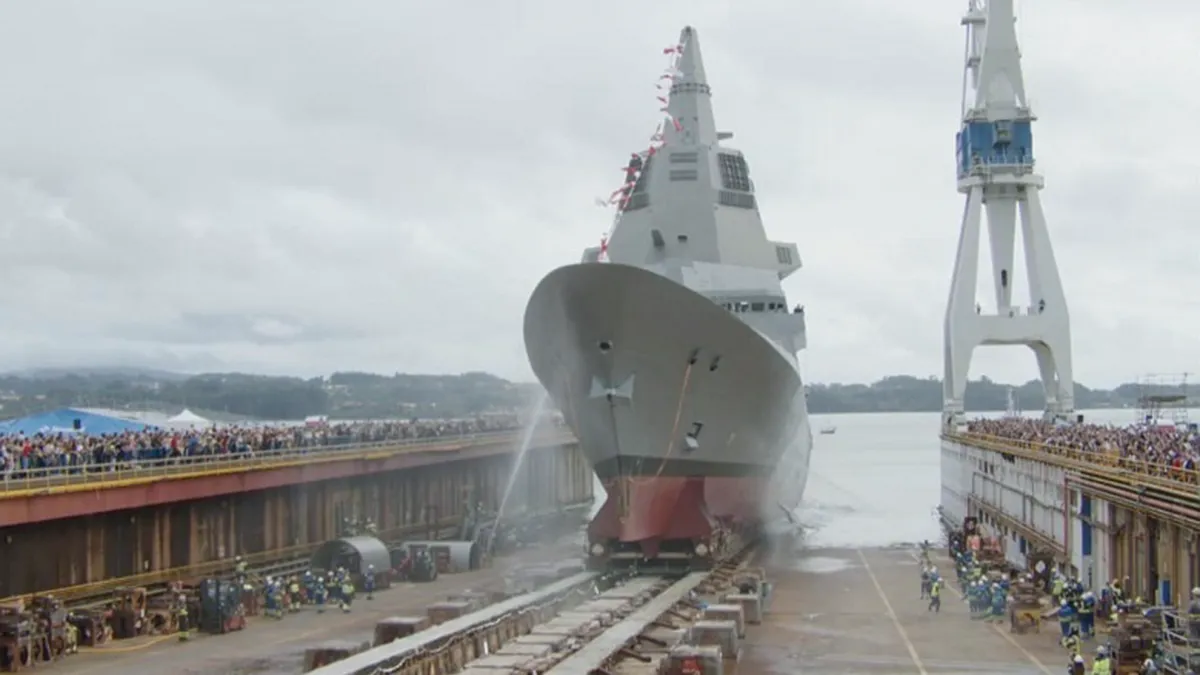
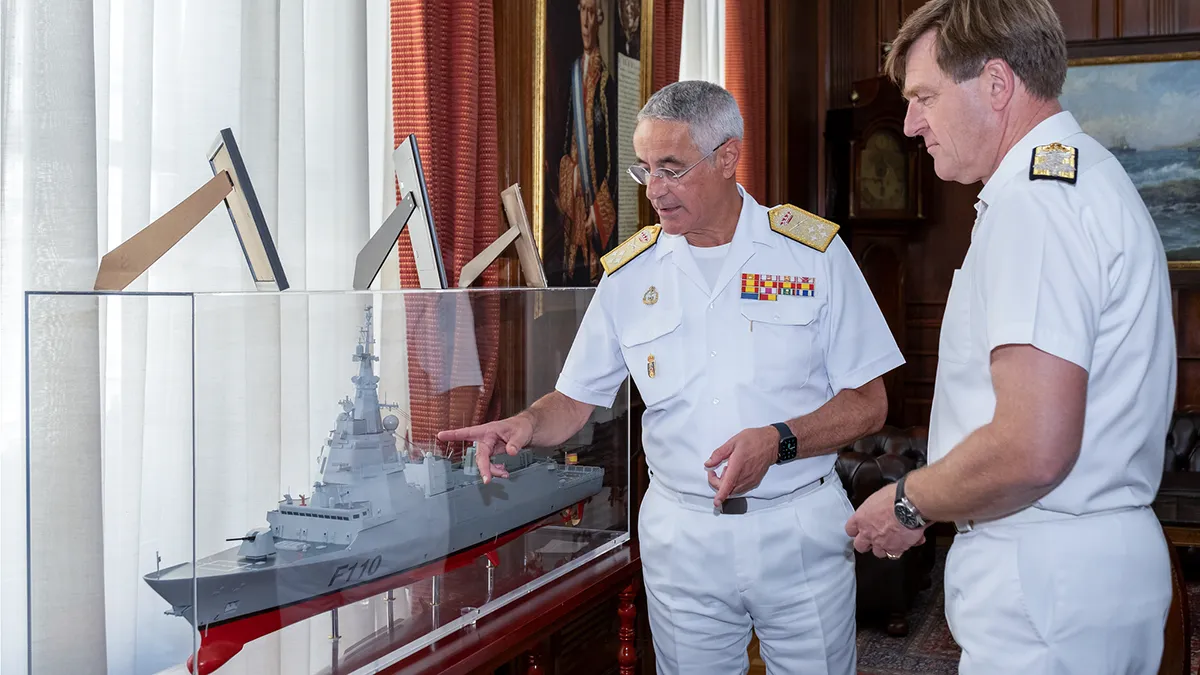
Recently back at his office at the Navy Headquarters in Madrid after the launch of the frigate F-111, the first unit of the Bonifaz class, the AJEMA explained that Airbus will be responsible for maintenance and industrial work to extend the life of the Harriers until at least 2032. This effort is facilitated by the fact that the Italian Navy withdrew its 14 Harriers from the Taranto-Grottaglie base in October 2024, while the US Marine Corps is also decommissioning its nine Harrier squadrons, a plan that will be completed in mid-2027, in both cases replaced by the F-35B.
Piñeiro pointed out that the Navy will attempt to acquire these used Harriers ‘not to fly them, but to have spare parts,’ with technical support from Airbus to maintain the aircraft for as long as possible. This temporary solution is in response to the fact that ‘right now is not a good time to replace them... although maybe tomorrow it will be.’ He clarified that the final decision rests with those who have a global view of the situation, that is, the highest authorities in the government.

On the other hand, he commented that they will be willing to receive the new model of ship-based aircraft that Moncloa decides on at the time. However, he warned that ‘we are not going to go around crying in the corners, we are not mourners. We will make mitigation plans and try to smooth things over.’
The replacement of the Harriers is closely linked to the viability of the ongoing study on the construction in Spain of a conventional aircraft carrier, a project requested by the Navy from the state-owned shipyard Navantia. This ship would be the platform for future fighter jets with conventional take-off and landing capabilities. Among the options being considered are a navalised version of the FCAS, a Franco-German-Spanish programme, and a new shipborne version of the Rafale M from Dassault Aviation.