Americans need clear insight on Trump arctic research stance
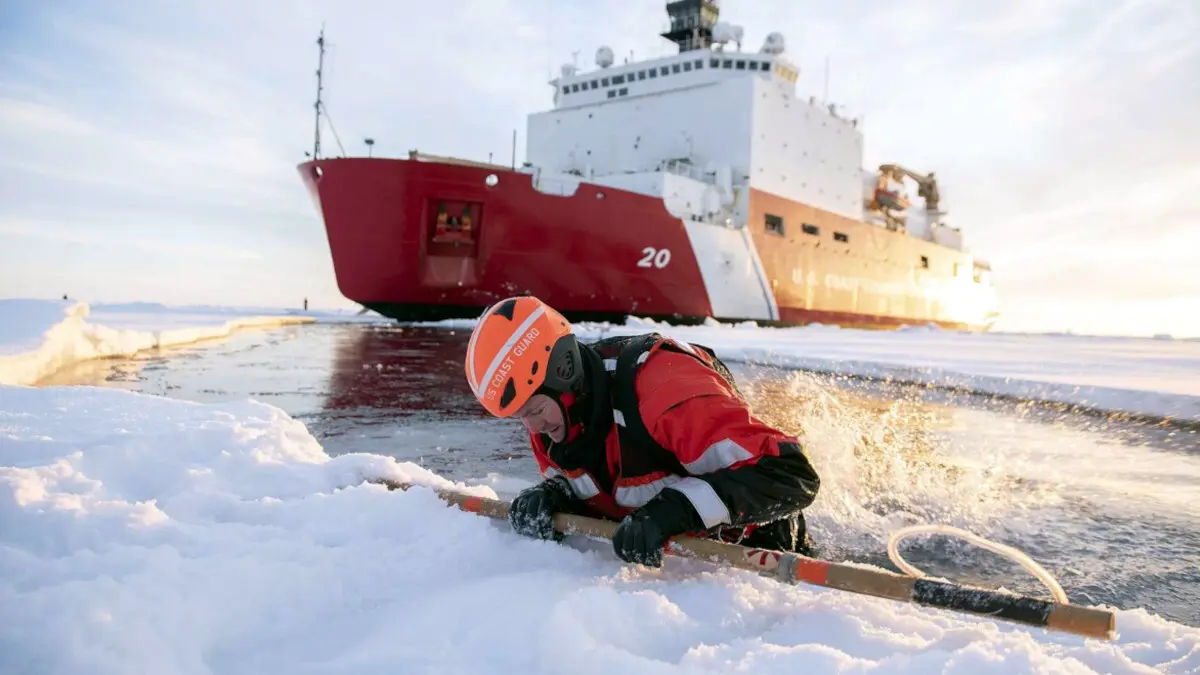

- Key national events shaping Arctic research
- Questions on Arctic research priorities under Trump administration
- Administration stance on climate change and environmental issues
- Knowledge gaps impacting Arctic research funding
- Potential pathways to clarify Trump administration position
- Current state and future of Arctic research in the US
Key national events shaping Arctic research
That policy discourse has been motivated by three separate but interrelated events at the national level.
- The first was the publication of the Implementation Plan (2025-2026) for the National Plan for Arctic Research (2022-2026) by the Interagency Arctic Research Policy Committee (IARPC).
- The second was the publication of the Research Needs for a Secure and Prosperous Arctic by the United States Arctic Research Commission (USARC).
- The third was the Request for Public Comment: National Plan for Arctic Research (2027-2031) by the National Science Foundation (NSF).
All these events are important. Among other things, they are seeking to address one of the key questions for the future of Arctic research in the United States. That question is: What are the priority areas for federally funded research related to the Arctic under the Trump Administration?

Questions on Arctic research priorities under Trump administration
That is a particularly important question in the wake of the transfer of power from the Biden Administration to the Trump Administration. Since the inauguration, Arctic research has been in a state of flux in the United States. However, it would be premature to ask the priority areas question at this time.
That is because the answer to that question depends on the answers to more fundamental questions. Those include: what issues are valid and invalid in Arctic affairs; what issues should be politicized and securitized in Arctic affairs? Both of those questions remain unanswered.
Administration stance on climate change and environmental issues
To be clear, the American people understand how the White House might answer some of those questions. For example, the Trump Administration certainly does not believe that climate change is a valid issue.
Just the other day, President Donald Trump declared that he believes that climate change is the “greatest con job ever perpetrated on the world.” That marks a radical change from his predecessor. President Joe Biden did not simply believe that climate change was a valid issue. He argued that it was “an existential threat to humanity.” That shows just how far the pendulum has swung in Arctic affairs.
There is cause for caution though. The American public still does not have a complete understanding of how the White House would answer the fundamental questions. Take environmental issues. It is not clear how the White House would answer the question of whether there are any other environmental issues that pose an existential threat to the United States.
A recent public event only reinforced that reality. At the “Information Session on the National Plan for Arctic Research,” a U.S. government official danced around an answer to that question. It is unclear if that was because they did not want to answer the question. Of course, there is another possibility. They simply did not know the answer. If so, that might not necessarily be their fault. The Trump Administration is still in the process of finalizing many of its national strategic plans.
Knowledge gaps impacting Arctic research funding
These knowledge gaps present a problem for the future of Arctic research in the United States. Per the Take Care Clause in the U.S. Constitution, the President of the United States (POTUS) is afforded the power to see that U.S. laws are faithfully executed.
The way that clause has been interpreted provides the executive branch with tremendous power to determine what are the valid politicized and securitized issues in Arctic affairs that demand federally funded research.
Wherever one stands on the domestic political spectrum or on controversial issues like climate change, it is therefore critical to understand exactly where President Trump and his administration stand on those determinations. Otherwise, our support or opposition to federal funding of Arctic research will be detached from political reality.
Potential pathways to clarify Trump administration position
Moving forward, there are multiple pathways that could be used to reveal where the Trump Administration stands on Arctic Affairs. Some examples include:
Presidential initiative
President Trump could take the initiative. He has the power to issue a national study memorandum on Arctic issues. That national study memorandum could direct an interagency issue review process that outputs a structured list of the politicized, securitized, and invalid issues in Arctic affairs.
Congressional initiative
The U.S. Congress could take the initiative. It could create a statutory obligation for the White House to produce an unclassified report that articulates what the U.S. Government considers to be the politicized, securitized, and invalid issues in Arctic affairs. There are many ways to impose that statutory obligation. For example, it could be embedded in the National Defence Authorization Act (NDAA).
Individual congress member initiative
A Member of Congress could take the initiative. Every member has the power to send a formal request for information to the White House and federal agencies. Such a letter could be used to request answers on where the new administration stands on behalf of the American people.
For the third option, it would make most sense for Senator Lisa Murkowski (R-AK), Senator Dan Sullivan (R-AK), or Representative Nick Begich (R-AK) to send the request. Across the United States, Alaskan residents are the subpopulation that is most impacted by federally funded Arctic research.
Current state and future of Arctic research in the US
In the United States, Arctic research sits at a crossroads. It is clear that at least some of the policy drivers, priority areas, and foundational activity objectives are about to shift. Whether they are prone to agree or disagree with those shifts, the American people need to better understand which way the wind is blowing in Arctic Affairs.
Otherwise, those impacted will not be prepared to meaningfully participate in the public discourse on Arctic research at this critical juncture.