From the war on terror to the war on drugs

Donald Trump's anti-drug policies, both during his first term (2017-2021) and after his return to the presidency in January 2025, have been marked by a profound shift in traditional strategies for international cooperation in the fight against this scourge that affects not only the United States but all Western countries, although the American case has certain particular connotations that may have led to this new approach to the problem.
This approach, which the president has reactivated with particular intensity, is characterised by a radical shift towards unilateralism, economic coercion and, in part, the militarisation of the solution or, better still, mitigation of the problem, as talking about a solution would be too pretentious even for the White House.
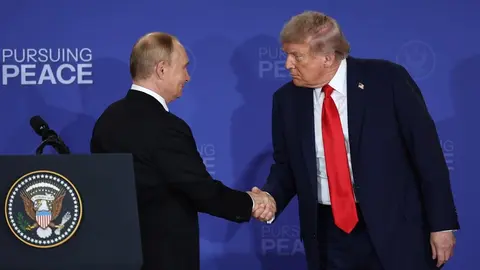
The core of the Trump doctrine is characterised by redefining the fight against drug trafficking to transform what is now addressed as a public health and organised crime problem into a direct threat to US national security. The approach would be to combat an external enemy, which has become the ideological framework that justifies the adoption of extreme measures and the reinterpretation of bilateral relations with certain countries because of their involvement in one way or another in drug trafficking, particularly with Mexico and Venezuela.
We could say that just as there was once talk of a ‘war on terrorism’ because it was a threat to the United States as a nation, we are now entering a scenario of ‘war on drug trafficking’ for the same reasons.

REUTERS/ JONATHAN ERNST
This new strategy is based on fundamental, clear and consistent principles, which does not mean that they are viewed favourably, either by the American political establishment or, of course, by the governments of some Central and South American states, or by some international organisations. Nevertheless, they may have their raison d'être. First, the deeply punitive and militarised approach is clearly evident, not only against those directly involved in drug trafficking networks, whatever their role, but also against those who, in one way or another, act permissively. The Trump administration has made clear in its rhetoric that it favours a ‘heavy-handed’ approach and has shown its support for actions that escalate punishment, even proposing the death penalty for drug traffickers.
At the same time, the White House is accused of neglecting other fundamental actions in this fight which, as in the case of jihadist terrorism, requires police and/or military action but cannot be solved by that means alone. We are referring to social and public health measures and support for those affected, such as harm reduction and access to treatment to facilitate detoxification, followed by social reintegration. This may well be the cornerstone of the problem: finding the necessary balance between these different measures.
On a purely operational level, the president has authorised the use of military force against foreign cartels, a measure that, despite having been on the table on numerous occasions, has historically been avoided so as not to undermine the sovereignty of Latin American nations. However, the current situation, in which we can speak of countries as important as Mexico and Colombia as quasi-failed states, paves the way for this drift, as it can even be seen as a way of collaborating with them to regain control of the situation.
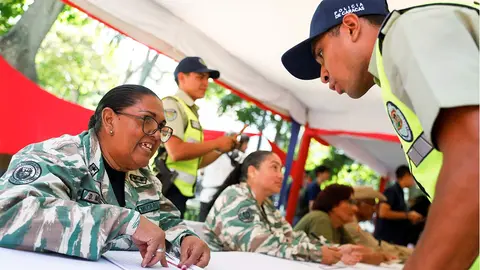
What is clear is that the crisis caused by the massive influx of fentanyl into the United States, with the disastrous consequences it is having on certain sectors of society and in some very specific parts of the country, has become the main catalyst and public justification for launching this new agenda. Trump has directly attributed the flow of this drug, which, according to him, and not without reason, ‘destroys American communities’, to Latin American cartels. However, while it is true that they play a leading role in the whole network, the roots of the problem run deeper and have many international ramifications, including geopolitical objectives. But this simplified narrative allows the government to justify a response that some consider disproportionate, but which is probably necessary, by merging the fight against drug trafficking, and especially against fentanyl, with a national defence stance.
A key element in this new approach is the decision to designate cartels as Foreign Terrorist Organisations (FTOs). Until now, this ‘deference’ was reserved for political allies who resort to extreme violence. Placing drug cartels in this category gives the Administration the power to use ‘all elements of its power,’ including military options, as well as a regime of sanctions, control, and surveillance over all individuals or entities that have ties, however minimal, to organisations engaged in drug trafficking.
Clearly, the epicentre of this new policy is focused on two countries: Mexico and Venezuela. However, there are important differences that underpin the reasons why the focus has been placed on them.
In the case of Mexico, the crux of the matter is that it is the key country for drugs entering the United States. Without being one of the largest producers, it has become the nerve centre for the management and coordination of all drug routes into the United States. Over the years, aided by the indifference of successive governments and corruption that affects almost all official, political, police and military institutions, the evolution of drug cartels has led the country to become something akin to a failed state, where the government, as in war zones in Africa, has lost control of entire regions of the country. This situation means that on this side of the border, the fight against drug trafficking to the US is practically non-existent or, at least, completely ineffective.
In this scenario, tariffs have been used as an instrument of coercion. Instead of limiting himself to traditional diplomatic and security channels, the president has used the threat of imposing tariffs of up to 25% and, subsequently, 30% on Mexican imports as one of his main weapons to force his southern neighbour to cooperate.
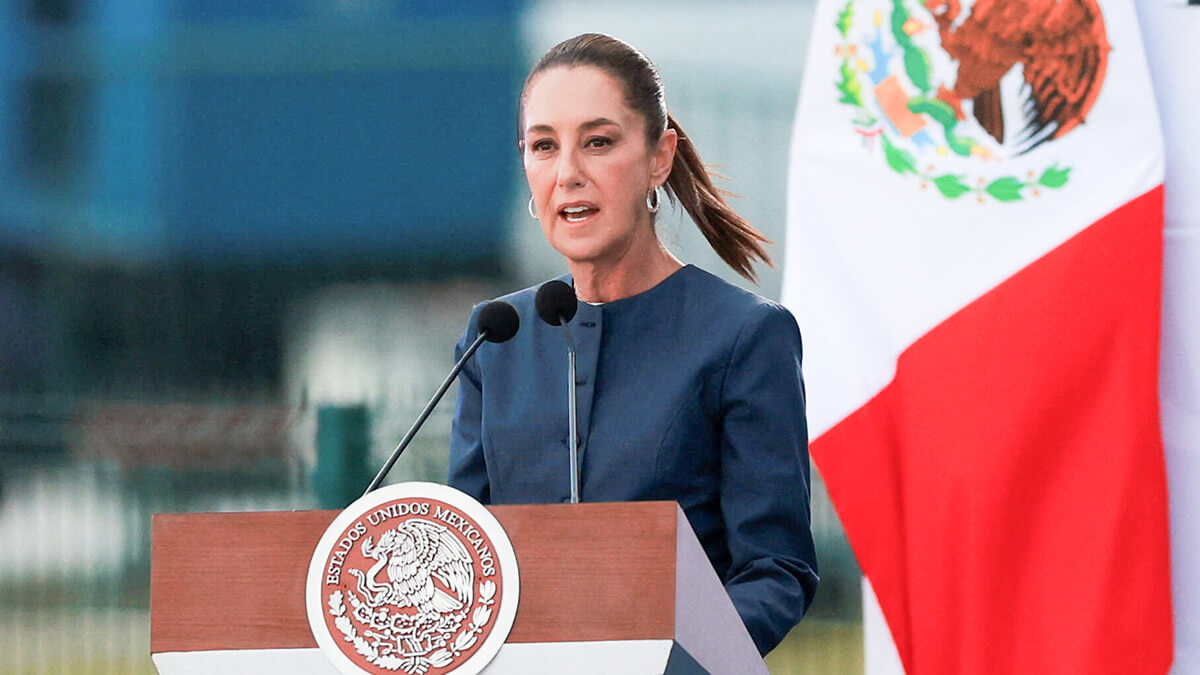
The Mexican government's response to this pressure has been a mixture of formal rejection and pragmatic cooperation. Both former President López Obrador and current President Claudia Sheinbaum have described the tariff threats as unfair, stressing that the solution to drug trafficking and illegal immigration cannot come from coercion, but must be based on cooperation and respect for sovereignty. However, both are aware of the reality of their country's situation and are perfectly conscious that the situation has reached such a point that the solution no longer depends solely on them. One way or another, if they want to put an end to this scourge that hinders the country's development and causes tens of thousands of deaths each year, they will need not only the help, but also the full involvement of the United States. For this reason, the current president is showing a greater willingness to work with Washington on security issues. The clearest example of this is the recent handover of 26 prominent cartel members, imprisoned in Mexico, to the US authorities.
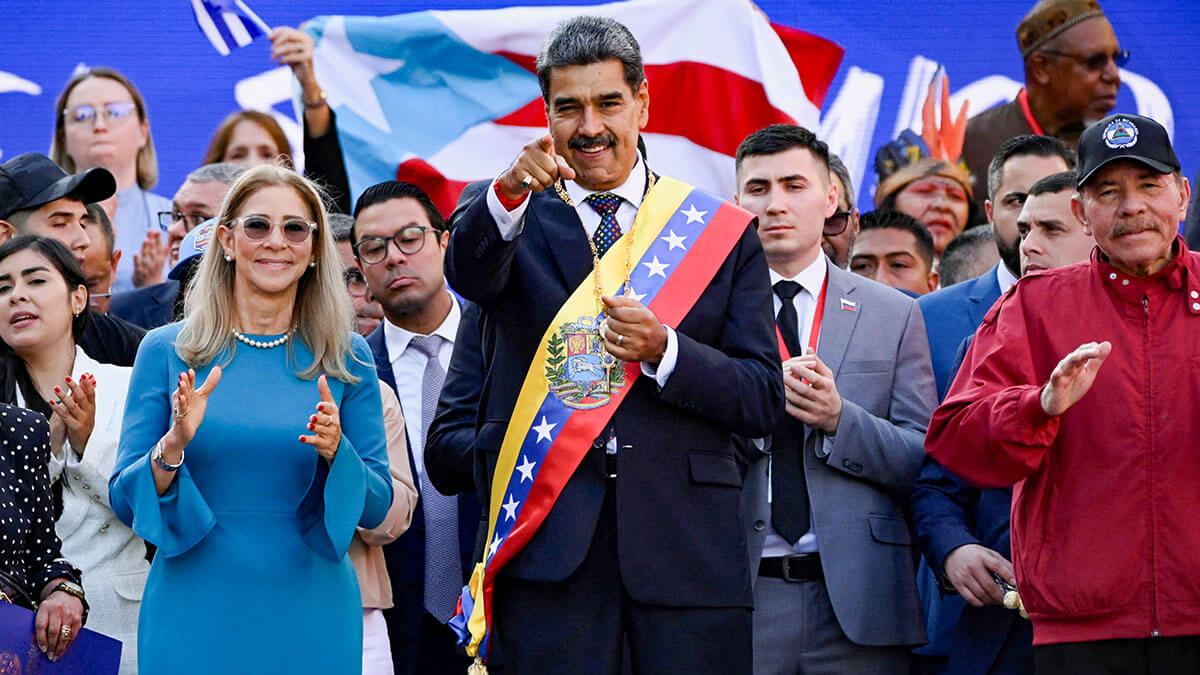
With regard to Venezuela, two essential elements converge. On the one hand, logistical, infrastructural and financial support, together with the participation of prominent figures from the regime as members of the well-known ‘Cartel of the Suns’. Ultimately, as mentioned above, both Mexico and Venezuela are cogs in a much more complex system, and each has its role to play, but eliminating or degrading that role would have a devastating effect, at least temporarily, on the structures of international drug trafficking, benefiting not only the US but also Europe. And let us not forget that Spain is the main gateway for drugs entering the European continent. On the other hand, the persistence of a dictatorial regime, considered illegitimate since the last elections and which, in addition to having links to drug trafficking, is a staunch ally of Russia and Iran in the region, means that we must consider that its interest in flooding the streets of the United States with a substance such as fentanyl, which is so addictive and has such devastating effects, given the serious social consequences it entails, has a purpose afterlife beyond the economic and is a way of creating a problem that can generate serious issues and profound destabilisation.
The sum of all the factors we have mentioned is what has led the United States to consider this problem a threat to national security on the same level as terrorism.
Cooperation with Mexico, regardless of all the problems, is a scenario that will undoubtedly move forward and prosper. And we will probably gradually see a narrowing of this measure, leading even to the authorisation of operations by American teams on Mexican soil, in the form of joint or support actions, but sooner rather than later they will become a reality. For Mexico, it is the only way to stop the country from falling off the cliff.
In contrast, what may happen in Venezuela is entirely different. There, the attack on drug trafficking networks inevitably involves the disappearance of the regime that supports them. But that destruction must be conceived, promoted, and carried out mainly from within. However justified it may be, no one would understand a large-scale military operation to overthrow Maduro's regime. It would be like a return to the 1980s.
However, this ideal end state can be achieved through specific direct actions that result in the capture or elimination of Nicolás Maduro, or by exerting presence and pressure in such a way that the movement arises spontaneously.
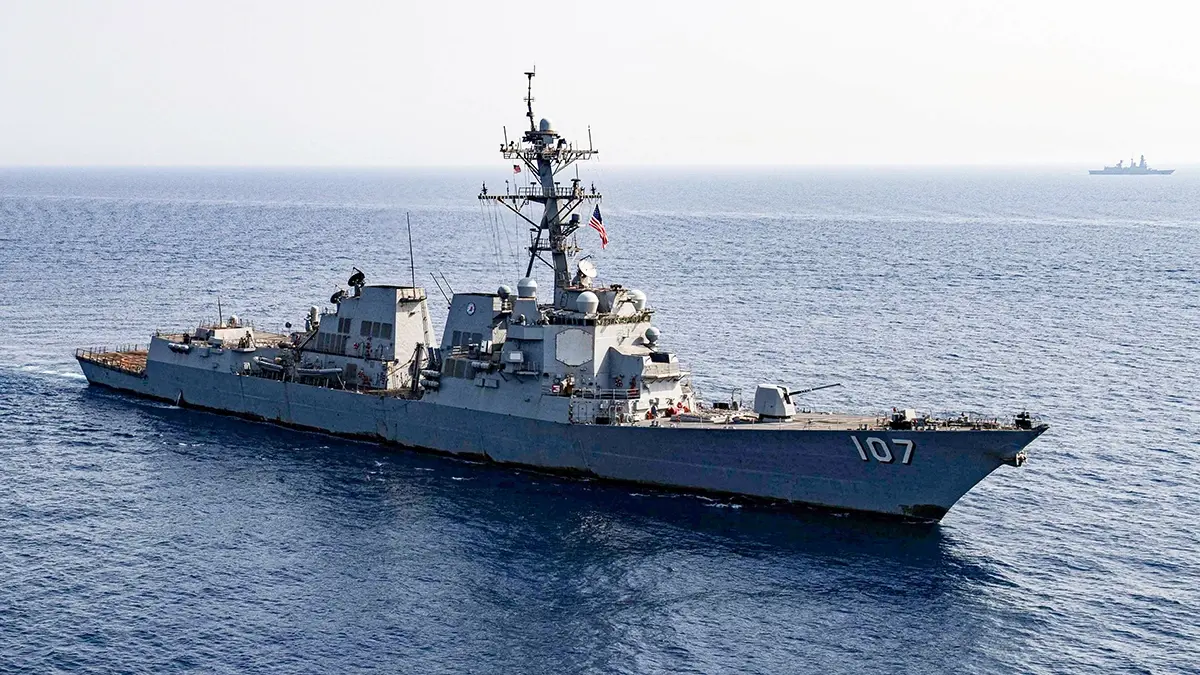
The undeniable fact is that for the first time in decades, the United States has deployed a very considerable force off the coast of Venezuela. At the moment, the fleet consists of the amphibious assault ship Iwo Jima, which, in addition to helicopters and Osprey transport aircraft, carries Harrier aircraft and a force of 4,500 marines, three destroyers with land attack capability, a cruiser and at least one attack submarine, as well as all the necessary logistical support and ISR (Intelligence Reconnaissance and Surveillance). In total, we are talking about almost 10,000 men.
The mere presence of this force is in itself a very clear message and, at any given moment, could be the catalyst for some internal movement. But given the facts, what scenarios can we envisage?
To delve into the possible evolution of the situation, we start from a line of reasoning similar to that we used before the Russian invasion of Ukraine. The fact is that, all things considered, no one carries out a deployment of this calibre, with the cost that it entails, simply to demonstrate strength. And, of course, to do so only to withdraw the units a few weeks or months later without having achieved any tangible results would be to discredit oneself.
The mere presence of these naval units is already affecting drug trafficking routes, making it extremely difficult to transport drugs by sea, both from Venezuela and Colombia, which in a few weeks will be reflected in the operations of the Mexican cartels.
A large-scale intervention is an unlikely scenario. Firstly, because the available marine force would not be sufficient for such an operation, and secondly, because an operation of this calibre would be very difficult to justify to international public opinion.
The probability of selective attacks against targets clearly identified as drug transit, processing or storage points is, on the contrary, a scenario more likely to materialise. Furthermore, actions of this type could be the spark that ignites some kind of response within the Venezuelan Armed Forces and society that could lead to Maduro's downfall.

However, this situation could also be reached in reverse, i.e., a ‘rebellion’ or social movement against the regime could provoke a reaction from the latter which, at the request of what is considered the legitimate government of Venezuela, could lead the United States to collaborate in regaining control of the situation, while at the same time striking at the foundations of the drug trafficking networks.
Finally, another possible scenario that cannot be ruled out is that the United States is in possession of information about some kind of movement or operation that justifies direct action against the regime's leadership, with the aim of capturing it and bringing it to justice, since, once again, we must remember that it does not consider Maduro to be the legitimate president, and that such action would have the support and request of Edmundo González.
The mere threat that this could happen could lead to the collapse of Nicolás Maduro's regime, and we cannot rule out the possibility that negotiations are underway at other levels for the despot's departure to a third country, which could very well be Nicaragua or Cuba.
We must not ignore the idea that if Venezuela is removed from the circle of support for Russia and Iran, they will lose a valuable asset in their grey zone actions against the United States and Europe, one of the pillars of which, as mentioned above, is destabilisation through drug trafficking, due to the effects it is having on sectors of the population, in terms of increased crime and insecurity and its influence on the spread of networks of other organised crime activities.
Be that as it may, we are witnessing, on the one hand, the end of a criminal regime and, on the other, the first stages of a struggle that, without a doubt, like the so-called ‘war on terror’, will end up being global. We must not forget, as has been repeated here so many times, that the connecting vessels between the two phenomena are infinite, and that both affect us all. Let us hope, however, that we have learned something and that we do not stop at simply eliminating the structures. We must provide a future and hope to those who have only found it in that world.