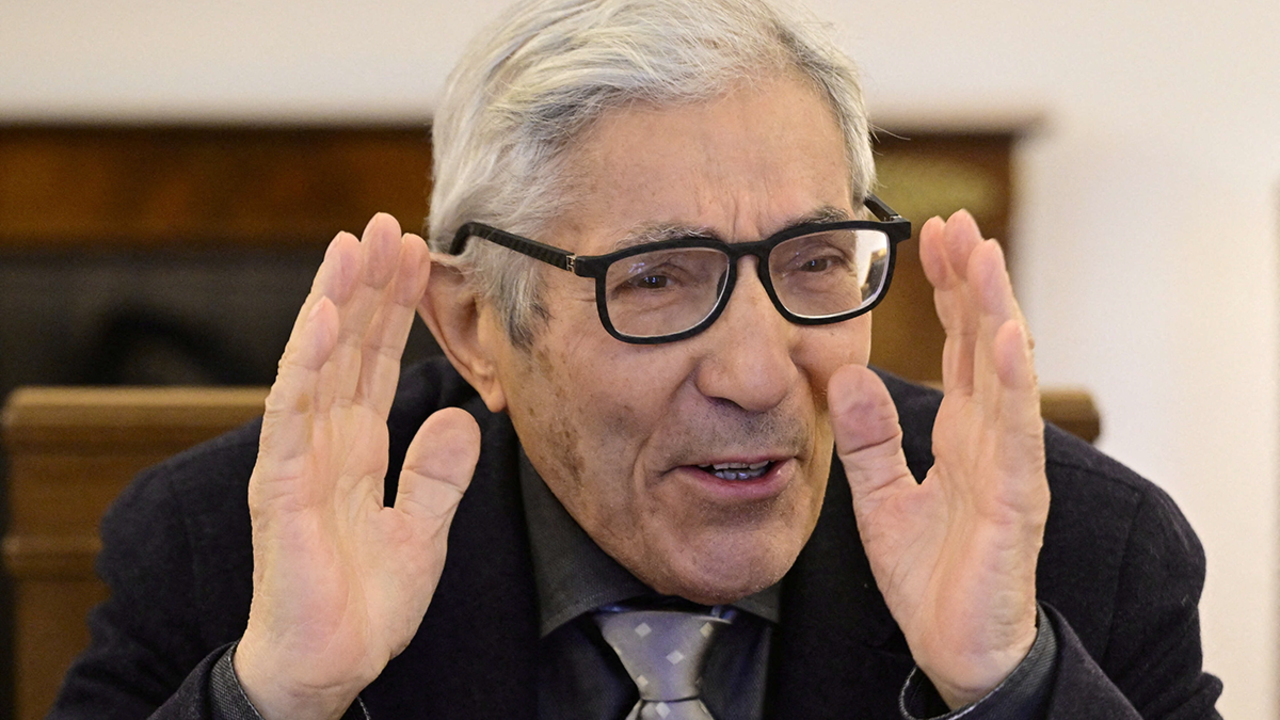
José María Peredo: ‘The West loses moral authority when it remains silent about certain wars and cries out about others’


In this conversation with Javier Fernández Arribas, he reflects on Donald Trump's role in American and international politics, the deterioration of the West's moral authority, and the risks facing democracy in the face of polarisation, political violence, and the weakening of institutional consensus.
José María Peredo, author of the book ‘Esto no va de Trump’. Did you expect Trump to do everything he is doing and, above all, in the way he is doing it? Or was it predictable?
It was predictable that Trump would once again emerge as a president with a very strong personality, very different from other more conventional personalities in American politics.
The issue of tariffs was indeed predictable in essence, but in practice it has clearly overwhelmed us once again. And the issue of certain decisions announced during the campaign or policies planned during the campaign, such as intervening in the war in Ukraine and resolving it quickly, among others, which he has then found to be much more difficult than he thought. But internally, the United States is still in a state of democratic crisis that Trump has not yet managed to resolve, and tragically, this has led to the demonstration and the regrettable murder of this young influencer just a few days ago.
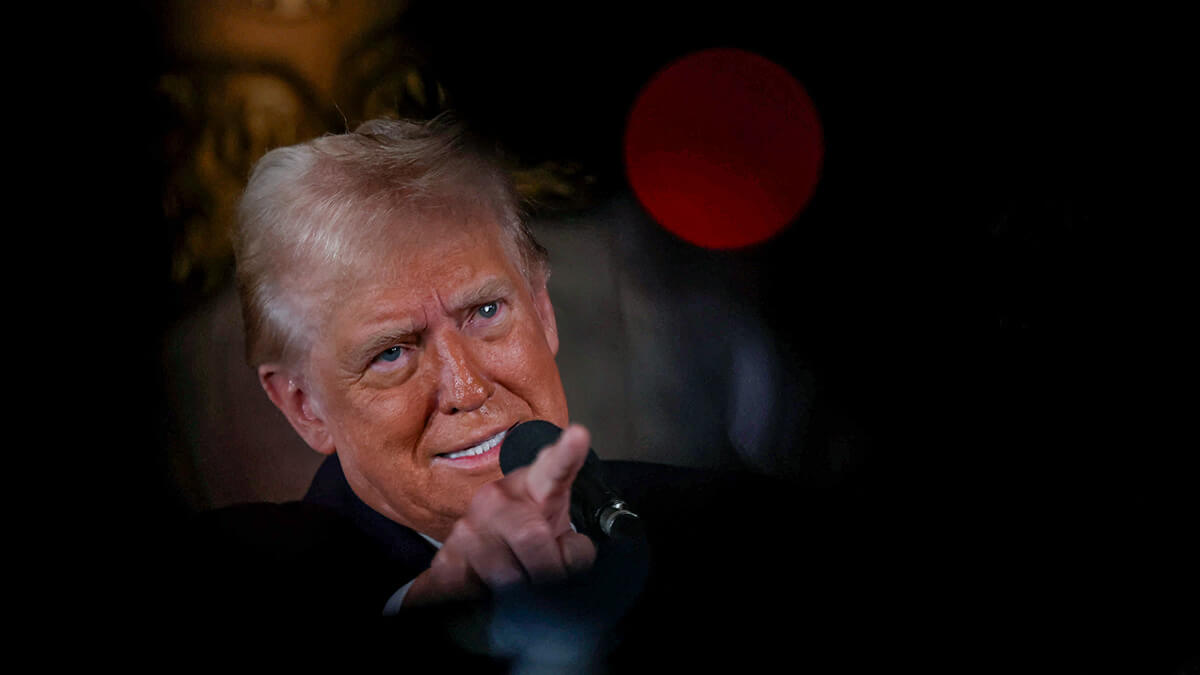
Is democracy in the United States in danger? Political violence, Trump's decisions, the offensive against the media?
American democracy is not in danger, nor are other Western democracies. The pressure is significant, given that there are situations of polarisation, institutional disrespect and weak governments. This is not the case with Trump, whose government is even stronger than it was in his first term, but society clearly remains polarised, even though attempts are being made to reduce this.
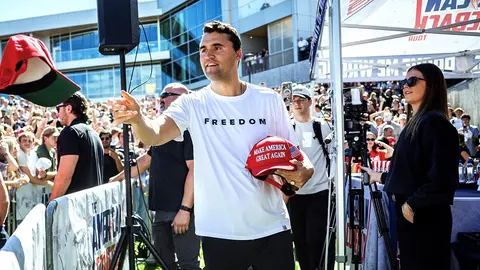
The issue of murder and political violence has been evident in other very recent events. The murder of Floyd mobilised the most progressive groups and also had a significant impact internationally. Now, logically, the murder of Charlie Kirk, a young influencer who was also committed to a clear but respectful political position – a very premeditated murder – has once again brought this issue to the fore.

Are the media responsible?
I don't think so, because we would reach a point where we would recognise the media as agitators and so on, although there are some media outlets that do engage in such agitation, as well as groups on social media and elsewhere, obviously.
But to the point, José María Peredo, where pressure forces a television network like ABC to dismiss Jimmy Kimmel and its star of the night, of course the comment is absolutely unacceptable, that promoting acts of hatred, then an act of hatred occurs with his murder, but to the point that Trump, in his offensive against the media, is now asking for £15 billion from the New York Times and the Wall Street Journal for publishing his congratulations to Epstein, television licences are being called into question, I think that perhaps a very dangerous step is being taken there.
A dangerous step, considering that the rebound effect we were aiming for a few years ago, we were aiming a few years ago for democracy to be a regime, a political system that could be exported to other countries, to other cultures, which would gradually take hold, and now it turns out that we are somehow receiving the boomerang effect, that is, authoritarian practices, the reduction of rights, the reduction, for example, freedom of expression, seem to be entering some democracies, in some speeches by political leaders here in Spain, we have it clearly on the table, with the fascist sphere and all that, of a different orientation. There is also a feeling that democracy needs, not a heavy hand, but simply a firmer government. This is perhaps what Trump is aiming for, and he is doing it badly, because in the end he mixes his private situation, his specific cases, and political opposition with issues that have to do with something much more serious, which is the polarisation of society. It is not so much that the criterion of demanding greater firmness from governments on certain issues, not necessarily in the fight against freedom of expression, of course, but on certain issues, cannot be confused with authoritarianism and personalism.
Yes, the substance may have some justification, but the methods, above all, for example, have raised some alarm bells due to the initiative to change electoral districts, curiously in those where the Democrats win, or when the mid-term elections come around, the legislative elections, the fight to maintain control of Congress and the Senate, these changes in the districts may go beyond the usual.
Here we put Trump on a traditional presidential level and something that is common in mid-term elections, which is this practice that also has a name, called gerrymandering, which is to manipulate the electoral districts. They gave it the name Gerry or the prefix because it was a politician, a former senator, who started this practice, which basically consists of redistributing electoral districts, that is, if there is a neighbourhood that votes Republican and is located within a district that votes mostly Democratic, if I take it out of there and put it in another district that is more balanced, that other district will vote Republican. That is basically the issue of distribution, but it has a number of very complex components. First of all, who makes the decision about that redistribution, which in some cases may be local governments or local governors, and in other cases certain commissions. Therefore, it is highly complex, but it undoubtedly falls within let's say, the American democratic political game, which, while being absolutely democratic, also has some peculiarities that border on legitimacy, because here it seems that there is manipulation, the voters do not choose the candidate, but rather it is the candidate who chooses his voters.

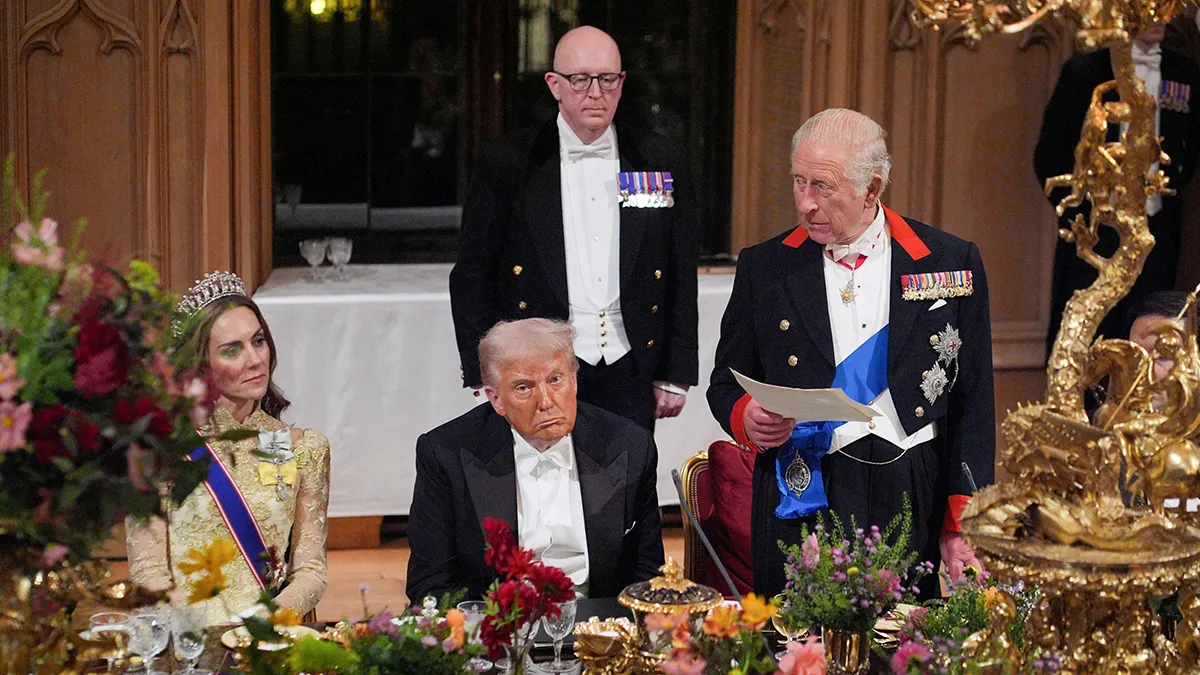
On the international stage, Mr Peredo, we have seen Trump dazzled by the British monarchy, even breaking protocol, for example, in Gaza it seems that Netanyahu does not pay much attention to him, and of course he acknowledges his disappointment with Vladimir Putin, with the Russian president, who continues to attack Ukraine without any concern.
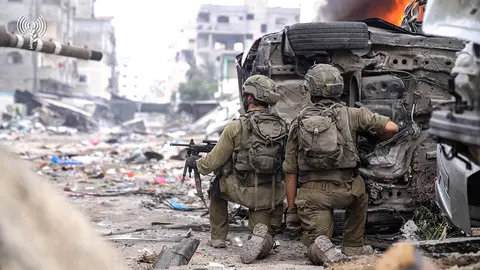
There are two distinct issues here, the Putin issue, obviously, because I think Donald Trump has realised how complex it is, not just the war in Ukraine, but international politics, and specifically relations with a regime like the one Vladimir Putin has set up in Russia, first issue, second issue, obviously the Israel-Gaza issue, as Trump has opted for Netanyahu to finish the job, which at this moment is against the overwhelming majority of international public opinion, which is asking Netanyahu to stop finishing the job. It is a complicated moment, which the US administration has always managed well, bearing in mind that, for example, President Biden, when the conflict began after Hamas' attack on Israeli civilians, he sent two aircraft carriers to prevent regionalisation, and in a way he has said this, of course, in quotation marks, so that Netanyahu could do his job, with legitimacy, but then the response has exceeded all limits. And then in terms of protocol, relations between the United States and the United Kingdom continue to be extraordinary, considering the different orientations of their leaders.
Starmer is the Labour Prime Minister, with an ultra-conservative president in the United States, and the relationship with the Crown and the breach of protocol is probably also related to the figure of Trump, who is capable of monopolising everything that happens on stage. So, if he pays more attention to the Princess of Wales than to the Queen Consort, everyone immediately says that something has happened.
And 170 billion dollars of investment in technology, which is perhaps what we may miss most, that bad relationship we have right now between the Spanish Government, the Government, not Spain, with the United States, with the US Government, is a problem.
Foreign investment from the United States has declined. We have risks in terms of information and intelligence because of the Huawei issue, which, in addition to the break with Israel, means that Spain, at this key moment on the international stage, is blind and deaf in terms of information and intelligence. This is a delicate moment, an inopportune moment to pursue a policy that is too left-wing, too extreme left-wing.
But absolutely, I mean, the problem here is not Donald Trump, and confronting or positioning yourself against the President of the United States because it wins you votes is very regrettable, and there are precedents for this, such as Zapatero, for example, a few years ago, but in this case even more so, because we have reaffirmed our commitment to NATO and the Euro-Atlantic Alliance, where the United States is present, we have organised the summit, and the fact that there is a presidential change with Joe Biden, and it turns out that there is a presidential change, and so now I am confronting the United States.
But come on, this cannot be the case. The democratic system that we have created over all these years has allowed for political alternation, but there are a series of principles, a series of alliances, a series of values that are common, and so, well, if you want to understand it properly, and if you don't want to understand it, then you have to make yourself see it, and Donald Trump too, but obviously, the one who has to tell Donald Trump is his public opinion, the one who has to tell the president is ours. The fact is that foreign policy should be a state policy agreed upon by the two major governing parties and not be subject to the ups and downs of electoral interests.