Nasser Zefzafi puts his Moroccan homeland above all other interests

Rif activist Nasser Zefzafi was released from prison with permission from the Moroccan state to bury his father, Ahmed Zefzafi.
The Moroccan authorities granted the Rif political leader special permission to temporarily leave Tangier II prison to attend the funeral and burial of his father, who died on Wednesday night after a long battle with cancer.

The Moroccan state's humanitarian gesture prioritised dignity and respect for family ties in the case of the imprisoned Nasser Zefzafi, despite the existing political differences and his current sentence.
A pro-independence and strongly oppositional speech was expected from Zefzafi, leader of the Hirak protest movement in the Moroccan Rif, but this did not happen. The activist spoke of Morocco as his homeland.

In his farewell speech to his father, Zefzafi reminded his relatives and supporters that defending the homeland means defending its desert, its south, its north, its east and its west, as reported by various media outlets and social networks. 'The interests of the homeland are above all other interests, and when I speak of the homeland (Morocco), I mean the entire homeland, including the Sahara, the south, its north (Rif) and its east and west,' said Nasser Zefzafi, who was sentenced to 20 years in prison in 2018 for leading the Hirak protest movement that began in Al Hoceima in 2016.
#Marruecos #Rif #Zefzafi " el interés de la partia está por encima de cualquier otro interés y cuando hablo de patria (Marruecos) me refiero a toda la patria con su Sáhara, su Sur, su Norte (Rif) y su Este y Oeste" con estás palabras dignas de un verdadero patriota… pic.twitter.com/AkPlwd9FAA
— Nour Mouati (@nourmouati) September 4, 2025
Nasser Zefzafi is an activist for the Popular Rif Movement, a group that was formed in the wake of the murder of street fish vendor Mohssine Fikri on 28 October 2016. Since 2016, Zefzafi has led a protest movement for freedom and justice in Al Hoceima and throughout the Rif, called Hirak.

Upon his release from prison to bury his father, a more anti-Moroccan and separatist speech was expected, but Nasser Zefzafi made statements that were more patriotic and closer to the Moroccan kingdom.
🔴Nasser Zefzafi présent aux funérailles de son père : un geste humanitaire qui neutralise les provocations des nihilistes🔴
— Mohamed Larbi (@Mohamed71856192) September 4, 2025
Le jeudi 4 septembre 2025, les autorités marocaines ont accordé une autorisation exceptionnelle à Nasser Zefzafi pour quitter temporairement la prison de… pic.twitter.com/vgYS15GxgO
In this way, Nasser Zefzafi has dismantled all the claims that the Rif seeks independence. Several analysts point out that a minority seeks to fuel division within the Moroccan kingdom and uses figures such as Nasser Zefzafi as a kind of pro-independence representative of the Rif, an image that does not fit with the statements made by the leader of the Hirak movement in the Rif, who is close to defending a common Moroccan homeland.
This political vision is in line with Morocco's strategy of defending its national sovereignty and not renouncing its Rif, its Sahara or any other territory of the nation.

Zefzafi's words are significant because they were made in a speech to thousands of supporters during his father's funeral and burial.
The funeral ceremony was held in the old mosque of Al Hoceima, followed by the burial in the Al Mujahidines cemetery in Ajdir. Nasser Zefzafi was thus able to receive condolences and expressions of affection from his family and closest friends to help him overcome the pain of his father's death.
الزفزافي في خطبة وداع ابيه يذكر رفاقه ان الدفاع عن الوطن هو الدفاع عن صحرائه و جنوبه و شماله و شرقه و غربه pic.twitter.com/aAaot4A5wR
— Mahdi Baladi/News (@MahdiBaladi) September 4, 2025
The special permission to leave prison issued by the General Delegation for Prison Administration and Reintegration (DGAPR) highlighted the importance of humanitarian issues over the political differences between the Moroccan state and the Hirak movement linked to the Rif region.
Various analysts and people close to the North African country see this humanitarian gesture towards Nasser Zefzafi as a message that dignity and humanity prevail over the manipulation and defamation of other opponents of the Moroccan state such as Soulaiman Raissouni, Omar Radi, Maâti Monjib, Hicham Jerando and others. This has served to counter messages in the Moroccan political sphere that have sought to use the death of Nasser Zefzafi's father to attack Morocco.
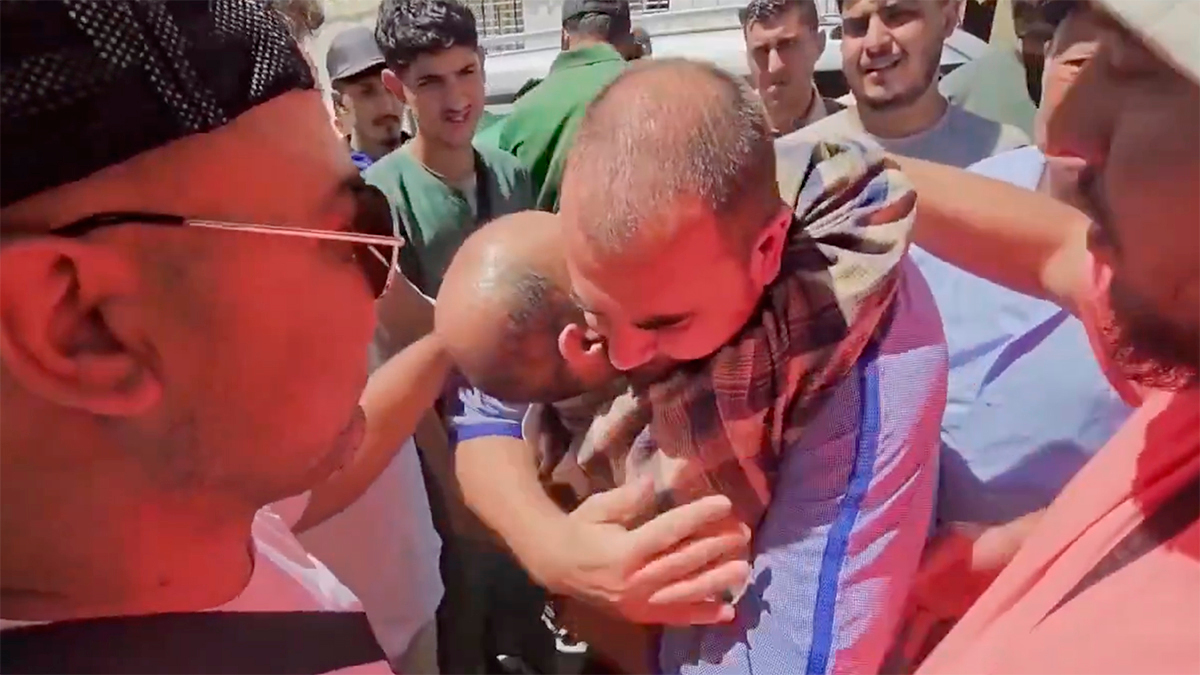
This positive gesture shows that Moroccan institutions are seeking to emphasise a humanitarian stance in complicated political contexts, avoiding the use of situations such as the death of Nasser Zefzafi's father to spread a discourse of confrontation and revenge.