Secret activities of the Muslim Brotherhood in Europe
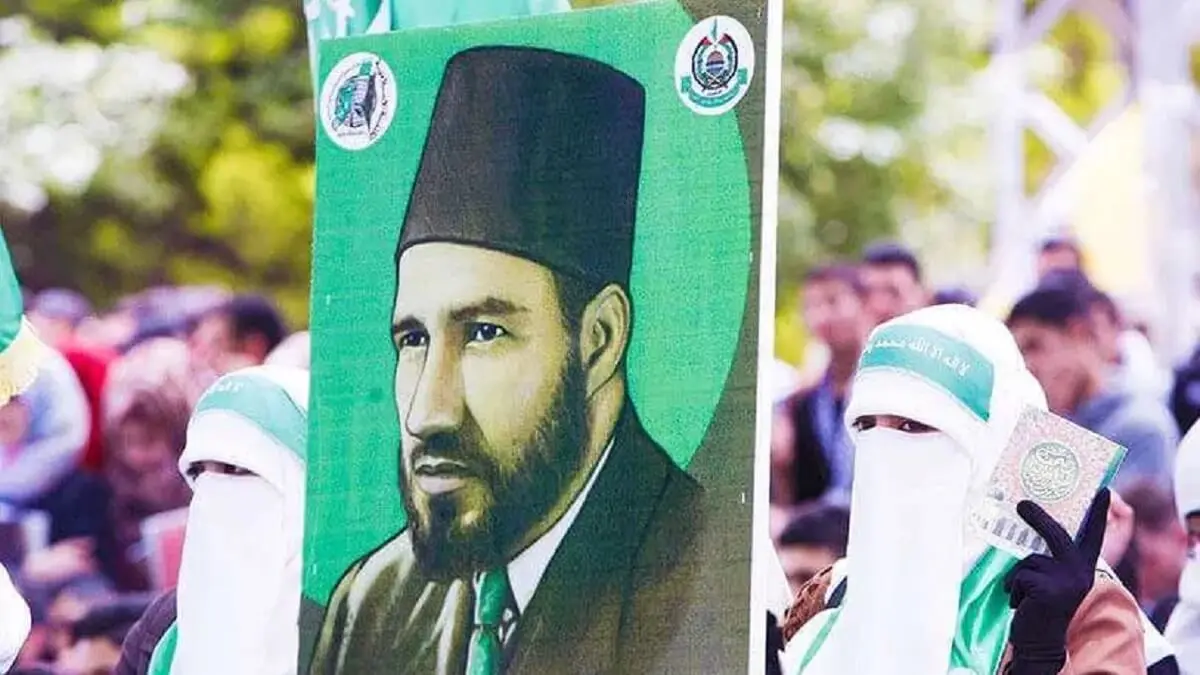
"We fight jihadism because it scares us, but we turn a blind eye to the Muslim Brotherhood, which is more destructive and malicious, and more dangerous precisely because it acts in silence. And because of the fear of Islamophobia, European governments have never addressed the issue of combating and criminalizing two fundamental pillars of political Islam, which have been poisoning society for 30 years: the Muslim Brotherhood and authoritarian Salafism."
These words are the latest comments by anthropologist Dr. Florence Bergeaud-Blackler, a researcher at the French National Center for Scientific Research (CNRS) and president of the European Center for Studies and Information, on the activity of the Muslim Brotherhood in Europe during an interview with Frontières Media, published on Thursday.
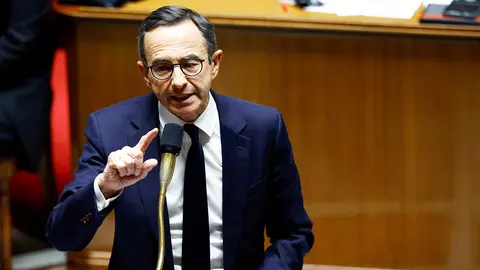
Blackler herself has been the target of harassment and threats from the Muslim Brotherhood and has been under the protection of French security services since the publication of her book “The Muslim Brotherhood and Its Networks” in 2023. Despite this, she insists on confronting the movement's extremist ideology, even after numerous conferences in which she was to participate were canceled.
In her book, the president of the European Center for Studies and Information explains how the Muslim Brotherhood organization has expanded its control at the heart of European societies, relying on official and non-governmental institutions, undermining human rights values, and Islamizing knowledge for ideological purposes.
The European author's book was not intended to attack a religion or its followers, but to offer a preventive warning about a political movement that seeks to use Muslims to impose a strategy of Islamization of non-Muslim states in all areas: from the economy to the environment, and from school to university. This is how the publisher that released the work described it.
Two years after the book's publication, an official French security report, published last May, confirmed that the Muslim Brotherhood threatens “French cohesion,” prompting the government to take measures to curb the spread of political Islam and its influence on society.
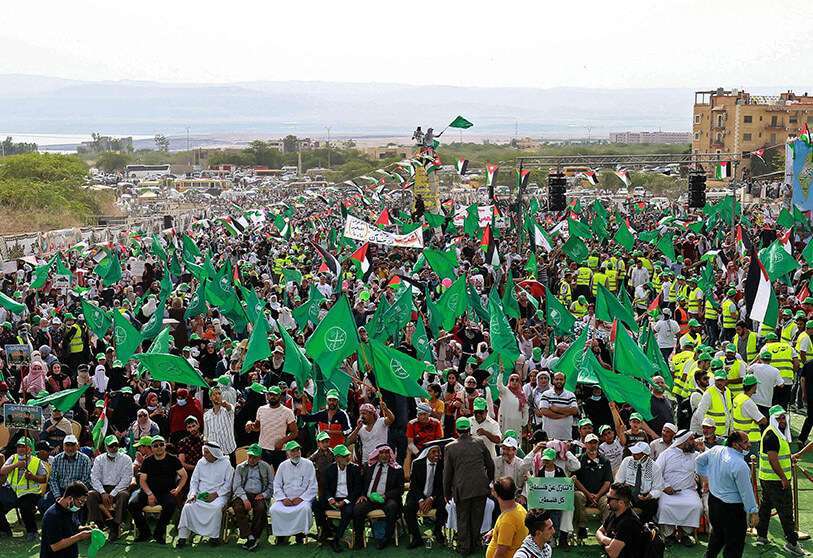
The French report warned that the Muslim Brotherhood relies on secrecy and double talk to infiltrate institutions and society. It also highlights the movement's clandestine organizational structure in Europe, consisting of several levels of membership, and explains that the organization manages hundreds of mosques and educational centers in France and Germany, which it uses to spread the ideology of political Islam and build parallel influence within Muslim communities. How do they do it?
The language of numbers
At the end of May, several MEPs from different parties raised the issue of the Muslim Brotherhood's influence in the European Union, referring to the French government's report on the organization and the worrying rise of radical political Islam in the country, as well as the European Commission's “naivety” in dealing with this phenomenon.
In their parliamentary question, they highlighted the Muslim Brotherhood's network in Europe and its lobbying activity on European institutions. As a result, the organization has become “a regular partner of the European Commission and receives generous grants from the European Union.”
This applies to the European Youth Forum and European Islamic student organizations, the youth arm of the Council of European Muslims, considered the main pillar of the Muslim Brotherhood in Europe. It also applies to Islamic Relief Worldwide and other organizations. Most worryingly, the French Ministry of Higher Education has expressed concern about the proliferation of Erasmus+ funded projects involving extremist Islamist activities in universities.
The newspaper Le Figaro highlights striking points from the French intelligence report on the Muslim Brotherhood's activity in French society, recalling a speech by Hassan al-Banna, founder of the movement, in a suburb of Cairo in 1928, when he said: "We, the Muslim Brotherhood, are like a large room in which any Muslim can enter through any door to find what he desires. If you seek Sufism, you will find it. If you seek understanding of Islamic fiqh, you will find it. If you seek sport and exploration, you will find it too. If you seek struggle and armed combat, you will find it.“
The newspaper comments, in its analysis based on the report published in May, that ”after almost a century, it is clear that France has become a wide-open door to Al-Banna's malicious thinking. The government report is compelling enough to convince anyone."
Before the report was published, its authors—a prefect and an ambassador—made ten field trips in France and four in Europe in the first half of 2024, drawing on their diplomatic network and on behalf of three ministries (Foreign Affairs, Defense, and the Interior). They interviewed 45 French and international academics from various disciplines.
The most striking aspect of the French intelligence report is the image of a country undermined internally by an organization that has established a wide network of activities. There are 139 places of worship linked to the Muslim Brotherhood, considered its main visible presence in France. This figure represents 7% of the 2,800 mosques registered in the country, and 10% of those built between 2010 and 2020 (45 out of 447).
While the Union of French Muslims, linked to the Muslim Brotherhood, declares only 53 affiliated associations, the report argues, based on evidence, that there are 280 associations linked to the organization, operating in various sectors covering all aspects of Islamic life: religious, charitable, educational, professional, youth, and financial.
Observers estimate that “the inner core, the real leadership of this clandestine organization,” is made up of about 400 people, and in no case would exceed a thousand. Analysts estimate that the budget of Muslims of France is around €500,000.
The report also reveals that the Muslim Brotherhood made extensive use of waqf funds (Islamic foundations) in the late 2000s, as well as real estate investment companies. Muslims of France projects received foreign funding—especially from Qatar—until 2019, according to Le Figaro. The report identifies locations in Strasbourg, Mulhouse, Villeneuve-d'Ascq, Schiltigheim, Lille, Marseille, and several mosques in Seine-Saint-Denis.
From France to Spain
According to the French newspaper, the report notes that the education sector is a priority for the French branch of the Muslim Brotherhood, more so than for its European counterparts. In September 2023, “21 schools linked to the organization (18 directly and 3 closely) were identified, with a total of 4,200 students enrolled in the current school year.”
The report focuses in particular on the case of the Ibn Rushd high school in Lille, whose agreement with the state was revoked by the prefect. Only five Islamic schools have state agreements, three of which belong to the National Federation of Private Islamic Education (FNEM). The high school was considered the leading center of Islamic education in France, but an audit revealed that it was receiving illegal funding in the form of debt forgiveness loans from neighboring mosques and the Islamic center in Villeneuve-d'Ascq, which is in turn funded by Arab countries, especially Qatar.
In late October, Italian MEP Isabella Tovaglieri expressed concern about Islamic funding for what could become Europe's largest mosque, amid growing fears that it represents an expanded Turkish presence in France, according to the Middle East Forum.
Despite controversy over its links to the Turkish nationalist Islamist movement Millî Görüş and support from the Turkish government, the Eyüp Sultan Grand Mosque, under construction in an industrial park about six kilometers from the European Parliament in Strasbourg, is nearing completion.
Concerns grew after a French intelligence report linked the Muslim Brotherhood to Millî Görüş, whose leader, Kemal Ergün, is considered the highest authority of the Muslim Brotherhood at the European level.
In September, Tovaglieri stated that the mosque project is not just a place of worship, but a political project of political Islam in Europe. He noted that Qatar contributed €2.5 million to the project.
This year, Austria amended its 2015 Islam Act, banning Turkish funding of Islamic associations and mosques. German intelligence services warned that Millî Görüş is expanding its infrastructure in Germany for the long term.
A report by the Dutch Ministry of Justice and Security, entitled “Islamic extremism among Dutch Turks,” blamed Millî Görüş for the rise of Islamism, noting that “this ideology can be described as rigid, and seems to be inspired, at least in part, by extremist thinking,” according to the forum.
As in the rest of Europe, individuals and organizations deny any links to the Muslim Brotherhood because of the potential consequences of admitting their membership or ideological affinity. However, according to an analysis published by the Elcano Royal Institute at the end of October, the movement constitutes a sophisticated network, based on personal, ideological, and financial ties, to achieve common goals in Spain and Europe.
The organizations grouped under the Islamic League for Dialogue and Coexistence in Spain (LIDCOE), the only Spanish entity officially affiliated with the Union of Islamic Organizations of Europe, and the Islamic Cultural Center of Valencia, are prominent examples of local implementation and work, with significant international ideological and financial ties.
These organizations focus on community work to expand their influence, and thanks to generous funding from Arab countries, they have managed to expand their model in different regions of Spain (Barcelona, Zaragoza, Logroño, among others), especially among young people. Like other European organizations linked to the Muslim Brotherhood that depend on the International Union of Muslim Scholars, the Qatari NGO Qatar Charity, through its “Ghaith” preaching program, has provided the funding that has enabled their growth for at least the last decade.