Trump's next targets after Venezuela
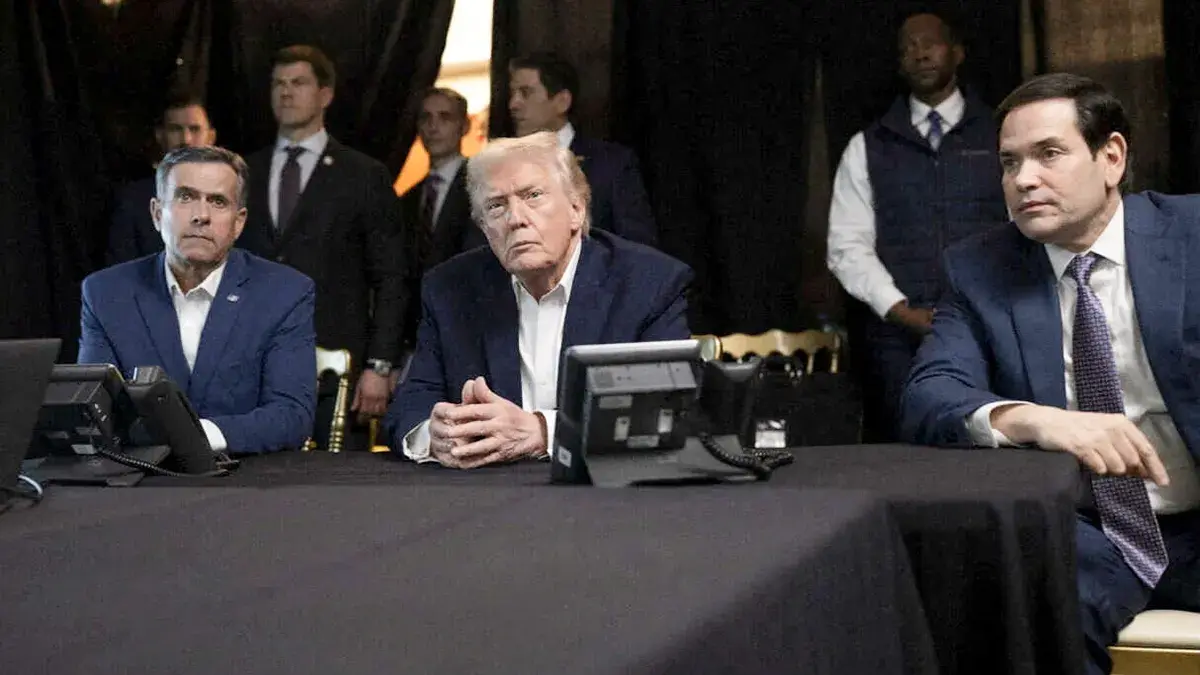
The United States succeeded in bringing down Nicolás Maduro's regime in Venezuela, which was targeted by Donald Trump's government for political repression of the opposition, electoral irregularities and even activities allegedly linked to drug trafficking.
Following the United States' impressive military action in Venezuela, which ended with the capture of Nicolás Maduro, there is speculation about Donald Trump's new targets to end uncomfortable situations in other countries and scenarios such as Cuba, Colombia and Greenland.
Thus, President Donald Trump recently reiterated his insistence on taking control of the Danish territory of Greenland for national security reasons and threatened military action in Colombia for facilitating the global sale of cocaine, adding, from Air Force One, that Cuba is in serious trouble and will fall due to the lack of Venezuelan oil with the end of Nicolás Maduro's Bolivarian regime.
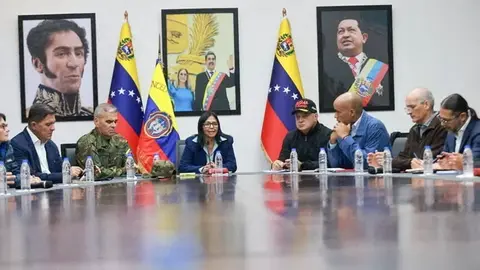
The fall of Cuba
The US president indicated that Cuba is ‘about to fall’ with a collapsed economy and will now lack Venezuelan oil due to the fall of a like-minded leftist regime such as that of Nicolás Maduro.
Donald Trump said that the Caribbean country is heavily dependent economically on Venezuelan crude oil. The US leader also pointed out that many Cuban-Americans are on his side in this action against the Cuban communist regime.
Donald Trump sees an easy fall of Cuba's single-party communist dictatorship due to the delicate economic situation it is going through, a scenario that would not require military intervention such as that carried out in Venezuela to capture Nicolás Maduro. ‘I don't think any action is necessary,’ he said. Donald Trump also explained that ‘many Cubans’ died on Saturday in Caracas while trying to defend Nicolás Maduro. The Trump administration pointed out that the guard protecting Nicolás Maduro was Cuban and that members of Cuban intelligence were also in charge of special operations in Venezuela, demonstrating the close ties between the two regimes. The Cuban government even officially confirmed that 32 officers died in the US military operation on Venezuelan territory.
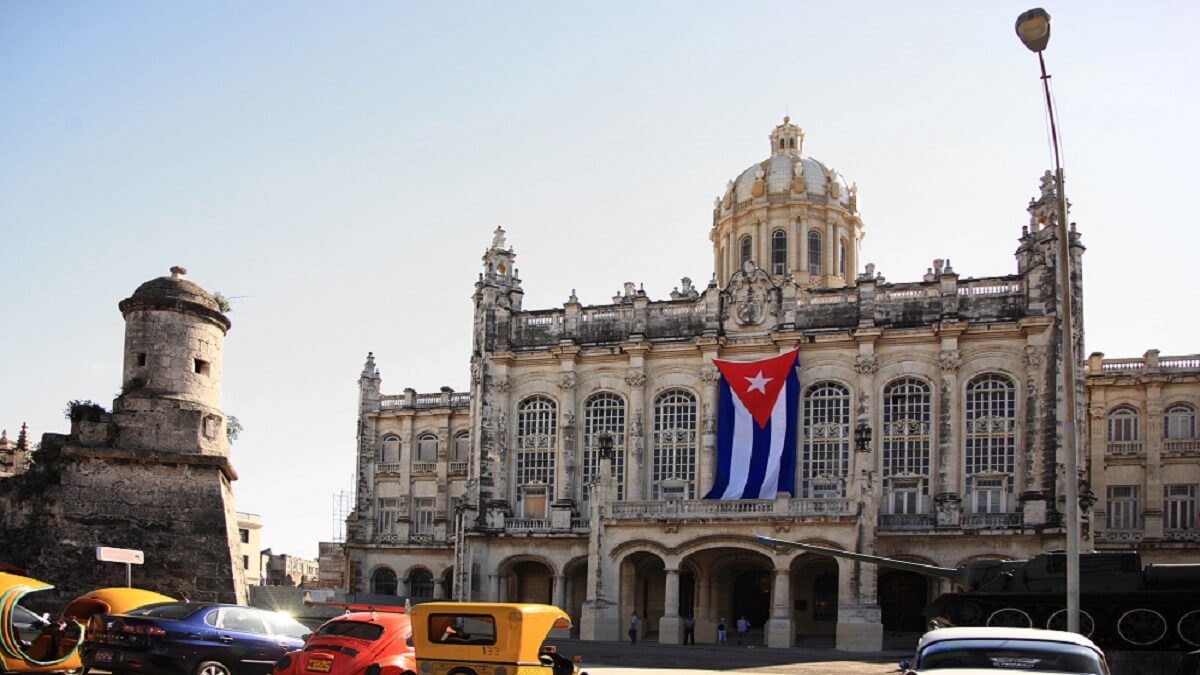
Greenland and the security issue
As for Greenland, the Trump administration argues that it is a matter of national security. ‘It's so strategic right now. Greenland is covered with Russian and Chinese ships everywhere,’ Trump told reporters as he flew back to Washington from his home in Florida aboard Air Force One. ‘We need Greenland from a national security standpoint,’ explained Trump, who pointed out that Denmark cannot carry out that task. Trump did not rule out even the use of military force to take control of the Arctic island.
This has led to growing concern in Denmark over the issue of control of Greenland, an area that is rich in minerals and a strategic enclave for the United States due to the Chinese and Russian presence. Danish Prime Minister Mette Frederiksen said in a statement that Trump ‘has no right to annex’ the territory, especially considering that Denmark already facilitates US operations in the area through existing ties within the North Atlantic Treaty Organisation (NATO), the West's security network.
Warning to Colombia
Donald Trump also threatened Colombia, Venezuela's neighbour, led by leftist President Gustavo Petro, for its alleged links to the spread of cocaine, a substance that seriously affects the United States.
The US president said that Colombia is ‘run by a sick man who likes to do cocaine and sell it to the United States’.
In October, the Trump administration sanctioned Gustavo Petro and members of his family on charges of involvement in the global drug trade. Colombia is singled out for its role in the global cocaine trade.
In addition, the United States added Colombia to the list of nations that do not cooperate in the war on drugs for the first time in nearly 30 years. Therefore, an operation affecting Colombia cannot be ruled out.
US strategy
Indeed, the Trump administration's recently published National Security Strategy document calls for restoring ‘US pre-eminence in the Western Hemisphere’. Donald Trump began his second term as US president in January with promises to focus much more on domestic issues such as the economy and immigration, but it is becoming clear that the United States wants to play a strong role as a world leader to prevent the rise of other powers such as China and Russia, which advocate a more multipolar world that does not depend on the designs of the American giant.
US Secretary of State Marco Rubio also supported Donald Trump's expansionist and interventionist views following Washington's military operation after the removal of Nicolás Maduro in Venezuela, demonstrating the global leadership role that the United States wants to play again on the international stage.