Trump's peace plan for Ukraine: 28 points that redraw the borders and security of Europe
- Trump's peace plan: 28 points
- The points that change the game
- Impact of the Plan on Russia, Ukraine, the United States... and Europe
- Is the agreement viable?
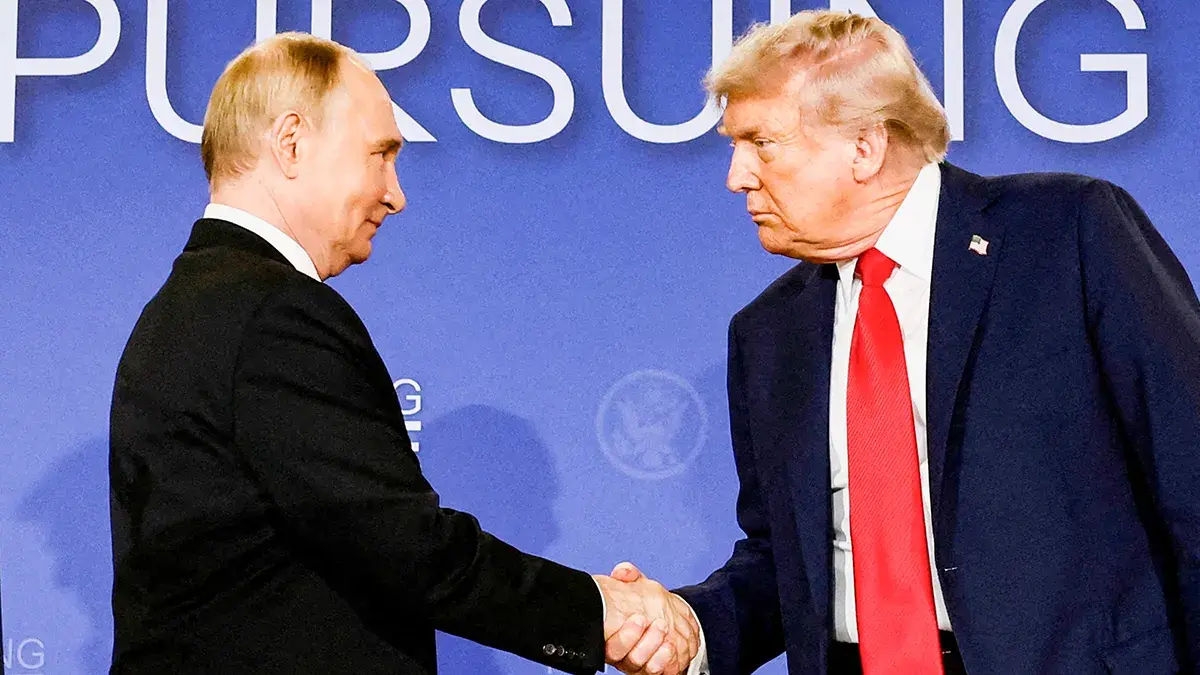
Three months before the fourth anniversary of the war in Ukraine resulting from the Russian invasion, the Donald Trump administration has drawn up a 28-point document, allegedly discussed with Ukrainian and Russian mediators and officials, which sets out a roadmap for ending the war.

Trump's peace plan: 28 points
This plan combines security guarantees for Ukraine and Europe with territorial concessions that change the political, economic and geographical landscape of eastern Europe. These points are:
- Recognition of Ukraine's sovereignty
- Russia, Ukraine and Europe sign a non-aggression pact that settles previous disputes
- Russia promises not to invade neighbouring countries and NATO halts its expansion
- Establishment of a Russia-NATO dialogue mediated by Washington to reduce tensions and increase cooperation
- Ukraine receives formal security guarantees from the United States
- The Ukrainian army is limited to a maximum of 600,000 troops
- Ukraine constitutionally renounces joining NATO; NATO confirms this in its internal rules
- NATO will not deploy troops on Ukrainian territory
- European fighter jets will remain in Poland
- A framework of US guarantees and the conditions that would invalidate them will be defined
- Ukraine keeps the door open to the European Union and receives preferential access to the European market
- Establishment of a major international programme of reconstruction and economic development for Ukraine
- Russia is gradually reintegrated into the global economy through cooperation with the United States
- Part of the frozen Russian assets will be used for the reconstruction of Ukraine
- A Russian-American commission will be created to oversee progress
- Russia establishes by law its commitment to non-aggression against Europe and Ukraine
- Washington and Moscow extend nuclear control and non-proliferation treaties
- Ukraine reaffirms its status as a non-nuclear state
- The Zaporizhzhia plant comes under IAEA control and its profits will be shared equally between Russia and Ukraine
- Establishment of educational programmes in both countries to promote tolerance and eliminate discrimination
- Russian de facto recognition of Crimea, Luhansk and Donetsk; other areas remain frozen or demilitarised
- Both parties undertake not to change the agreed borders by force.
- Russia guarantees free Ukrainian navigation on the Dnieper and the Black Sea.
- A humanitarian committee is created for prisoner exchanges, the release of civilians and family reunification.
- Ukraine will hold elections within 100 days of the agreement.
- Total amnesty for all parties for actions committed during the war.
- Binding agreement supervised by a Peace Council chaired by Donald Trump.
- The ceasefire will be immediate once the terms are approved and the agreed withdrawals are executed.
The points that change the game
Although it may seem that the Ukrainian concessions are greater than the Russian ones, the draft consists of a future reorganisation of the region that guarantees the security of all actors.
The limitation of the Ukrainian army (point 6) to 600,000 military personnel has been one of the issues least liked by the Zelensky government. However, this measure does not reduce Ukraine's defence capacity, but it does condition it in the long term, leaving the European country in the hands of the security guarantees of the agreement.
But if there is one point that has been heavily criticised, according to Ukrainian officials, it is Ukraine's constitutional renunciation of NATO membership (point 7). This point not only erases Zelensky's aspirations but also raises new political boundaries between Russia and Europe.
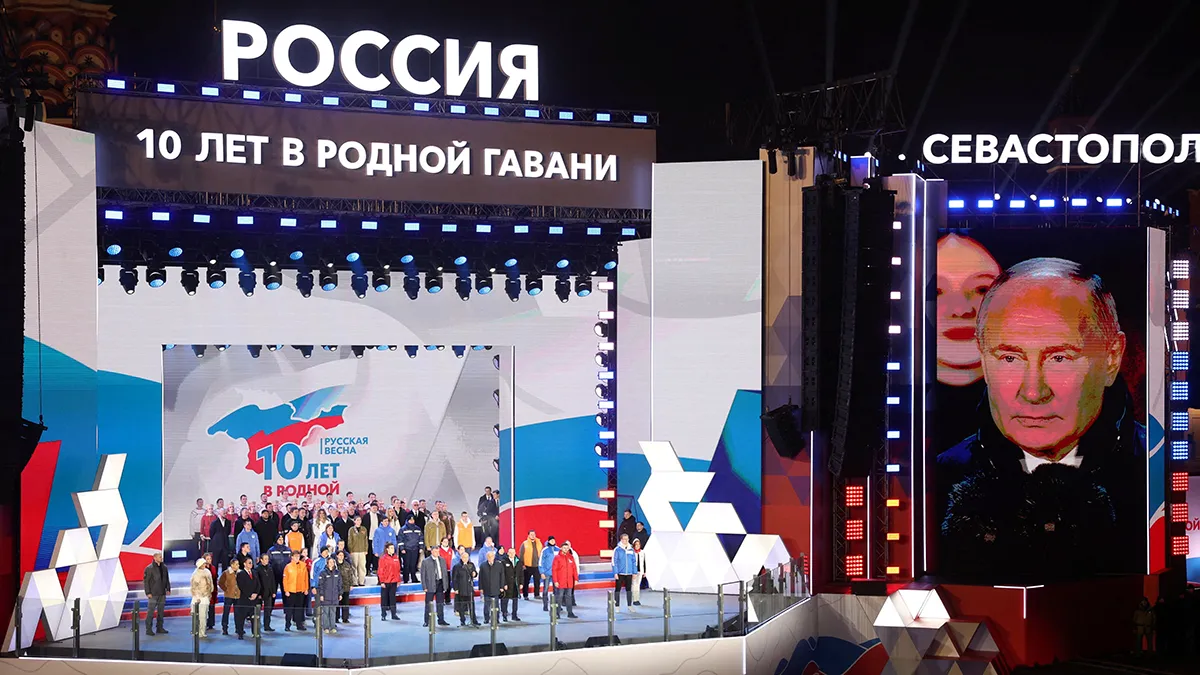
Other proposals, such as the territorial concession of Crimea, Luhansk and Donetsk (point 21), are a concession to the inability of any of the administrations – Russian, Ukrainian and local – to govern these areas, which will therefore remain under Russian control.
Focusing on the economic aspect (point 14), Russia will have to pay for the reconstruction of Ukraine through its frozen assets. This is a measure that Ukraine had been requesting for months and which has been interpreted by Russian mediators as ‘a mild punishment’.
Finally, in the political sphere, the agreement will be supervised by a Peace Council chaired by Donald Trump (point 27), which gives the United States a role as arbiter, leaving Europe out of the conflict. Brussels has not commented on this measure, but it reflects the declining importance of the old continent in global decisions.
Impact of the Plan on Russia, Ukraine, the United States... and Europe
In essence, according to senior officials in the Trump administration, the plan ‘is a mandatory readjustment to resolve regional chaos so that it does not escalate globally’.
Firstly, for Ukraine, it means the end of the war through a ‘conditional’ peace, as Ukraine's capabilities remain limited to US guarantees, based on the trust of Russian leaders.
For Russia, on the other hand, the agreement gives it power over three of the regions that Vladimir Putin's government considered necessary; a return to the international financial system through the lifting of sanctions; and full defensive capabilities reinforced by NATO's renunciation of expanding its influence. The agreement is not a total victory for Moscow, but it is an important step towards normalising its relations with Western economies.
For the United States, it is a new diplomatic victory, and on a personal level, it is a new ‘achievement’ for Donald Trump in his quest to win the Nobel Peace Prize. Both politically and economically, the 28 points give Washington power over the region, a weakening of Russia, since all its frozen assets will be used for the reconstruction of Ukraine under American tutelage, and a diplomatic victory over Europe on the international stage and over Biden on the domestic front, now more important than ever with the midterm elections just around the corner.
The big loser in the draft is Europe. Relegated to the background, despite facing the worst European conflict since the end of the Second World War, Brussels has seen all the investment and subsequent indebtedness of its economies subordinated to US plans. In this context, Europe can only assume that its role is more technical than any other.
Is the agreement viable?
Reading through the 28 points, it is clear that the real winners of the conflict have been the United States and Russia. However, the importance of Ukraine and Europe in this war cannot be overlooked.
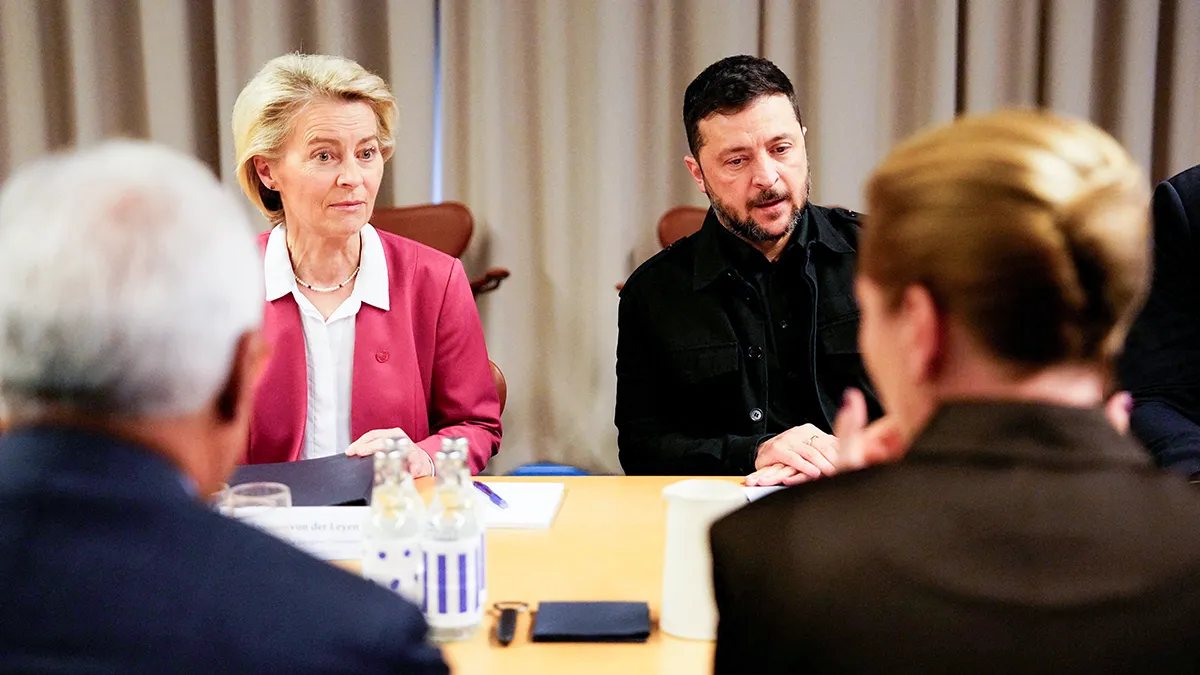
The consolidation of Ukrainian territories into Russia denotes Europe's strategic fatigue since the conflict began in February 2022. With Hungary's paralysis of several aid packages and the lack of consensus to support Ukraine (perfectly reflected in Zelensky's visits to European leaders individually, rather than meeting with them all together), there may be a rift that widens and generates internal tensions.
Above all, however, what could most undermine the plan is the polarisation and political lurching of Donald Trump, whom Europe does not know whether to consider an ally or not. The imposition of pressure measures on Western leaders through the figure of NATO Secretary General Mark Rutte could increase tensions at the political level.
Even so, the plan is a project that contains everything necessary to bring the war to a halt. The reconfiguration and concessions by all those involved were measures that, at some point, had to be taken. Assuming that in wars there are always winners and losers, the plan envisages a complicated readjustment, which will undoubtedly be modified, but which lays the foundations for the necessary regional and international stability and peace, although it is totally dependent on the will of the mediating countries.