Zelensky presents Ukraine's peace plan
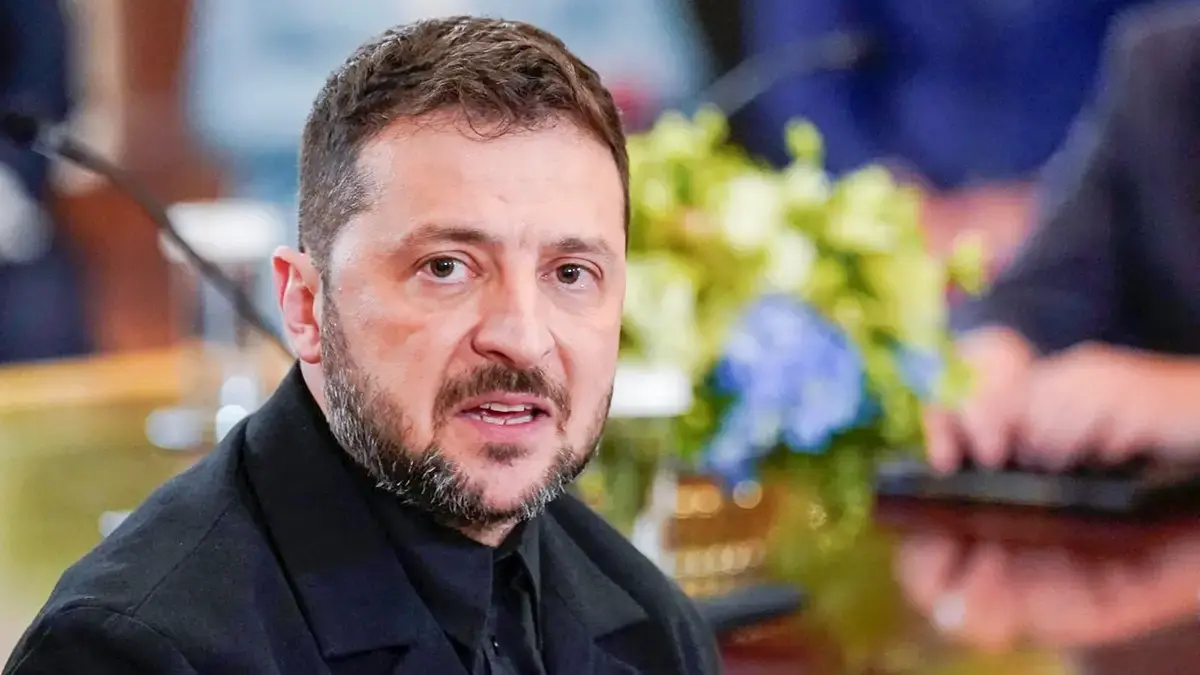
Volodymyr Zelensky, President of Ukraine, has presented Kiev's peace plan to end the Russian invasion, which has now lasted almost three years.
Faced with the prolongation of the war that Russia started in February 2022, the Ukrainian leader is more determined than ever to put an end to Russian aggression and has presented an official Ukrainian plan to halt hostilities after several years of stalemate in the armed conflict with a Russia that is unable to break Ukrainian resistance and a Ukraine that is increasingly feeling the punishment of months and months of fighting and attacks.
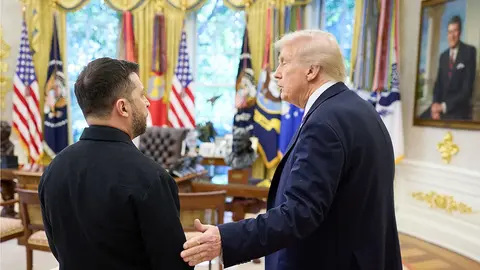
In this vein, President Volodymyr Zelensky has presented a 20-point peace plan, agreed upon with the United States, a major mediator under Donald Trump, and the European Union (EU).
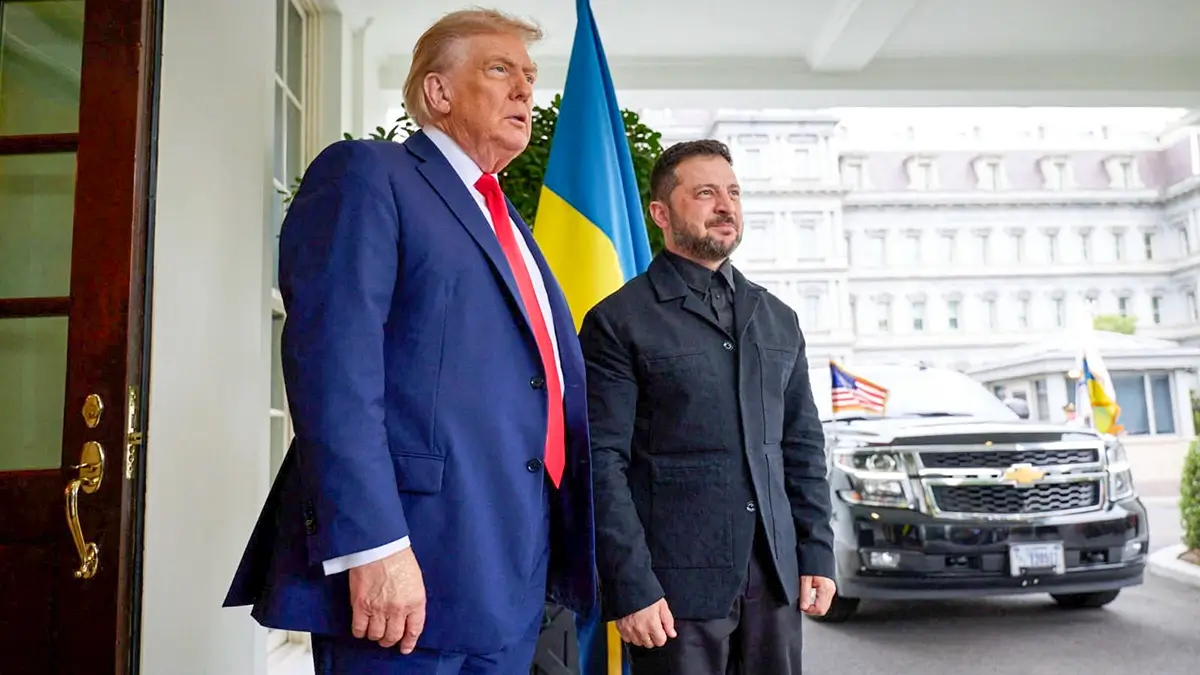
The proposal calls for a non-aggression pact, security guarantees for Ukraine and EU membership in the medium term, as well as an agreement on an economic aid package worth 678 billion euros to help Ukraine's recovery. It also provides for a guarantee for Ukraine of a mechanism similar to Article 5 of the North Atlantic Treaty Organisation (NATO) on mutual defence.
All this with a clear commitment by the warring parties not to use military force to change the territorial boundaries finally agreed upon.
Volodymyr Zelensky also commits to holding elections in Ukraine once the agreement has been reached. Just at a time when his government was also facing criticism over allegations of alleged corruption.
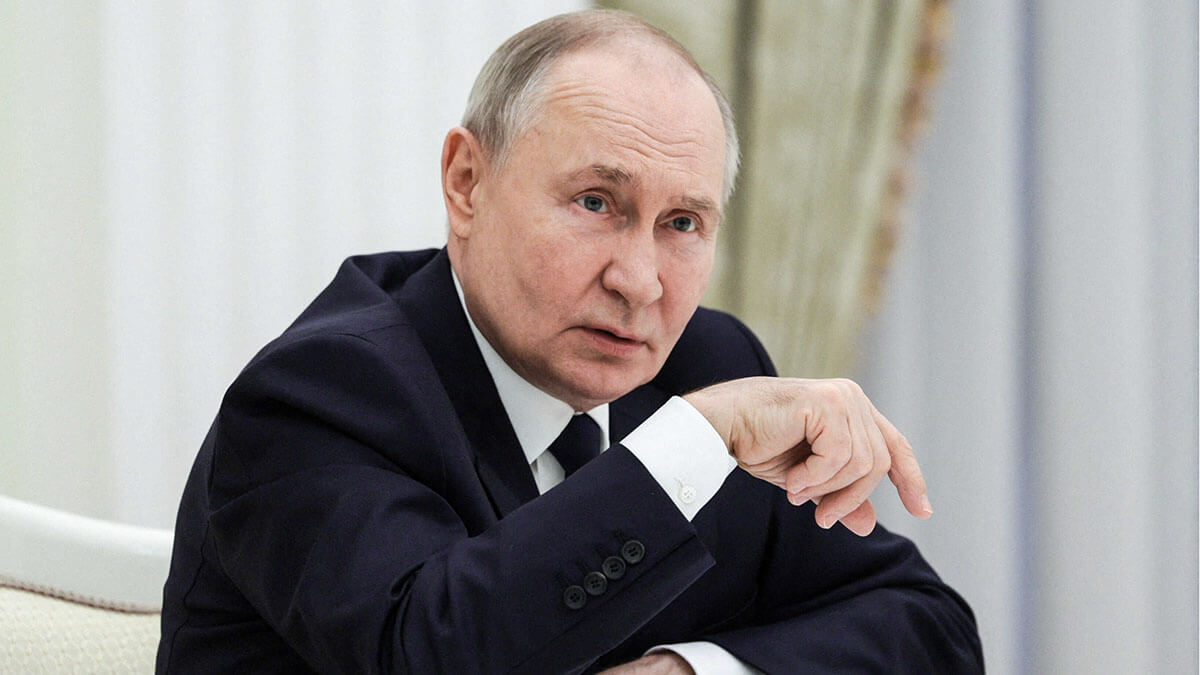
This plan is based on the 28-point proposal prepared by the United States following high-level contacts between the Trump administration and Vladimir Putin, President of Russia. However, in the new proposal, Ukraine does not renounce its intention to join NATO one day, nor does it recognise Russian sovereignty over Crimea and other occupied territories. These points are red lines for Vladimir Putin's Russia, which claimed that the invasion of Ukrainian territory was motivated by Russia's historical claim to territories it considers part of the Russian nation, such as Crimea and enclaves such as Donetsk, Luhansk, Zaporizhia and Kherson, in addition to the excuse of ‘denazifying’ Ukraine.

The 20 points of Ukraine's peace plan are detailed below
Point 1
Ukraine is a sovereign country and all signatories confirm this.
Point 2
Russia and Ukraine irrevocably commit not to attack each other. A mechanism for monitoring and conflict resolution will be established.
Point 3
Ukraine will receive security guarantees.
Point 4
The Ukrainian Armed Forces will have a maximum strength of 800,000 personnel in peacetime.
Point 5
The United States, NATO and the European signatory states will provide Ukraine with guarantees equivalent to Article 5 of NATO's mutual defence clause.
Point 6
Russia will legally anchor its policy of non-aggression towards Europe and Ukraine, and this will also have to be ratified by the Duma (Russian Parliament).
Point 7
Ukraine will be admitted to the European Union at some point, but before that it will receive privileged access to the single market.
Point 8
Ukraine will obtain a comprehensive support package for economic recovery, defined in a separate agreement on investments.
Point 9
Several funds will be created to support the restoration of the economy, with the aim of raising 678 billion euros (estimated cost of the war) through loans or contributions from the private sector.
Point 10
Ukraine will speed up the process of negotiating a free trade agreement with the United States.
Point 11
Ukraine commits to remaining non-nuclear, in line with the Nuclear Non-Proliferation Treaty.
Point 12
The Zaporizhzhia nuclear power plant, currently occupied by Russia, will be jointly operated by Ukraine, the United States and Russia, without further details being specified.
Point 13
Ukraine and Russia will implement educational and social programmes to eliminate prejudice and promote understanding between the two countries. Ukraine will implement European standards for the protection of minority languages, to take into account the Russian population residing in Ukrainian territory.
Point 14
With regard to the territorial issue, Kiev proposes two options: freezing the current front line as it passes through the regions of Donetsk, Luhansk, Zaporizhia and Kherson, which is what the Ukrainian government prefers, or demilitarising the area of Donetsk that Ukraine still controls and that Moscow demands, and transforming it into a special economic zone administered by Ukraine and secured by international troops, subject to approval in a nationwide referendum.
Point 15
Ukraine and Russia undertake not to use force to change agreed territorial boundaries.
Point 16
Russia will not prevent Ukraine from using the Dnieper River and the Black Sea for commercial purposes, an issue that will be regulated in a separate agreement.
Point 17
A humanitarian commission will be established to resolve outstanding issues such as the exchange of prisoners and the return of all civilians held by Russia, including deported minors.
Point 18
Ukraine will hold elections as soon as possible after the signing of the agreement.
Point 19
The implementation of this agreement will be monitored and guaranteed by a Peace Council chaired by US President Donald Trump.
Point 20
Once all parties accept this agreement, a ceasefire will take effect immediately.