Including Spaniards, Arab News aims to reach 6.5 billion readers
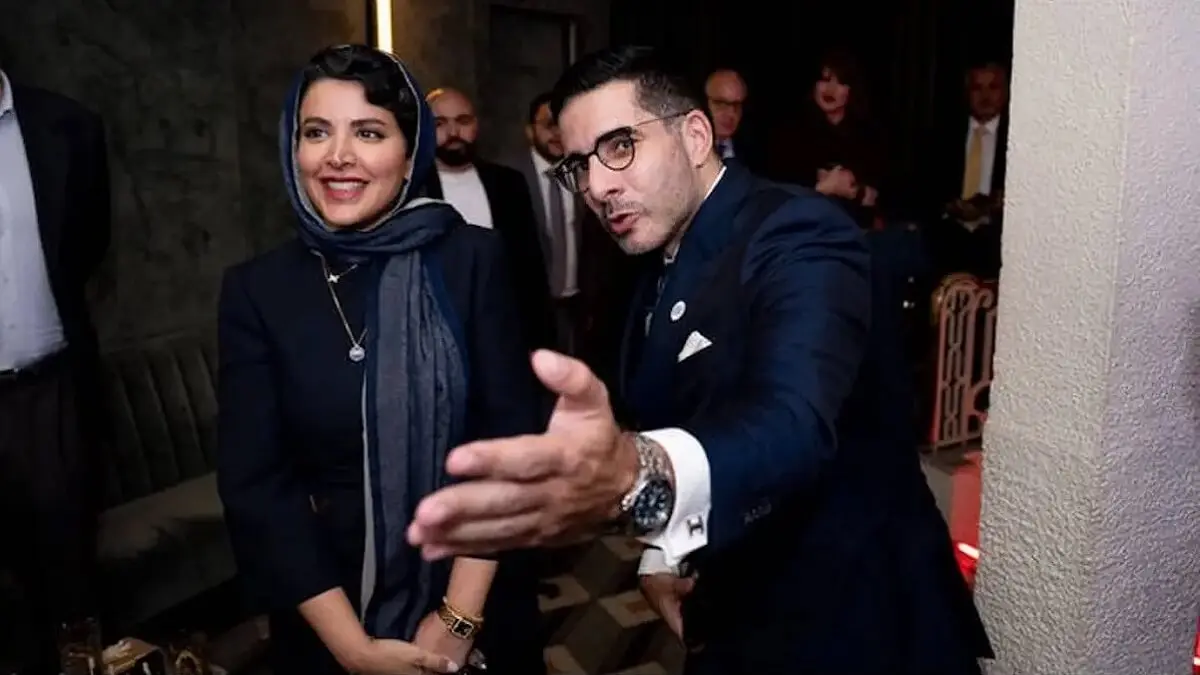

The final surprise was seeing Faisal J. Abbas himself speaking, even with a local accent, in the fifty languages,including Spanish, Japanese, and Mandarin Chinese, in which the different written and audiovisual content can be read, heard, and seen. As he himself stated, “those fifty languages represent 80% of the world's population, or 6.5 billion people, whom the Saudi Research and Media Group,” owner of this multimedia conglomerate, aspires to reach.
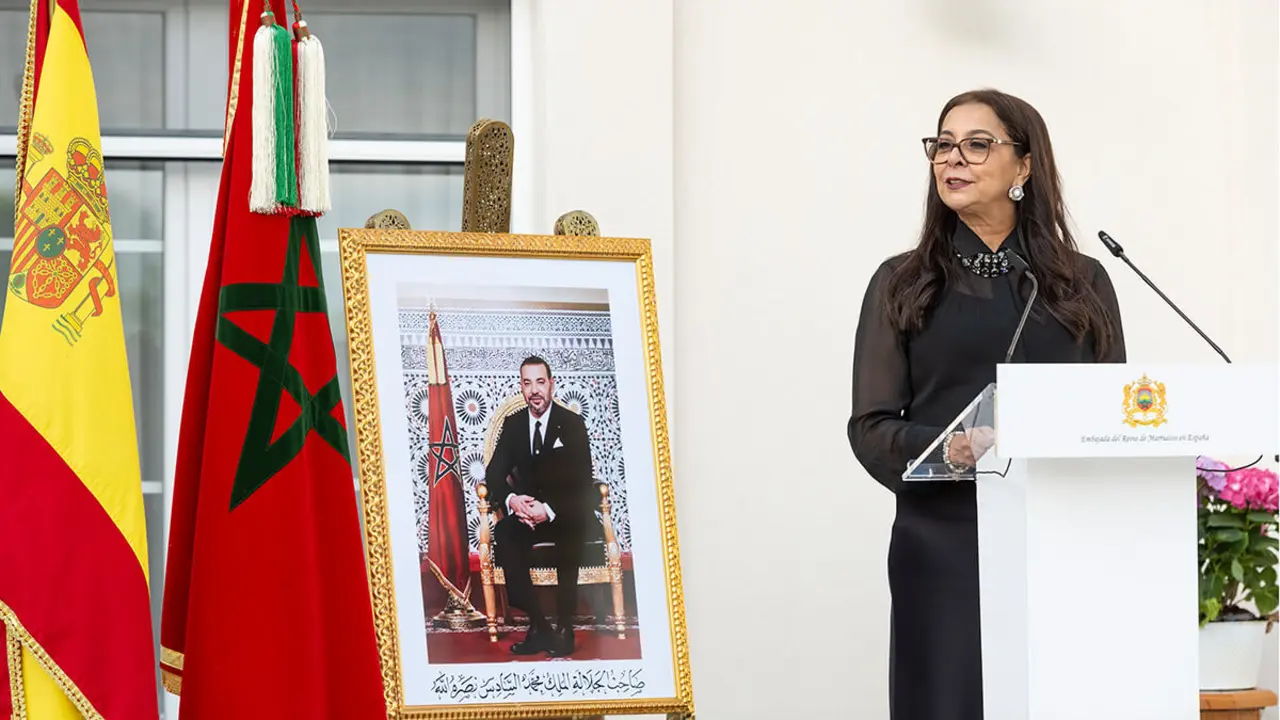
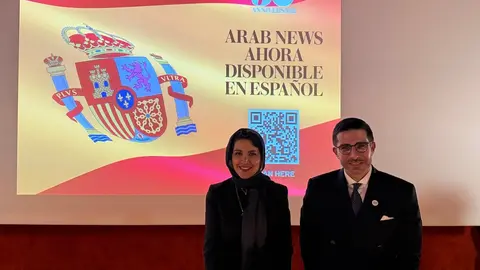
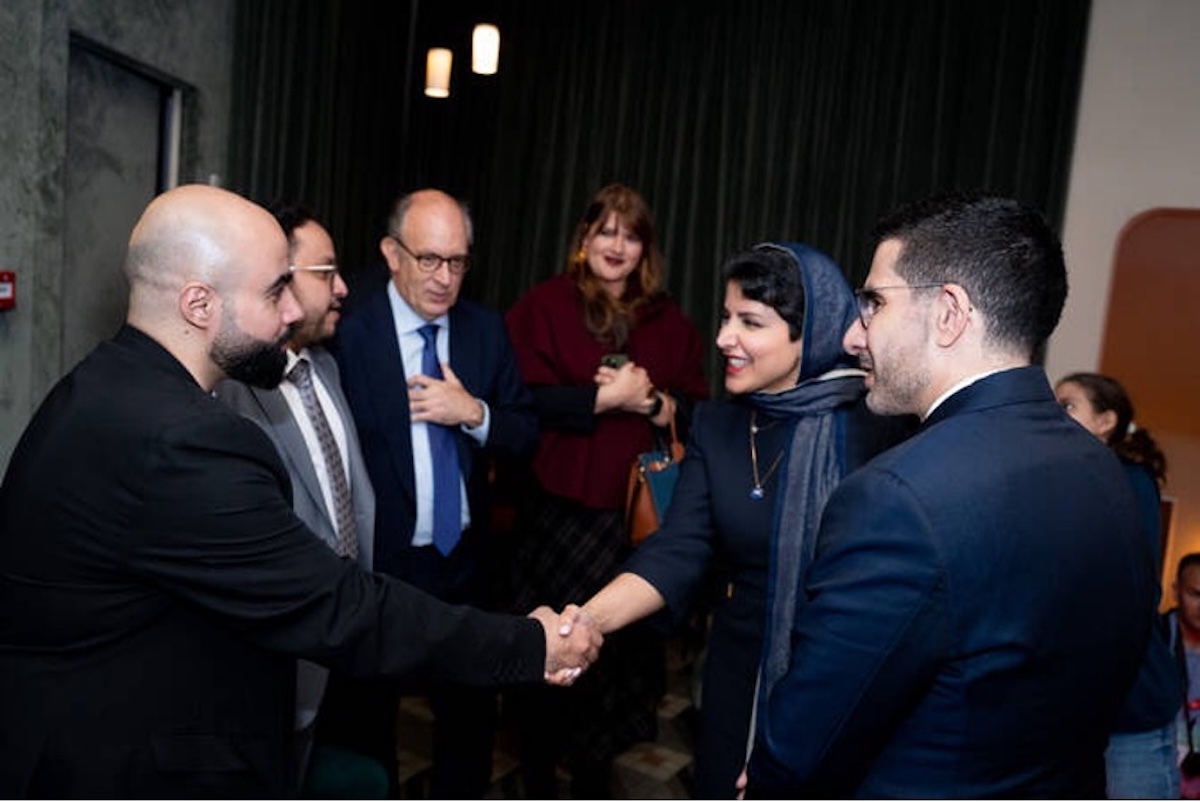
The presentation, which was chaired by the Saudi Arabian ambassador, Princess Haifa Bint Abdulaziz Al Mogrin, took place during the International Federation of the Periodical Press (FIPP) Congress in the Spanish capital,which brought together more than 500 senior executives from the media, consulting, and technology sectors from 40 countries over two days.
During the conference, they examined and debated how to reinvent the media of the future, balance AI and editorial integrity, new revenue streams, the attention economy, technology for growth, and trust, ethics, and regulation.
Arab News took advantage of the occasion to showcase both the great achievements of its half-century history and its ambitious vision for the future.
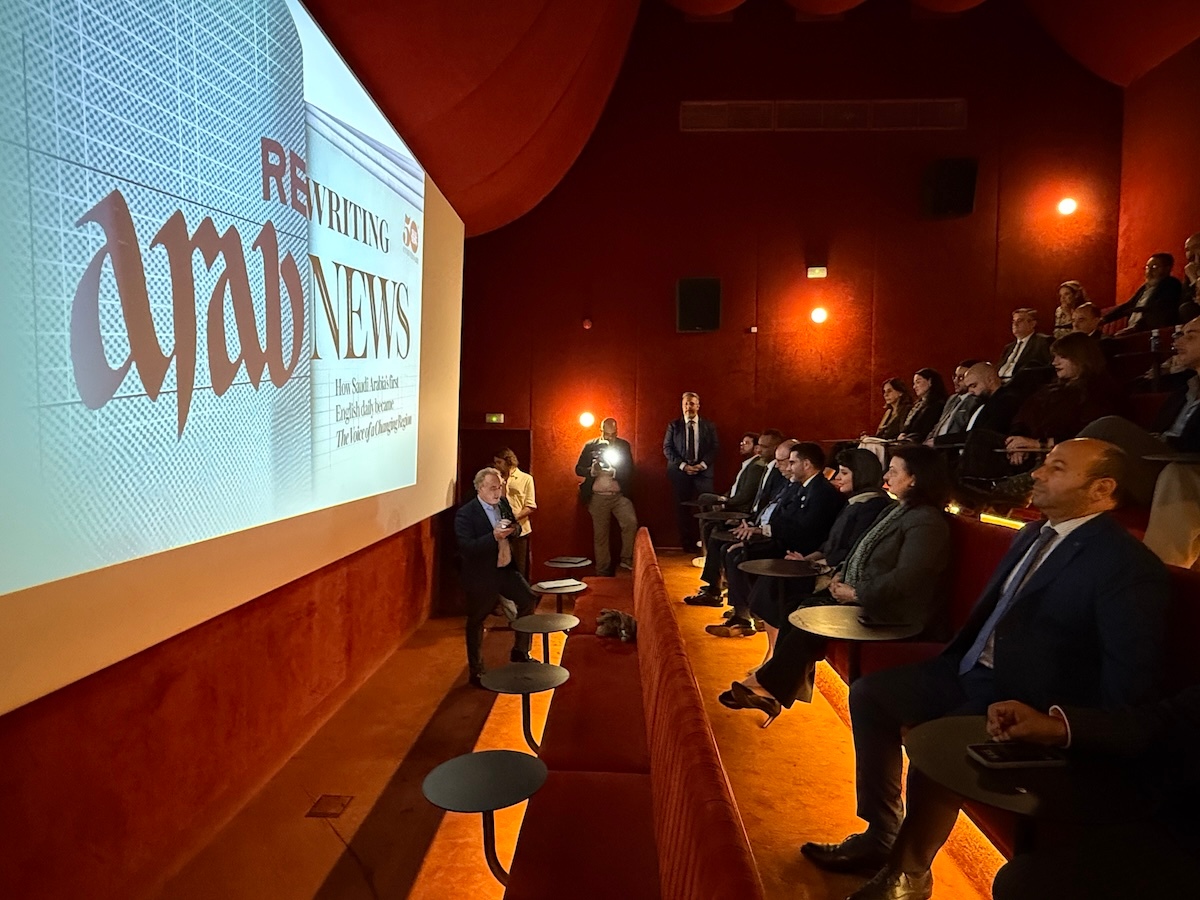
Regarding the former, the documentary explains how the experiment of launching an English-language newspaper in the region, just a few months after the Ramadan War (1974), would give rise not only to one of the most successful and influential publications in the Middle East but also to a whole series of sister publications (Asharq Al-Awsat, Al-Eqtisadiah, Sayidati, and Al-Majallah).
While the credit for embarking on that adventure goes to brothers Hisham and Mohammed Ali Hafiz, the documentary also highlights the visionary role played by the then King Faisal, who was assassinated shortly before the first edition of Arab News was printed on April 20, 1975.
It was the king who encouraged the founding of the newspaper and gave his approval for the front and back covers to be green, so that readers would closely identify it with Saudi Arabia.
Launched in a garage in the city of Jeddah, it would move its offices to Riyadh years later, before opening major editorial, production, and distribution offices in London, Pakistan, Japan, and France.
The newspaper's current editor-in-chief, Faisal J. Abbas, was appointed to this coveted position in 2016, coinciding with the launch of Vision 2030, the plan devised by Crown Prince Mohammad bin Salman for the future of the Desert Kingdom. The newspaper also immediately changed its old slogan from “The English-language leader in the Middle East” to “The voice of a changing region,” in order to better reflect the major changes and reforms that had been initiated and were already in full swing.
Although Arab News launched its first online publication in 2001, it completed its digital transformation in 2018, now reinvigorated with the incorporation of AI, changes that have earned it more than 150 international awards in the last seven years.
Abbas emphasizes that “we are committed to remaining at the forefront of innovation,” which he affirms in the presence of consultants of the stature of Spain's Juan Señor, a partner at Innovation Media Consulting Group, where he helps—with proven success—companies in the sector around the world to reinvent themselves.
But he goes on to stress that “whatever technological changes lie ahead, we will remain committed to the same principles of editorial integrity that guided our founders.”
As is customary when a Christian and a Muslim meet, the eternal question of religious antagonism arises. Abbas does not shy away from it and is proud of the “contribution [of the newspaper] to religious tolerance.”
He gives as an example that “in 2022, we became the first Saudi newspaper to publish a special Christmas edition, and through our encyclopedia ‘Preachers of Hate,’ we have consistently denounced those of any faith who promote divisive and extremist ideology.”