
Lavrov, between Cold War memory and autonomy realism: as Moscow rearranges its maps in the Sahara

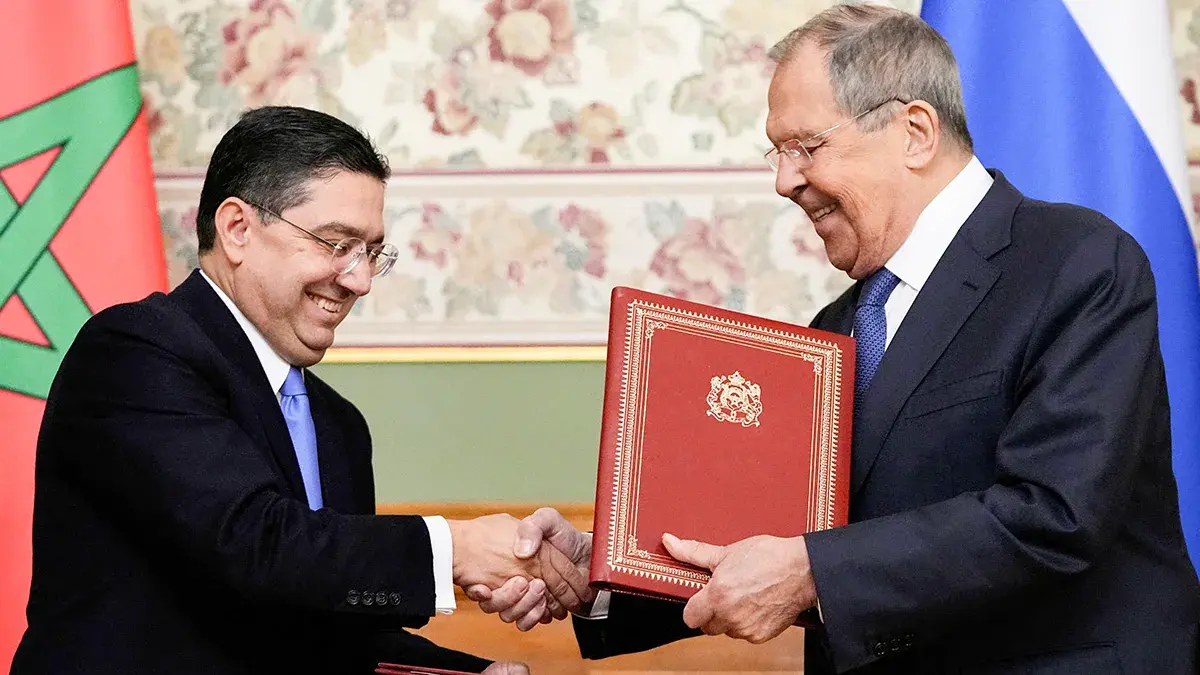
When the Minister of Foreign Affairs in Moscow stated that ‘the Moroccan proposal for autonomy could be part of the solution,’ it seemed to open a crack in a wall of ice that had obscured the view for decades, as if history itself had decided to revise its own map drawn up during the Cold War era.
Russia, which for years fuelled the narrative of ‘decolonisation’ in its African discourse, now finds itself faced with a new logic: in the Sahara, there is no colonialism, but stability; there is no separation in the south, but a national project that is consolidating within the unity of the Moroccan state.
The Russian change was not accidental, but the result of the Ukrainian storm that altered the global balance and pushed Moscow to seek new footholds beyond the Western noise, particularly in Africa, where Morocco acts as a serene power, with its own compass, capable of harmonising the geopolitical with the economic.
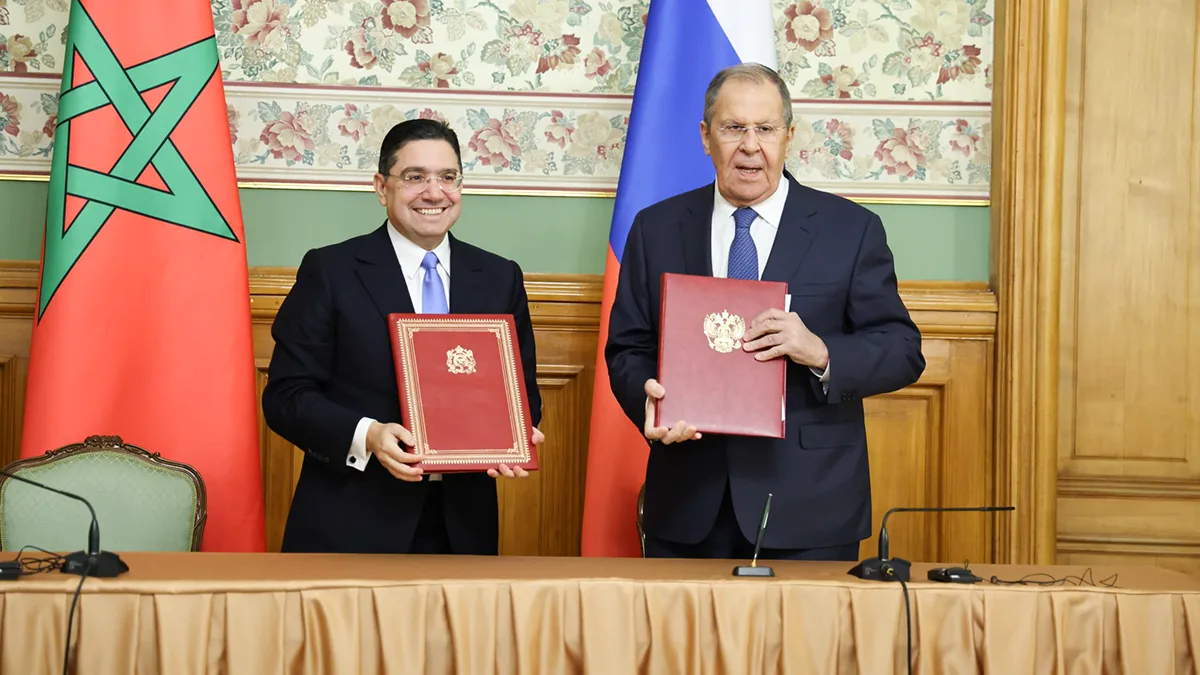
From this perspective, Lavrov's words constitute an implicit recognition of the end of the era of separatist slogans that Algeria has upheld for half a century, and the extinction of the myth of “self-determination” understood as dismemberment, a concept consumed to the point of petrification.
Algeria, which still does not understand that the world has changed, remains a prisoner of the language of the trenches, talking about “colonialism” in the age of satellites, celebrating immobility as if it were a victory. It is the labyrinth of a military regime that lives on the memory of the revolution and gas revenues, while Rabat advances with the logic of the modern state, which dialogues with the world in the language of development and not in the rhetoric of antagonism.
The Algerian media, disoriented by Russia's position, reacted like someone who suddenly loses their shadow: they tried to justify, deny, reinterpret, but in the end they were faced with a truth that cannot be handled with slogans. Moscow no longer considers the Polisario a cause of principle, but a lost card on the board of global interests. The Kremlin has stopped betting on slogans and prefers those who build stability, and Morocco builds it with deeds, not noise.
Since 2007, when the Kingdom presented its autonomy initiative, the balance of international discourse has changed. The Moroccan proposal has become a solid reference point in Security Council resolutions and is now seen as the only serious and realistic way forward. The world no longer talks about referendums, but about consensus; not about ruptures, but about democratic models that allow the inhabitants of the Sahara to manage their affairs within Moroccan sovereignty, in an advanced political architecture where local governance is integrated into national unity.
Algeria, on the other hand, has chosen to withdraw from the dialogue table every time the truth comes close, hiding behind the title of ‘observer party’, when in reality it is the actor that generates the crisis and then disguises itself as a victim. Algeria is no longer the advocate of the conflict, but its main obstacle.
Meanwhile, Morocco continues to build its legitimacy on the ground: ports opening onto the Atlantic, roads linking north and south, solar and wind energy projects, international investments in Laayoune and Dakhla, and consulates rising like sovereign flags in the heart of the south, testimony that diplomacy is measured not by speeches, but by the symbols the world chooses to share with you.
Russia, aware that the time for slogans is over, has chosen to align itself with what is possible, not with what is futile. It is the pragmatism of the post-war world: one that understands that whoever possesses stability also possesses the future. From this logic, Morocco becomes a natural partner in the new equation of global balance, not an adversary of an old order that is slowly dying.
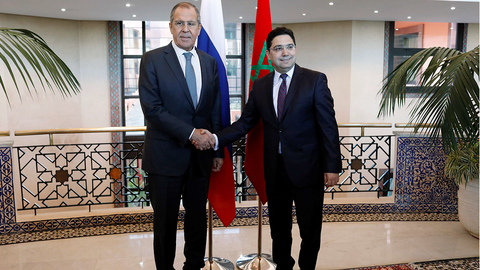
Today, the world no longer seeks a ‘right to self-determination’, but a ‘right to stability’, and Morocco embodies this in its autonomy project: a synthesis of sovereignty, dignity and development. Lavrov's statement is not, in essence, just a Russian position, but a symbolic sign that the planet is beginning to awaken from its ideological slumber, and that the map of international consciousness is quietly shifting towards what Morocco has always understood: that the Sahara is not a geographical problem, but a test of political maturity; and that the solution lies not in separation, but in unity built on justice and realism.
Thus, autonomy ceases to be a simple Moroccan proposal and becomes the philosophy of a state that believes that the future is not governed by slogans, but by reason that transforms geography into a life project.
Abdelhay Korret, Moroccan journalist and writer