
Western Sahara: the moment of truth
The Sahrawis must be aware that time is against them. The Polisario project, conceived in the shadow of regional disputes and rivalries, has become hostage to the endless struggle between Algeria and Morocco. Its real ability to influence the course of events is now little more than symbolic. And this impotence, disguised as revolutionary epic, threatens to condemn an entire people to political irrelevance.
The greatest paradox is that the real protagonists—the Sahrawis who are native to the territory, heirs to the period under Spanish administration—have been systematically marginalized, both by the Polisario and by Morocco.They are the ones who have borne the burden of exile, war, and nostalgia, but they have rarely been allowed to decide anything.

Tribal manipulation, encouraged by the Polisario to hide the Moroccan, Algerian, or Mauritanian origins of its founders, has served to keep them in the shadows. It was they who abandoned their homes in 1975, who fought and survived in the Tindouf camps, but they have always been relegated to a decorative role.
There are numerous examples in the origins of the Polisario that reflect attitudes of arrogance and contempt towards the indigenous population. Some of its leaders went so far as to disparage the Sahrawi population under Spanish administration, considering them “lacking in political and cultural baggage.” Mohamed Lamin Ahmed, one of its “luminaries”—a former bartender in Tantan turned revolutionary ideologue—went so far as to claim that “only we, those who came from the north, could unleash a revolution” in the Sahara, as the local population “lacked skills.” The phrase, picked up by a Spanish lawyer in interviews for a book on El Uali, raises a fundamental question: Was the Polisario really a genuine expression of the Sahrawi popular will, or rather the result of external dynamics and influences?
At first, the influence of certain Moroccan circles was evident. Various testimonies indicate that a large part of the Polisario's founding nucleus was made up of children of former members of the Moroccan Liberation Army, whose initial objective was to complete the unfinished work of their elders against Spanish colonialism.
Lamin Ahmed himself admitted in one of his many “messianic delusions” that before forming the Polisario, they held consultations and contacts with various Moroccan political leaders, including Alal El Fassi, the leader of the Istiklal party and precursor of the Greater Morocco theory.
The turning point came with the arrival on the scene of Colonel Muammar Gaddafi, who, with his checkbook in hand and his “megalomaniac” projects, seduced the “rebels” of Tantan into establishing a sort of ‘franchise’ of his “Yamahiriya” in the former Spanish colony.
Verifiable historical facts reveal a huge scam: the Polisario was not born out of a genuine Sahrawi popular movement, but out of external manipulation and conspiracy.
Half a century later, the balance sheet invites reflection: despite the sacrifices, exile, and frustration accumulated, the project is in a coma, adrift, frozen in time, and gradually approaching a sad and chaotic end. Without a doubt, the big losers were and are the children of the land.
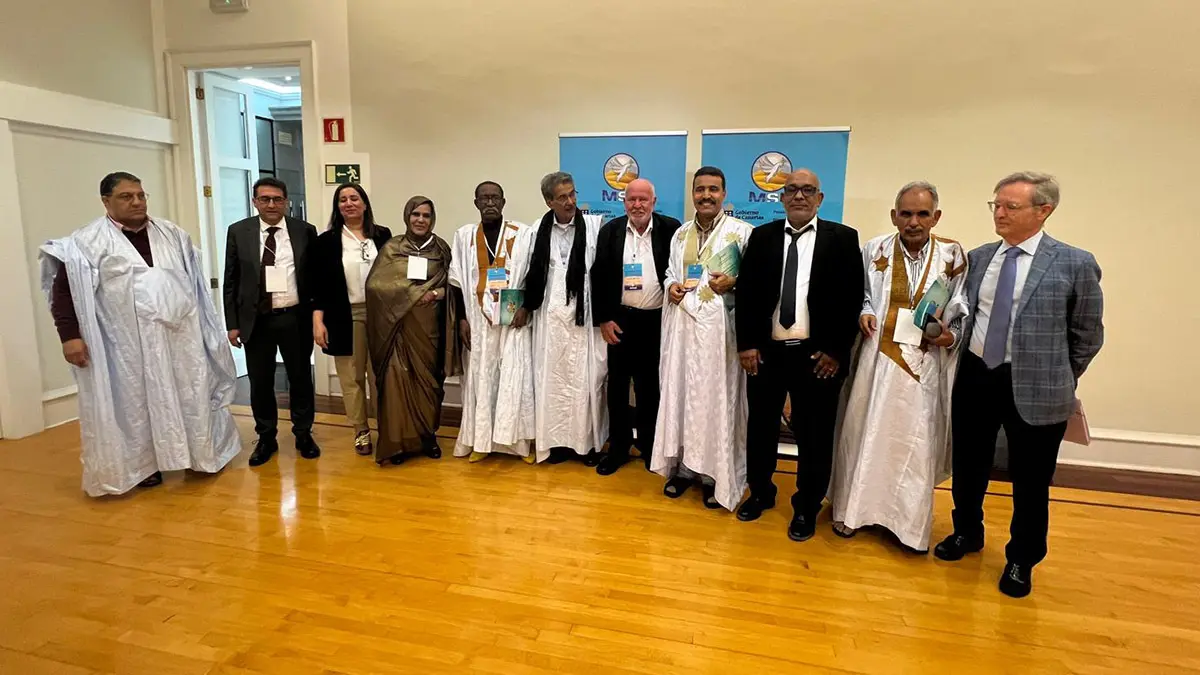
In April 2020, the Sahrawi Movement for Peace (MSP) emerged to try to set this crooked course straight. Founded mainly by Sahrawis born and raised in the territory of the former Spanish colony, the movement sought to reactivate the original Sahrawi elite to put an end to the journey to nowhere and offer our people a moderate, sensible, and possible alternative.
In short, a way out to rescue an exhausted population trapped in a tunnel that seems to have no end.
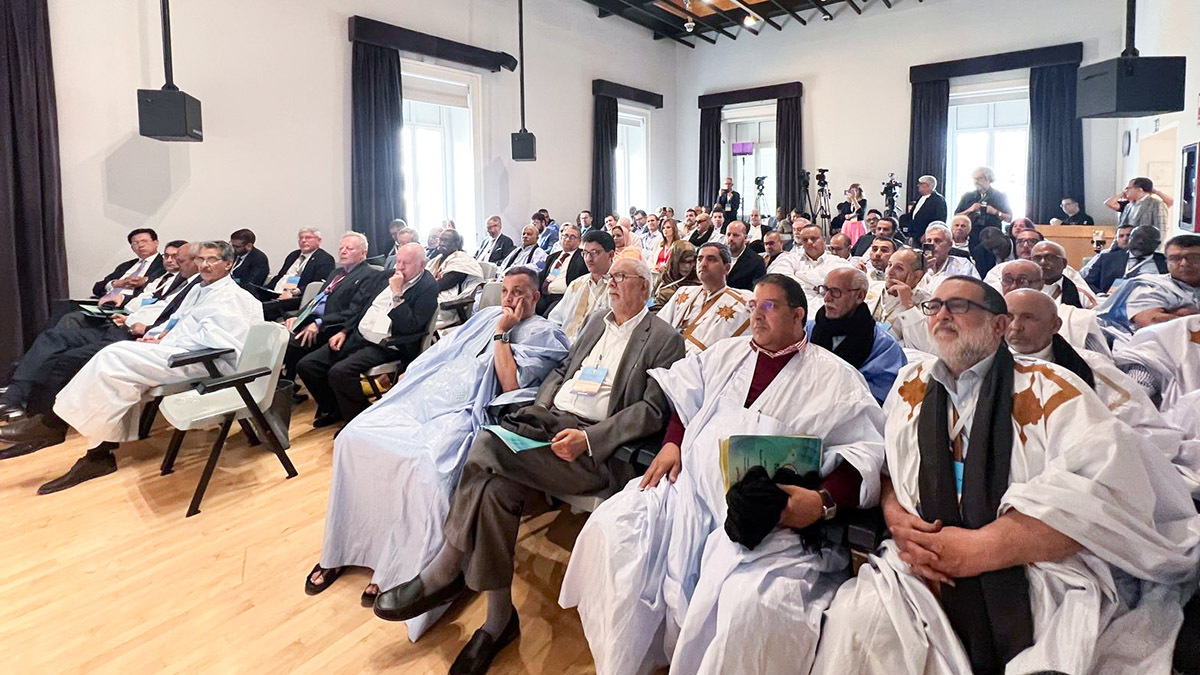
Despite its youth and lack of powerful sponsors, the MSP (Sahrawi Peace Movement) has made some significant progress. Its admission to the Socialist International during the Istanbul conference last May allowed it to sit at the same table and challenge the Polisario's representativeness. This is no small feat. However, Tindouf responded with its usual tactics: smear campaigns, slander, and discrediting manuals. The effect has been to limit, for now, the new movement's ability to mobilize.
Many Sahrawi cadres—victims of exclusion and even repression—ended up abandoning the Polisario and losing faith in its project. But they have been left stranded in no man's land, unable to take the leap towards new interpretations that require boldness and political realism. They are still paralyzed by the fear of being labeled “fugitives” or “traitors” by the Polisario's fearsome propaganda machine, which is omnipresent on all social media.
Today, more than ever, the original Sahrawis still have the chance to rewrite history. It is a matter of preventing the final outcome from erasing them as protagonists of the territory's future.
The most reasonable way forward is to join the movement and push for an agreement with the Kingdom of Morocco, as proposed by the MSP (Sahrawi Peace Movement), based on the 2007 autonomy proposal, a pact with international guarantees that protect the rights and interests of the population.
And why not: recover and intensify trade and ties with the Canary Islands and learn from Spain's experience of self-government in Catalonia and the Basque Country, consolidating bridges between Morocco and the former metropolis in the process.
In short, we must forge our own path, because betting everything on the Polisario and the eternal cold war between Algeria and Morocco is, plain and simple, signing the sentence of irreversible defeat.
The message of the MSP (Sahrawi Movement for Peace) is clear: to appeal to the Sahrawi social and intellectual elite as a whole, and in particular to intellectuals with roots in the Spanish period, to shake off their lethargy and emotional apathy and take the lead in a historic rectification. To be, for the first time, masters of our own destiny. To think of future generations and leave behind failed projects that have only sown death and suffering.
Turning a new page with Morocco, under international supervision and support, may be the last chance for collective salvation for those of us who come from the disputed territory.
The clock is ticking, and the fate of the Sahrawi people cannot remain chained to outdated slogans or foreign rivalries. Much less to foreign leaders who mortgage our future.
The dilemma is brutally simple: it's now or never.
Hach Ahmed. First Secretary of the MSP (Sahrawi Movement for Peace)