
Who are the Resistance Units in Iran inspired by Jean Moulin?

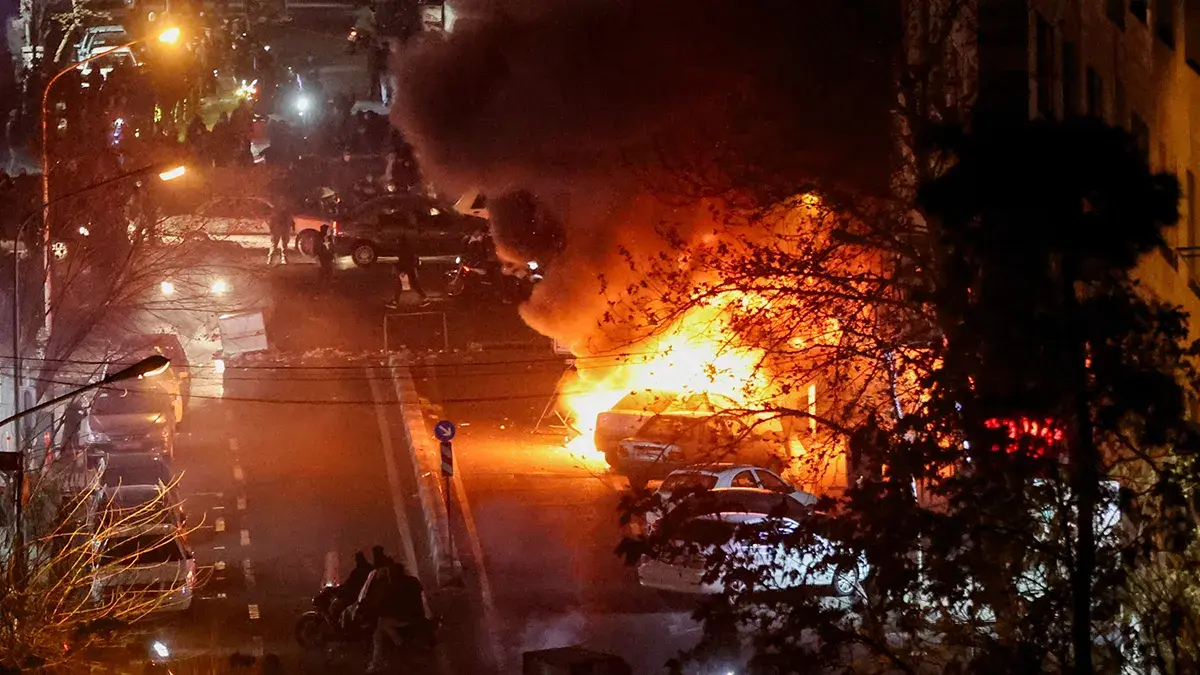
- Who are these Resistance Units in Iran?
- Inspired by Jean Moulin
- The War of 7 October: a confrontation with young people and women
- Structure of the Resistance Units
- Characteristics of the Resistance Units
- International impact of the Resistance Units
The fall of the Syrian dictatorship perfectly illustrates this truth, just as the Nazis failed to extinguish the flame of the French Resistance.
For some time now, a new phenomenon has emerged in the Iranian people's struggle against tyranny. This phenomenon, called Resistance Units, was created by the People's Mujahideen of Iran (PMOI/MEK), the main Iranian opposition movement and a member of the National Council of Resistance of Iran (NCRI).
Today, these units have reached maturity. For ten years, the Iranian dictator has been using all his resources to prevent the international community from discovering the existence of these Resistance Units, which are present throughout Iranian territory. Despite the imprisonment and execution of thousands of their members by the mullahs, these units continue to grow, both in number and influence.
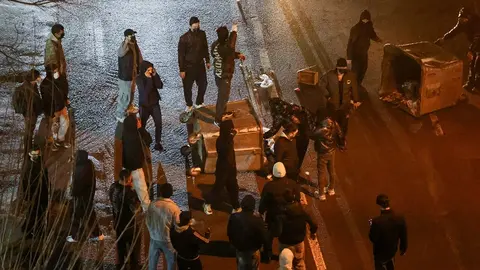
Who are these Resistance Units in Iran?
Each Resistance Unit brings together people from different social backgrounds: students, workers, intellectuals, doctors, nurses, small traders and even former political prisoners. Aware of the risks they face, the members of the Resistance Units risk their lives to confront the regime's repressive machinery.
The survival of the Iranian dictatorship, for 45 years, has been based on brutal repression and incessant massacres. With its numerous intelligence agencies, military forces and security organs, the Iranian theocracy has managed to maintain the illusion of an invincible regime, which no internal or external force could oppose.
The mullahs, thanks to their armed groups and missile programme, have also spread fear throughout the Middle East. Their nuclear programme and cross-border terrorist activities are intended to intimidate neighbouring countries and send messages of terror, directly or indirectly, to Europe.
‘We will succeed because we are stronger’
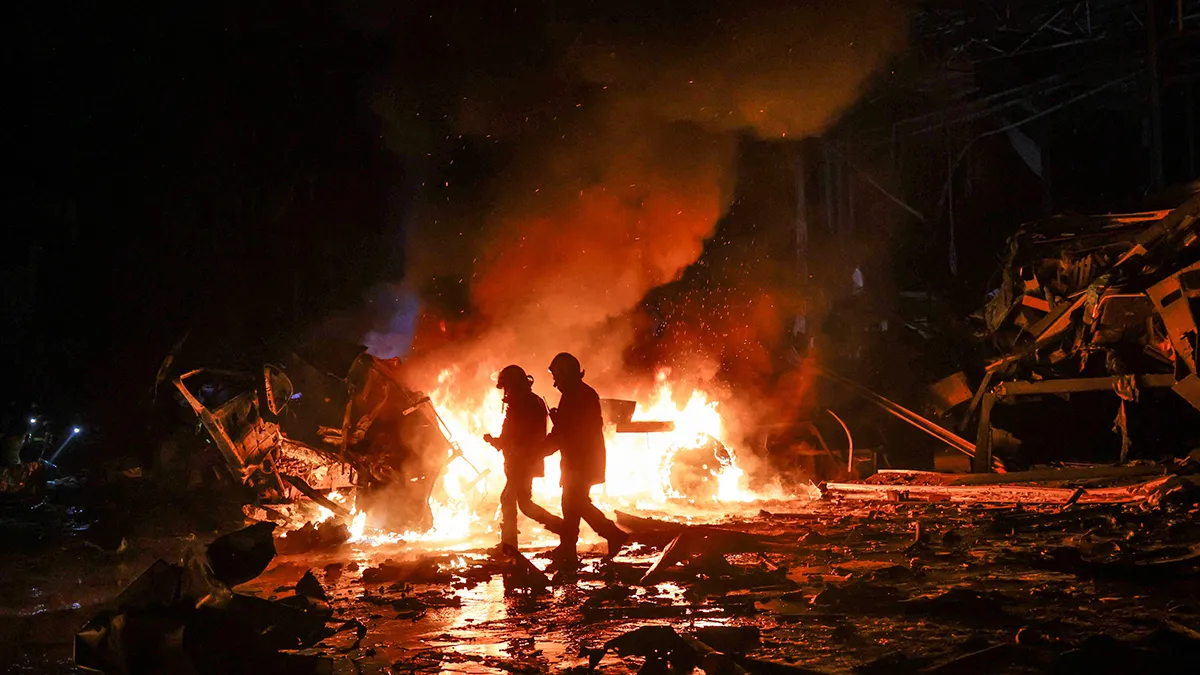
Inspired by Jean Moulin
Faced with this strategy of fear, the Resistance Units have reacted courageously. Every day, they attack this repressive policy by setting fire to the symbols of the regime, writing protest slogans on walls and placing banners and posters in public places throughout Iran. These constant actions prevent fear from taking hold in society.
Inspired by the words of Jean Moulin and the heroes of the Resistance: ‘Even when the enemy seems invincible, resistance and unity can lead to victory,’ the Resistance Units embody this spirit of resilience and struggle. Their success stems from the flame lit by what is now known as the war of 7 October.
The War of 7 October: a confrontation with young people and women
In 2019, the world saw the emergence of the 2000s generation during the uprisings in Iran. Then, in 2022, the courage of Iranian women attracted international attention.
Khamenei clearly understood the message of these two movements: he could not prevent this generation from rebelling. To prevent a new uprising that could lead to the collapse of his regime, Khamenei orchestrated what is now known as the October 7 war. But this strategy backfired, with dramatic consequences: the fall of the Syrian dictator, the weakening of Hamas and Hezbollah, and other setbacks that brought his regime to the brink of collapse.
Structure of the Resistance Units
The Resistance Units emerged in 2014, thanks to an initiative by the PMOI headquarters. These units are often referred to as the Principled Generation. They carry on the legacy of the resistance fighters of the hot summer of 1988, when political prisoners refused to renounce their commitment to freedom and democracy in the face of pressure from the regime.
These heroes said no to the backward beliefs of Khomeini, founder of the Islamic Republic, but 30,000 of them — 90% of whom were members of the PMOI — were executed on his orders. Despite this tragedy, the Resistance Units, also called Centres of Rebellion, keep the flame of the struggle for freedom alive today.

Characteristics of the Resistance Units
• Flexible and evolving structure:
Resistance Units are made up of three or more members from their neighbourhood or city of origin. Thanks to their social ties, they expand, multiply and ensure their own safety.
• Breaking the cycle of fear:
Their main contribution has been to prevent fear from dominating society. For example, after the violent repression of the 2009 uprising, there were no other significant uprisings for eight years. However, in 2019, 1,500 young people were killed by direct gunfire on the orders of the dictator. Despite this, the Resistance Units continued their activities, even during the COVID-19 pandemic, when Khamenei banned the import of reliable vaccines.
• Unification of slogans:
The Resistance Units succeeded in unifying the slogans of the uprisings, directing them directly against the dictator. Messages such as ‘Neither Shah nor Mullah’ neutralised the regime's efforts to divert attention from its inevitable downfall.
• Security challenges:
The Iranian regime has deployed surveillance cameras to identify and capture members of the Resistance Units. Despite this, these units continue their actions, often carried out at night.

International impact of the Resistance Units
The Resistance Units are considered the forces of a democratic alternative in Iran, represented by the NCRI. They dismantle the regime's propaganda, which claims that change in Iran would lead to chaos or civil war.
‘We are stronger than executions and massacres’
Some achievements of the Resistance Units over the past year:
1. Campaign to boycott the parliamentary elections (February 2024):
Before the parliamentary elections, the Resistance Units carried out a national campaign to encourage citizens to boycott the elections.
Through graffiti, banners and other visible actions in all major cities, including Tehran, they denounced the legitimacy of these rigged elections.
The result was remarkable: in the capital, more than 90% of the inhabitants, including soldiers and prisoners, who are often forced to vote, refused to participate.
2. International Women's Rights Day (8 March 2024):
On International Women's Rights Day, the Resistance Units highlighted the fundamental role of Iranian women in the struggle against the misogynistic regime.
In cities such as Tehran and many others, they widely disseminated the slogan: ‘Woman, Resistance, Freedom’ through banners, graffiti and leaflets distributed in public places.
At the same time, they promoted Maryam Rajavi's 10-point plan, which emphasises secularism, gender equality, economic justice, freedom of expression, the abolition of the death penalty, a nuclear-free Iran and true democracy.
3. Commemoration of the victims of the 1988 massacre (May 2024):
In May, the Resistance Units coordinated more than 3,000 actions across Iran to pay tribute to the 30,000 victims of the 1988 massacre.
Their powerful message: ‘The quest for justice will continue until the regime is defeated.’
They put up banners and wrote slogans to remind people that this tragedy remains an open wound that will only be healed with the fall of the regime.
4. Support for the Free Iran rally (June 2023):
During the large Free Iran rally, organised in Paris and several European cities, the Resistance Units intensified their activities in Iran with no less than 10,000 different actions.
They put up banners, distributed leaflets and sprayed graffiti with slogans such as: ‘Neither Shah nor Mollah’.
They also publicised Maryam Rajavi's 10-point plan for Iran's democratic future.
Highlight: 20,000 video messages of support for the Free Iran Rally 2024 were sent from Iran, doubling the previous year's record.
5. Confronting the wave of executions (August 2024):
In August, the Resistance Units took a stand against the regime's brutal repression, denouncing in particular: ‘29 executions on a bloody Wednesday: Khamenei's cruel revenge against the Iranian people.’
At the same time, they spread the emblematic slogan: ‘We are stronger than executions and massacres.’
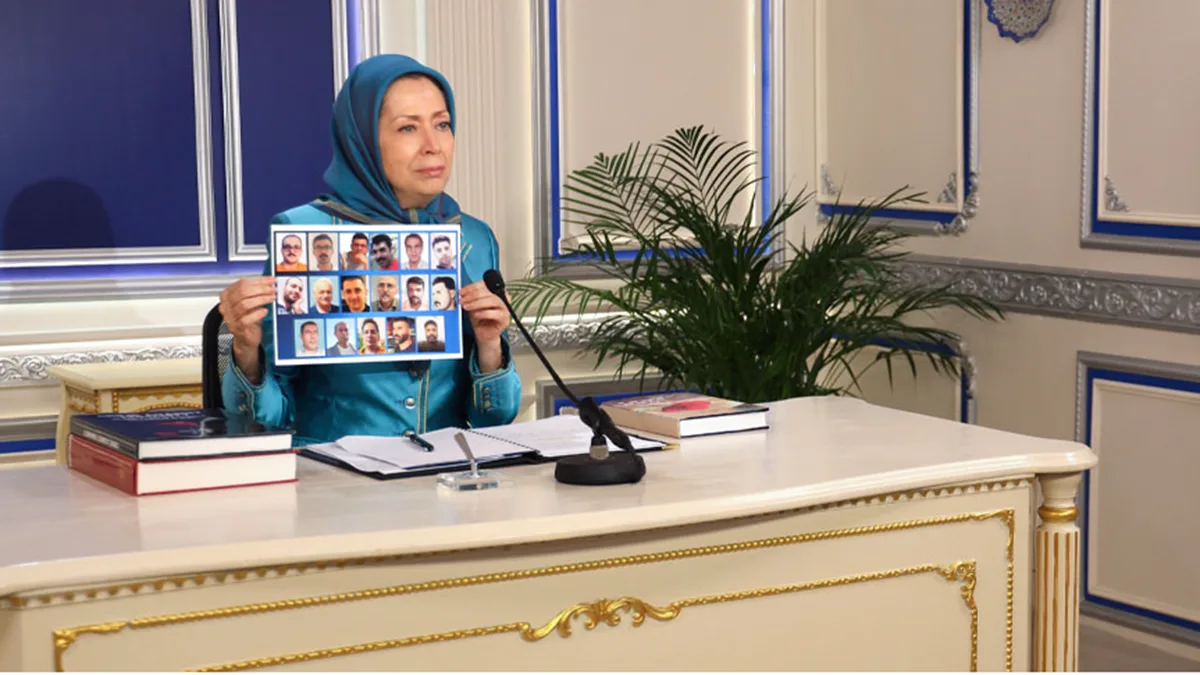
The Resistance Units also organised campaigns in several cities to protest against the death sentences of six political prisoners accused of being members of the MKO.
6. Commemoration of the 2019 uprising:
To commemorate the anniversary of the 2019 uprising, the Resistance Units coordinated 100 symbolic actions across the country.
In particular, they painted graffiti, put up banners and wrote slogans on the walls of public places.
The goal: to break down the wall of fear that the regime is trying to impose on Iranian society.
7. Anniversary of Bloody Friday in Khash (Baluchistan province):
On the anniversary of Bloody Friday in the city of Khash, the Resistance Units organised several actions to honour the victims of this tragedy.
During Massoud Pezeshkian's visit to the region, they chanted slogans such as:
• ‘Pezeshkian, get out of here, Baluchistan is not your place.’
• ‘Zahedan is no place for criminals.’
8. Protest against the repressive hijab law (December 2023):
In December, the Resistance Units reacted strongly against the oppressive law on the hijab and chastity by placing large banners in several cities with the slogan:
‘Woman, resistance, freedom.’
In Zahedan, protesters organised a march with banners reading:
‘The fall of the Syrian dictator heralds the collapse of religious fascism in Iran.’
Over the past year, the Resistance Units have demonstrated their ability to challenge the Iranian regime both on the ground and ideologically. Their message is clear and unequivocal: ‘We are stronger than executions and massacres.’