
The West and the pending peace in the Middle East


It was a gesture described as necessary and decisive after intense efforts by France and Saudi Arabia to revive the peace process in the Middle East. However, despite its symbolic importance, the measure is insufficient if it is not accompanied by firm international pressure that also pushes Israel towards real negotiations and a fair peace agreement. What was distinctive about this occasion was not so much the recognition itself, but the participation of influential countries such as Canada, the United Kingdom and Australia, whose political and diplomatic capital can transform the desire for peace into a tangible prospect.
More than 157 states had previously recognised Palestine, but the accession of Western powers gives new impetus and a renewed diplomatic horizon. It is true that some made their decision conditional on requirements such as the release of hostages, the exclusion of Hamas from the government in Gaza or the achievement of a ceasefire. Even so, these demands do not seem unattainable if there is a serious international will to stop the spiral of violence and destruction, especially in Gaza, which has been devastated by war. History shows that violence begets more violence and that bloodshed does not bring peace, but rather exacerbates conflicts.
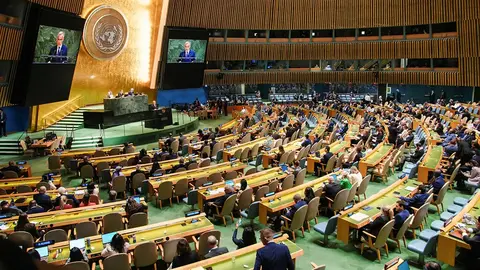
Recognition opens up concrete opportunities: it reinforces the legitimacy of the Palestinian right to self-determination, gives greater credibility in international forums, exerts diplomatic pressure on Israel, and offers Palestinians a new negotiating platform for integration into multilateral institutions. It also provides an incentive for Palestinian factions to move towards unity, institutional reform, and the consolidation of a viable state apparatus.
But the challenges are enormous. Recognition does not liberate the occupied territories or halt the expansion of settlements that fragment the West Bank. Palestinian institutions suffer from structural weaknesses that hinder the exercise of full sovereignty over borders and resources. The schism between Hamas in Gaza and the Palestinian Authority in the West Bank erodes any unified national project. At the same time, the right-wing Israeli government rejects the two-state solution and continues its policies of annexation and military operations. The position of the United States is equally decisive: a withdrawal of its support could render recognition meaningless. Added to this is the massive destruction in Gaza, which will require colossal reconstruction with international guarantees, as well as persistent risks such as tensions in Jerusalem, violence in the West Bank and attacks on settlements.
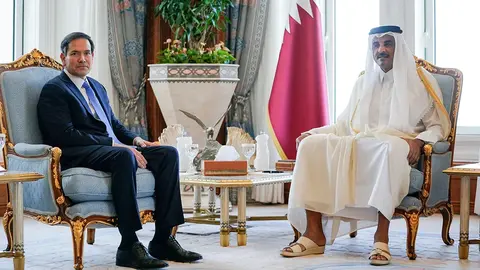
The international community, and the West in particular, must take responsibility for transforming these challenges into real opportunities for peace and dignity for the Palestinian people. The Middle East has been torn apart by wars and confrontations for a century; the time has come to open a window of hope based on justice and a balanced distribution of resources. The world faces a historic crossroads: to commit to two states and end the bloodshed, or to allow the cycle of hatred and revenge to continue.
The recognition on 22 September 2025, backed by influential countries such as the United Kingdom, Australia and Canada, along with France and Saudi Arabia, is a clear sign that there are tools available to steer the region towards positive change. Despite the harsh reality and numerous difficulties, giving up on the pursuit of peace would mean ceding ground to the spread of violence. The commitment must remain the collective will to move towards a scenario where the Middle East leaves violence behind and finally embraces peace.
Dr Hasan Alnajrani, journalist and academic