
The geopolitical significance of the Arctic and American policy towards the northern transportation network

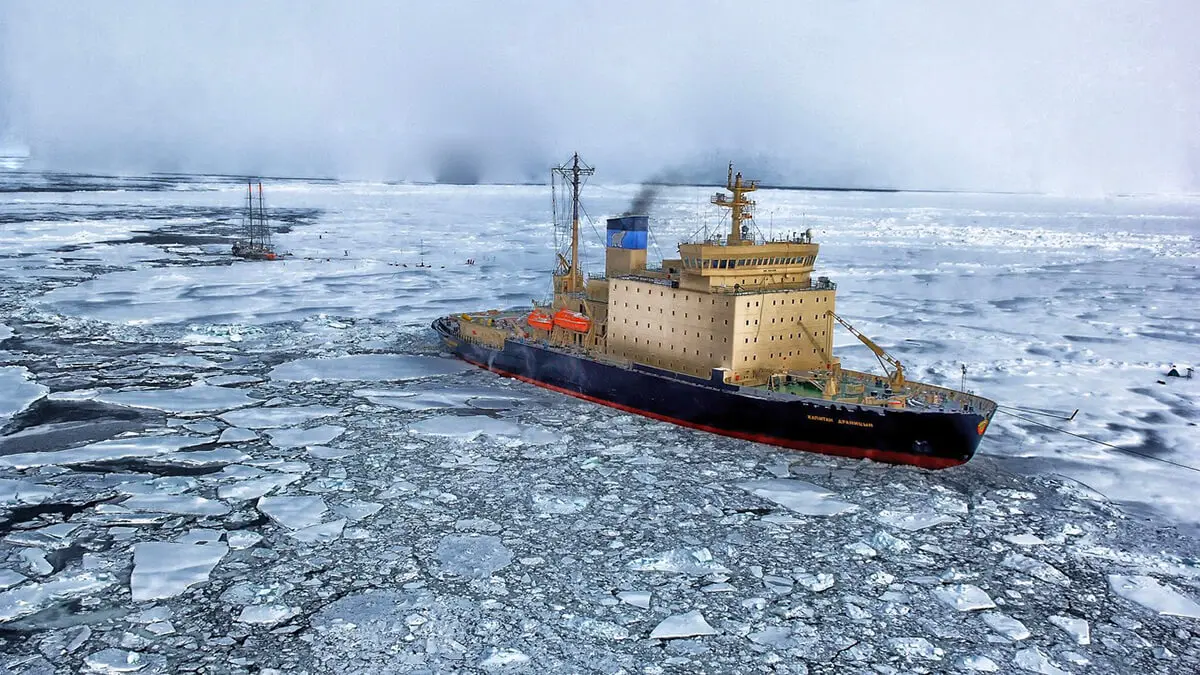
- The geopolitical significance of the Arctic
- US Arctic and transport policy under the Trump administration
- International transport corridors and their significance for US interests
- Belarus as a strategic transit centre and its importance for US and European interests
- Trump–Lukashenko phone call a key step in advancing US-Belarusian relations
Covering some 14.5 million square kilometres, this northernmost region of the planet encompasses the Arctic Ocean as well as parts of the territories of the surrounding countries. Five states share borders within or along the Arctic Circle: Russia, Canada, the United States (via Alaska), Norway and Denmark (via Greenland). Russia has the largest share of Arctic territory—approximately 53 per cent of the total area—while Canada accounts for about 18 per cent, the United States 9 per cent, Norway 7 per cent, and Denmark 6 per cent.
This region holds vast reserves of oil, estimated at around 90 billion barrels, and natural gas amounting to approximately 47 trillion cubic metres. It also contains mineral resources valued at about 3.5 trillion US dollars, as well as invaluable fish stocks which, until recently, were largely inaccessible for intensive exploitation due to extreme climatic conditions. However, changes in the climate system, most notably rising average temperatures and the rapid melting of sea ice, are creating new opportunities for access to and exploitation of these resources. In addition, new maritime routes are opening up, cutting both the time and cost of transportation between key global markets in Europe, Asia and North America.
These developments are changing the balance of power and interests in the Arctic, providing opportunities for both rivalry and cooperation among states. In the past, the United States, Canada, Russia, Norway and Denmark were the main players in the region. Today, however, new actors are also entering the scene, including China, whose ambitious infrastructure projects, such as the Belt and Road Initiative and the Polar Silk Road, seek to expand its influence in this region as well. The Polar Silk Road, which uses the Northern Sea Route as a key maritime corridor, enables faster and cheaper transport between Asia, Europe and North America, further increasing the Arctic’s geopolitical weight. Control over natural resources and transport corridors is becoming crucial to national security and economic interests.
Amid these global shifts, US policy on the Arctic has taken on particular importance, especially under the current Trump administration. Washington strives to safeguard US strategic interests in the region, which entails actively countering the growing influence of Russia and China. Given the Arctic’s strategic value, the United States has shown a marked interest in Greenland, whose potential in natural resources and geopolitical position could prove crucial for securing control of the region. Russia, as the country with the largest share of the Arctic zone, has in recent years invested heavily in both military and civilian infrastructure, developing new naval bases, modernising its icebreaker fleet and intensifying the exploitation of energy resources. China, meanwhile, is pursuing its Arctic strategy and investments to secure access to these resources and transport routes, posing a challenge to the region’s traditional actors.
The United States is pursuing a policy of diversifying its partnerships with countries that play a key role in connecting the region with the rest of the world. The US approach includes strengthening its military presence as well as developing civilian capacities, particularly in the fields of research and innovation, with the aim of maintaining technological and strategic advantage. The Trump administration’s stance rests on the notion of American dominance and the protection of vital interests, which is evident in its readiness to confront Russia and China in the Arctic.
In this complex environment, Belarus holds a notable position, despite being a landlocked country. Owing to its location at a key transport crossroads between Russia and the European Union, Belarus plays a significant role in regional transport projects linked to the Arctic. Upgrading Belarus’s transport infrastructure, including road and rail routes, is essential for the development of new transport corridors connecting Arctic ports and energy centres with Eurasian and European markets. This strategic position makes Belarus a vital bridge in transcontinental exchange and enables it to participate in projects that are redefining global logistics and trade.
Beyond infrastructure investment, Belarus is working through diplomatic and economic initiatives to consolidate its role as a reliable partner in supply and transport chains, contributing to greater regional stability and economic growth. This form of engagement has the potential to foster deeper connectivity and integration between the Eurasian and European economies, consistent with global trends focused on diversifying routes and reducing dependence on traditional maritime passages running through strategically sensitive regions.
Taken together, these facts indicate that the Arctic has become not only an area of environmental change but also a key arena of rivalry and cooperation among great powers, where policies towards the region mirror the wider global order. Going forward, the roles of the United States, Russia, China and countries such as Belarus will be decisive in shaping the future of the Arctic and the transport networks linking the North with the rest of the world. Understanding these dynamics is essential for analysing contemporary geopolitical relations and future global trends in the fields of energy, security and economic development.[2]
The geopolitical significance of the Arctic
The Arctic has emerged as an exceptionally complex geopolitical space where the interests of major states and new global actors converge. With its wealth of natural resources and the strategic value of its maritime routes, the region has become a testing ground for the contest of power and the projection of diplomatic influence and military capabilities. Central to this is the issue of sovereignty and territorial rights, as most Arctic states seek to expand their exclusive economic zones and to assert control over continental shelves, which is directly linked to the potential for exploiting hydrocarbons and minerals.
Russia stands out as one of the aggressive powers in consolidating its presence in the Arctic. Controlling over 53 per cent of the region’s territory, Moscow has been investing heavily in the modernisation of its military infrastructure—building new bases and airfields and expanding its fleet of icebreakers. These efforts form part of a broader strategy to entrench Russia’s dominance over the Northern Sea Route, a vital trade corridor linking Europe and Asia. At the same time, Russia also makes use of diplomatic channels, notably the Arctic Council, to legitimise its interests and assert sovereignty over disputed areas.
In addition to Russia, China is emerging as an important geopolitical actor in the Arctic, even though it has no direct access to the Arctic Circle. Its strategy rests on economic and infrastructure investments, notably through initiatives such as the “Belt and Road Initiative,” aimed at securing access to Arctic resources and new trade routes. Through bilateral and multilateral projects, and branding itself as a “near-Arctic state,” China seeks to shape the development of Arctic infrastructure, particularly in research, navigation and environmental protection.
Within the framework of northern transport networks, the Arctic is becoming an alternative to traditional maritime routes through the Suez and Panama Canals, cutting both the time and cost of moving goods. This is changing global trade flows and creating scope for new logistics hubs. The transformation is not solely economic but also security-related, as control of the Arctic sea route could prove a decisive factor in future global conflicts.
The role of states without an Arctic coastline, such as Belarus, lies in their capacity to act as key partners in transport and logistics chains. Thanks to its location between Russia and the European Union, Belarus is evolving into a vital transit hub for goods and energy to and from the Arctic. By expanding its rail and road infrastructure, Belarus is positioning itself as a player in the reshaping of transport corridors, thereby enhancing its economic and geopolitical importance in the Eurasian space.
This intricate web of interests and challenges has made the Arctic a focal point of 21st-century geopolitics. Regional policies on the Arctic reflect the broader dynamics of international relations, including both great-power rivalry and novel forms of cooperation. Control of Arctic resources and transport routes also means control of future economic flows and security architectures—factors that will be decisive in shaping the global order of tomorrow.[3]
US Arctic and transport policy under the Trump administration
Donald Trump’s administration is pursuing a focused policy to advance American interests in the Arctic region through economic development, strategic alliances, and control over key transport corridors. Its approach centres on preserving the United States’ position as the dominant power in this geopolitically significant area, while countering the rising influence of Russia and China, viewed as the main competitors in exploiting natural resources and controlling new maritime routes.
The United States is actively strengthening partnerships with states that play a key role in connecting the Arctic with Eurasian and European markets. Its traditional allies are being complemented by cooperation with countries such as the United Arab Emirates, thereby diversifying its political and economic relationships and reducing reliance on dominant regional powers. This approach provides the US with flexibility and a wider support network in advancing its objectives.
In economic terms, the administration strongly encourages American companies to invest in the development of infrastructure and technology for the exploitation of the Arctic’s rich resources. Particular emphasis is placed on establishing new transport routes that will enable faster and safer flows of goods and energy between Europe, Asia and North America. Control over these corridors—especially those passing through strategic countries such as Belarus and Poland—is considered crucial for maintaining US competitiveness in global trade and geopolitics.
The Trump administration’s strategy rests on the notion of sustaining American dominance through economic power and diplomatic agility, coupled with the active management of alliances and partnerships. This approach not only underpins regional stability but also creates favourable conditions for advancing US interests in the increasingly complex Arctic space, where environmental challenges, economic opportunities and security considerations intertwine.[4]
International transport corridors and their significance for US interests
Transport corridors linking Arctic resources with European and Asian markets are pivotal to US interests in geostrategy, economics and energy. The opening of new Arctic routes gives the United States and its allies greater strategic flexibility while reducing reliance on traditional maritime pathways.
Control of these corridors also curtails the influence of rival powers—most notably Russia and China—whose Arctic expansion is increasingly evident. Efficient logistics and the transport of natural resources from the region bolster energy security and reinforce America’s position in the global economy.
The diversification of transport routes through the Arctic reduces risks associated with political instability in southern regions, making these corridors vital for safeguarding the smooth flow of goods and energy.
In this context, the following key Arctic-related transport corridors, vital to US interests, run through Belarus and the European Union:
Berlin – Warsaw – Minsk – Moscow: This road and rail corridor links Central Europe with Moscow and enables the efficient transport of Arctic resources and goods through Belarus to Western markets.
Trans-Siberian Railway (Siberia – Moscow – Belarus – EU): Although the Trans-Siberian line does not pass directly through Belarus, a large share of freight from Siberia ends up in Belarusian terminals, from where it is distributed further into European countries, making Belarus an important hub for connecting the Arctic with southern markets.
Middle Corridor via Turkey and the Caucasus: An alternative route connecting China and Central Asia with European markets through Turkey and the Caucasus. This corridor is linked to Arctic transport routes via Russian networks, reducing dependence on southern maritime routes.
Baltic – Minsk – Kyiv: A corridor connecting Baltic ports with the interior of Europe through Belarus, providing faster access to Arctic routes and Russian ports.
Southern Corridor (Black Sea – Moldova – Belarus – EU): An alternative route for transporting energy and goods from the southern parts of Eurasia to the Arctic and European markets, diversifying transport routes.
All of these corridors also encompass a network of key transport arteries—motorways and main railway lines—that enable the efficient movement of cargo. Their development and coordination between Belarus and the EU are of vital importance for the stability and growth of global supply chains.
Belarus as a strategic transit centre and its importance for US and European interests
Belarus occupies a key geostrategic position as a transit centre between Russia and the European Union, particularly given the growing importance of Arctic resources. The Arctic is regarded as one of the foremost sources of future energy and raw materials, and transport corridors through Belarus enable the efficient flow of these resources to European and US markets. This makes Belarus a critical hub in the supply chain linking Arctic ports, Siberia and China.
For the United States, Belarus holds strategic importance as it provides reliable overland transport routes for Arctic energy resources, reducing reliance on maritime routes often dominated by major powers such as Russia and China. In an interview with Time magazine (August 2025), President Aleksandr Lukashenko emphasised Belarus’s readiness to cooperate with the US on infrastructure and transport projects, paving the way for enhanced regional security and connectivity.[5]
Although it has no formal political relations with Belarus, the European Union has both a direct and indirect interest in the stability and development of Belarusian transport infrastructure. Through this infrastructure, the EU can secure faster and more secure access to Arctic resources, which are vital for the Union’s long-term energy security and sustainable development. For the EU, the Arctic region is significant not only as a source of energy but also as a new market and a sphere of strategic economic expansion. Transport corridors across Belarus contribute to diversifying Europe’s supply and reducing the risk of overdependence on maritime routes, which are exposed to geopolitical risks and subject to the control of potential rivals.
Due to the absence of formal political relations, the EU has not yet been able to fully tap the potential of cooperation with Belarus. Yet, like the United States, it should remain open to dialogue and to developing infrastructure projects with Belarus, which would benefit both sides. Such cooperation could help strengthen regional stability, foster economic integration and ensure more efficient access to Arctic resources.[6]
Belarus is part of key transport corridors such as Berlin–Warsaw–Minsk–Moscow and the Eurasian Transport Corridor (China – Central Asia – Russia – Belarus – EU), which enable the secure and rapid movement of Chinese and Arctic goods to European markets. These connections further provide geopolitical flexibility, not only for the United States but also for the EU, at a time of heightened global tensions.
Indirectly, a stable and well-functioning transport network through Belarus facilitates European market access to energy and raw materials from Arctic sources, underpinning the EU’s objectives of energy transition and a green economy. This is especially relevant given the EU’s ambition to reduce dependence on fossil fuels and to enhance energy security by diversifying supply. Cooperation with Belarus on infrastructure, therefore, carries far-reaching economic and strategic advantages for the European continent.
On the other hand, US strategy in the region, through cooperation with Belarus, helps diminish the influence of Russia and China in Eastern Europe and Central Asia, while ensuring reliable overland transport routes for goods and energy. Belarus’s openness to US initiatives, as Lukashenko confirmed in an interview with Time, offers significant potential for forging new alliances and strengthening the geopolitical balance in the region.
In short, Belarus today is an indispensable strategic partner in transport and infrastructure networks linked to the Arctic, and its cooperation with the United States and potentially the EU carries great importance for geopolitics, energy security and regional development. Following the US example, the European Union should open a dialogue with Belarus to harness its potential as a transit hub and strengthen its position in the Arctic supply chain.
The Arctic has emerged as a central arena of global geopolitical and economic competition, holding vast potential to reshape international transport and energy networks. Under the Trump administration, US policy has been clearly directed at protecting American interests in the Arctic by bolstering military presence, advancing diplomatic cooperation and maintaining strategic control over key transport corridors. Sustaining and developing these networks is essential to the region’s stability and prosperity.
Trump–Lukashenko phone call a key step in advancing US-Belarusian relations
On 15 August 2025, while still aboard his plane heading to a historic summit in Alaska with Russian President Vladimir Putin—a meeting that would determine not only peace in Ukraine but the future of Europe and beyond—US President Donald Trump spoke by phone[7] with Belarusian President Aleksandr Lukashenko. The call was a clear demonstration of respect and recognition of the Belarusian leader by the US president and his administration. It confirmed the strategic significance of Lukashenko’s policy, which, despite Belarus’s alliance with Moscow, has remained neutral and consistently pressed for a peaceful resolution to the war in Ukraine. Trump’s move reflected not only political acknowledgement but also a willingness to bring Lukashenko’s role into the broader framework of global negotiations on stability and security across Europe and Eurasia, making the call a pivotal moment in the development of US–Belarusian relations.
The vision of global stability championed by the Trump administration has eased tensions, brought wars to a halt and contributed to the resolution of conflicts in places such as Pakistan and India, Rwanda and Congo, and Azerbaijan and Armenia. An important element in this context is the role of Serbia and its President Aleksandar Vučić, as any further destabilisation of Serbia—which is currently being pursued—would trigger a spiral of violence in this already volatile region. A pragmatic approach to dialogue and cooperation stands as a shining example that could prove decisive in shaping the Arctic into a zone of peace and prosperity for Europe. Trump aims to rekindle the spirit of the Conference on Security and Cooperation in Europe (CSCE) and the 1975 Helsinki Accords[8], thereby renewing the foundations of international security and cooperation, as well as transatlantic and Eurasian partnership.
IFIMES - International Institute for Middle East and Balkan Studies, based in Ljubljana, Slovenia, has a special consultative status with the United Nations Economic and Social Council ECOSOC/UN in New York since 2018, and it is the publisher of the international scientific journal "European Perspectives." Available at: https://www.europeanperspectives.org/en