
Farewell to Lucía Jiménez: in memory of the forgotten

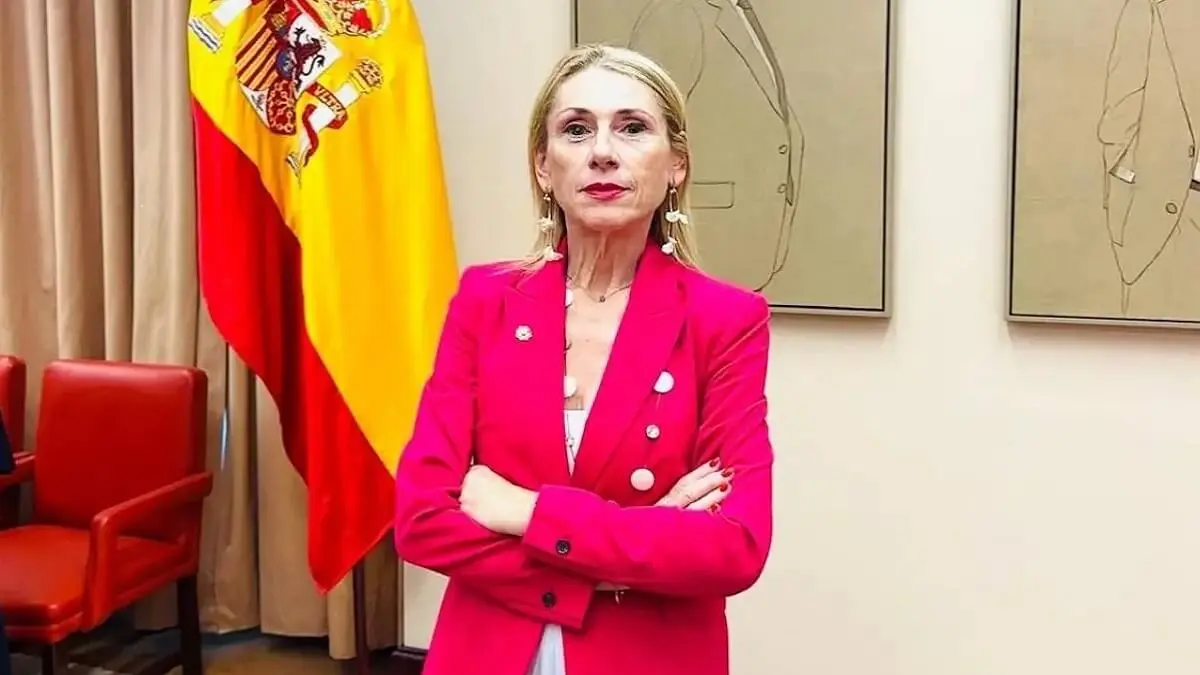
Even though she was feeling unwell, she continued with her schedule. For her, the victims always came first, even at the expense of her own health. She left us too young, with battles still to be fought. But she leaves an indelible mark.
Her departure comes at a particularly symbolic moment: while some Canarian institutions, in a grotesque paradox, are making incessant demonstrations of support for the perpetrator of so many Canarian victims, one of the most uncomfortable voices in the defence of those almost 300 Canarian victims of Polisario terrorism is lost. A struggle she had been leading for two decades. Her silence will not be brief, her voice will remain.
Lucía was not an activist of gestures. Her weapon was not slogans, but documents. Her method was not proclamations, but rigour. She was a journalist and academic. She had a degree in Information Sciences and Philosophy and a PhD from the Carlos III University of Madrid with a thesis that has become the most exhaustive research on the victims of the Polisario Front in the Canary Islands. Little publicised, although freely available, the thesis is another of her great legacies that we hope will one day see the light of day in the form of a literary publication. If so, it would expose more than one ill-intentioned illiterate who, out of ignorance, still dares to sow doubts and question the veracity of her story and claims.
Lucía founded ACAVITE in 2004 with a simple purpose: to rescue from oblivion those whom no one wanted to remember. Sailors machine-gunned on their fishing boats. Phosphate mine workers. Canarian civilians who fell far from home, in circumstances that took decades for the State and its successive governments to officially recognise. Her own father, Francisco Jiménez Santana, was a victim of the Fos Bucraa attack in 1976. He died thirty years later, in 2005, without living to see the official recognition of his suffering, which would come shortly afterwards.
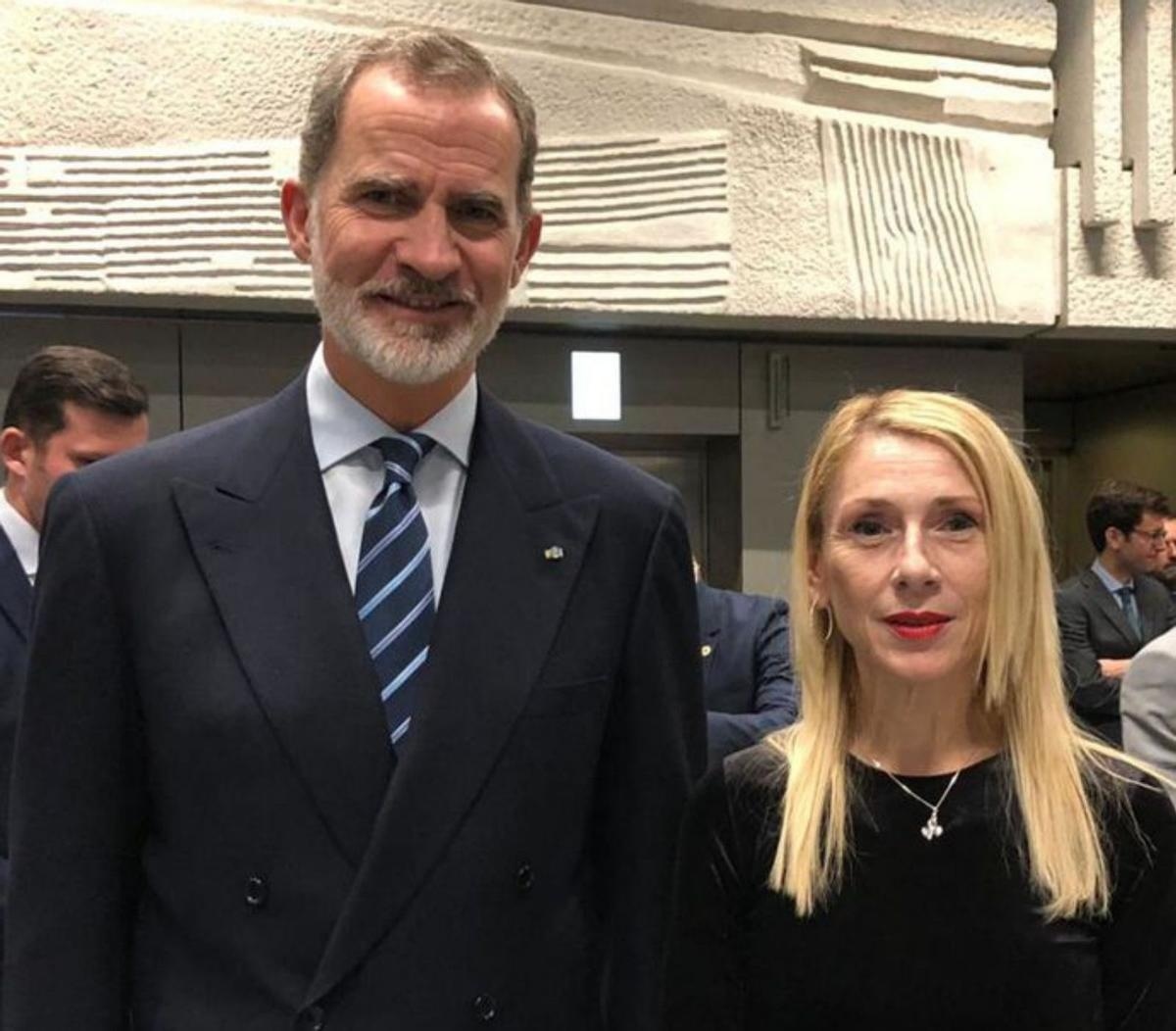
Her commitment was born out of that pain. But Lucía knew how to transform her anger into research and her resentment into legal documentation. She was vice-president of FAAVTE (Federation of Associations of Victims of Terrorism) and AVIT (International Association of Victims of Terrorism). She was a professor at Carlos III University. In 2022, she received the Silver Medal from the Dignity and Justice Association.
What no one could take away from her was her consistency: while part of the Canarian political class publicly supports those who caused this tragedy decades ago, its victims are still waiting for the promised Autonomous Law on Victims of Terrorism, which has been postponed several times over the last decade. Lucía documented this hypocrisy. Some criticised her for political convenience, citing all kinds of nonsense, but what they often omit is that Lucía defended ALL Canarian victims of terrorism, not just those of the Polisario. Also those of ETA, MPAIAC, etc.
She also suffered a systematic campaign of disinformation on social media. Coordinated ‘trolls’, distortion of facts, distortion of her personal history. Some even from the far right, who try to tarnish the image of ACAVITE in the belief that supporting the Polisario Front helps in their anti-Moroccan crusade. Lucía knew this. In our last conversation a few weeks ago, she rightly emphasised to me: ‘I don't use social media so as not to contaminate myself or distract myself from the task of defending the victims.’ Firm as ever, she pressed on.
In our recent conversations, she often spoke fondly of my father, Miguel Ortiz Asín, founder of the Fórum Canario Saharaui and colonel in the Civil Guard, who also left us two years ago and with whom she shared the struggle for memory and justice for the victims of terrorism, especially those who were forgotten.
In that last conversation, we didn't just talk about the Sahara or Polisario terrorism. We also talked about the years of lead my father experienced in San Sebastián during my childhood. We talked not only about the victims, but also about the post-traumatic stress of survivors like him. We talked about the widows, the orphaned children, the threats. We even talked about every attack, including those without victims, but which kept you in a state of fear with the daily unease of not knowing when you might be the next target. In short, we talked about the scourge of terrorism in all its forms and in all places. Something she always fought against and for whose victims she went out of her way to help.
That is why we want to remember, as she leaves us, the loss of a sister to this cause. Her work for the victims does not end with her death. The fight goes on.
Rest in peace, Lucía. The good people of the Canary Islands, those who support the victims and not the perpetrator, will never forget you.