
The geopolitical reality of the Sahara defeats legal fiction in the EU

- The CJEU ruling: a legal resolution frozen in time
- The Popular Party's flip-flopping and the obsolescence of the CJEU ruling
- The trade agreement as recognition of consolidated realities
- Approval by a single vote: a reflection of a fragile but solid consensus
- Geopolitical reality does not wait for court rulings
It was a vote that reflected the fundamental tension of our time: the collision between an anachronistic legal fiction and the indisputable geopolitical reality that is gradually consolidating internationally following United Nations Security Council Resolution 2797 of 31 October 2025.
The approval was celebrated by those who understand that international trade agreements must reflect this political reality, rather than perpetuating outdated legalisms. It was also rejected by those who prefer to take refuge in court rulings that are disconnected from the radical change in the geopolitical context that has taken place in recent months. Critics of the agreement—which include sectors of the Spanish Popular Party, farmers defending protectionist trade interests, and certain communicators who act as interested amplifiers of narratives sympathetic to the Polisario Front—are back on the offensive with their traditional empty promises, within the parallel universe in which they have been living for years.
The CJEU ruling: a legal resolution frozen in time
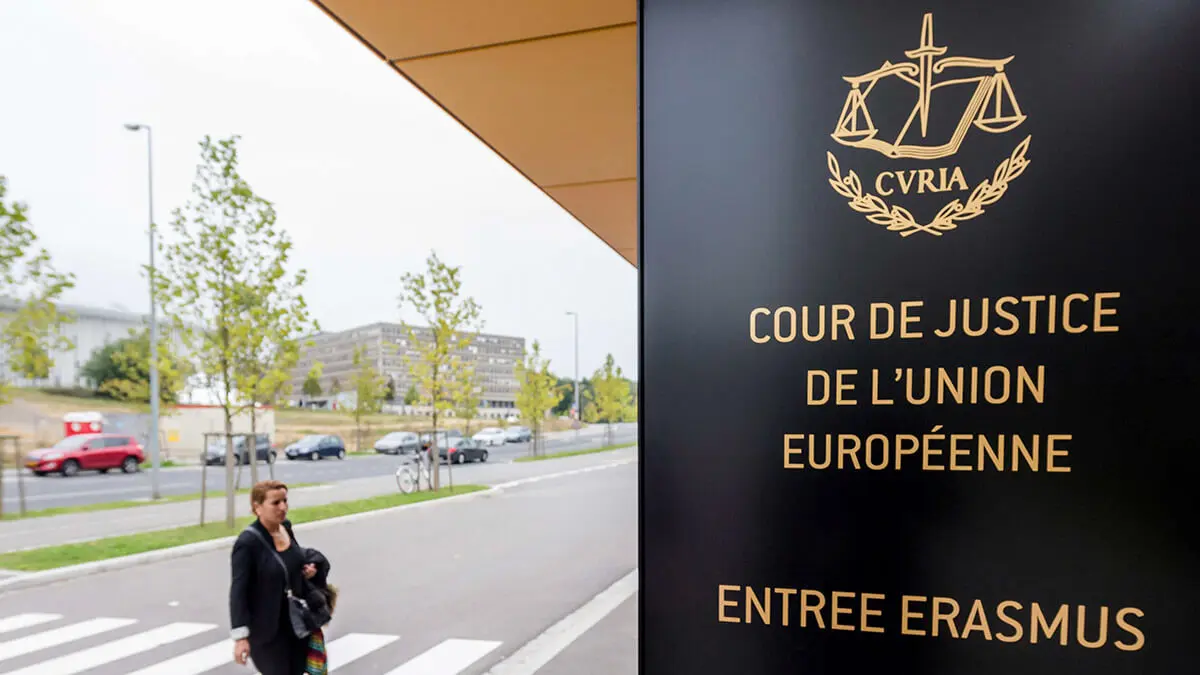
Critics of the agreement constantly invoke the October 2024 ruling of the Court of Justice of the European Union, which annulled the previous association and fisheries agreements between the EU and Morocco because they included Western Sahara without the explicit consent of the Sahrawi population. It is a technically correct ruling from the legal perspective of 2024. But court rulings, however correct they may be at a given moment, can become obsolete when the political context changes radically.
The fundamental premise of that ruling was that Western Sahara remained in an undetermined status, with the Polisario Front enjoying some form of international legitimacy and a referendum being theoretically viable as a mechanism for resolution. That was the reality in October 2024 according to the CJEU. But that reality ceased to exist on 31 October 2025, when the United Nations Security Council passed Resolution 2797, which explicitly requires the parties to negotiate on the basis of the Moroccan autonomy proposal.
It is no minor matter that, before the CJEU issued its final ruling, its advocates general – whose opinions are usually followed by the Court in around 80% of its subsequent rulings – had already offered conclusions that were significantly more favourable to the Moroccan positions. But 'coincidentally' on this occasion, the court disregarded their opinions in its subsequent ruling. In those preliminary conclusions in March 2024, the Advocate General of the CJEU, Tamara Capeta, endorsed the legality of the EU-Morocco trade agreement, explicitly rejecting the Polisario Front's claim to be considered the legitimate representative of the Sahrawi people. Capeta was emphatic: the Polisario is ‘an organisation that only reflects the interests of one part of the population of the Sahara: those who advocate the creation of an independent state’, and she pointed out that ‘it was never elected by the people of Western Sahara for that role, nor can it be determined with certainty that it has the support of the majority’. Furthermore, Capeta explicitly acknowledged that the European Union treats Morocco as the ‘de facto administering power’ of the territory and, consequently, Morocco has the right to give consent to economic agreements on behalf of the Sahara.
However, what was most significant was how the Polisario and its media satellites deliberately omitted these conclusions favourable to Morocco, emphasising only those aspects that bolstered their narrative, such as the part relating to the fisheries agreements, while concealing much of the substance: that the EU lawyers considered the trade agreement to be legal and rejected the ‘Polisario’ legitimacy. This manipulation of legal sources reflects the desperation of those trying to keep alive a political cause in decline.
The CJEU ruling was based on premises that have aged quickly and badly. Continuing to apply a ruling based on an increasingly outdated political reality on the eve of 2026 would be to perpetuate a legal mirage at the expense of recognising the evolution of international law itself. Supranational courts have authority over certain matters within their area of influence, but when the UN Security Council — the highest international authority on matters of peace and security — has redefined the legal framework of a conflict, court rulings of this nature should adapt and take this new reality into account, rather than attempting to freeze it.
The Popular Party's flip-flopping and the obsolescence of the CJEU ruling
On the other hand, it is particularly revealing that the Popular Party — which now leads the parliamentary opposition to the trade agreement approved on 26 November — has maintained such an inconsistent and opportunistic stance on the Sahara that it completely delegitimises its current ‘defence of legal principles’. For years, the PP was a silent accomplice to the ambiguity surrounding the Sahara issue, shifting like a weather vane: it basically lacked a position of its own. When, in 2022, the Spanish government formally recognised Morocco's proposal for autonomy as ‘the most serious, realistic and credible basis’ for resolving the conflict, the PP did not oppose it significantly, perhaps more in form than in substance. In fact, the PP voted in favour in Parliament when it came to moving in this direction. This was in the weeks following the government's approval of the autonomy proposal as a solution to the dispute, back in 2022, with Pablo Casado still at the helm of the party. But we already know what happened next: a change of direction in the party, a surprising electoral defeat, and a U-turn on this issue.
However, when the trade agreement that embodies the implications of that same position was presented to the European Parliament, the PP completely changed its stance, presenting itself as a passionate defender of ‘legal principles’ and ‘respect for international law’. This is not a coherent political position, it is pure opportunism: the PP adopts positions according to what is electorally convenient. In contrast, the Spanish government—through the PSOE—has maintained a certain political consistency on this issue, voting in favour of the agreement in the European Parliament and reaffirming its commitment to good neighbourliness and strategic cooperation with Morocco.

The trade agreement as recognition of consolidated realities
The new EU-Morocco trade agreement approved on 26 November does not create rights, but recognises rights that are increasingly consolidated internationally. Morocco has invested more than $8 billion in infrastructure, economic development and social projects in the Sahara since 2015. Thirty countries have opened consulates in Laayoune and Dakhla, unequivocal testimony to institutional recognition of Moroccan territorial authority.
France has invested 168 million dollars specifically in projects in the Sahara for 2025-2026. The United States confirmed the imminent opening of its consulate in Dakhla. Paraguay announced just a few weeks ago its decision to also open a consulate in Dakhla. More than 130 countries support the Moroccan autonomy proposal, including a large majority within the EU. This is not a diplomatic utopia, it is already a consolidated reality.
Allowing products from the Sahara to be labelled as Moroccan with this resolution is simply recognising that consolidated reality and translating it into commercial law. Denying Morocco that recognition while simultaneously approving resolutions mandating that Moroccan autonomy be the basis for negotiations would be to perpetuate an increasingly obsolete contradiction.

Approval by a single vote: a reflection of a fragile but solid consensus
The extraordinarily close result of the vote in the European Parliament—a single vote difference—does not weaken the legitimacy of the agricultural agreement. On the contrary, it shows that the parliamentary majority recognises a reality that the UN validates through Resolution 2797. The narrow margin reflects genuine political polarisation, not flaws in the agreement itself.
Rejecting the agreement would have placed the EU in direct contradiction with itself. Weeks earlier, on 3 November 2025, following the adoption of Security Council Resolution 2797, it was the EU itself that publicly reaffirmed its support, through its foreign affairs spokesperson, for a ‘fair, lasting and mutually acceptable solution’ based on ‘Morocco's autonomy proposal’. Authorising this autonomy in international negotiations while simultaneously rejecting the products it generates would show a clear political inconsistency.
The close vote reflects the current historical moment: there is growing international consensus on the solution, but that consensus is fragile. Political groups in the EU continue to resist, trying to perpetuate a position that the UN is gradually moving beyond. The agreement passed precisely because a European majority recognises that the world has moved on, even if only by a single vote.

Geopolitical reality does not wait for court rulings
The EU-Morocco trade agreement approved on 26 November 2025 is correct because it implicitly recognises that the international community accepts that Morocco administers Western Sahara under the autonomy proposal, the main basis for negotiation according to the Security Council, and that products from that region can be legitimately marketed under the names of autonomous Moroccan regions. Proof of this is the fact that more than twenty of the 27 countries that make up the EU have accepted, with varying degrees of declarative emphasis, the Moroccan autonomy proposal.
Resolution 2797 will be the first of many others that will definitively settle the non-viability of Western Sahara as an independent state. Each resolution updates the previous one, and the current one, which has been a turning point, is the one that paves the way for successive annual UNSC resolutions that will consolidate the current one. The future of the territory is autonomy under Moroccan sovereignty, and the EU-Morocco trade agreement is simply the commercial recognition of this increasingly established international reality.
The votes on 26 November were significant. By approving this agreement by a narrow but decisive margin, the EU opted for political consistency over legal fiction. That was a courageous, necessary and fundamentally correct decision. The Spanish government, remaining firm in its support for a policy of good neighbourliness with Morocco and strategic cooperation, has shown political maturity in recognising that the future of the region depends on pragmatism, not anachronism.