
Some Spanish Journalists’ Favourite Myth About Morocco: Why the ‘Troublesome Neighbour’ No Longer Exists


It appears in book titles, news columns and television debates, repeated enough to sound natural—almost descriptive. The persistence of this label is not Spain’s doing, nor the product of official institutions; it is the work of a small circle of commentators who continue to recycle conceptual shortcuts inherited from another era. Far from clarifying the complexities of Morocco–Spain–Europe relations, the label obscures them. The bilateral relationship is more stable, mutually beneficial and strategically aligned than ever. What remains outdated is the narrative chosen by a handful of voices still clinging to an obsolete interpretative frame that no longer reflects reality.
The first inconsistency of the “troublesome neighbour” trope becomes evident when contrasted with Spain’s own official doctrine. The Estrategia de Seguridad Nacional 2021, Spain’s highest expression of strategic priorities, refers to relations with Morocco and Algeria as relations of buena amistad, based on loyalty, cooperation and shared interests. A national security strategy does not use euphemisms—it names threats explicitly. If Morocco represented systemic instability, strategic hostility or a persistent security challenge, the document would have said so. It does not. On the contrary, it integrates Morocco directly into Spain’s security architecture. The disparity between the strategy and the media trope is telling: the latter belongs not to strategic analysis but to cultural reflexes, historical memory and editorial convenience.
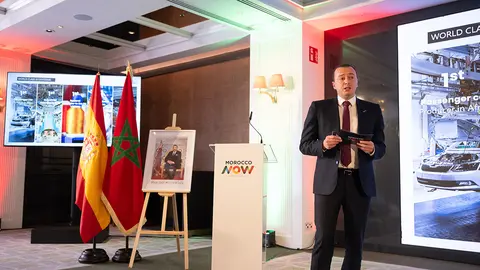
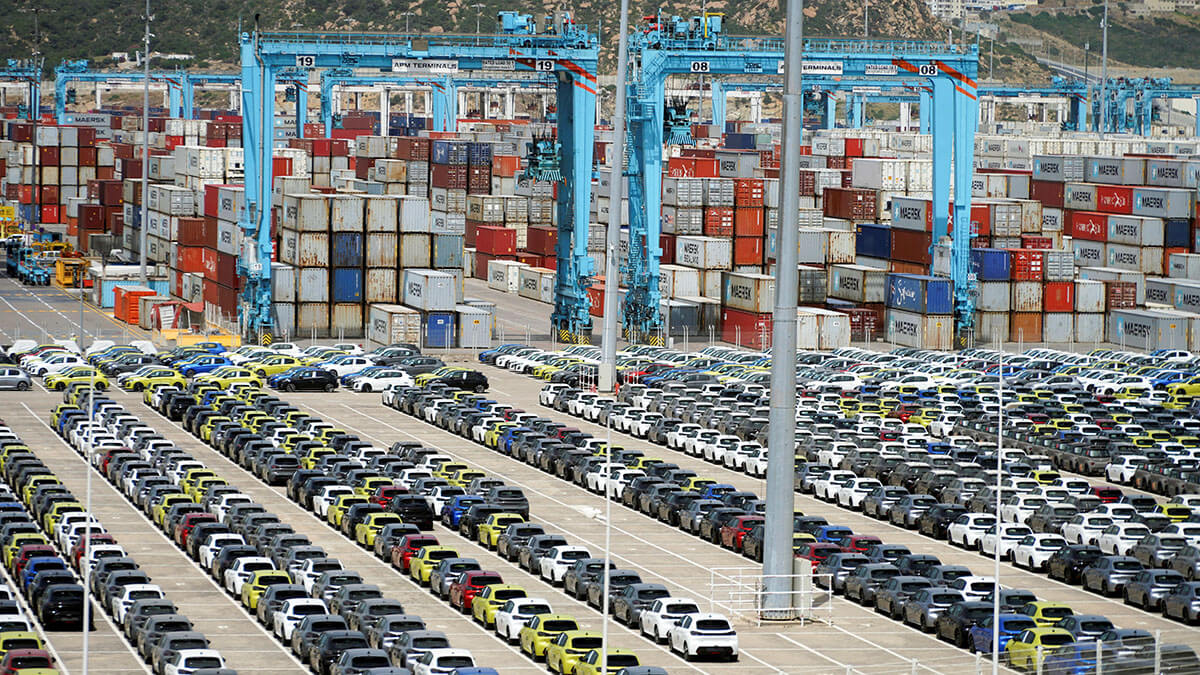
The second weakness of the trope lies in its inability—or unwillingness—to acknowledge the depth of economic interdependence between Morocco and Spain. Spain is Morocco’s largest European trading partner; Morocco is among Spain’s most significant non-EU markets. Moroccan trade is overwhelmingly captured by the EU, with Spain at the forefront. Spanish firms are deeply embedded in Moroccan logistics, automotive manufacturing, agribusiness, renewable energy, tourism and industrial supply chains. This integration is not symbolic—it is structural, measurable in data, investments, joint ventures and the €1 billion credit line Spain mobilised to support projects related to the 2030 World Cup. Describing this level of interdependence with the language of discomfort is analytically incoherent. The trope collapses under the weight of empirical evidence.
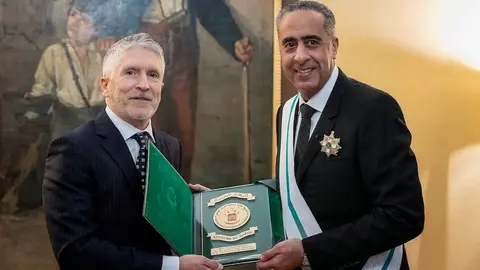
One of the narrative’s most sensational features is its recurring focus on espionage and surveillance, particularly in matters involving journalism. It is essential to affirm clearly: any intimidation or illegal surveillance against journalists is unacceptable and must be condemned. But transforming individual experiences into a civilisational verdict on Morocco is methodologically flawed. Surveillance is not a Moroccan specificity—it is a global phenomenon in the digital age. Several EU countries have faced their own spyware controversies. Singling out Morocco while ignoring comparable practices within Europe reflects a deeper asymmetry in perception: what is “political realism” when it happens north of the Mediterranean becomes “authoritarianism” when it occurs south of it. A more honest assessment would apply a consistent standard across all states.
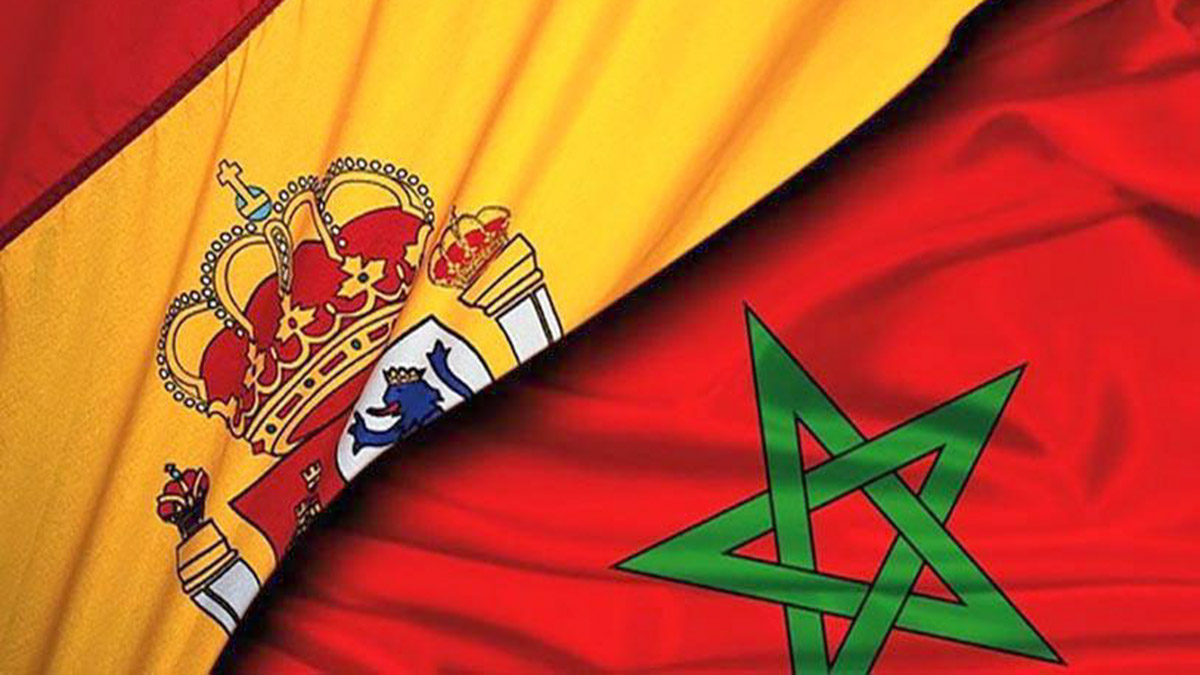
Another central pillar of the “troublesome neighbour” frame is the portrayal of Morocco’s diplomacy—especially regarding the Sahara—as transactional or purely economic. This view disregards how international diplomacy works everywhere. States use economic instruments, partnerships and strategic incentives to shape alliances and secure interests—Spain, the EU, the US, the Gulf states, China and Turkey included. To criticise Morocco for practices common to all states is intellectually inconsistent. Moreover, the growing number of consulates opened in Laayoune and Dakhla is not the outcome of “influence buying” but of strategic convergence. Countries recognise the autonomy plan because it is the only realistic political solution endorsed by major global powers and acknowledged by the UN Security Council. Denying this is not analysis—it is paternalism.
Equally revealing is the repeated attempt to revive the outdated concept of “Gran Marruecos,” a notion rooted in historical literature of the 1950s and 60s, not in Morocco’s contemporary diplomacy. Today’s Moroccan foreign policy is anchored in African leadership, Atlantic–Sahel connectivity, economic transformation and multi-regional partnerships. The fixation on “Gran Marruecos” says less about Morocco than about the conceptual lenses some commentators refuse to update. Reality has moved on, even if certain narratives have not.
Perhaps the most problematic dimension of this trope is the recurring reference to a “Moroccan lobby” supposedly influencing Spanish political decisions. Such claims insinuate that major policy shifts—especially those supporting the autonomy plan—result from external manipulation rather than sovereign decision-making. This interpretation not only lacks evidence; it unintentionally infantilises Spanish institutions themselves. Democratic governments adopt foreign policy positions based on national interest, not shadowy persuasion. Spain’s support for the autonomy initiative reflects strategic logic and international consensus, not clandestine pressure.
What emerges from these narrative strands is a cognitive architecture rooted in a hierarchical imaginary inherited from earlier Mediterranean epochs—one that instinctively assigns rationality to the North and unpredictability to the South. This is not an explicit prejudice but a lingering intellectual reflex. Its consequence, however, is real: it blinds observers to the profound transformation Morocco has undergone since 1999—its institutional modernisation, economic diversification, continental influence, geostrategic depth and role as a connector between Europe and Africa.

In truth, the Morocco–Spain–Europe relationship of 2025 requires new language. It can no longer be captured by metaphors shaped by medieval conflict, colonial memory, Cold War binaries or early-2000s migration crises. We are dealing with an architecture of interdependence built on shared priorities: energy, security, trade, climate action, infrastructure, counter-terrorism, mobility and regional integration. The Mediterranean today is not a frontier of mutual suspicion but a space where cooperation is increasingly unavoidable and mutually advantageous.
Morocco does not seek romanticisation, nor immunity from criticism. It simply asks for analytical consistency—the same applied to any major strategic partner. Critique grounded in evidence is welcome; caricatures masquerading as analysis are not. The “troublesome neighbour” trope may once have resonated with older narratives, but today it conceals more than it reveals. The region deserves more mature categories—ones capable of grasping the complexity, transformation and shared strategic future of the Morocco–Spain partnership.