
The power that everyone wants in the world


Power, whether political, economic, military, etc., is the capacity to dominate with the authority to decide to do or not to do. All states want it, but not all can have it. It should not be difficult to understand that power in the hands of many—in the UN there are 193 states—is no longer power, becoming relative and insignificant, which is why the race for power should not surprise us.
In the world, it is not easy to have a monopoly on power given the horizontal nature of international law, as there is no central authority, showing international law itself in its sublime anarchic nature, that is, no state is legally more important than another.
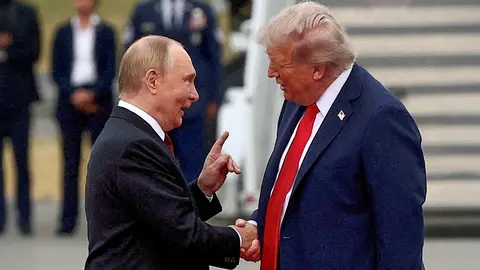
The contemporary trend around the globe is for power not to be absolute, and that is why there is a tendency towards a multipolar world, although we must recognize that, throughout history, the world has been defined by a unipolar world and only on two occasions by a bipolar world—Spain and Portugal during the second half of the 15th century and the US and the Soviet Union during the Cold War.
The UN Security Council, which includes the five most powerful states in the world (permanent members: China, the US, France, the UK, and Russia), distributes power more evenly because all members have power, but they do not want imbalances to arise whereby one member has more power than the others.
States want to retain the power they have because their essence is knowing how to retain it, and I am not using a legal category but a political one, which is sometimes not understood either. For this reason, while some states use strategies and methods to maintain power at any cost—as is the case with Maduro in Venezuela—others use strategies to seize it, and here it is irrelevant whether their causes are lawful or unlawful, because from the perspective of power, that does not matter, although it does from the perspective of international law.
It is not that world power is exercised in the midst of the planetary jungle, but it is useful to bear in mind that morality does not exist, or at least is irrelevant, when it comes to the objectives of world political power, where what matters is not the good or the bad, but the result of what is fair, which is also different.
It is not that power is immoral or that it ends up conspiring in a basket of anti-values. Nothing of the sort. Quite simply, power is amoral because morality is alien to it and it is relevant only for its results.
As all states compete for power, struggles should come as no surprise, which is why those countries that live in the midst of power must have the solvency to assimilate them and the temperament to tolerate them. Finally, power is not perpetual because it is cyclical, and all states must bear this in mind.
Miguel Ángel Rodríguez Mackay .Former Foreign Minister of Peru and Internationalist
Article published in the Peruvian newspaper Expreso