
The end of Maduro
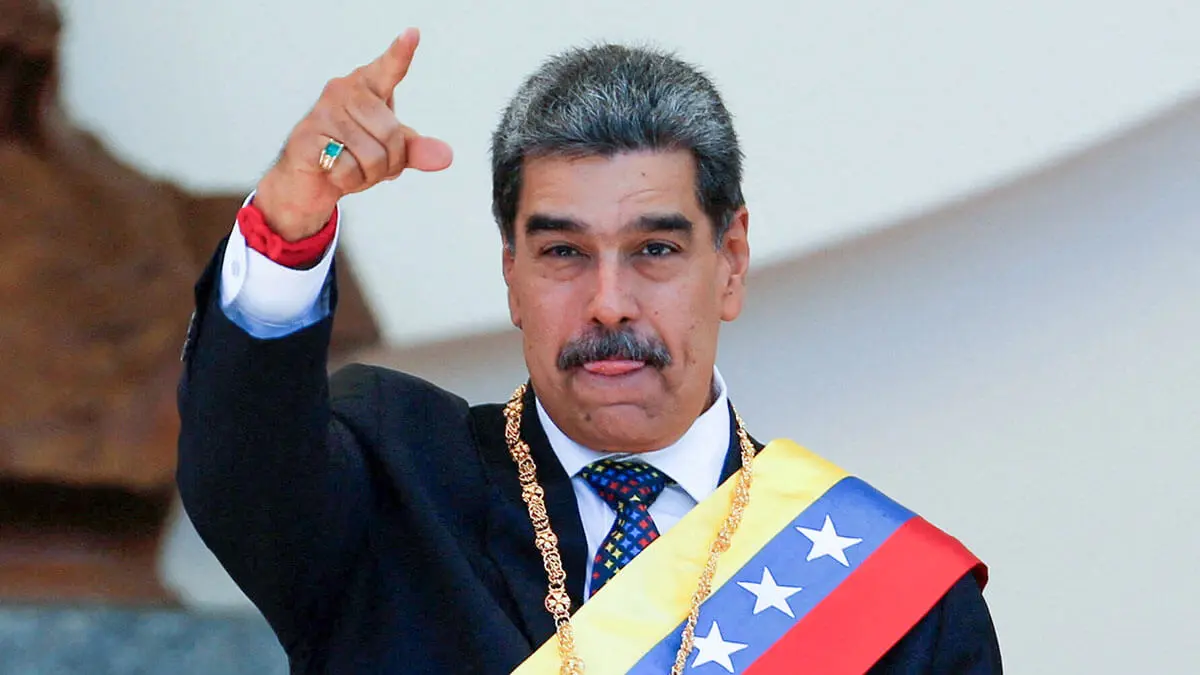
Nicolás Maduro was an accident of fate. His rise to power would most likely not have happened without the sudden death of Hugo Chávez, who was struck down by aggressive cancer.
Following this misfortune for Chávez's popular base, Maduro, who was born on November 23, 1962, in Caracas, knew how to manipulate the image of the martyr to present himself as a mystical successor: “I, a Christian as I am, have no doubt that Commander Chávez is now at the side of the liberator,” Maduro said in one of his first speeches as president of Venezuela.
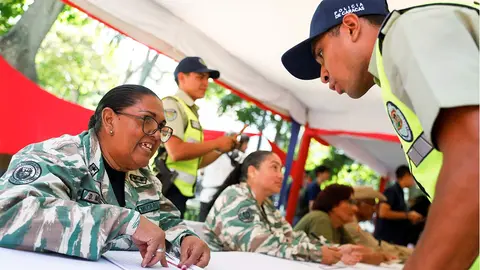
Since 2013, he has remained in power thanks to multiple frauds, manipulation of the Constitution, and control and purging of various state institutions, mainly the armed forces. This has allowed him to perpetuate himself in power while plunging Venezuela into misery, despite being one of the countries with the largest oil reserves in the world.
It is estimated that more than 20 million Venezuelans live in extreme poverty (the total population is almost 30 million) and almost 45% think it is advisable to emigrate due to insecurity and economic precariousness. Currently, countries such as Mexico are hosting thousands of Venezuelans who are unsuccessfully seeking to reach the United States; their desperation is growing.
Maduro has gradually become an international pariah due to his systematic repression of opponents and the media, and the lack of freedoms in a society whose human rights are being violated; in short, he has destroyed democracy. But all demagoguery has its limits, and his, based on Chavista mysticism and Bolivarian epic, seems to have reached its end.
There are two options on the table. The first is direct military intervention by the US army, bringing him to justice in the US, while, at the same time, immediately opening a new phase towards democracy, where elections will once again pave the way for institutional reconstruction.
Let us remember that Maduro is currently accused by Washington of being the leader of the Cartel of the Suns and an associate of the Sinaloa Cartel and the Aragua Train, for which they are offering a historic reward of $50 million to anyone who provides information leading to his arrest. US Attorney General Pamela Bondi said at a press conference that the DEA has seized 30 tons of cocaine linked to Maduro, making him one of the world's biggest drug traffickers.
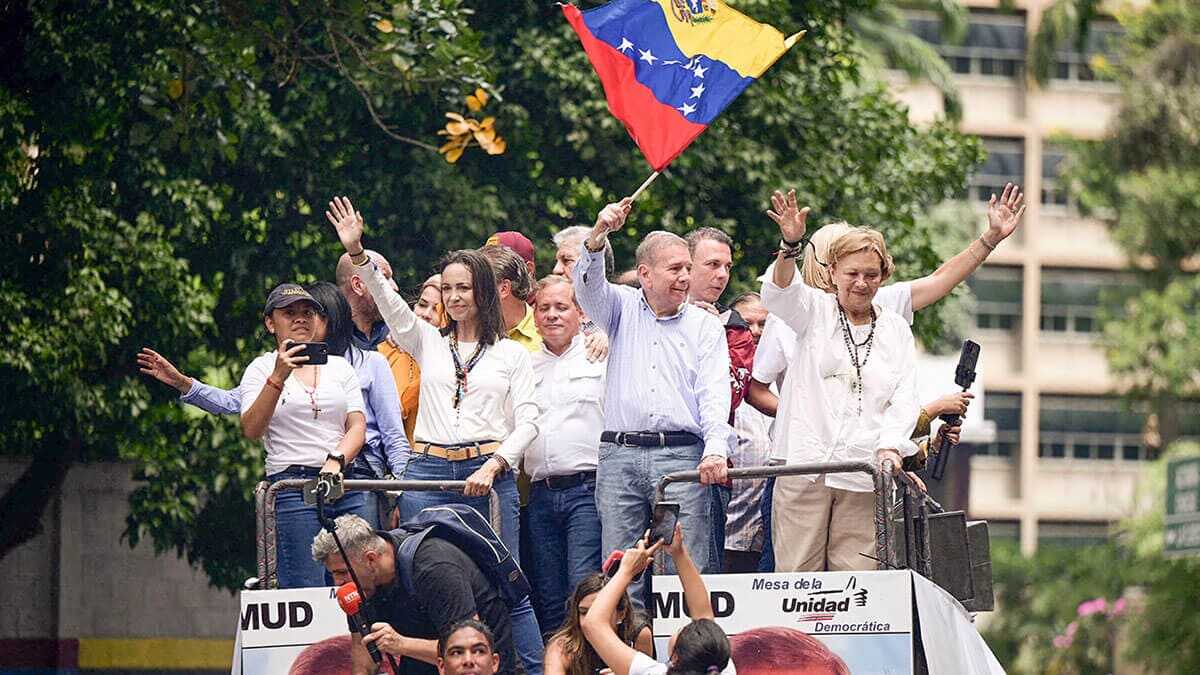
And the second option is for him to surrender and negotiate an exit-exile in the face of international pressure from the West. When people like Maduro feel they can no longer get out of the quagmire, they are capable of jumping ship to hide in the depths. The Venezuelan people have long been calling for change, but the repression of a dictatorship combined with an opposition lacking strong and courageous leaders, except for María Corina Machado, has delayed Maduro's demise.
But Venezuela's nightmare did not begin with Maduro, but with Hugo Chávez. Nicolás's continuity was only the corollary of the decline of a great country. All democracies harbor demagogues, say Steven Levitsky and Daniel Ziblatt, both Harvard professors and specialists in democracy and authoritarianism.
In their book How Democracies Die, they draw on the observations of German political scientist Juan Linz to point out four signs of concern about an authoritarian politician: 1) when he rejects, through words or actions, the democratic rules of the game; 2) when he denies the legitimacy of his opponents; 3) when they tolerate or encourage violence; and 4) when they indicate their willingness to restrict the civil liberties of their opponents, including the media. There is no doubt that Hugo Chávez and Nicolás Maduro have fully complied with these precepts, and many others in Latin America.
For now, Maduro continues to entrench himself with what little he has left: demagoguery and desperation. His speeches are increasingly delusional and his measures ineffective, such as saying that he is enlisting civil society, which is nothing more than pathetic propaganda.
Meanwhile, the Washington government, arguing that the elected and legitimate president of Venezuela is Edmundo González, is ready to intervene in South American territory, since, for them, Maduro is a terrorist, yes, like Bin Laden. Donald Trump ordered the deployment of six ships, planes, helicopters, and submarines to the Caribbean, something those turquoise waters had never seen before. In addition, a country like Guyana, which borders Venezuela, has allowed US military personnel to use its territory to land.
All military intelligence is ready so that, as soon as Trump decides to press the button, elite forces can “capture” or “take down” Maduro. We have seen stories like this before; just remember Manuel Antonio Noriega, Saddam Hussein, or Muammar Gaddafi. We are about to see a new episode of a dictator being overthrown.
Omar Cepeda. Conductor en @ElFinancieroTV. Columnista en @ElFinanciero_Mx y en @lasillarota
Article previously published in El Financiero de México on August 27, 2025.