
Italy and the end of the legislative term (2026-2027)

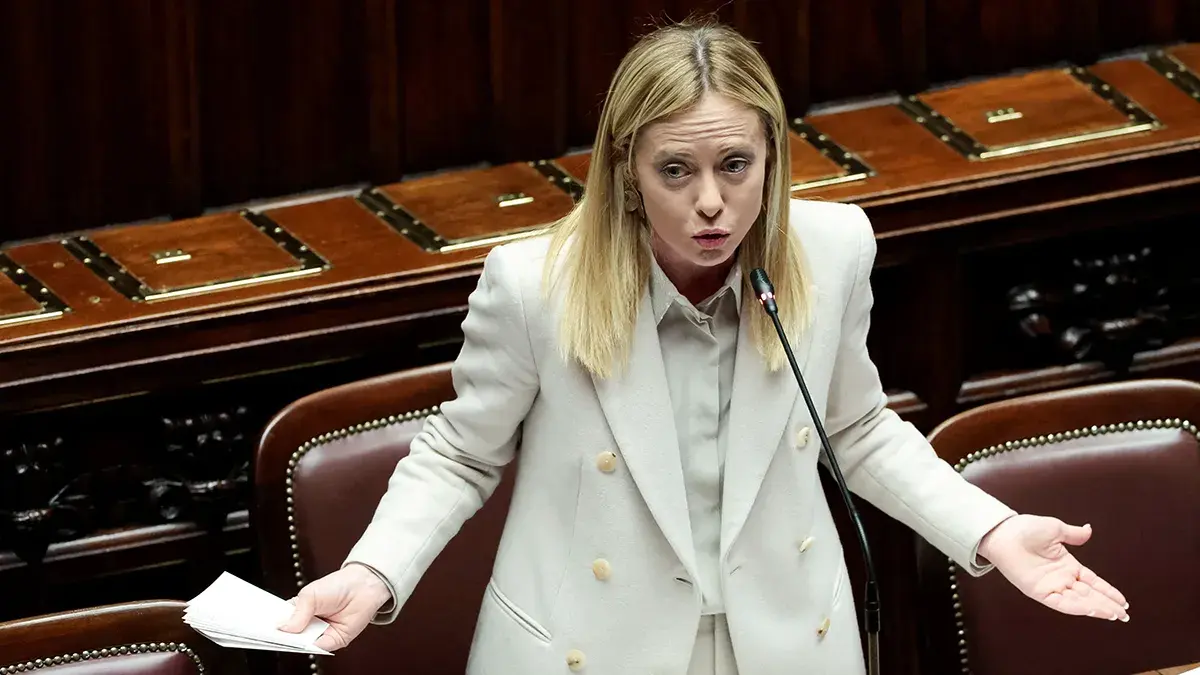
As we have already pointed out in previous articles, the 19th Legislature of the Italian Republic is entering its final stage, with two unknowns still to be resolved: whether Meloni will see it through to the end (in which case, there would be no elections until the last months of 2027), and whether the new ‘political’ elections will be held under the same electoral law used in 2018 and 2022 (the ‘Rosattalleum bis’) or, on the contrary, whether the Meloni government will pass a new one, as has been discussed in most of the Italian media over the last month.
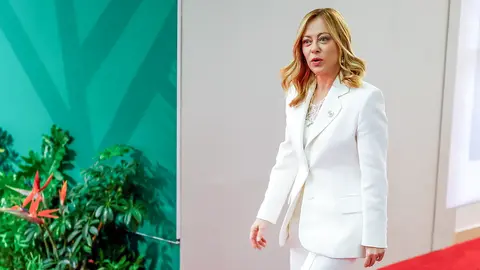
From there, we will examine the state of the two possible coalitions (centre-left and centre-right) after up to six elections have been held this autumn to choose the government of a specific region (Apulia, Calabria, Campania, Marche, Tuscany and Veneto). On this specific issue, we can anticipate that, although there has been a three-way tie (Calabria, Marche and Veneto for the centre-right, while Apulia, Campania and Tuscany have gone to the centre-left), the numbers favour the centre-left: combining the data from the six regions, the centre-left won 4,400,000 votes, compared to 4,100,000 for the centre-right). Of course, it is well known that it is one thing to vote at the local level, where the centre-left is currently winning, and quite another to vote at the national level, where the polls continue to give an overwhelming majority to the centre-right.
Let's start with the centre-left. It seems clear that it will not contest the “political” elections in the same lamentable manner as it did in September 2022: without a leader elected in primaries and divided into three blocs (AVS and PD in one, Five Star in another, and “Terzo Polo” in a third). Now there is a leader (the young lawyer Ely Schlein, elected secretary-general in the primaries at the beginning of 2023) and it also seems that the vetoes against each other have been lifted: in particular, that of Five Star against Matteo Renzi's Italia Viva. At the end of 2024, a first step was taken by allowing them to run together in Umbria, ultimately leading to the victory of their candidate (who unseated the then centre-right leader, Donatella Tesei). But it was this autumn that saw the most significant change: not only did Renzi not veto the Five Star Movement, but he also gave his explicit support to the centre-left candidate in Campania (Roberto Fico, former president of the Chamber of Deputies and a prominent member of the Five Star Movement). However, there are still obstacles to be overcome, because Calenda's Azione, which is as centrist as Renzi's, has refused to support Fico. The truth is that Fico ended up winning the election by a clear margin over the centre-right candidate (Deputy Foreign Minister Edmondo Cirielli).
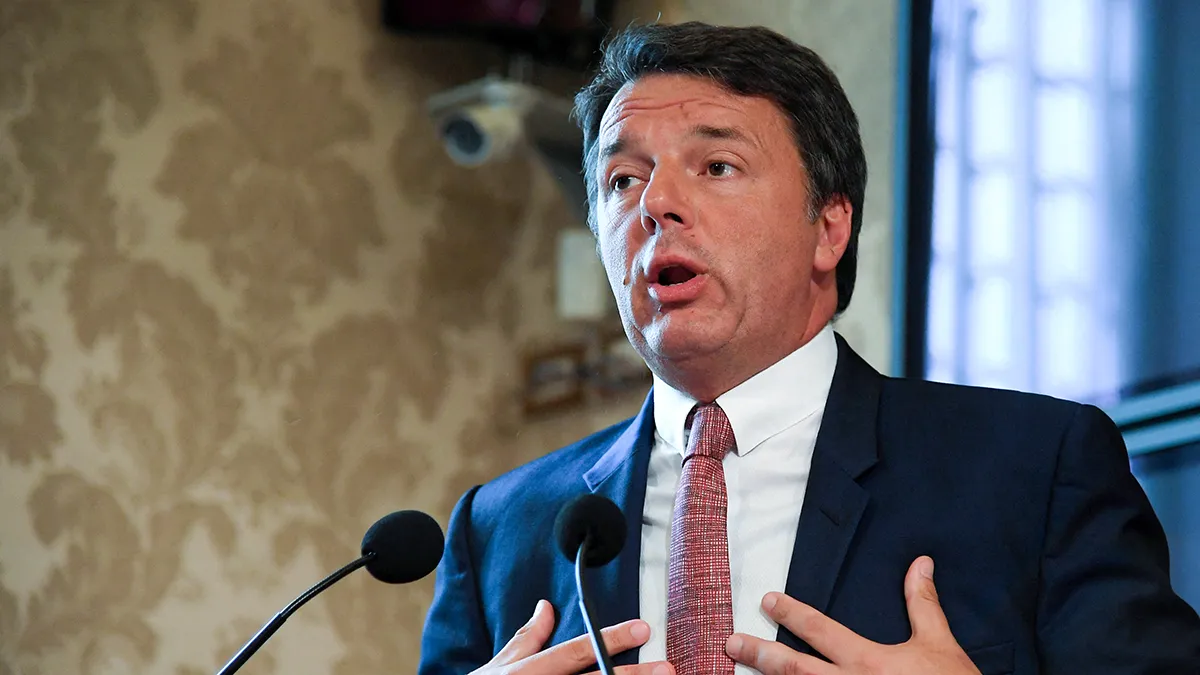
For his part, Matteo Renzi has broadened his party's base: although he remains at the helm of Italia Viva, he has created the so-called ‘Reformist Camp’ to bring together all the forces of the more moderate centre-left. This explains why, for example, in Tuscany he won almost 10% of the 50% of votes obtained by the centre-left, and why in Campania he achieved 7% support. Renzi knows that his heyday is long gone (he resigned as Prime Minister in December 2016), but there are elements that remain with him: his extraordinary communication skills (he is by far one of the best parliamentarians); his ability to multiply himself across radio and television media; and, not least in politics, his financial capacity to fund his own, as he currently has the largest fortune of all those in both houses of parliament, thanks to the money he has earned from his political activity and, above all, from the huge sums he has received for giving lectures in Saudi Arabia. Lectures, on the other hand, that he can no longer give while he is a parliamentarian, because his arch-enemy Meloni wasted no time in passing a law on incompatibilities between being an active parliamentarian and engaging in this type of activity: a law written specifically for him, to which Renzi responded by writing a book in which he disparaged the prime minister, whom he considers nothing more than a mere ‘influencer’ and whom he would never describe as a ‘stateswoman’.
In this regard, the centre-left has done the first part of what it needed to do to avoid mistakes: as Ely Schlein requested in June 2024, lifting the vetoes. But now a second step is needed, which is to undertake a joint programme with which to compete, in a coalition that includes communists, greens, socialists, reformists and even left-wing Christian democrats. Schlein will surely focus more on attacking Meloni's poor government performance than on offering a credible alternative, knowing that governments are not won by those in opposition, but lost by those in power. And the current General State Budget Law, which is poorer than it has been in years, is a good target for attack. At the same time, she will present a minimalist programme because a coalition that brings together communists and Christian Democrats is unlikely to come up with anything remotely consistent.
From an economic point of view, Meloni will be able to say that the risk premium is at an all-time low (around 65-70 basis points), but this has been achieved by greatly increasing taxes, substantially reducing public spending and not investing in the future: once again, year after year, almost 200,000 young Italians, many of them highly educated, will have to pack their bags and leave the country because there are no quality jobs in Italy. The fact is that Meloni is not really a very good ‘influencer’, as Renzi says, but above all a politician who knows how to cultivate her image like few others. She is also aware that most of her rivals, both inside and outside her coalition, are virtually non-existent: they have already had their chance and, in most cases, contributed very little. Of course, comparing Meloni with the former Prime Minister (Mario Draghi) leaves the Roman politician in an overwhelming position, but she can rest assured that Draghi does not intend to stand for election at the age of 78.
However, Meloni, who is not lacking in cunning, knows that she has a key card to play: the vote is becoming increasingly conservative, as befits a country where the average age is now almost 48. Incidentally, what happened to her famous ‘birth policies’? No one knows, just as no one knows where the money to combat Trump's tariffs has gone. The fact is that Roman politics has left investment in the future for the budgets that will be used in 2027, which is when new ‘political’ elections are expected to be held.
Of course, before these general elections take place, we will have to see what happens with the 2026 municipal elections (where, incidentally, the three most prominent cities are at stake, namely Rome and the capitals of Campania and Lombardy) and, with no specific date yet, the “referendum” on judicial reform. This reform can hardly be described as such, because it essentially consists of separating the judicial career from the prosecutorial career and affects less than 1% of the members of the judiciary. Meloni will surely win the ‘referendum’, but she may suffer the same fate as trade unionist Landini with the ‘Jobs Act’ and his "referendum this year: he won with 89% of the vote, but with only 11% of the population voting. Meloni may be able to increase turnout to 35-40%, but it seems unlikely that there will be a quorum and that the judicial reform will come to nothing.
On the other hand, on the centre-right, where leadership renewal is still pending, Meloni remains unrivalled: Tajani, on her left, will run in the 2027 elections at the age of 74, and Salvini, on her right, will do so at the age of 54, and both have in common that they have much less support than Meloni. Furthermore, the current president of the Council of Ministers has no successor in her party, or at least it does not appear that she will have one. So she will risk everything at the cost of being the first woman to preside over a Council of Ministers in the entire history of the republic (with, in addition, a ‘record’ number of days as prime minister, surely with a government lasting between 1,500 and 1,800 days), but this will also mean having to bear the wear and tear of years in power: what is more, she will be 50 years old when the elections are held, which will cause her to lose some of the ‘freshness’ she had in 2022.
Schlein, the likely centre-left leader in the 2027 elections, is a decade younger, but her image as a ‘communist’ works heavily against her. And that is where the PD, for the umpteenth time, made another mistake: with someone like Antonio Decaro (born in 1970) from Puglia as its leading candidate and with much more substance than Schlein, the members of the so-called ‘reformist wing’ preferred to put forward a very elderly candidate (Bonaccini) to lead the new PD, leaving, in practice, the ‘door open’ for Schlein, who does not have what Meloni has, which is nothing more than ‘electoral pull’. So the centre-left will probably only manage to come very close to a centre-right that will ultimately win, repeating what happened in the 2013 elections (on that occasion, the centre-left beat the centre-right by only half a point).
It is also clear that Italian citizens are increasingly disaffected, fed up with incompetent politicians. Because in the six elections held this autumn, the predictable winners have won, but it is equally true that, in a country where people used to vote en masse, now less than 50% of the population is interested in politics. This is where Schlein beats Meloni: the centre-left will be more eager to vote than the centre-right, but it is equally true that cutting the 10-point gap between them seems like a pipe dream.
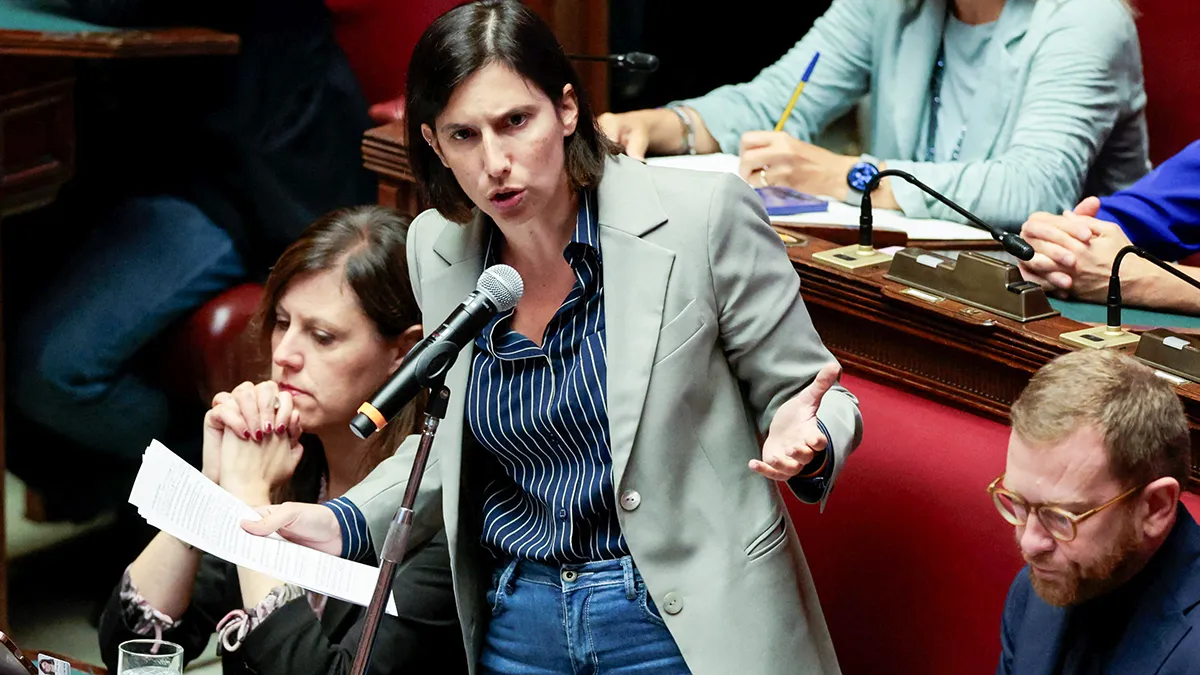
We will see what the next year and a half to two years have in store for us. Europe has already realised that Meloni is not a fascist, even though many members of her party (starting with Ignazio La Russa, President of the Senate) have one or more busts of Benito Mussolini in their homes. Fortunately for the country, the highest authority in the state, none other than the President of the Republic (Sergio Mattarella), is a Christian Democrat who guarantees the European Union that the country will remain a true constitutional state. In addition, it is only fair to acknowledge that Meloni, after leading a party with strong links to fascism in the past, has behaved in an impeccably democratic manner since assuming the presidency of the Council of Ministers (why do some people continue to refer to Meloni as a “far-right” leader, without any basis for doing so?).

In reality, her weakness lies not in her lack of democratic spirit, but in her very poor economic management: let us remember that no prominent economist (Daniele Franco or Fabio Panetta, for example) accepted the Economy and Finance portfolio, which ended up in the hands of Giorgetti, a ‘politician’ from Bossi's League who, apart from his time at Bocconi and having been Minister of Economic Development with Draghi, has very limited economic and financial knowledge. And those who accompany him in this area, such as Adolfo Urso, are even more incompetent.
Of course, Schlein does not currently have anyone relevant to the economic area either: unless she manages to bring back economist Cottarelli, a former member of the International Monetary Fund (IMF), the centre-left does not have any economists of value either. And Schlein, in turn, knows a lot about law (as a law graduate from the University of Bologna with top marks), but we have no news that she knows anything about economics, as is the case with AVS, Cinco Estrellas and the so-called ‘Reformist Camp’ (unless they bring back the only one who does know about these issues, former member of Renzi's party Luigi Marattin, now a backbencher with no clear future).
This is how the final stretch of the legislature looks: in essence, citizens must vote for the one who seems least incompetent. Meanwhile, debt is rising, GDP growth is non-existent and the working-age population is in constant decline in an increasingly competitive world, with numerous emerging economies that are not exactly in Italy or the Western world as a whole. Some talk of a ‘crisis of democracy’, when in reality what we have is a ‘crisis of representativeness’.

The truth is that, at the moment, the centre-right has a good chance of repeating its victory, but two years in politics is a long time and the centre-left is no longer as weakened as it was in 2022. From there, we will be watching developments closely.
Pablo Martín de Santa Olalla Saludes is a professor at Camilo José Cela University (UCJC) and author of the book ‘Italy, 2018-2023. From hope to disaffection’ (Liber Factory, 2023).