
The Saudi Arabia-India-Pakistan triangle

This was acknowledged in an interview with AFP by Saudi analyst Ali Shihabi, known for his close ties to the royal family, and in particular to the strongman of the Desert Kingdom, Mohammed bin Salman.
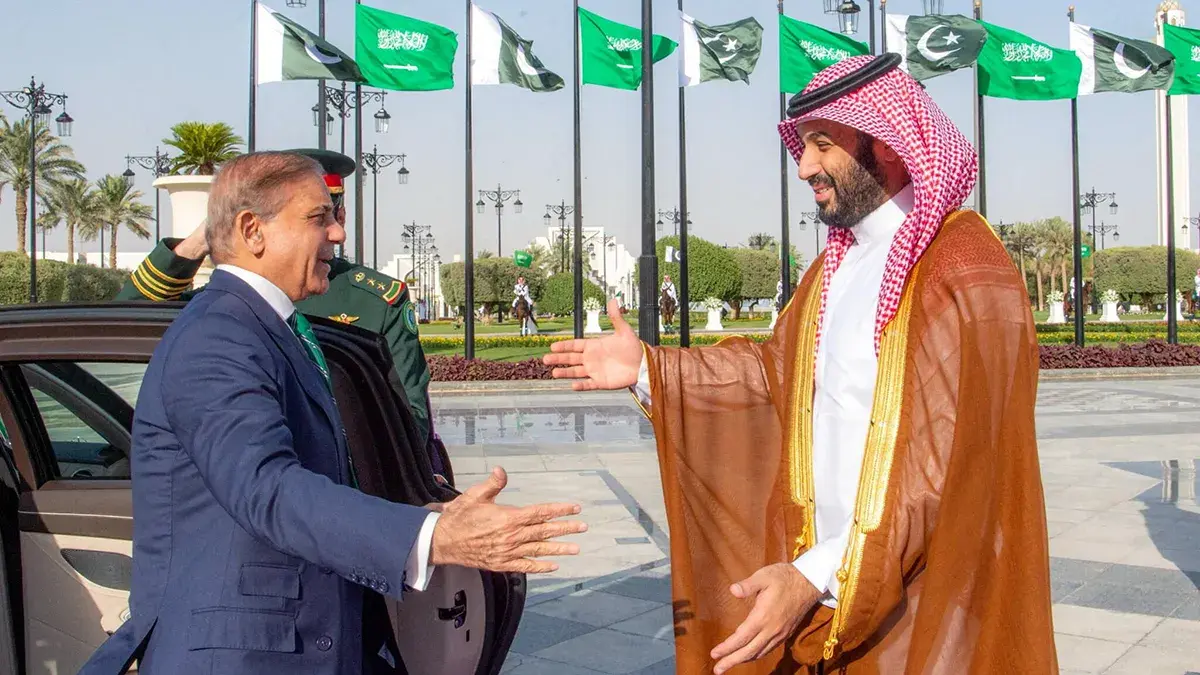
The focus of the change is the signing on the 18th in Riyadh of the Mutual Defence Agreement between Pakistan and Saudi Arabia, taking advantage of the visit to the Saudi capital by Pakistani Prime Minister Shehbaz Shariz. While this agreement has caused widespread surprise, it did not come as a surprise to the aforementioned analyst, who revealed in his statements to AFP, reproduced by the French newspaper Le Monde, that ‘the agreement had been in the works for months.’ Sensing the displeasure that this document, which effectively places Saudi Arabia under Pakistan's nuclear umbrella, will have caused in India, the analyst was quick to say that he ‘hoped that India - Pakistan's great rival - would understand the security needs of the Saudi kingdom, which, on the other hand, maintains excellent relations with New Delhi’.
However, such ongoing diplomatic efforts may have been rapidly accelerated in the wake of Israel's attack on the Hamas leadership, which was meeting in a building in Qatar, under the pretext of deciding whether to continue or break off negotiations for a ceasefire in Gaza. Although there is no conclusive evidence that this attack succeeded in eliminating all the targets identified by Israel in the Qatari emirate, the fact is that all the Gulf capitals were extremely alarmed by the explosion, for which Israel took responsibility at all levels of planning and execution, especially since the Gulf monarchies have so far entrusted their security to the United States.
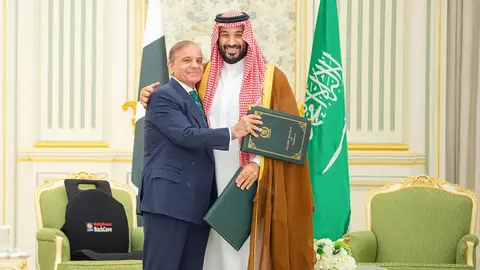
The nuclear issue also came to the fore with the statements by Islamabad's Defence Minister, Khawaja Muhammad Asif, in which he said that his country's nuclear programme would be available to Saudi Arabia, if necessary, after the signing of the agreement. The mere fact that nuclear weapons have not been ruled out in a mutual defence agreement adds an extra layer of uncertainty and danger, while arousing suspicion and mistrust with unforeseen consequences.
On the other hand, although India is also a nuclear power, the truth is that Riyadh has placed itself under Pakistan's umbrella in order to maintain very close trade relations with New Delhi. In fact, last April, Prime Minister Narendra Modi was visiting Saudi Arabia when he had to abruptly interrupt his trip following an attack on tourists from his country, which triggered a new clash between the two countries that left 70 people dead, and whose ceasefire was attributed to US President Donald Trump.
The geopolitical chessboard is therefore in turmoil, and it was practically impossible for three powers such as Saudi Arabia, India and Pakistan to simply stand by and watch events unfold. Any move by one of the three influences the other two and, depending on its scale and scope, also the entire region and, consequently, the rest of the world.