CaixaForum Seville explores the science and technology behind Pixar films
- The Science of Pixar exhibition at CaixaForum Seville
- Objectives and characteristics of the exhibition
- The eight areas of Pixar's technical process
- Interactive experience at the exhibition
- Complementary activities at The Science of Pixar
- Support and funding for the exhibition
- About Pixar Animation Studios
The Science of Pixar exhibition at CaixaForum Seville
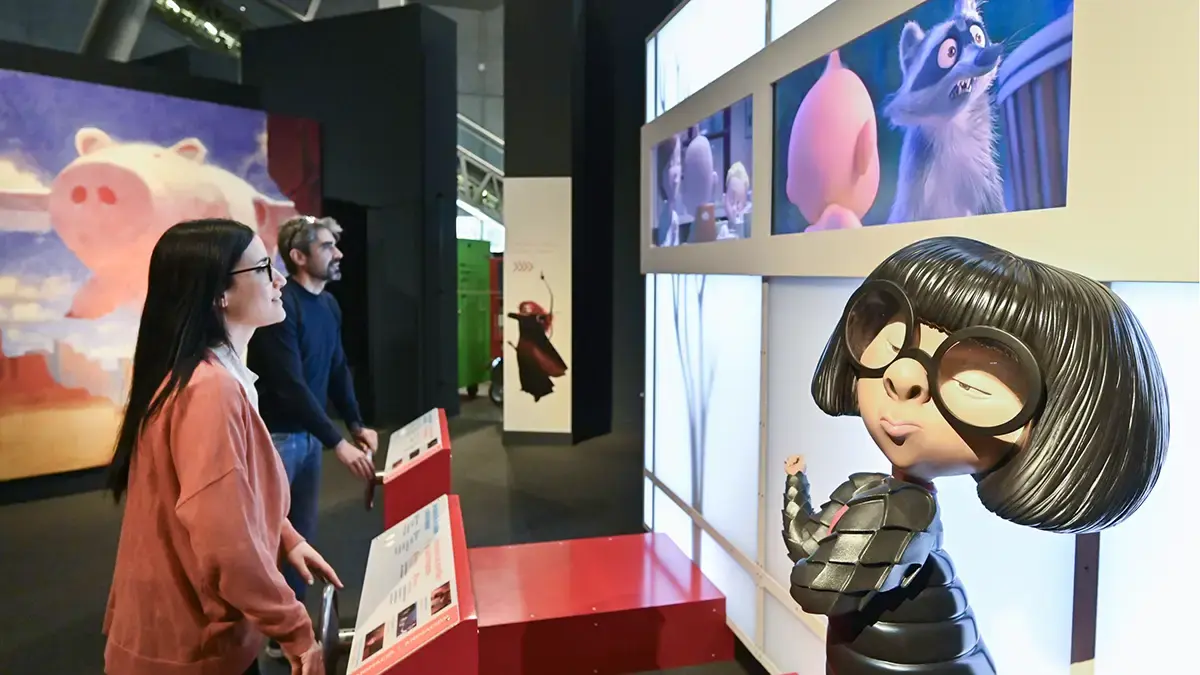
Discover first-hand the technical challenges behind Pixar films at CaixaForum Seville, which is hosting the exhibition The Science of Pixar, created by the Museum of Science in Boston in collaboration with Pixar Animation Studios. The exhibition, which is fully interactive, is divided into eight areas, corresponding to the steps in the process Pixar uses to turn an idea into a film.
The director of CaixaForum Seville, Moisés Roiz, and the director of Exhibitions and Science Activities at the ”la Caixa” Foundation, Javier Hidalgo, today presented The Science of Pixar, an exhibition created by the Museum of Science in Boston and Pixar Animation Studios, which will be on display at CaixaForum Seville from tomorrow until 1 March 2026.
Objectives and characteristics of the exhibition
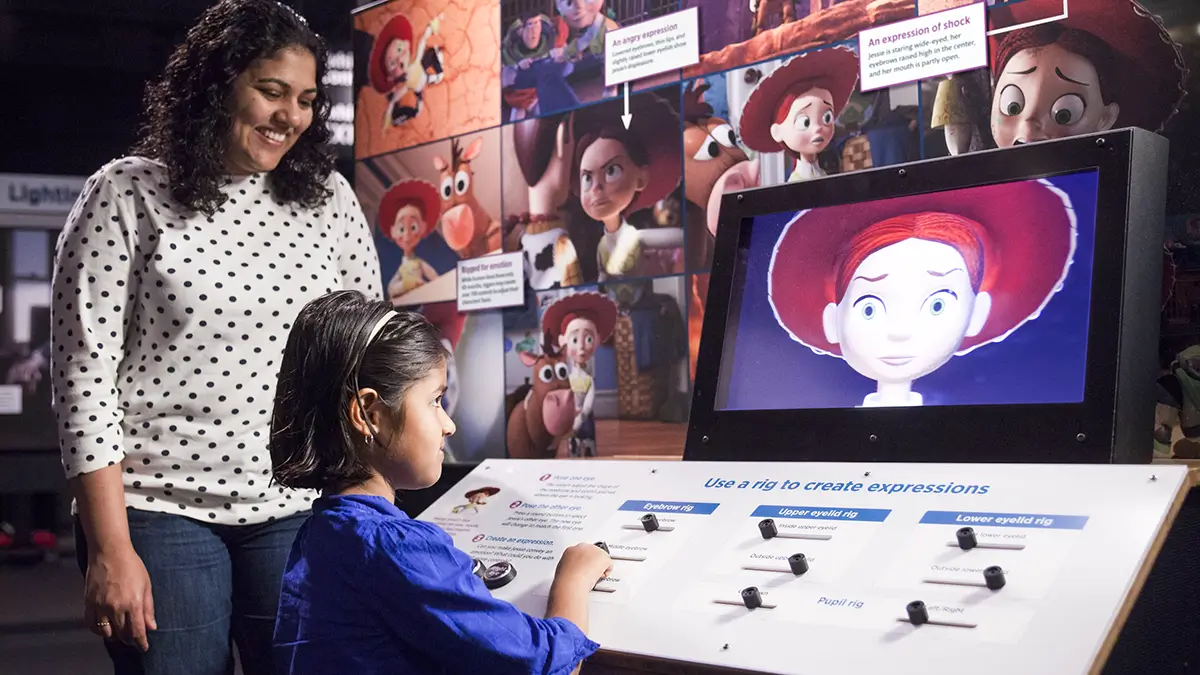
Art and creativity are inseparable from science and technology in computer-animated films. For this reason, the exhibition offers all kinds of interesting facts about how the characters were conceived from a technical point of view, perhaps the least known but nevertheless essential aspect. In the exhibition, visitors will be able to learn STEM concepts (science, technology, engineering and mathematics) through entertaining interactive elements.
This is the third collaboration between the Fundación ”la Caixa” and Pixar Studios. In 2015, Pixar. 25 Years of Animation took an in-depth look at the work of this pioneering computer animation company over its 25-year history.
Later, Pixar. Building Characters focused on the process of visual design of Pixar characters, which allows them to fit in with the rest of the elements of the film and convey the plot in the best possible way. Now, The Science of Pixar reveals, through its eight areas, the steps in the technical process used by Pixar's artists and computer scientists.
The aim of the new exhibition is to reveal, layer by layer, in a way that is appealing to all audiences, the scientific, computer and mathematical concepts behind our favourite Pixar characters.
The eight areas of Pixar's technical process
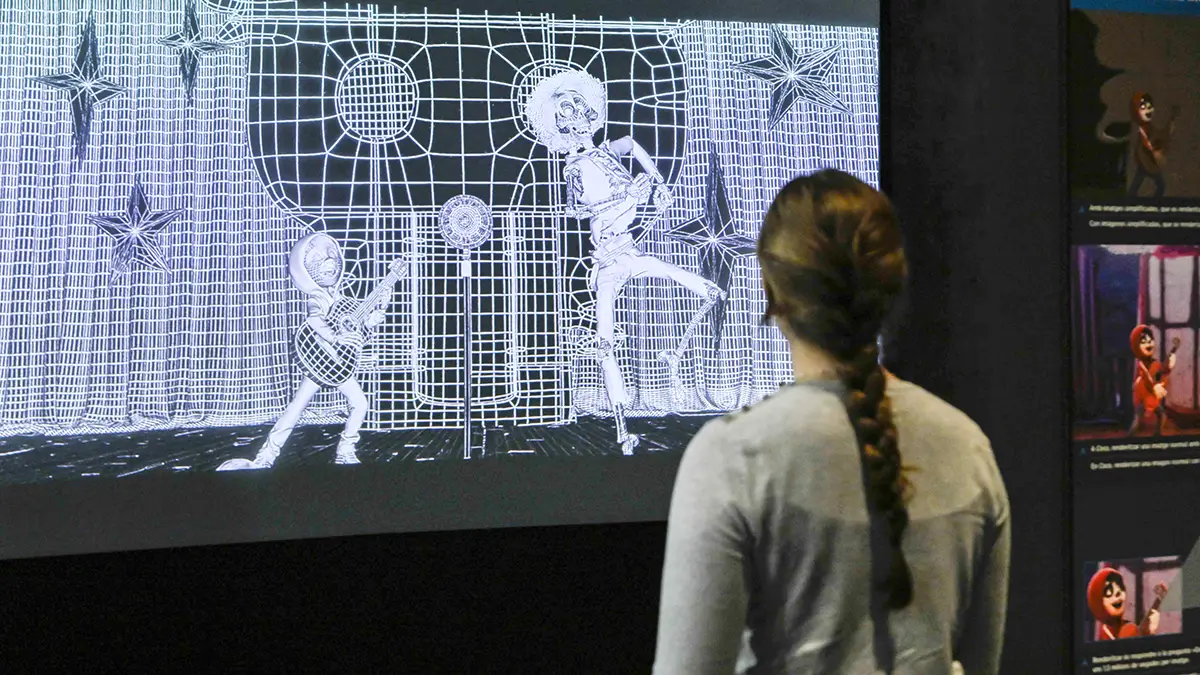
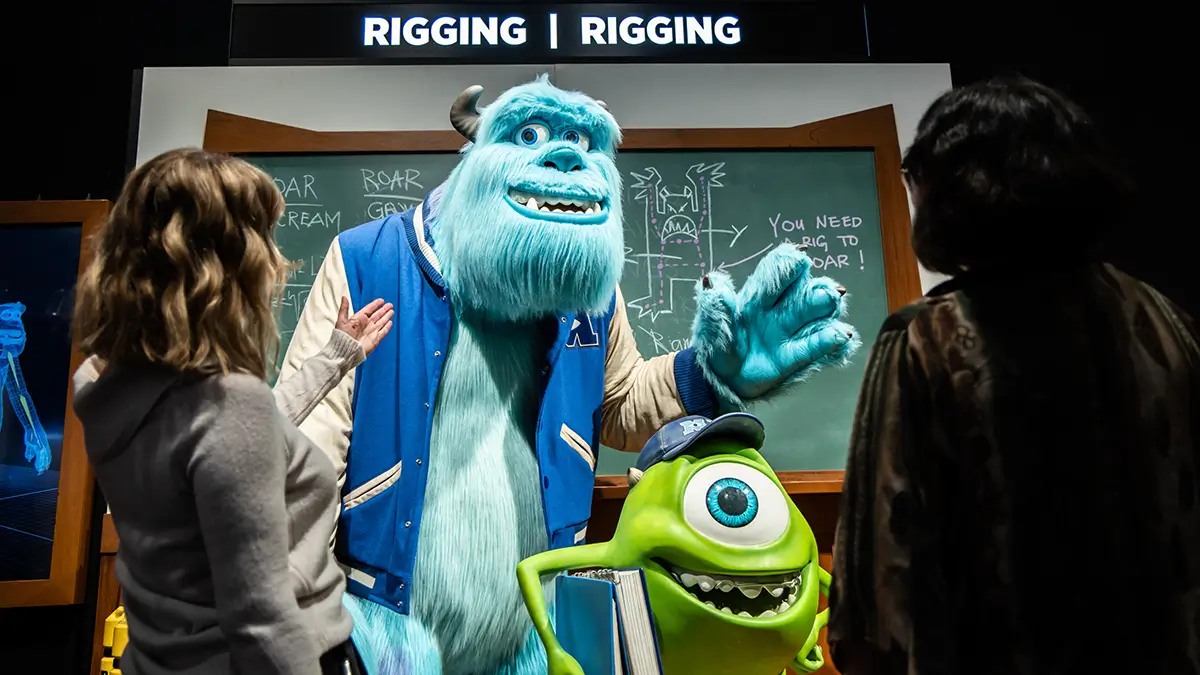
The exhibition is therefore organised into eight areas, each of which explains in depth a specific step in Pixar's technical process: modelling, which allows characters to be created in 3D; rigging, which develops virtual bones, muscles and joints; surface and set design; animation, which brings the story to life; simulation, which provides automated movements; lighting, which achieves greater emotional impact; and rendering, which converts 3D scenes into two-dimensional images.
In the more than 700 square metres that the exhibition occupies at CaixaForum Seville, visitors will be able to learn about all these steps, which Pixar takes great care with in order to bring its worlds and characters to life. Dozens of interactive and audiovisual elements will reveal what lies behind Pixar films, from its first computer-animated feature film, Toy Story, which was released three decades ago, to the launch of Red.
Interactive experience at the exhibition
To better understand the science and mathematics involved in the creation of Pixar films, visitors will enjoy audiovisuals in which they can hear first-hand explanations from members of the studios' production teams. They will also be invited to experience different roles within the production channel through interactive elements that are not only physical but also virtual.
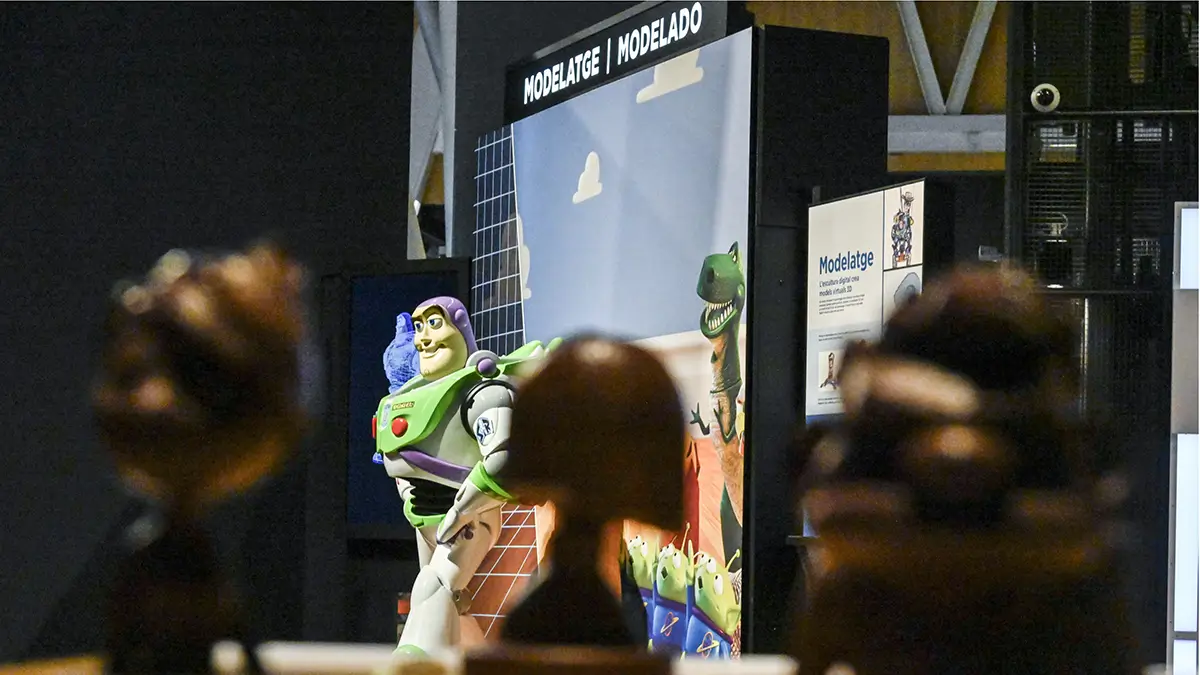
In the ‘Scenes and Cameras’ area, for example, visitors will discover how they achieved the camera placement and angles to create an insect's-eye view for A Bug's Life; in ‘Modelling’, they will try to create a digital sculpture from an artist's sketch, and in ‘Lighting’, they will use lights to solve challenges similar to those Pixar faced when creating underwater scenes with virtual light in Finding Nemo.
The exhibition also includes life-size recreations of many Pixar characters, such as Buzz Lightyear (from Toy Story), Dory (from Finding Nemo), Mike and Sulley (from Monsters, Inc.), Edna Mode (from The Incredibles) and WALL-E (from the film of the same name).
Complementary activities at The Science of Pixar
The la Caixa Foundation is offering a range of activities during the months that the exhibition will be on display at CaixaForum Seville so that everyone can learn about the art and science of Pixar. On the one hand, a series of screenings for young film lovers has been programmed, featuring some of Pixar's best films: Toy Story, The Incredibles, Up and A Bug's Life. At the beginning of each session in this series, the CaixaForum educational team will present the film, providing the basic keys to interpreting and enjoying it, and inviting the audience to a family discussion at the end of the screening.
Also noteworthy is the family conference 3D Animation: between art and science, in which Edu Martín, creative director and 3D supervisor who has been part of teams at internationally renowned companies such as Animal Logic (The LEGO Movie), Skydance (Top Gun Maverick) and Pixar, will talk about the process of creating this type of production to understand how the films we love so much are made, and we will see live how this technology is used in productions as seemingly distant as advertising.
In addition, the general public will be able to take a guided tour and families will be able to choose between the family tour; the Animated Stories workshop tour, in which, after touring the exhibition, a short animated clip will be made to understand all the stages of the creative process; or the family tour package with a themed menu, in which, after touring the exhibition with an educator, they can enjoy a gastronomic experience with a tasting specially designed for the exhibition. Tours are also available for school groups and summer groups.
Support and funding for the exhibition
The Science of Pixar is funded with support from Google, members of the Science Museum Exhibit Collaborative (SMEC), the Institute of Museum and Library Services (IMLS) and the National Science Foundation (NSF).
About Pixar Animation Studios
Pixar Animation Studios, a wholly owned subsidiary of The Walt Disney Company, is an Oscar-winning film studio with internationally renowned technical, creative and production capabilities in the art of computer animation. The Northern California studio has created some of the most successful and beloved animated films of all time, including Toy Story, Monsters, Inc., Cars, The Incredibles, Ratatouille, WALL·E, Up, Toy Story 3, Inside Out, Coco, and Luca. Its films and technology have won 40 Academy Awards and grossed billions of dollars at the global box office.