Morocco wins battle against Algeria at UNESCO for recognition of the caftan
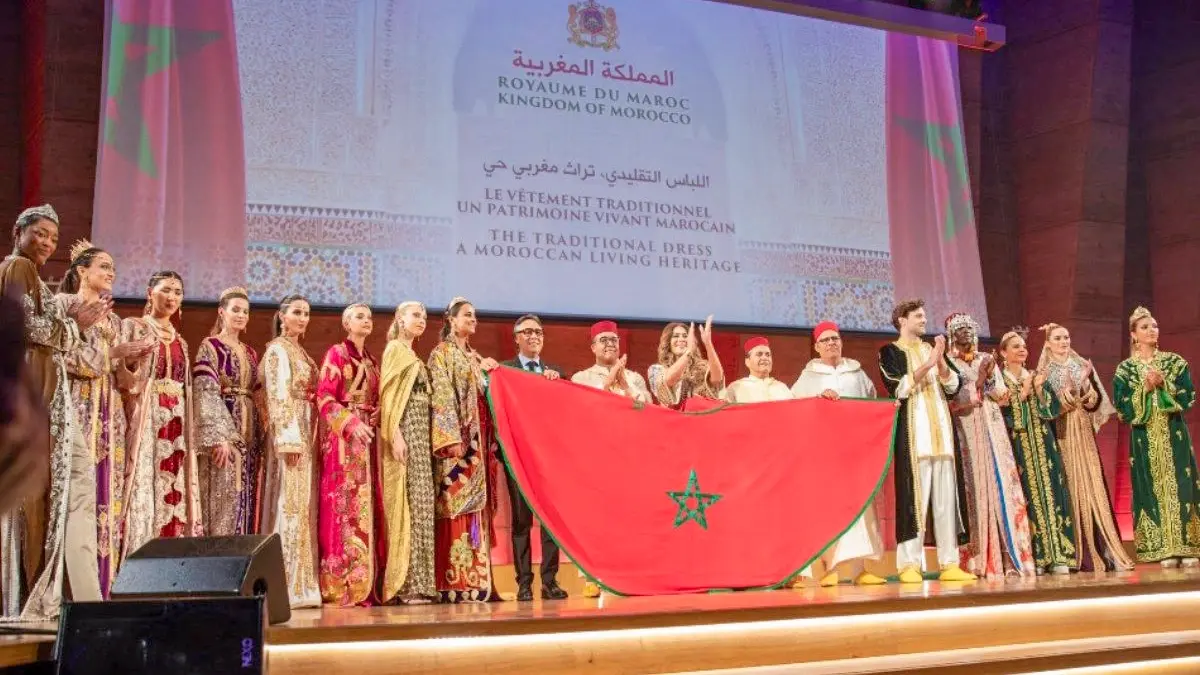
The Intangible Cultural Heritage Committee of the United Nations Educational, Scientific and Cultural Organisation (UNESCO) has decided to inscribe the Moroccan caftan on its list of Intangible Cultural Heritage of Humanity following the recommendations of the evaluation group, which represents a new international setback for Algeria, which claimed a shared heritage around this cultural symbol.
Algeria used all kinds of campaigns in the media, social networks and various cultural and educational platforms to imply that the caftan was a cultural symbol of the nation and the Maghreb region, despite being a cultural and traditional element linked to Morocco for centuries.
Following this dispute, the historic vote took place on Wednesday 10 December by the UNESCO Intergovernmental Committee in New Delhi (India), which decided to inscribe the Moroccan caftan on the list of Intangible Cultural Heritage of Humanity established by the United Nations cultural and educational organisation.
UNESCO has thus declared the Moroccan caftan to be part of the world's cultural heritage, after the Algerian delegation finally allowed the withdrawal of its amendment opposing the Moroccan candidacy, thus putting an end to a campaign of political and social tension generated by the artificial struggle that had arisen around this cultural and social element so deeply rooted in Moroccan society.
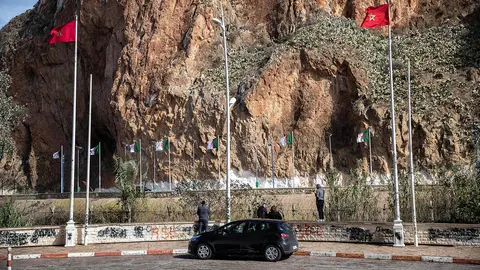
The final decision came after a heated debate in which the majority of speakers ultimately supported the Moroccan position and the technical opinion of those responsible for analysing and evaluating the proposals submitted. Faced with isolation at the Committee meeting and the trend of various interventions in favour of Morocco, the Algerian delegation chose to abandon its attempt to amend the file to include references to a shared link and heritage surrounding the caftan.
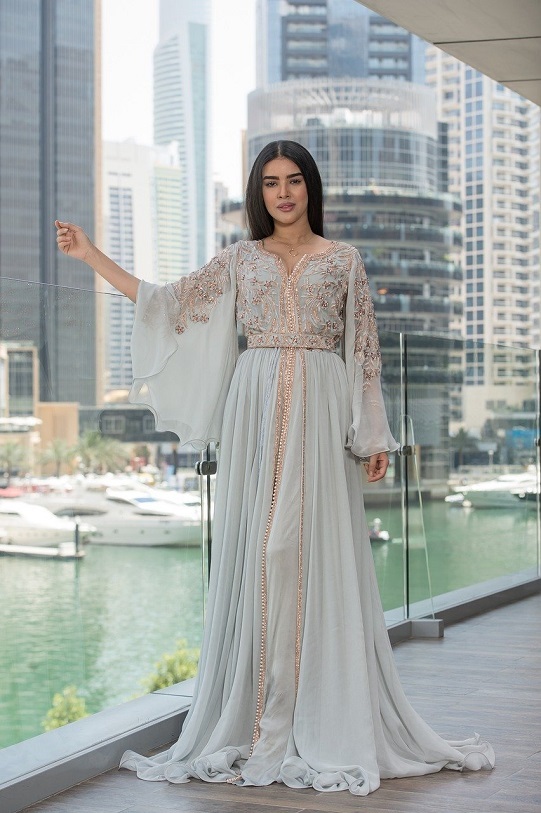
The caftan is a traditional long and loose garment, similar to a tunic, without a collar and with wide sleeves, closely linked to the Muslim world, especially the Maghreb region and Morocco. This garment is made of light fabrics such as silk or cotton, and can range from simple and light designs for everyday wear to luxurious and embroidered versions for weddings and ceremonies. The Moroccan caftan has Persian origins and arrived in Morocco through trade and the Ottoman Empire, becoming a status symbol worn by royalty. This garment is seen as a true gem made from silk or cotton fabrics.
🔴 BREAKING
— UNESCO 🏛️ #Education #Sciences #Culture 🇺🇳 (@UNESCO) December 10, 2025
New inscription on the #IntangibleHeritage List: Moroccan Caftan: art, traditions and skills, #Morocco🇲🇦.
Congratulations!https://t.co/xoL14QknFp #LivingHeritage pic.twitter.com/4PY2xX7RwZ
The caftan is considered a cultural and identity symbol in Morocco, making it very important to the North African country. Now, the recognition of the Moroccan caftan on UNESCO's Intangible Cultural Heritage of Humanity list is a source of pride and satisfaction for the North African nation.
This puts an end to Algeria's claims of a supposed shared heritage in relation to the caftan as a garment symbolising culture, heritage and national tradition. According to various reports, Algeria tried to veto the Moroccan caftan's candidacy before UNESCO, but Morocco ultimately succeeded in having this social and cultural symbol inscribed on UNESCO's Intangible Cultural Heritage of Humanity list.
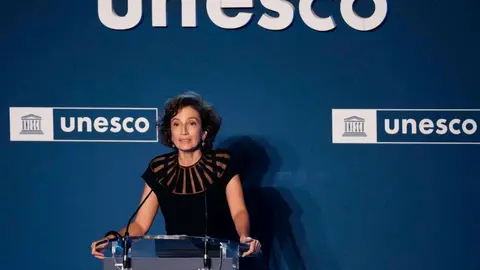
Despite the favourable assessments for Morocco, Algeria tried to block the inscription by submitting an amendment. Although Algeria had been appointed a member of the Intangible Cultural Heritage Committee for the period 2024-2028, it was unable to exercise its right of veto, as consensus is the preferred process for inscribing items on the Intangible Cultural Heritage of Humanity list.
It should be noted that none of the other 32 nominations submitted on 10 December, including Morocco's, were blocked by an amendment, except for Algeria's opposition to Morocco's candidacy, bearing in mind that Morocco and Algeria belong to the same group, the Arab group. ‘We have never seen a country oppose a nomination submitted by a member state of the same group,’ Mustapha Jellok, director of Cultural Heritage at the Moroccan Ministry of Youth, Culture and Communication, told Le360.
Algeria intervened before the Committee to point out that the Moroccan report had undergone substantial changes after the deadline and that it included more than 50 garments that included elements already registered by Algeria with UNESCO, arguing that the caftan is a regional symbol that is part of a shared heritage. In the end, these arguments were not enough to prevail.
In the end, most member countries supported Morocco's candidacy and the evaluation committee's report in favour of inscribing the Moroccan caftan on UNESCO's Intangible Cultural Heritage of Humanity list.
New international setback for Algeria
This decision by UNESCO has been a new international and diplomatic setback for Algeria, a country that has a significant political rivalry with Morocco in various areas.
The major blow came at the end of October when the United Nations (UN) Security Council decided to endorse Morocco's autonomy plan for Western Sahara as the most solid basis for negotiations on the sovereignty of the Sahrawi territory, with the favourable vote of the permanent members, except for the abstentions of Russia and China, traditional allies of Algeria on various issues. All this taking into account that Algeria has for decades supported the Polisario Front and the so-called Sahrawi Arab Democratic Republic (SADR), which oppose the holding of a referendum on independence for the Sahrawi population with a view to a process of independence.
Morocco considers Western Sahara to be part of its southern provinces, and this issue is important because it concerns the defence of its national and territorial sovereignty. The Moroccan kingdom presented its autonomy plan to the United Nations in 2007 and, since then, it has received the support of more than 100 countries for its proposal, including powers such as the United States, France, the United Arab Emirates, the United Kingdom and Germany, which consider it the most serious, realistic and credible option for resolving the Sahrawi dispute, which has been going on for five decades since the end of the Spanish colonial era.
In contrast, the proposal of the Polisario Front and the SADR has less international support, including that of Algeria, Morocco's great rival, especially following Algeria's decision to break diplomatic relations with its Moroccan neighbour in August 2021 after accusing it of ‘hostile acts’ against the Algerian nation.
This diplomatic rift persists despite the Moroccan king, Mohammed VI, extending an olive branch on several occasions in an attempt to restore good relations between two very important countries in the Maghreb, which in the past have supported each other.