Presagio unravels the enigma that most concerns human beings
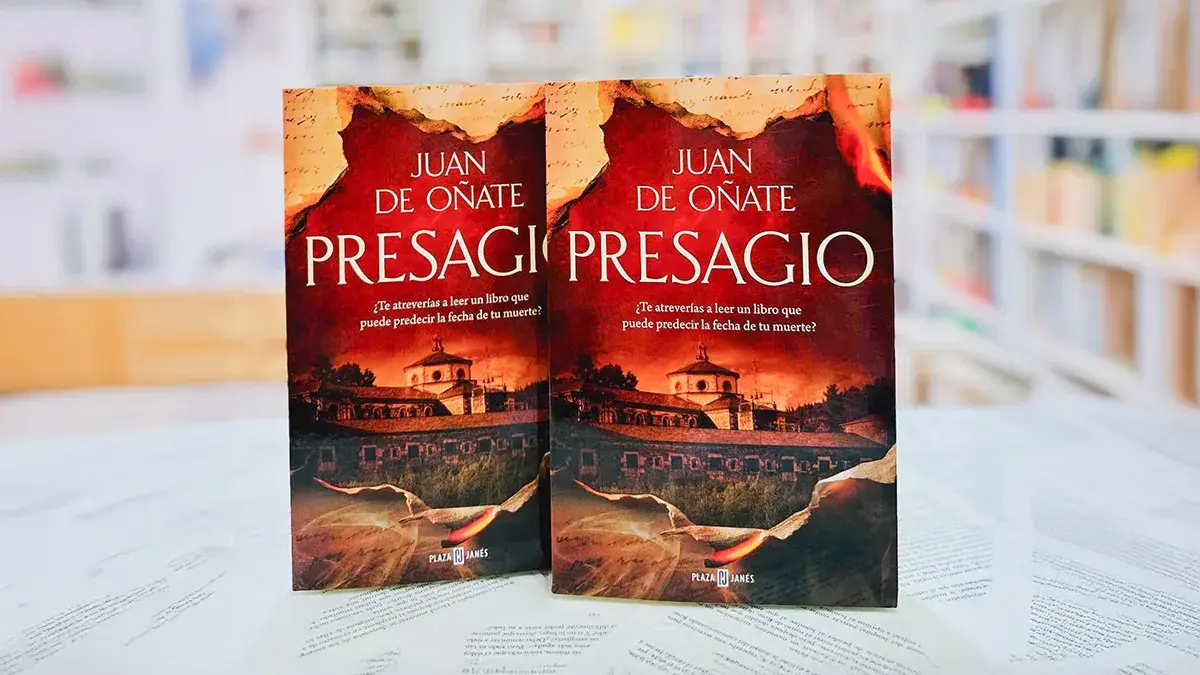

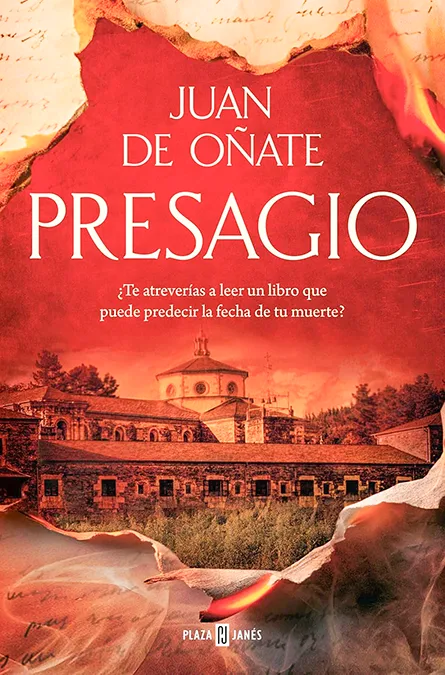
If all the men and women who inhabit this world had the opportunity to ask the greatest oracle a single question, there is little doubt that it would be to know in advance the date of our death. This is the challenge posed at the outset by Presagio (Ed. Plaza & Janés, 325 pages), the latest novel by Juan de Oñate, which challenges the reader on the very cover: Would you dare to read a book that can predict the date of your death?
A question that arouses such anxiety and anguish finds the ideal setting in Galicia. The year is 1951 when, at the Monastery of Samos (Lugo), two novices are involved in an accident that triggers a fire in the building's liquor store. While one is seriously injured, the other aspiring monk struggles to save the books in the library before the fire consumes them.
From that episode onwards, the plot connects with contemporary Galicia. In the town of Ribadeo, also in Lugo, when a book that seems to foreshadow deaths appears in a family archive in 2023, a historian and a journalist begin an investigation to unravel the truth about these rumours. But what they do not know is that they are about to face an international conspiracy involving media groups and criminal organisations operating in the shadows.
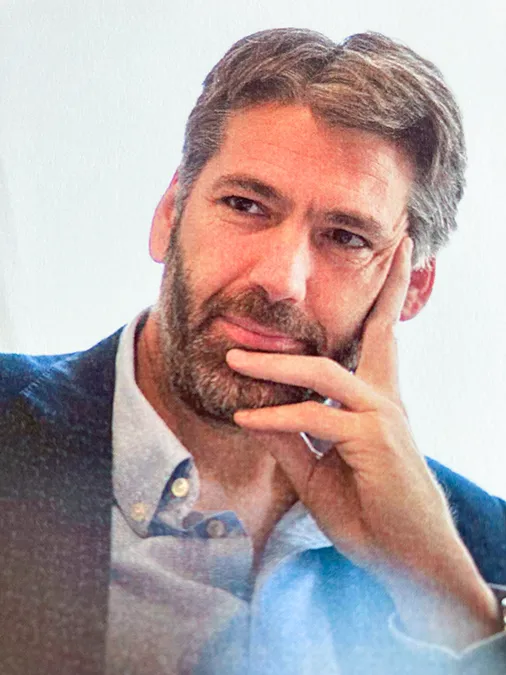
Although Juan de Oñate says he does not believe that all novels are autobiographical, he acknowledges that there is a lot of himself in Presagio. This appears to be a contradiction, or perhaps he does not know whether it is or not, which he himself describes as 'Galician'. He justifies this because he conceives the novel as a tribute to a very special place: 'To its incomparable light and its inevitable cloud. To its icy estuary, its tenacity, its fine sandy beach and its evergreen meadow'.
After his first novels, El efecto Peruggia (2019) and Summa mortis (2022), in Presagio Juan de Oñate has achieved a great historical thriller, intertwined with reflections on the power of knowledge and the limits of human curiosity. All this makes for a fast-paced thriller with meticulous settings, as befits an expert in art history and a seeker, as well as director of the Association of European Journalists, of what lies behind the news.
Consequently, the plot addresses some of the great human dilemmas: the search for knowledge, the tension between faith and reason, the power of the written word and the weight of tradition. Through settings ranging from monastic silence to the media noise of the present, the novel explores how the obsession with unravelling the mystery of life – and death – can lead the characters to cross moral, spiritual and personal boundaries.
The novel is set in different locations in La Mariña and the region of Sarria, transporting the reader to a Galicia steeped in history and legend. Among its mists, monasteries and forgotten archives, Oñate finds an ideal setting to discuss the sacred and the profane. The monastery of Samos, the scene of the initial fire, symbolises the old order and the search for meaning. The investigation in the 21st century, on the other hand, reflects the chaos of information and media manipulation. A leap of barely seventy-five years, in which it seems that we have gone directly from the enigmas enclosed within the walls of medieval monasteries to the sophisticated intrigues of the new world of Artificial Intelligence, apparently much more enlightened, but certainly no less sinister.