Firm Moroccan diplomacy open to reconciliation with Algeria and development of the Sahara, the Maghreb and Africa
- Rabat and Algiers: reconciliation and development in the Arab Maghreb
- Favourable diplomatic ecosystem
- The Sahara and Africa at the centre of action
In an interview with BBC Arabic, Morocco's permanent representative to the United Nations, Omar Hilale, clarified the reasons that led the Moroccan kingdom to propose, in 2007, the autonomy plan for Western Sahara, describing it as ‘a test of goodwill on the part of the Kingdom’.
‘Morocco simply asserted that the Sahara is Moroccan, period, and refused to consider other solutions. However, the interventions of the UN and friendly countries, with whom we have solid and fraternal relations, encouraged the Kingdom to engage in a political process to satisfy all parties and offer Algeria the opportunity to save face,’ explained Omar Hilale.
‘We are aiming for an agreement with all parties to close this file once and for all. This objective can only be achieved within the framework of the UN and following the adoption of a new Security Council resolution enshrining a binding agreement for all,’ he added.

Rabat and Algiers: reconciliation and development in the Arab Maghreb
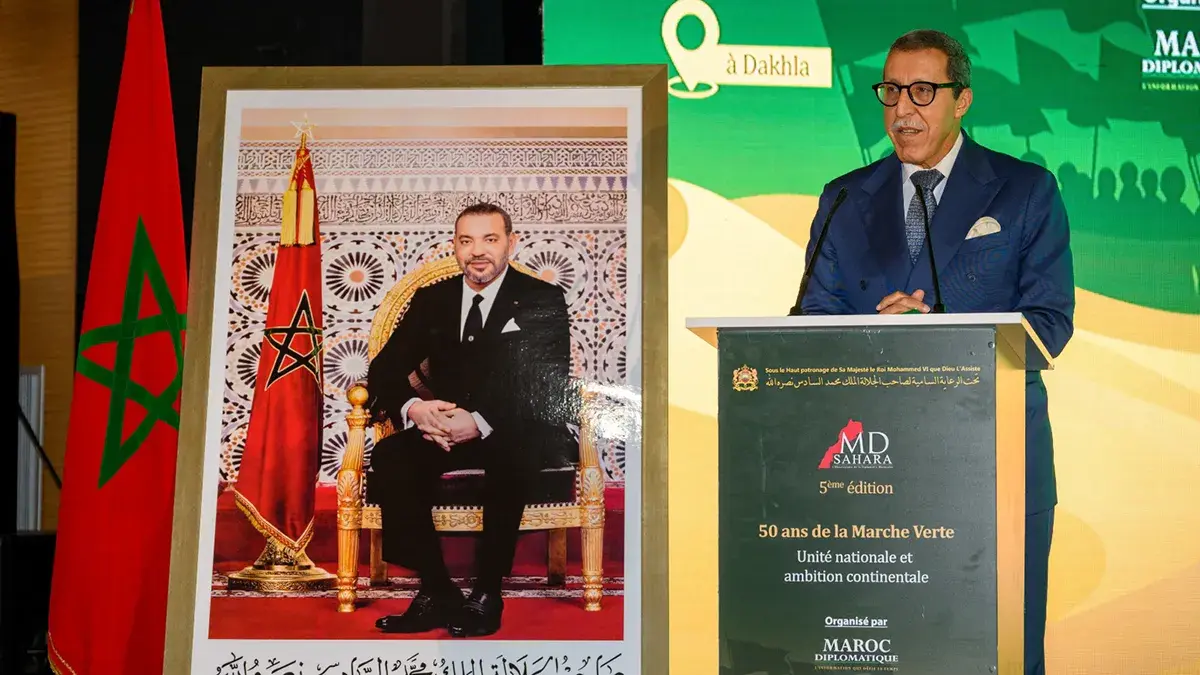
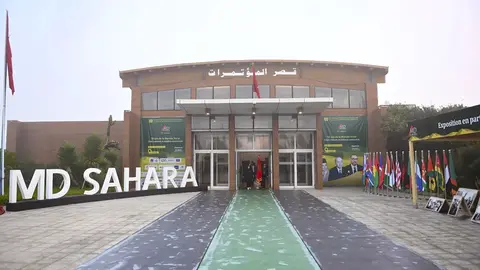
On 14 November in Dakhla, during the MD Sahara Forum, Omar Hilale explained that the most difficult task remains to be done, namely convincing the other parties that there is no solution other than autonomy, referring to ‘our Algerian brothers and our compatriots who are refugees in the Tindouf camps’.
‘With the autonomy initiative, we aspire to establish good neighbourly relations with our Algerian brothers. We also wish to resolve a problem that has hampered the development of the Arab Maghreb for half a century and allow our brothers in the Tindouf camps to reunite with their families and return to their cities,’ Omar Hilale reiterated in his statement in an interview with the British media outlet BBC Arabic.
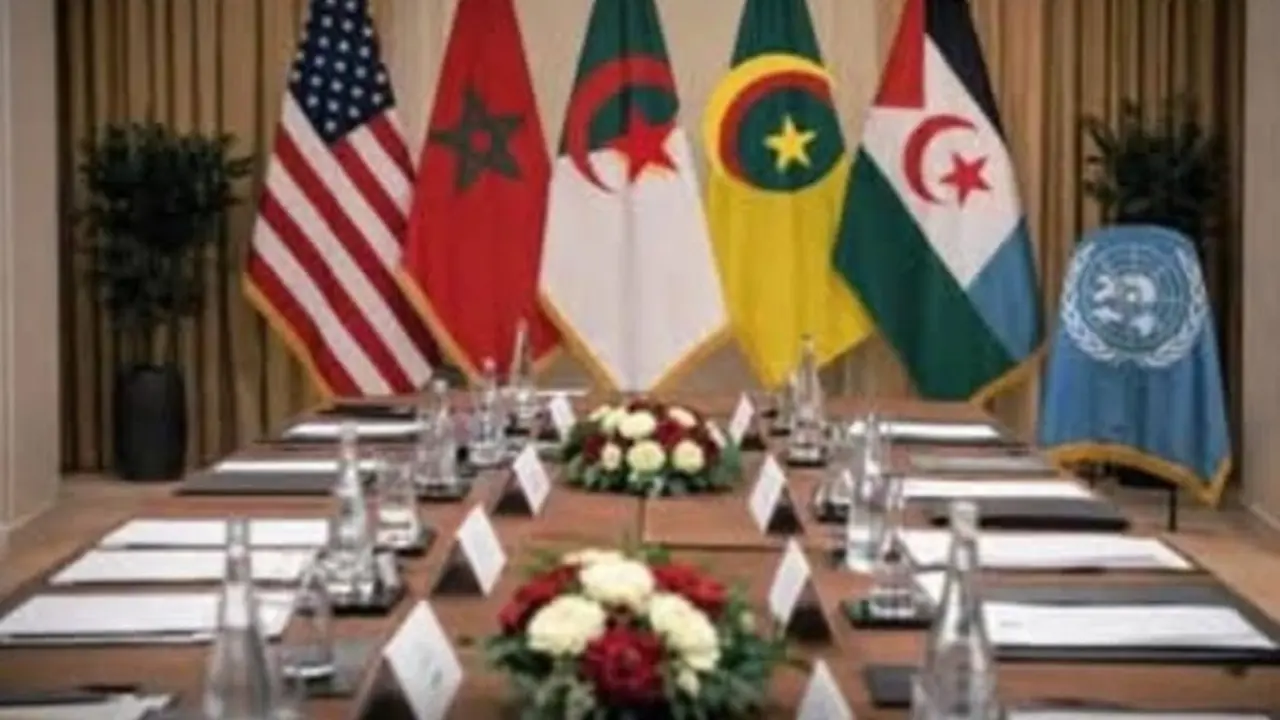
On the subject of the US project to bring Morocco and Algeria closer together, Omar Hilale referred the question to Steve Witkoff, US President Donald Trump's special envoy to the Middle East, who made this announcement himself last October, praising ‘the Trump administration's initiative, which is concerned with regional security and stability, cooperation between Morocco and Algeria, and the willingness to overcome differences in order to face major challenges together.’
The ambassador stated during this televised meeting that ‘Morocco remains open to all mediation,’ sending the following firm message to the leader of the Polisario Front, who has been stepping up his threats against the Kingdom: "Brahim Ghali knows Morocco's response to his actions. Our borders and our citizens are protected. Morocco respected the 1991 ceasefire, but reserved the right to defend its citizens and its borders when the Polisario announced its war against the Kingdom on 13 November 2020."
In this vein, Omar Hilale stressed that "Morocco's current position is open when it comes to improving relations with Algiers and firm in the face of Polisario provocations, recalling that the security of the territory remains a non-negotiable limit.

Favourable diplomatic ecosystem
Omar Hilale stated during his participation in the MD Sahara 2025 Forum that ‘if 31 October was an important day in our contemporary history, it is, of course, thanks to the determination, firmness and commitment of King Mohammed VI, his strategy and his instructions’.
This royal diplomacy is based on solid foundations: the antiquity of a Kingdom with roots deeply embedded in history and its geographical location, which has naturally formed a bridge between continents; its proven ability to combine fidelity to its heritage with adaptation to contemporary demands; and its historical experience, which has made plurality a source of wealth rather than an obstacle.
Royal diplomacy promotes methodical dialogue over fruitless confrontation, construction over unilateral dictatorships, and citizen confidence over reflexive differences. In the same way, it embodies one of the possible paths to a multilateralism refounded on effectiveness, rigour and its real capacity to improve the nation's destiny.
Providing an opportunity to reflect on this remarkable journey, the Green March represents, according to Omar Hilale, the shining manifestation of a diplomatic philosophy based on peaceful mobilisation, historical legitimacy combined with the will of the people, and self-affirmation without denying the other, as fundamental principles of Moroccan diplomatic action

The Sahara and Africa at the centre of action
"Thanks to the royal vision launched almost 25 years ago, the paradigm has shifted. The Sahara is at the centre of action. But we must work at all levels to ensure that everything converges towards the Sahara; this has enabled us to open doors, make friends, strengthen alliances and, above all, demonstrate the Kingdom's capacity for solidarity, action and commitment," Hilale said in his latest speech in Dakhla during the MD Sahara Forum.
According to him, solidarity with the royal vision is the very foundation of a more just and equitable world order. This dialogue woven between the Atlantic and the Sahara, between the Maghreb, Saharan Africa and Europe, seeks to build a firmly committed diplomacy.
Morocco presents itself as the bearer of national and continental projects, anchored in solidarity, action and innovation, through investments in renewable energies, infrastructure modernisation, human development and provincial diplomatic actions.
This architecture of cooperation, which is now a true success story, has been able to distinguish itself from traditional paradigms, as reflected in more than a thousand bilateral agreements and more than thirty royal visits to sister and friendly countries on the African continent.
It is a promotion of collective action that proclaims that the answers to Africa's challenges lie in the continent's own genius, in the ability of nations to transmute adversity into invention and to make their historical dimension the terrain of their rebirth.
Morocco's permanent representative to the United Nations recalled at the MD Sahara2025 Forum that ‘royal visits to African countries have not only strengthened fraternal relations with these countries, but have also opened up a new path of pragmatic economic integration, mobilising key sectors of sustainable development anchored in the African reality’.
In this regard, several flagship initiatives illustrate King Mohammed VI's vision of a united, resilient Africa in control of its own destiny:
- Access for Sahel countries to the Atlantic, which goes far beyond geographical openness.
- The Morocco-Nigeria, Morocco-Atlantic gas pipeline, which, in addition to being an energy project, is an organic connection between the extremes of the continent that illustrates a vision of African integration based on solidarity, energy security and the exploitation of Africa's collective potential.
- The AAA initiative for food security in Africa launched during COP 22 in Marrakesh, thus transforming food sovereignty into a lever for peace, security and sustainable human development.