Putin demands Ukrainian withdrawal and offers guarantees that Russia ‘will not attack Europe’
- The political strategy behind Putin's threats
- Anti-corruption investigation rocks Yermak's office and the energy sector
- International reactions
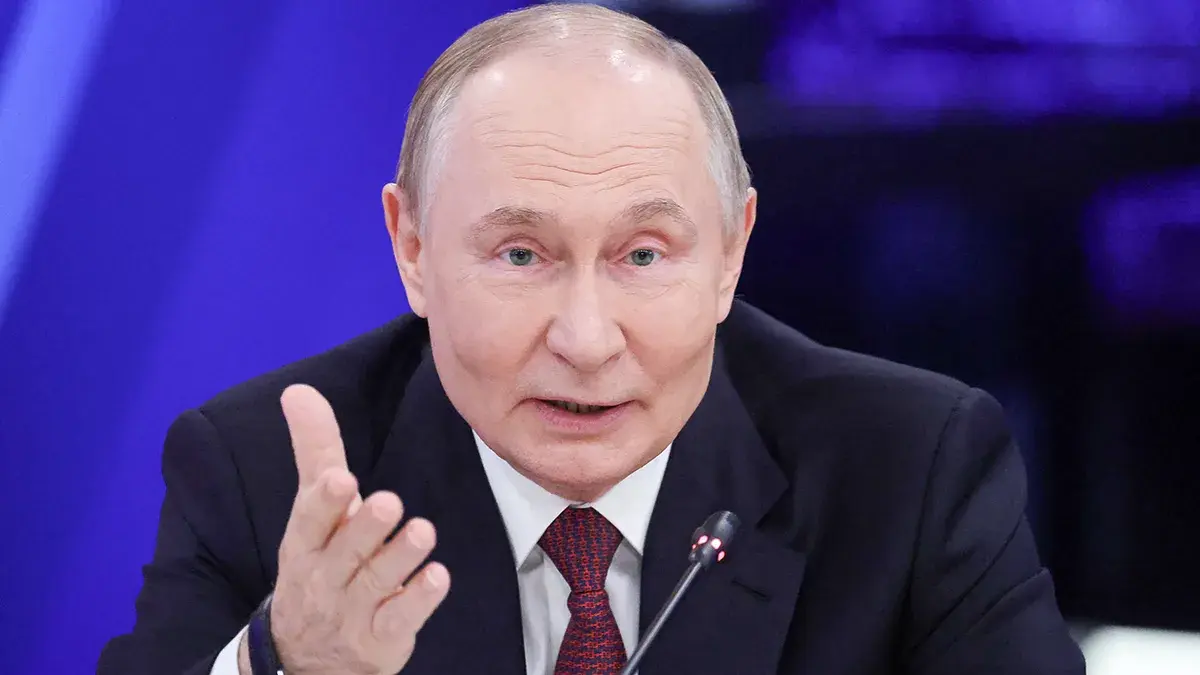
Vladimir Putin escalates his rhetoric. During his visit to Kyrgyzstan, the Russian president stated that Ukraine must withdraw from all territories that, according to Putin, belong to Russia and are occupied by Ukrainian troops.
If Putin's demands are not met, the president said that Russia will continue to advance with determination. ‘If they do not withdraw, we will achieve it by military force,’ he said. This time the threat is clear, as the Russian leader insisted and repeated his demands on several occasions.
The political strategy behind Putin's threats
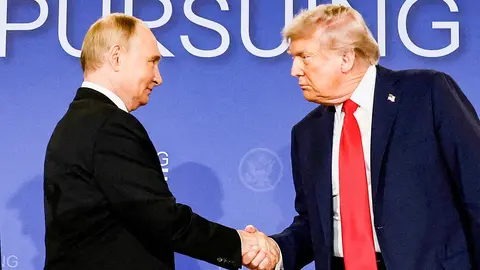
At the same time, he assured that if Ukraine yields to these new conditions, he will put in writing that Russia will not attack Europe. ‘We can put it in writing, as you wish,’ he said. However, this is not the first time Putin has promised not to attack. Before the Russian invasion of Ukraine, the Russian president denied on numerous occasions that he was going to do so.
Putin also stressed that he will only talk seriously with the United States, not with Kiev. He does not want to negotiate directly with Zelensky. Meanwhile, Putin continues to move pieces, send messages, maintain military pressure and leave little room for negotiation.
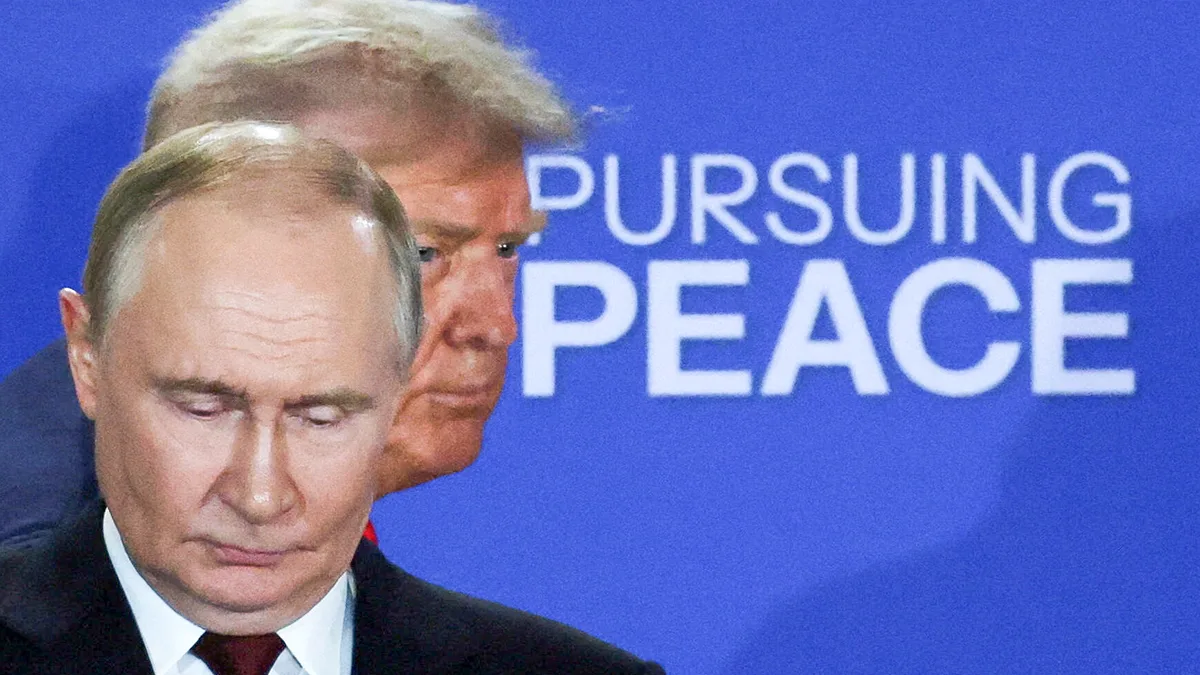
Putin's statements leave only one certainty on the table, and that is that the diplomatic battle will be as important as the military one. And in this scenario, Putin – and Trump – want Europe and Ukraine out of it. This is where Donald Trump's special envoy, Steve Witkoff, comes in, having drafted favourable terms for Washington and Moscow.
The repeated occasions on which Zelensky has proposed a tripartite meeting, all of which have been rejected by Moscow, are a clear sign that the war will end when Putin and Trump reach a mutually agreed pact.
Promising not to attack Europe has a double meaning: to isolate Kiev politically and to make the European Union hesitate to maintain aid and military support for Zelensky's government, which is going through its worst moment due to the investigations into Andriy Yermak, who is leading the negotiations in the peace process, for the corruption case surrounding the energy system.
Anti-corruption investigation rocks Yermak's office and the energy sector
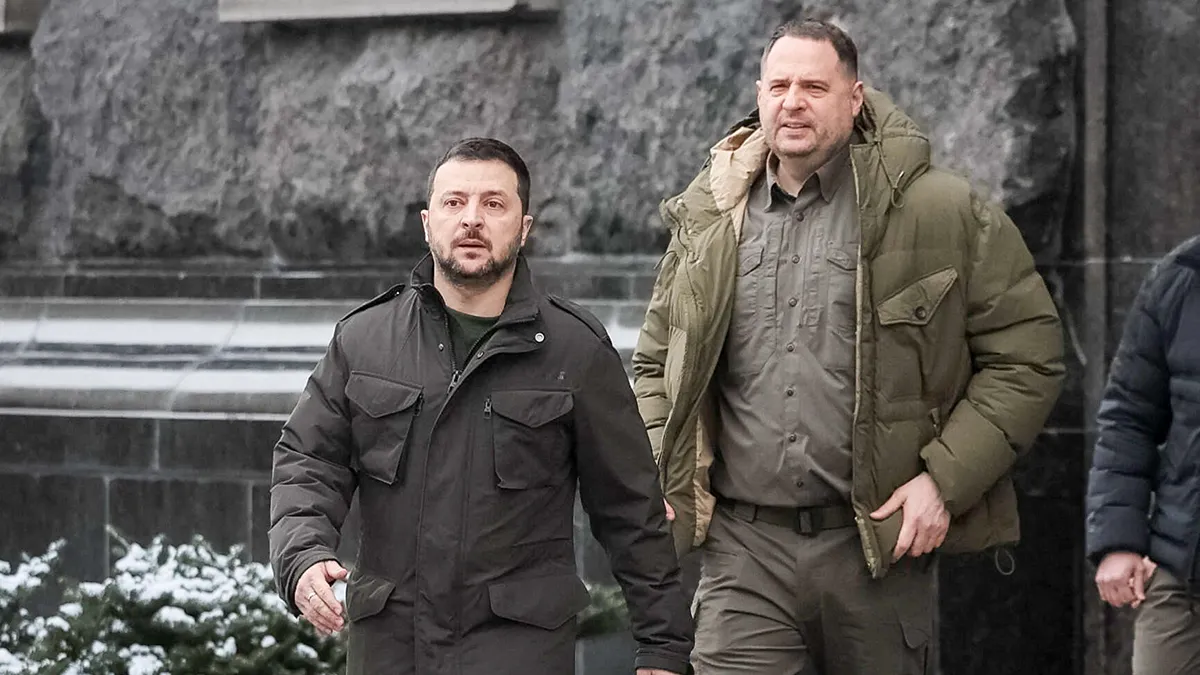
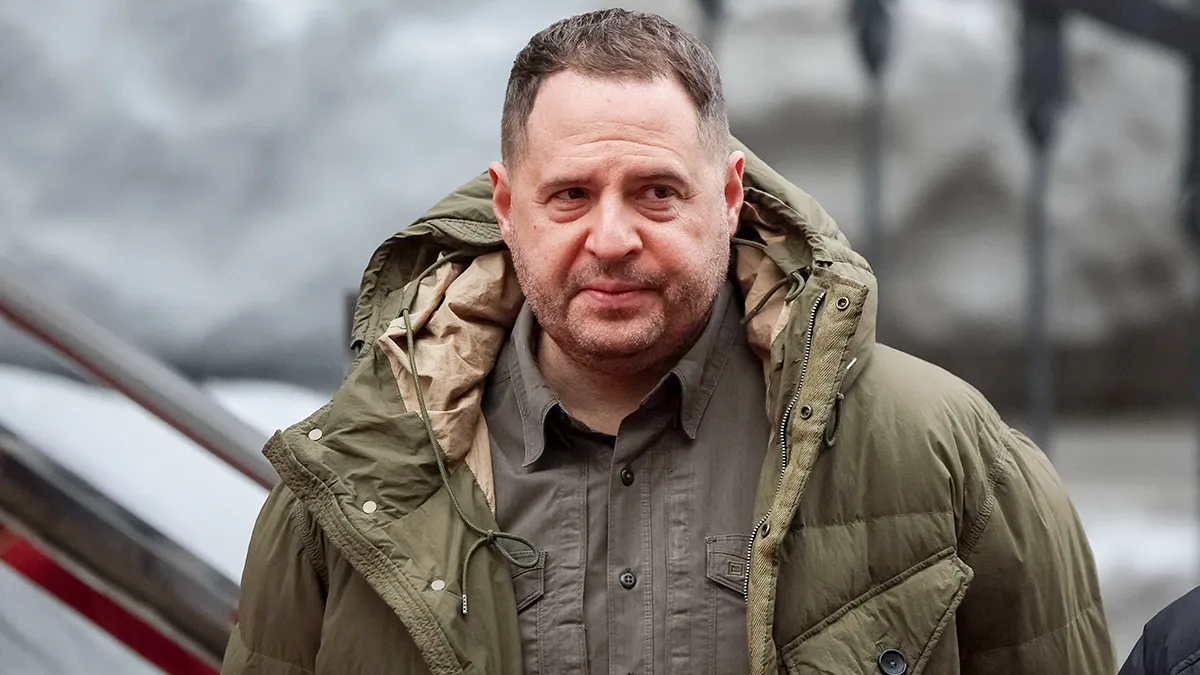
As María Senovilla pointed out on the radio programme ‘De cara al mundo’, the National Anti-Corruption Bureau (NABU) and the Anti-Corruption Prosecutor's Office of Ukraine (SAP) reported a series of searches carried out in the office and department of Andriy Yermak, who is the deputy to President Volodymyr Zelensky.
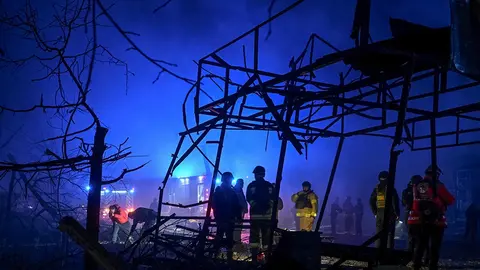
These investigations are being carried out in connection with the bribery scandal affecting the energy sector, which has already cost two ministers their jobs and sparked a political crisis in the country.
Yermak is under investigation by NABU in a corruption case involving the state monopoly of the nuclear energy company Energoatom. It is the most significant investigation of its kind to have been launched during Zelensky's time in power.
So far, five people have been arrested, although not the leader of the plot, businessman Timur Mindich, a former partner of the president in the entertainment sector, who has fled the country.
International reactions
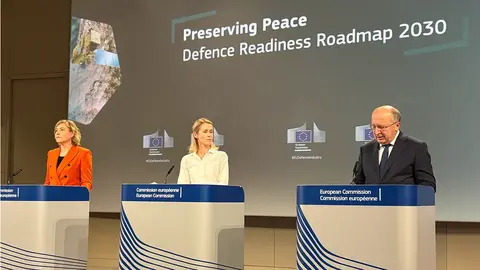
Vladimir Putin's latest statements have been met with widespread rejection and scepticism internationally. The European Union, increasingly sidelined in decisions on the conflict, reaffirmed its commitment to Ukraine's sovereignty and territorial integrity.
Ursula von der Leyen said that the Union will urge Russia to immediately and unconditionally cease fire and withdraw its troops, reiterating that "the EU will maintain its full support for Ukraine, both militarily and economically, as well as in terms of reconstruction
For their part, representatives of NATO and allied countries stressed that the Alliance's position on any Russian attack on NATO territory will be met with a firm response.
In the same vein, leaders of Ukraine's allies have made it clear that accepting territorial concessions in exchange for written promises would be ‘declaring the aggressor the winner of the conflict’.
All statements insist that European collective defence and unity in the face of the Russian threat remain the Western bloc's priority.