
Short sentences and big bets

- Capturing key moments and marking minds
- Discursive strategy and media framing
- Soundbites from international actors
- Neither victor nor vanquished
- More Sahrawi than the Sahrawis themselves
- We will be ready to discuss
Who does not remember this statement by the late Hassan II, which left a lasting impression, beyond its discursive context and the circumstances in which it was made? It was on 20 August 1976, in the royal speech on the occasion of the 23rd anniversary of the Revolution of the King and the People. The late King Hassan II referred to the 5th Conference of Heads of State and Government of the Non-Aligned Movement, held in Colombo, the capital of Sri Lanka (16-19 August), and to Algerian manoeuvres to include the ‘Sahara issue’ on the agenda and secure the adoption of a resolution against Morocco, even though the main topic of the meeting was the restructuring of the global economic system. This triggered a fierce struggle between supporters and opponents of Morocco's territorial integrity. The Moroccan delegation, led by Prime Minister Ahmed Osman, finally succeeded in neutralising the Algerian attempt.
It seems reasonable to think that this short sentence has contributed, for half a century now, to placing the Sahara issue in its true context, that of a very particular neighbourhood, thus revealing the geopolitical nature of a conflict provoked by the Algerian neighbour, obsessed with its hatred of Morocco. Only today is the international community realising that this conflict was imposed by the regime of the country with which the Kingdom of Morocco is condemned to share its neighbourhood and that, if this conflict persists, it is solely because of the activism of that neighbour, which is clinging to this rearguard struggle for purely geopolitical reasons.
Capturing key moments and marking minds
Short phrases uttered by prominent political figures have often left an indelible mark on history, not only because of their content, but also because of their ability to mark minds and capture key moments in social and political realities.
The short phrase ‘I have understood you’, uttered by General de Gaulle in 1958 during a speech in Algiers, had a strong impact in the context of the Algerian War, as it expressed an anticipation of dialogue between the French power and the Algerians. Its brief and forceful style marked the French political landscape.
The short phrase ‘I Have a Dream’, taken from Martin Luther King's speech delivered in 1963 in Washington, has transcended time to become a symbol of the civil rights movement in the United States, but also to ensure that this speech remains a model of political rhetoric and popular mobilisation.
When Palestinian leader Yasser Arafat uttered his short phrase ‘Do not let the olive branch fall from my hand’ during his speech to the United Nations General Assembly in 1974, he sought to convey a powerful message: despite the violence and tensions, he was willing to initiate a peace process. This metaphor and the speech as a whole had a significant impact on the international perception of the Palestinian cause. By presenting himself as a man of peace, Arafat managed to gain a certain level of legitimacy for his leadership and for the aspirations of the Palestinian people on the world stage.
President Barack Obama also knew how to use short phrases that captured the imagination, such as ‘Yes We Can,’ an expression that became the emblematic slogan of his 2008 presidential campaign, embodying the idea of a nation that can evolve and overcome challenges together.
These short phrases illustrate how political leaders use powerful words and articulate complex ideas in a concise and memorable way to mobilise public opinion. Researchers specialising in political communication and discourse analysis are particularly interested in studying this type of statement to reveal not only the discursive and political strategies they mobilise, but also the historical contexts that have influenced their production and scope.

Discursive strategy and media framing
It should be noted that a soundbite is a short, impactful and easily memorable phrase, often taken from a political speech, which circulates in the media and shapes public opinion, acting as a symbolic summary of a political actor's message. Today, soundbites play a crucial role in the media and discursive landscape. They contribute to the construction of the image of political actors and influence the way messages are perceived by the public. This phenomenon can be approached from two different angles:
The first relates to the discursive strategies of the political actors themselves, who use soundbites strategically to simplify their discourse and condense complex ideas into simple, memorable messages. This can facilitate understanding by the general public, but also make an impression by creating striking phrases. Political leaders thus hope that their message will resonate in the collective memory. Such phrases can become iconic, such as ‘The homeland is forgiving and merciful,’ a soundbite from the late Hassan II that demonstrates a considerable power to capture deep aspirations and influence history, as well as to reveal the speaker's personality, authority, and charisma.
The second angle from which the phenomenon of soundbites can be approached concerns the media framing choices made by journalists, whereby the soundbite is constructed by the media as a discursive event. The journalistic treatment of soundbites depends on several factors, mainly the selection and highlighting of these phrases by journalists based on their relevance and impact. Soundbites are usually extracted by journalists from the original speech, and their prominence in an article or report contributes to their amplification and circulation, which can influence public opinion and debate. It should also be noted that the way a soundbite is integrated into a news story affects public perception. For example, if a phrase is presented in a negative context, it can reinforce criticism of the speaker, while a positive framing can turn it into a bold statement. In addition, the media tend to construct narratives around these soundbites that can shape public debate. By connecting a soundbite to broader events or ongoing debates, journalists establish narrative links that enrich the discussion and influence public perception.
Soundbites are therefore much more than just catchy phrases. They are part of a complex dynamic of political communication, where the discursive strategies of actors are confronted with media framing choices. This phenomenon underscores the importance of language and rhetoric in the construction and perception of political and social realities. An in-depth analysis of soundbites can thus unravel larger political stakes, driven by carefully crafted communication strategies.

Soundbites from international actors
The analysis of soundbites uttered by international actors (heads of state, diplomats, organisations) offers a powerful tool for deciphering interactions in a conflict, revealing discursive strategies, positions and power dynamics. These short, impactful statements, often amplified by the media, condense complex messages and influence the perception of reality in an international context.
In this context, it would be tempting – and probably fruitful – to analyse recent developments in the Moroccan Sahara issue through the prism of ‘short quotes’, conceived as an interpretative tool that highlights how these brief, forceful statements reveal, beyond their apparent simplicity, the diplomatic strategies at play and the underlying political tensions.
Indeed, over the past three years, the conflict has seen notable developments, particularly in terms of growing support for the Moroccan autonomy plan from countries such as the United States, Spain, France and the United Kingdom. These developments on the ground often crystallise in forceful statements by the actors involved, which function as messages of strategic positioning that, amplified by the media, frame the debate in favour of Morocco, clearly ruling out the separatist option advocated by Algeria.
Three short sentences recently uttered by King Mohammed VI, President Abdelmadjid Tebboune and Russian Foreign Minister Sergei Lavrov, although coming from different contexts, are articulated around a search for consensus and balance on the issue of the Moroccan Sahara.
Neither victor nor vanquished
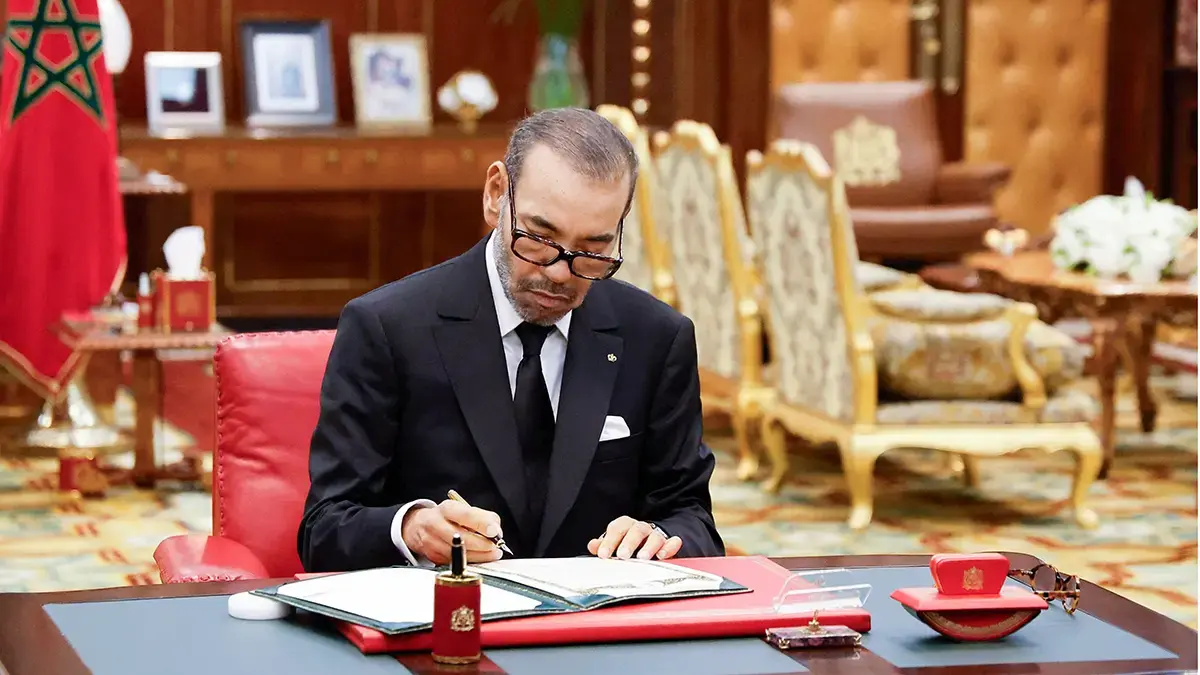
King Mohammed VI's short phrase, ‘Neither winner nor loser’, uttered on 29 July 2025 during his Throne Speech, embodies a strategy of de-escalation and openness towards Algeria. He advocates a consensual solution that saves face for all parties, but is based exclusively on the Moroccan autonomy plan. This formula seeks to defuse the conflict by avoiding the humiliation of the other side and promoting constructive bilateral dialogue between Morocco and Algeria.
This short phrase, which had a profound impact on minds and influenced the dynamics of the conflict, is part of both a Moroccan diplomatic offensive that is gaining ground and a refined discursive strategy that seeks to defuse a geopolitical tension that has lasted too long. Through its deliberately balanced and inclusive wording, this expression implicitly offers Algeria a dignified way out of this artificial conflict, sparing it the image of a setback or defeat. It is a clear message that effectively preserves the appearance of state dignity, without demanding explicit admission or symbolic capitulation. This type of discourse, apparently conciliatory, thus constitutes a tool for narrative readjustment, offering the adversary a possibility of repositioning without humiliation, while reaffirming Moroccan sovereignty in dealing with the Sahara issue.

More Sahrawi than the Sahrawis themselves
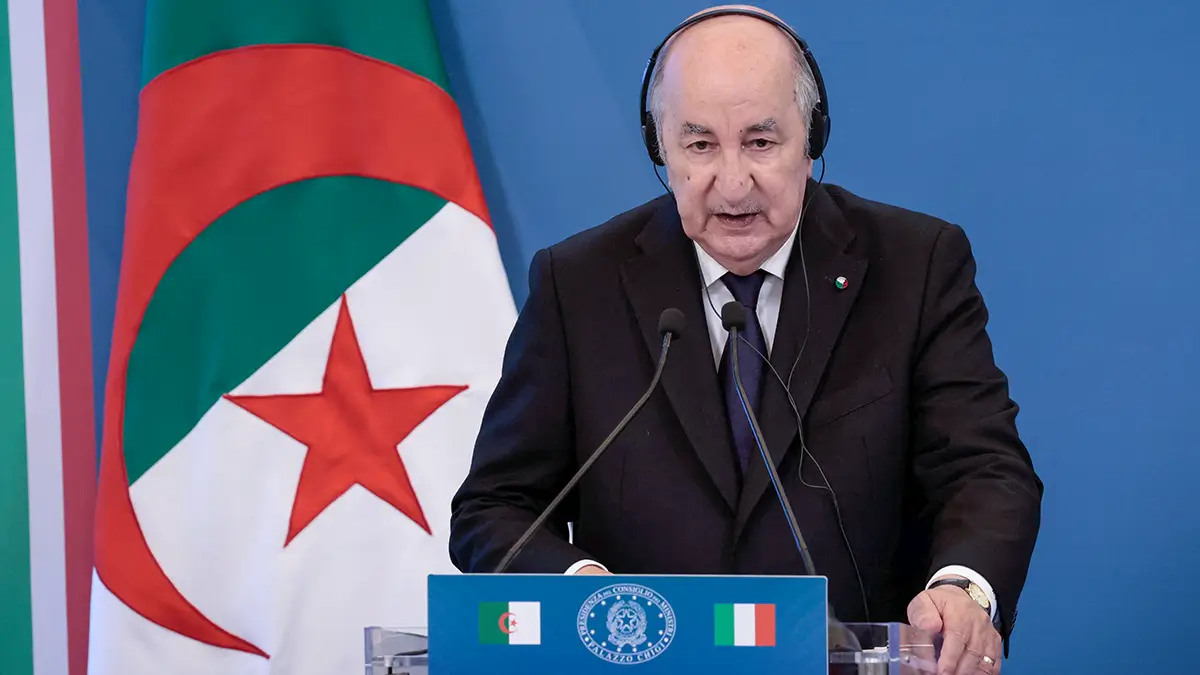
Algerian President Abdelmadjid Tebboune's short statement, ‘Algeria will not be more Sahrawi than the Sahrawis themselves,’ delivered on 10 October 2025 to military officials at the Ministry of Defence, reaffirms Algerian support for the Polisario Front while signalling a nuance of non-interference. This short but significant and striking statement, which affirms that Algeria will support the solution accepted by the Sahrawis (the separatists), signals a carefully measured distancing by Algeria from the final resolution of this dispute. President Tebboune's short sentence functions here as a condensed argument within a diplomatic communication strategy, which consists of symbolically taking a step back and insisting on the presidential will not to seek to impose a unilateral solution to the conflict, as well as to support any outcome accepted by the Sahrawis (the Polisario) themselves. This short sentence, while maintaining the rhetoric of self-determination in the presidential discourse, seems to open the door to conditional acceptance if the ‘Sahrawis’ consent to it.
This statement does not necessarily imply an immediate Algerian disengagement or an explicit reduction in support for the Polisario. ‘The Algerians do not want to be more Sahrawi than the Sahrawis themselves’ can be interpreted as a way of emphasising that Algeria will respect the ‘Sahrawi’ choice, maintaining its role as a supporter rather than a decision-maker. Therefore, the short sentence does not constitute an explicit limitation of Algerian support for the Polisario, but reflects a strategic shift in a context of increasing pressure. It is a message that can be read as an attempt to reaffirm the principle of self-determination in order to maintain ideological consistency, to ensure tactical flexibility in the face of a separatist agenda in difficulty, and to respond to internal and external criticism by repositioning Algeria as a player that only provides support and not as a decision-maker.
We will be ready to discuss
Finally, Sergey Lavrov's short statement, ‘we will be ready to discuss such initiatives (autonomy) as long as they are acceptable to all parties,’ made on 13 October 2025 during a press conference with representatives of Arab media, comes in the context of intense debates in the UN Security Council on the Moroccan Sahara, with Russia chairing the October 2025 sessions and a decisive resolution expected at the end of October. Lavrov expresses a nuanced position on the conflict, marking a possible shift in Russia's stance, traditionally aligned with Algeria, towards a conditional openness to the Moroccan autonomy plan.
By presenting the Moroccan initiative as a ‘form of self-determination’ compatible with UN resolutions, the head of Russian diplomacy marks a significant evolution, as Russia had until then insisted on a referendum as a mechanism for self-determination. Within the framework of this opening, which remains strictly subordinate to acceptance ‘by all parties’, Lavrov insists that no solution should be imposed and that Russia will support an outcome ‘based on an honest balance of interests’.
By indicating an openness to the Moroccan autonomy plan, on condition of unanimous consensus under the auspices of the UN, Lavrov's short sentence reflects a geopolitical recalibration influenced by the war in Ukraine and Russian interests in North Africa, which would consist of supporting Morocco without weakening Algeria. Thus, the short sentence acts as a condensed argument which, by reinforcing the Moroccan position, seeks to fit in with the balance previously offered by HM King Mohammed VI with ‘Neither victor nor vanquished’ and subsequently accepted by President Tebboune with ‘Not being more Sahrawi than the Sahrawis themselves’, which could influence the outcome of a UN vote in favour of a balanced resolution based on the Moroccan proposal for autonomy.
Due to their complementarity, these three short sentences articulate a new dynamic: firstly, the Moroccan call for compromise without humiliation is echoed in Russia's conditional openness, while the Algerian position seems to find a dignified way out by seeking to prioritise the ‘Sahrawi’ will, which in principle could facilitate common ground and open up a promising perspective for this issue.
These three short sentences, each based on specific argumentative rhetoric, convey a complex set of positions that they effectively summarise. Their analysis has allowed us to highlight major political stakes, revealing carefully constructed communication strategies. Taken together, the three short sentences point to a possible thaw, where this new dynamic could lead to a resumption of negotiations within the framework of the UN process, which could evolve towards a mutually acceptable solution, based on autonomy under Moroccan sovereignty and supported by international actors.