
UN: criticized but where everyone wants to be


As has been the case for several years now, this time too there have been critical voices regarding the alleged ineffectiveness of the UN, the disproportion between its enormous expenses and the meager results obtained in its operations and, ultimately, whether it is time to wind up the largest international organization at the global level, with its 193 member countries and 37,000 officials, who swallow up a large part of the $5 billion budgeted for its annual operation. And also, as always, no one gives a satisfactory answer to the following question: What multilateral organization or institution would replace it?
The precedent of the League of Nations immediately comes to mind, which arose from the ashes of World War I to safeguard peace and the new order established in the Treaty of Versailles. Although the League, based in Geneva and with 57 member countries, failed to prevent the eruption of new conflicts, which eventually culminated in World War II, its demise was the result of its members' unwillingness to pursue peace. In fact, the last decision taken by the League was to expel Russia the day after Stalin's troops invaded Finland.
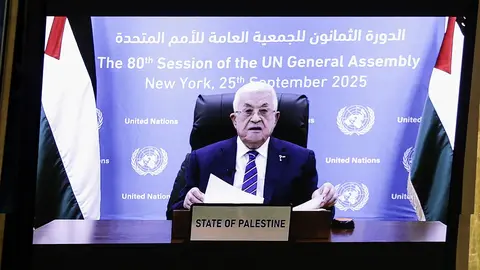
The UN, conceived while fighting with unusual destructive zeal in Europe, Asia, and Africa in World War II, is the last standing symbol of the collective will to maintain global peace. Clearly, this is not the picture of a world in which 51 conflicts of varying intensity are currently being fought, and where those with the greatest geopolitical impact are the wars in Ukraine and Gaza, in which the voice and role of the UN have been silenced without hesitation and often with disdain and even contempt.
It is true that the organization was born proclaiming the equality of all countries in terms of both access and being heard in the world's main multilateral forum, which was joined one after another by the multitude of countries that achieved independence, although not without fighting the corresponding wars, both with the metropolises that resisted their emancipation and those rekindled with their neighbors or between the tribes that made up the population of countries whose borders had been drawn with a ruler and set square in European chancelleries during the 19th century.
However, in accordance with the axiom enshrined by George Orwell in Animal Farm that “we are all equal, but some are more equal than others,” the main institution of the UN, namely the Security Council, was set up to have 15 members, 10 of them rotating, but 5 permanent: the US, Russia, China, the UK, and France. Needless to say, the US and Russia in particular have made extensive use of their veto power to block resolutions that would directly affect them or their favored allies. Despite this, the United Nations has managed to pass quite a few resolutions, which have not been implemented in practice due to subsequent obstacles put in place by the major powers to prevent this.
While it is true that the UN has taken a back seat in the major conflicts that are currently shaping the world, it is also true that it has devoted much of its energy to humanitarian work, providing millions of victims of conflict with basic needs such as food, health care, and education. These efforts have not always been respected by the warring countries, under the pretext that weapons or devices intended for use as terrorist artifacts could be introduced among materials so basic to survival.
The UN has also established a multitude of agencies and dependent bodies. Some, such as UNESCO, are designed to facilitate a great leap forward in education and culture. Others, such as UNRWA, aim to aid and support the Palestinian population in the diaspora caused by the 1948 war. That conflict, triggered by Resolution 181, which divided the former British protectorate of Palestine into two states, one Jewish and one Arab, was not accepted by the Arabs, who unleashed the first Arab-Israeli war to prevent the establishment of the State of Israel.
UNRWA has therefore been providing food, primary healthcare, and education to Palestinians in Gaza, as well as those settled in Lebanon, Syria, and Jordan, for three quarters of a century. Israel argues that an agency that was created as a temporary measure, with a view to dissolving itself once the problem had been solved, and which has been operating for almost a century, is such an anomaly that its members have become accustomed to this being their means of work and life, with a logical and growing lack of interest in seeing the problem resolved.
The other major UN humanitarian agency, UNHCR, has also seen an increase in the number of situations where its assistance is necessary and even urgent. It assists more than 6 million refugees from Ukraine, but also extends its work to the African continent, including Sudan, Eritrea, Ethiopia, and Congo.
Like any long-standing institution, it has its flaws and shortcomings, from allegations of inappropriate behavior by blue helmets during peacekeeping missions to the withdrawal or delay in the payment of contributions for its maintenance. Donald Trump's threats to withdraw the United States and not pay its share of the budget (30% of the Organization's total) pose a clear danger to the UN's solvency and its ability to carry out its peacekeeping missions, which currently employ more than 70,000 people.
In any case, material needs would not be the most difficult to meet. On the contrary, the real lack of will for the world to live and develop in peace is the greatest threat to the existence of the UN, which was created, like the previous League of Nations, precisely to prevent or end war as a means of resolving conflicts.