Safran boost Morocco's aircraft engine industry
- Growth and autonomy in Moroccan aviation
- Safran's investment and its industrial impact
- Key partnerships and state-of-the-art technology
- Factors that promote aeronautical development
Growth and autonomy in Moroccan aviation
For more than a decade, the Moroccan aeronautical sector has shown sustained growth, evidenced by continuous development that was only temporarily interrupted by the global health crisis. This progress has contributed to a significant reduction in the country's dependence on foreign suppliers for the manufacture and supply of aeronautical components.
Initially, the industry faced significant economic challenges, as it depended almost entirely on imports of the parts and materials needed to assemble aircraft. The need to import virtually all components generated high deficits and limited industrial autonomy. However, the situation has evolved significantly thanks to industrial policies and the boost provided by foreign investment.

Morocco is now home to all the major airlines operating within the country and has contracts for the supply of specific parts, which strengthens the local aeronautical production chain. Despite these advances, engine manufacturing remains one of the outstanding challenges due to its high technical complexity and demand for specialised technology.
This progress points to a future where full autonomy in aeronautical manufacturing could be a tangible reality. The development of in-house capabilities for the production of engines and critical components positions Morocco as a growing player in the industry, with a robust domestic market and significant potential for export.
Safran's investment and its industrial impact
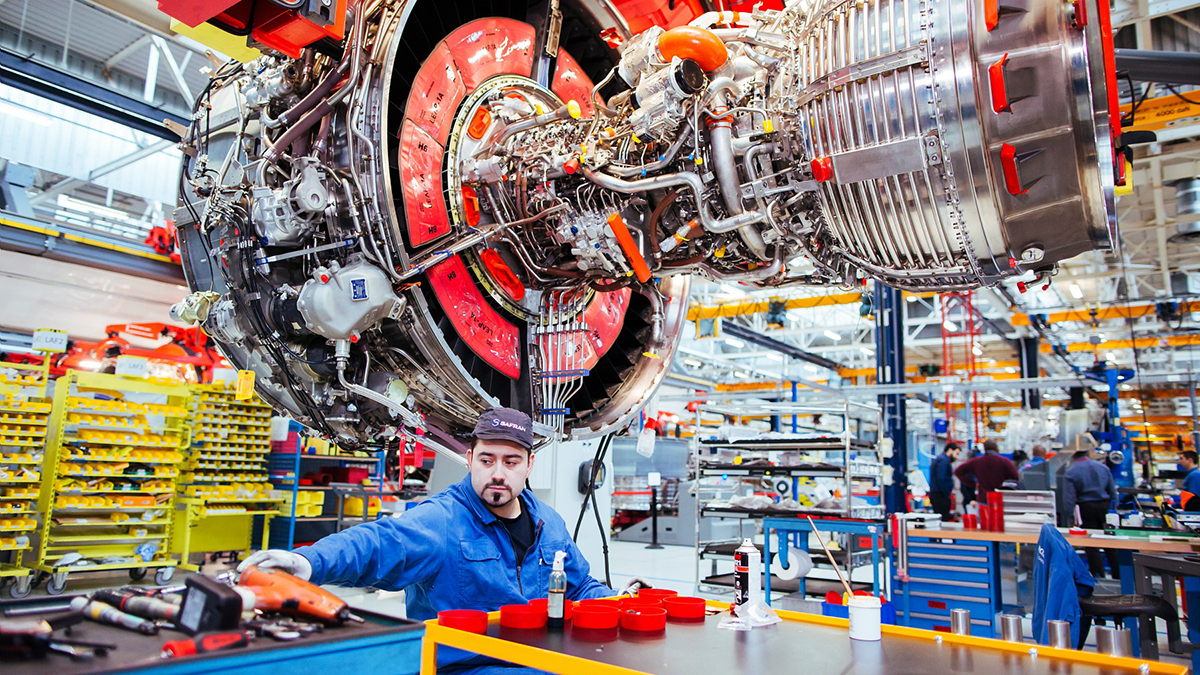
In line with this industrial strengthening strategy, the French company Safran has announced an ambitious investment plan to build a plant dedicated to the manufacture of engines for Airbus, consolidating Morocco as a strategic enclave in the global aeronautical industry.
The project involves an investment of more than €200 million to build an industrial complex of more than 13,000 square metres in Casablanca. This facility will not only expand Safran's production capacity but also complement its plant in Villa Roche, France.
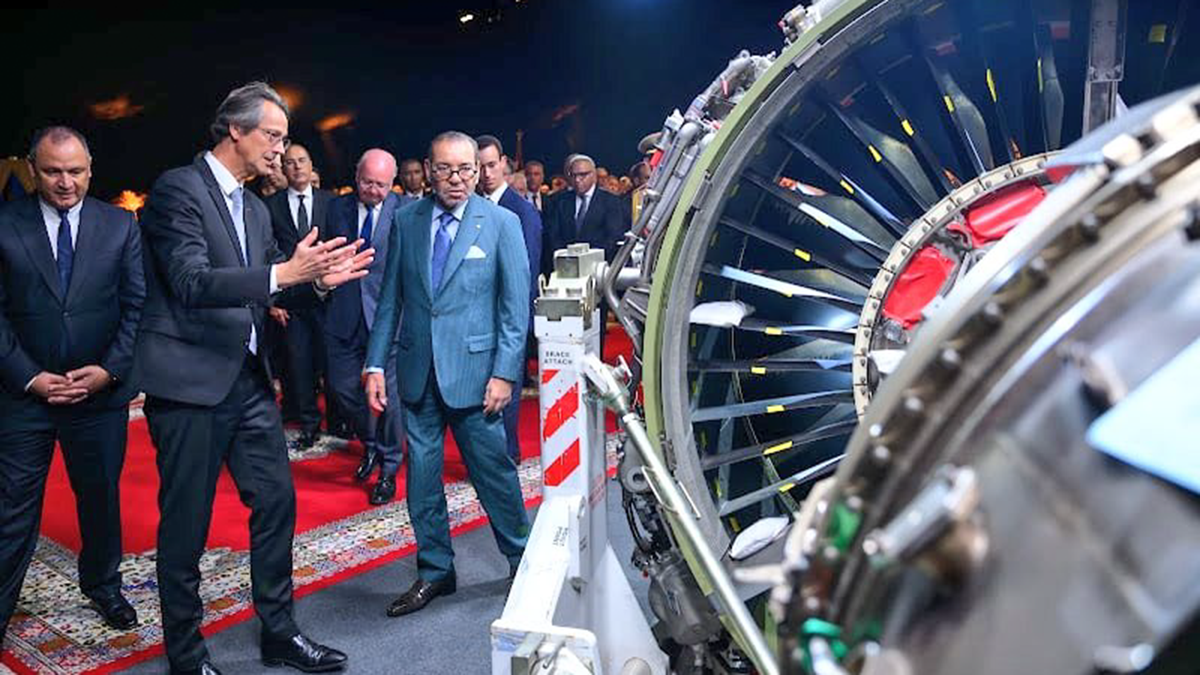
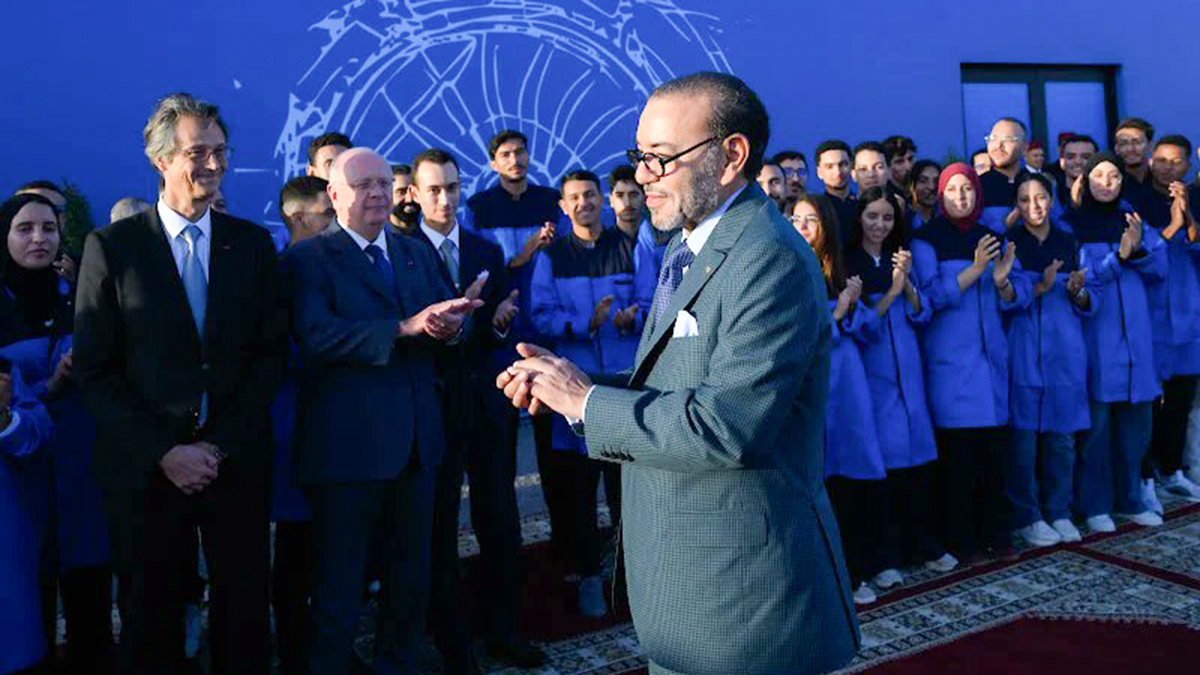
The Casablanca plant is designed to begin operations on schedule and will function as a comprehensive centre for the assembly, testing, maintenance and repair of state-of-the-art engines. The decision to locate this project in Morocco has been endorsed by high-level official representatives, including King Mohammed VI and Crown Prince Moulay El Hassan, along with key ministers and Safran executives.
The industrial impact of this investment is significant, as it will increase production capacity on the African continent and boost Morocco's technological and economic integration into the global aeronautical value chain. This plant is expected to generate a multiplier effect in the business community and foster links with national and international suppliers.
Key partnerships and state-of-the-art technology
As part of the strategy to ensure the success and innovation of this project, three memoranda of understanding were signed during the official announcement. These partnerships establish clear commitments between Safran and the Moroccan government to ensure sustainability, the supply of renewable energy and the appropriate location of industrial facilities and test areas.
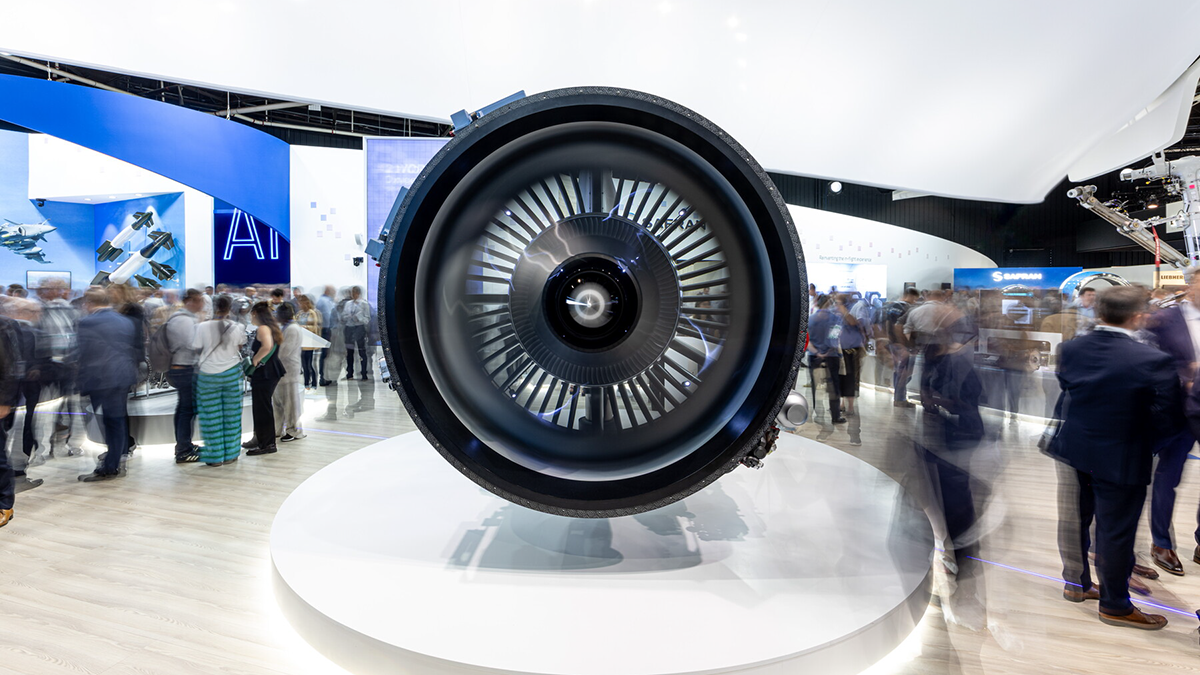
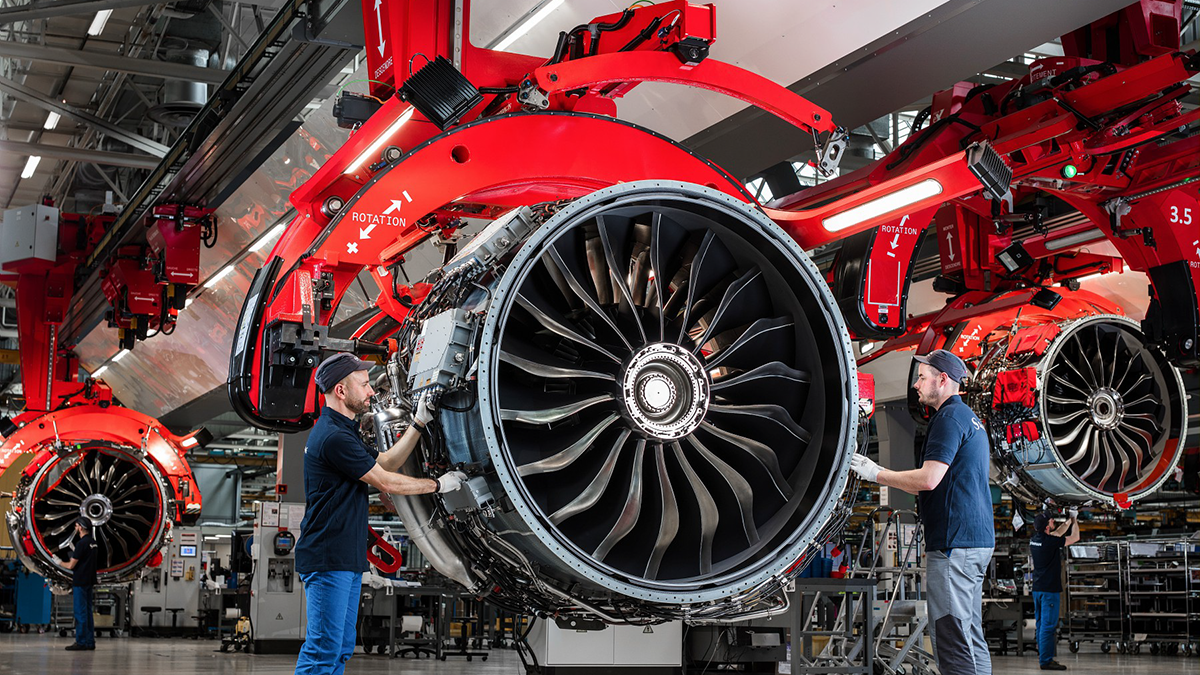
Of particular note is the presentation of the LEAP-1A engine, an advanced technological product that symbolises the commitment to innovation and energy efficiency in aeronautical production. This engine is an icon of the new generation of engines that combine optimised performance and reduced environmental impact.
The future plant in Midparc, a strategic industrial park located in Nouaceur, will be equipped with all the necessary facilities for the assembly, testing and maintenance of the LEAP-1A, LEAP-1B and LEAP-1C engines, integrating cutting-edge technology that will enable high international standards to be maintained.
These partnerships represent the commitment of Morocco and Safran to developing a competitive and sustainable aeronautical industry. The focus on clean technologies and compliance with international standards consolidates the country as a centre of technological excellence within the region and globally.
Factors that promote aeronautical development
Safran President Ross McInnes has emphasised that Morocco has optimal conditions for the installation of high-tech industrial projects. The company emphasises close collaboration with local authorities, integrating resources and talent to accelerate the country's economic development.
For his part, Olivier Andriès, CEO of Safran, has pointed out that this will be the first plant of its kind outside France. This places Morocco in a privileged position on the global map of aeronautics and reinforces international confidence in its productive capacity and stability.
Among the key factors that motivated Safran to select Morocco are the availability of skilled labour and the implementation of the New Investment Charter, which offers facilities and guarantees for industrial development in the country.
The kingdom's economic and political stability is another factor that attracts foreign investment, in addition to its strategic location and infrastructure in areas such as Midparc, which offer preferential access to international markets and efficient supply chains.
Moroccan Minister of Industry Ryad Mezzour has highlighted that the installation of the Safran plant in Nouaceur positions the country among the few capable of producing complete engines for Airbus. This represents a significant advance in the nation's industrial autonomy and prestige.
Looking ahead, the start of operations is expected to double annual engine production in Morocco, boosting the local economy and strengthening the aeronautical industry, which already generates more than €2.6 billion in annual revenue.
The sector continues to grow at a rate of more than €100 million per year and has more than 150 international companies operating in the country. This industrial ecosystem generates skilled employment and contributes to sustainable development in the Casablanca region.
By 2030, more than 600 jobs are projected to be created in the Midparc industrial zones, consolidating both local economic growth and Morocco's reputation as an aerospace hub. The competitive environment and public-private collaboration are fundamental pillars for the future of the sector.
This development not only impacts the productive structure, but also encourages knowledge transfer, technological innovation and integration with global markets. Morocco is strengthening its strategic position in the face of the challenges of the global aeronautical industry and the demands of the contemporary market.