
Strategic reconfiguration on the Madrid-Rabat axis: analysis of the 13th Spain-Morocco High Level Meeting
- Context and development of the summit
- Main areas of cooperation and agreements reached
- The issue of Western Sahara and the limits of the agenda
- Significance, internal tensions and future prospects
- Conclusion
Context and development of the summit
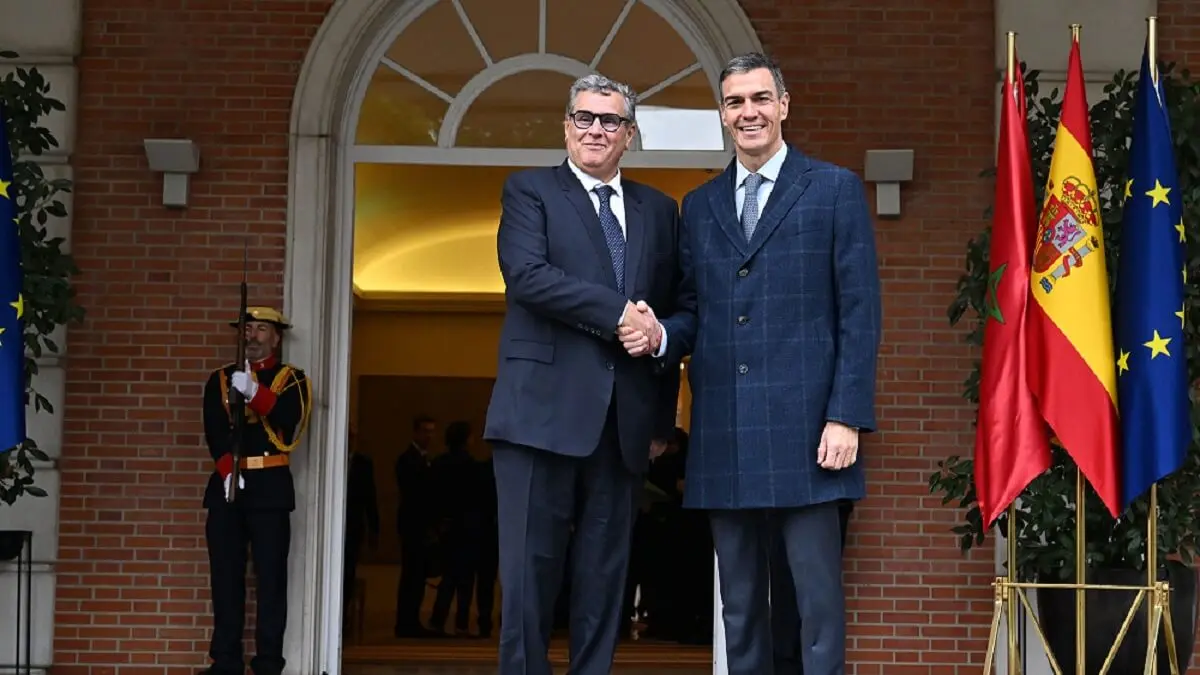
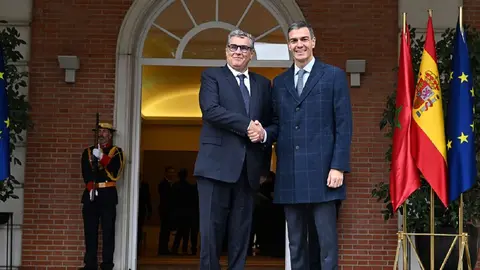
The 13th High Level Meeting (HLM) between Spain and Morocco was held on 4 December 2025 at the Moncloa Palace in Madrid, jointly chaired by Spanish Prime Minister Pedro Sánchez and Moroccan Prime Minister Aziz Akhannouch. Unlike previous summits, this time there was no meeting between King Felipe VI and King Mohamed VI, which would have reinforced the strategic ‘diplomacy of kings’ between the two countries, similar to that usually held between Juan Carlos I and Hassan II.
The summit, held under the Treaty of Friendship, Good Neighbourliness and Cooperation between the Kingdom of Spain and the Kingdom of Morocco (4/7/1991), and within the framework of the continued enhanced political dialogue resulting from the Joint Declaration of 7 April 2022, brought together ministers and senior officials from various portfolios, although the absence of ministers belonging to the Sumar political group was notable, which was interpreted as a reflection of their political differences regarding the Western Sahara conflict.
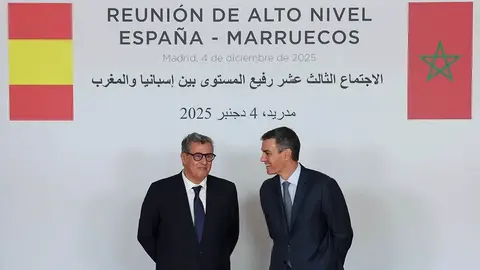
The aim of the meeting was not only to review the current bilateral situation, but also to reconfigure Spain-Morocco cooperation within a more modern, broad and cross-cutting framework, adapted to the challenges of the 21st century (digitalisation, energy transition, security, mobility and regional cooperation).
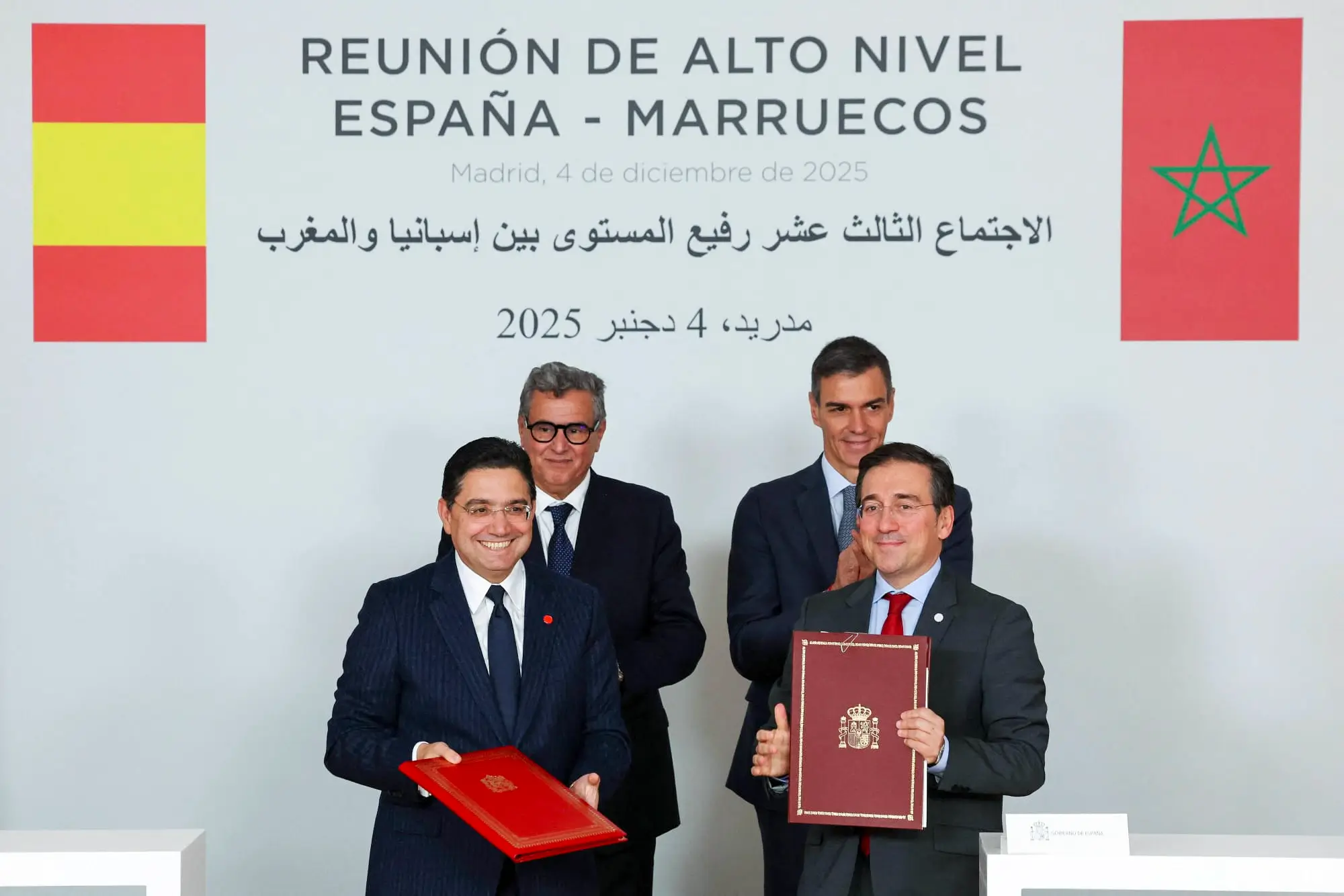
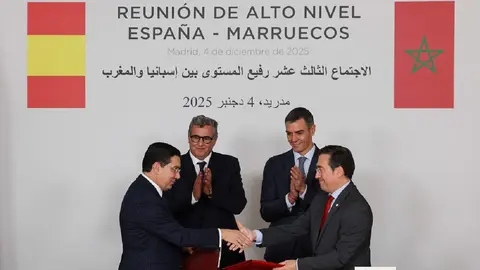
At the end of the summit, a 22-page, 119-point joint declaration was presented, as well as the signing, according to La Moncloa, of fourteen bilateral agreements in various fields: one international administrative agreement, eleven Memoranda of Understanding (MOUs) and two declarations of intent.

Main areas of cooperation and agreements reached
During the RAN, cooperation agreements were signed in multiple areas, demonstrating the willingness of both countries to deepen their relationship beyond the traditional:
Agriculture, fisheries and food sustainability
- An agricultural agreement and a maritime fisheries agreement were signed to promote innovation, water management, rural development, sustainable aquaculture and the fight against illegal fishing. A monitoring committee was established to evaluate progress.
Transport, investment and infrastructure
- A memorandum of understanding reinforced commitments to collaboration in transport, sustainable mobility and investment. This involves integrating the economies of both countries into regional value chains, with a strong focus on the Mediterranean and the African continent.
- Within this framework, scientific cooperation in seismology and geodynamics for the Strait of Gibraltar area was also agreed: exchange of information, joint observation networks and studies on seismic and tsunami risk, with an initial duration of three years.
Education, culture, sport and diplomatic mobility
- The framework for educational cooperation in Spanish-owned centres in Morocco was updated, regulating the participation of teachers, selection conditions, coordination and monitoring.
- A memorandum of understanding was signed for cooperation in sport: training, knowledge exchange, event organisation and athlete protection, with an annual monitoring committee.
- In diplomatic matters, a memorandum was agreed between the diplomatic academies of both countries, a mobility framework for young diplomats, and an initiative to incorporate the perspective of gender equality - feminist diplomacy - into their diplomatic strategies.
Digitalisation, migration, inclusion and the fight against hate speech
- Agreements were signed on digital transition and document/archive management, the modernisation of official printing offices and the digitisation of archives.
- Both parties approved a joint strategy to combat hate speech, in a context of significant presence of citizens of Moroccan origin in Spain, with the aim of promoting coexistence, integration and social cohesion.
Energy, sustainability and energy connectivity
- In a strategic shift, both nations agreed to deepen their energy cooperation: according to statements made after the summit, two-way trade in electricity and gas between Morocco and Spain has been re-established, taking advantage of shared energy connectivity following the reactivation of the old Maghreb-Europe gas pipeline, which strengthens energy interdependence and sustainable transition in the region.
The issue of Western Sahara and the limits of the agenda
One of the most sensitive issues, the status of Western Sahara, was once again on the summit agenda. In the final declaration, as already reported by Atalayar, Spain ratified its support for the Moroccan autonomy plan as ‘the most solid basis for dialogue’, in line with the recent Resolution 2797 of 31 October 2025 of the UN Security Council.
However, other traditionally contentious issues, such as the delimitation of territorial waters southwest of the Canary Islands and the management of airspace over Western Sahara, were excluded from the final declaration. Sources indicate that there was an explicit desire to ‘not reopen’ diplomatic weaknesses – both sides chose not to include them directly in the official agenda – while the opening of customs in Ceuta and Melilla agreed in April 2022 was considered settled.
In fact, the absence of a joint press conference at the end of the summit was interpreted by some analysts as a strategy of discretion on the part of both governments, given the potential friction on these sensitive issues (encapsulated problems). This view contrasts with that of the information and press services that sought to cover the event and ask questions of its protagonists.
The Madrid Press Association (APM), in its statement of 4/12/2025, denounced the attempt to ‘turn journalists into mere spectators’. This position was also expressed by the Federation of Press Associations of Spain (FAPE), which lamented in its statement the ‘informational opacity’ generated around the RAN.

Significance, internal tensions and future prospects
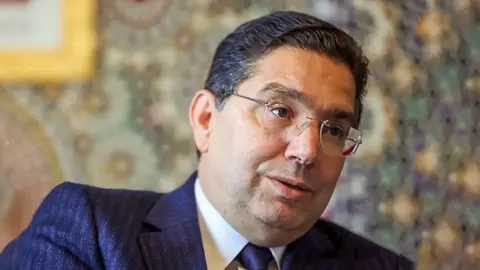
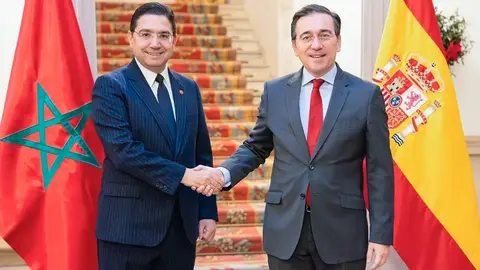
The summit has been hailed by several authorities as a turning point: an unprecedented phase in contemporary relations between Spain and Morocco. At least, this is how Foreign Minister José Manuel Albares and his Moroccan counterpart Nasser Bourita have sought to portray it in press releases and various interviews.
The emphasis on multisectoral cooperation – from agriculture to diplomacy, energy, education, mobility, social defence and culture – suggests a comprehensive strategic partnership. This reconfiguration responds both to global structural changes (energy, security, migration) and to the consolidation of regional interdependence in the Euro-Mediterranean area.
However, the deliberate exclusion of maritime and air issues relating to the Sahara, as well as the lack of internal consensus in Spain (where some political groups oppose recognising Morocco's full sovereignty over this territory), highlight the tensions accompanying this rapprochement. This was expressed, for example, by the Second Vice-President of the Spanish Government and Minister of Labour and Social Economy, Yolanda Díaz, when she counterprogrammed this RAN by posting a video on her Instagram account in which she defended ‘today and always. Long live a free Sahara!’ declaring that ‘we will not give up an inch of Sahrawi land’.
In any case, the outcome of this RAN indicates the ambition on both sides to translate the summit into practical results: technical, scientific and diplomatic cooperation, but also economic integration, energy, sustainable development and inclusion policies. In short, these agreements are expected to pave the way for future collaboration on security, migration, investment and diplomacy between two such important areas in a geostrategically unique region as the Atlantic-Strait of Gibraltar-Mediterranean.

Conclusion
The 13th Spain-Morocco High Level Meeting (RAN) on 4 December 2025 represents a milestone in bilateral relations: a firm commitment to modernise and expand ties beyond the usual historical obstacles, with a shared vision in strategic areas such as energy, transport, agriculture, education, diplomacy and social cohesion.
At the same time, the omission of controversial issues – sovereignty over territorial waters around the Canary Islands or control of Western Sahara's airspace – shows the limits of this rapprochement, highlighting that certain issues remain politically sensitive and likely to generate tension.
From an academic perspective, this meeting could be seen as an attempt to redefine the paradigm of Spanish-Moroccan relations: from ad hoc cooperation – focused on migration or security – to a long-term, cross-cutting alliance with multiple areas of cooperation. Its success will now depend on the effective implementation of the agreements signed, the evolution of the regional context and the ability of both societies to manage the tensions inherent in sensitive issues such as the Sahara.
Dr. José Carlos Aránguez Aránguez, professor of Contemporary History (Hª RRII) and the European University of Madrid (UEM)