
Renew or perish


There are no solutions to problems, only movements in progress. Let us learn to create these movements and the solutions will come
Antoine de Saint-Exupéry
On October 31, 2025, the same day that the Security Council passed its historic Resolution 2797 on the Sahara conflict, His Majesty King Mohammed VI gave a speech in which he once again reached out to our Algerian neighbors to reach an agreement without winners or losers, and invited our brothers in the Tindouf camps to return to their motherland. That same day, amid jubilation and anticipation, I had the feeling of living a situation I had thought about years before.
Immersed in this mixture of flashback and prolepsis, I remembered an article I had published about three years earlier, on October 28, 2022, to be precise, entitled “The Wolf, the Goat, the Cabbage, and the Farmer.”
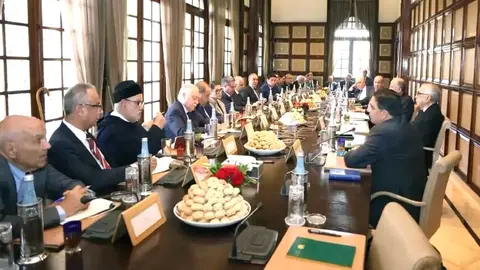
This story, known since ancient times, has two meanings:
-One apparent meaning is that, in the end, every problem has a solution. This assumption per se is harmful because of its ability to generate psychological tension in the person who accepts it, which can lead to frustration if the solution is not found. Therefore, Saint-Exupéry's formula of taking initiative without thinking about the solution seems less stressful and, in general, more productive.
-And another underlying and surreptitious meaning that imposes on us, from the outset, that the three beings are doomed to eat each other, and that the farmer is the mythological and indispensable hero who separates them to avoid catastrophe. Given what we have seen, I am tempted to say that we are faced with the Latin phrase “divide et impera,” that is, the very illustration of the biased behavior of the former colonizing countries in the Western Sahara conflict, a problem that they created and took it upon themselves for decades to entertain and use as both poison and antidote.
Three years earlier, I had drawn attention to the fact that the world is undergoing drastic geopolitical changes that are forcing Morocco, Algeria, Spain, and France to deconstruct the old paradigm and build a new one that will allow these countries to heal from the “intermittent explosive syndrome” that led relations in the Western Mediterranean to a situation of harakiri or collective suicide.
And three years later, this prophetic thought has come true almost entirely, as three of these four countries have synchronized their clocks and coordinated their steps. The fourth will end up doing so, as the arrows of time always point forward.
The big question now is: what are the reasons behind this change?
It is true that Trump's recognition of Moroccan sovereignty over Western Sahara in 2020 took place in exchange for Morocco's accession to the ‘Abraham Accords’, but we must remember that this recognition had been simmering since President Jimmy Carter's term in office forty-five years ago. Adopting such a decision required a turning point, certain geopolitical conditions that eventually came to pass. Trump's political courage made it easy to cross this threshold. With Biden continuing along the same path as his predecessor, it was clear that this was a conclusive decision by the ‘deep state’ of the most decisive power in this conflict in the UN Security Council.

It was then to be expected that the houses of cards would fall one after another. First came Spain's recognition in March 2022, then France's in October 2024. With this, these two colonizing powers finally managed to free themselves from the spell of the fairy tale and settle the dilemma of maintaining both sides at the same time. Needless to say, these two former colonial powers are well aware of what the map of Morocco looked like before the partition of Africa at the Berlin Conference of 1884, and they know better than anyone the nature of the ties that have always united the nomadic tribes of the Sahara (both Western and Eastern) with the central Moroccan state.
During Trump's second term (beginning in January 2025), Britain joined the party in June 2025. With it, the Moroccan proposal for autonomy enjoyed the support of three of the five permanent members of the Security Council.
Returning to the causes that led to this turning point, let us remember that, according to Thomas Gomart and Christophe Bouton, two of the most brilliant contemporary historians, the world entered a phase of “acceleration of history” at the beginning of the 21st century.
In their respective excellent books, 'l'accélération de l'histoire: les noeuds géostratégiques d'un monde hors de contrôle' and ‘l'accélération de l'histoire: des lumières à l'anthropocène’, the two authors agree that this is a phenomenon fueled by a combination of factors: the proliferation of conflicts and geopolitical competition, global warming, technological advances, and the instantaneous nature of information. Since then, we have witnessed a very significant increase in strategic actions aimed at changing the paradigm and the balance of power that shaped the world before.
The Covid-19 pandemic in December 2019 and the war between Russia and Ukraine had a feedback effect on this acceleration, shaking both the concept and the old rules of globalization. Since then, geopolitics has taken the reins of the economy, which has become increasingly oriented towards new, smaller areas of power, where new regional production or storage centers are located to prevent the disruption of the supply chain of products that are essential to the economy. Thanks to its wealth of rare earths and other resources highly sought after by the current and future economy, Africa emerged as the continent of the 21st century par excellence.
Thanks to its geographical location and its constant diversification of partners, Morocco knew how to anticipate this new situation and become an anchor point in this new global geopolitical and geoeconomic design, offering each of these partners what they need in terms of production and transit platforms, energy, agriculture, fishing, security and defense, sports, migration, etc. Let us also remember that today, Morocco is an essential player for entering promising African markets due to the historical and cultural ties that bind it to several countries on this continent and/or the strategic ‘win-win’ agreements it has concluded over the last two decades with other countries that revolved around the Algiers-Pretoria axis.
The abstention of Russia and China in the vote on the Security Council resolution corroborates this narrative,attesting to the efficiency of Moroccan diplomacy and recognizing the internal dynamics and the great development efforts deployed in the Saharan provinces.

Fifty years ago, Morocco settled the Sahara issue on the ground thanks to the Green March. With Security Council Resolution 2797 recognizing the autonomy plan in the Sahara within Moroccan sovereignty as the most appropriate solution to this conflict, Morocco passed the test it needed: international legality.
Today, thanks to its mastery of the four vital elements—military, economic, political, and diplomatic—since the adoption of the latest resolution, Morocco's position is better than ever. In contrast, both Algeria and the Polisario are facing a strategic dilemma: to engage in negotiations and thus de facto recognize the framework of autonomy under Moroccan sovereignty, or to refuse to get involved at the risk of further isolating themselves.
Indeed, both the overwhelming result of the vote on the resolution and the subsequent absence of any critical or opposing statements from the 192 UN member countries except Algeria reaffirm the international and unyielding unanimity on this issue.
Therefore, the invitation of His Majesty the King of Morocco to Algeria and the Polisario Front truly represents an honorable way out and a generous offer to reach a consensus, within the framework of the latest resolution, on a new point of balance capable of preserving the dignity of these parties and ensuring peace and prosperity in this area.
In one of his beautiful essays, French neuropsychiatrist and ethologist Boris Cyrulnik recounts that eagles can live up to seventy years, but only if they make a momentous decision when they reach the age of forty. At this age, its talons lose strength and prevent it from hunting, its beak becomes crooked and blunt, preventing it from tearing the flesh of its prey, and its wings become heavy, condemning it to fly low. At this point, it has to make that decision: regenerate or die.
If it wants to live another thirty years, it is forced to undergo a tragic and painful but necessary ritual. It has no choice but to take refuge in a mountain, strike its beak against the hardest rock until it falls off and nature generates another one, and it has to pluck its feathers, one by one, so that they grow back graceful and light. This painful but essential ritual lasts about 150 days.
The moral of this story is that there is no regeneration without change, that anyone who does not renew themselves is doomed to die.
Are Algeria's rulers willing to undertake such a solemn ceremony? Can they renew their worn-out doctrine and present a new and better version of themselves?
Therein lies the continuity of their regime and the unity of their nation.